Revolutionizing Recommendation Engines: How Spotify Leverages Reinforcement Learning and TensorFlow to Personalize Sound

In the high-stakes world of music streaming, the difference between a satisfied listener and a churned user often comes down to the next song in the queue. Spotify, the world’s leading audio streaming platform, has long relied on sophisticated machine learning to curate discovery. However, as user intent grows more complex and listening habits become more fluid, traditional recommendation models are reaching their limits. To push beyond these boundaries, a team of researchers and engineers at Spotify has turned to Reinforcement Learning (RL), utilizing TensorFlow and TF-Agents to simulate the complexities of human listening behavior in a controlled, offline environment.
This technical milestone, presented at KDD 2023, represents a significant shift in how streaming platforms approach sequential decision-making. By building a high-fidelity simulator, Spotify is now able to train "Agents" that learn to curate playlists by anticipating user reactions, all without subjecting live users to the risks of an untrained AI.
The Core Challenge: Sequential Decision Making
At its heart, music recommendation is not a static classification problem; it is a dynamic, sequential process. When a user opens Spotify, they aren’t just looking for a single song; they are looking for a curated journey that matches their current intent—whether that is focus, workout, or relaxation.

"Many of our music recommendation problems involve providing users with ordered sets of items that satisfy users’ listening preferences and intent at that point in time," explain the authors of the project, a team comprising Surya Kanoria, Joseph Cauteruccio, Federico Tomasi, Kamil Ciosek, Matteo Rinaldi, and Zhenwen Dai.
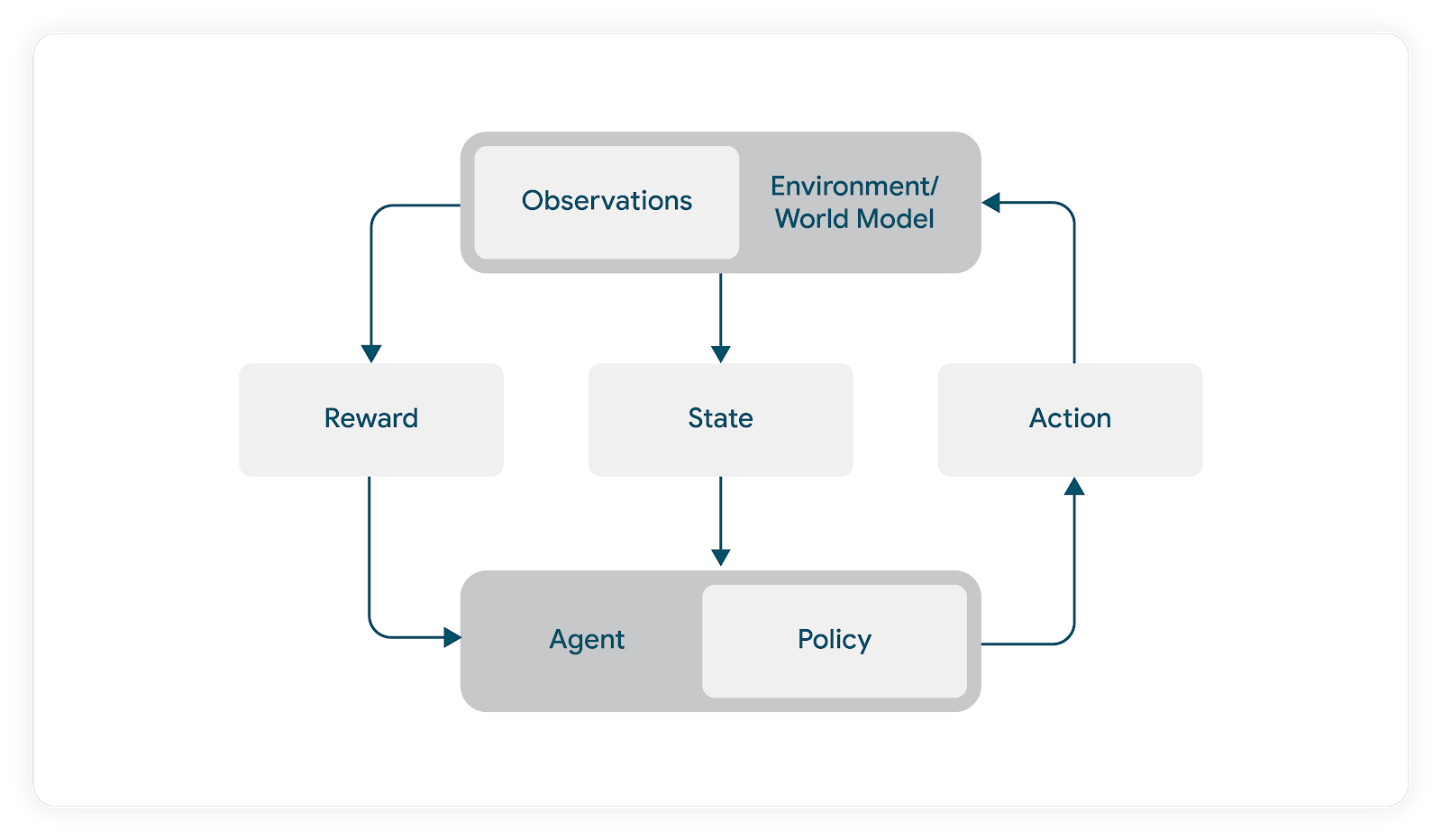
In this context, every recommendation made by the platform is a decision that impacts the subsequent state of the user. If the platform suggests a track that the user skips, the "state" of that session changes, and the platform must adapt immediately. Reinforcement Learning—a branch of AI where an agent learns to make decisions by performing actions in an environment to maximize a reward—is theoretically perfect for this. However, applying RL to millions of users in real-time is notoriously difficult and potentially detrimental if the agent is not properly trained.
A Chronology of the Innovation
The journey toward this RL-driven architecture began with a search for a robust, scalable, and production-ready framework.

Phase 1: Selecting the Toolkit
Spotify’s machine learning infrastructure is deeply rooted in the TensorFlow ecosystem. To ensure that experimental breakthroughs could be quickly transitioned into production, the team opted for TF-Agents, an end-to-end reinforcement learning library built on top of TensorFlow. The decision was strategic; it allowed for seamless integration with existing TFX (TensorFlow Extended) pipelines and serving infrastructure.
Phase 2: Building the "Offline Simulator"
The team’s primary hurdle was the lack of an environment to train these agents. In RL, an agent needs an "environment" to interact with. To avoid the disastrous prospect of training an agent on live users—where poor recommendations could drive users away—the team built an offline Spotify simulator.
Using Keras, the team trained a "User Model" capable of predicting how a hypothetical user would respond to specific tracks. This user model became the heartbeat of their simulation environment. The simulator was designed to mirror real-world listening sessions, allowing an agent to propose a playlist and receive a "simulated reward" based on the user model’s predicted reaction.
Phase 3: Developing the AH-DQN
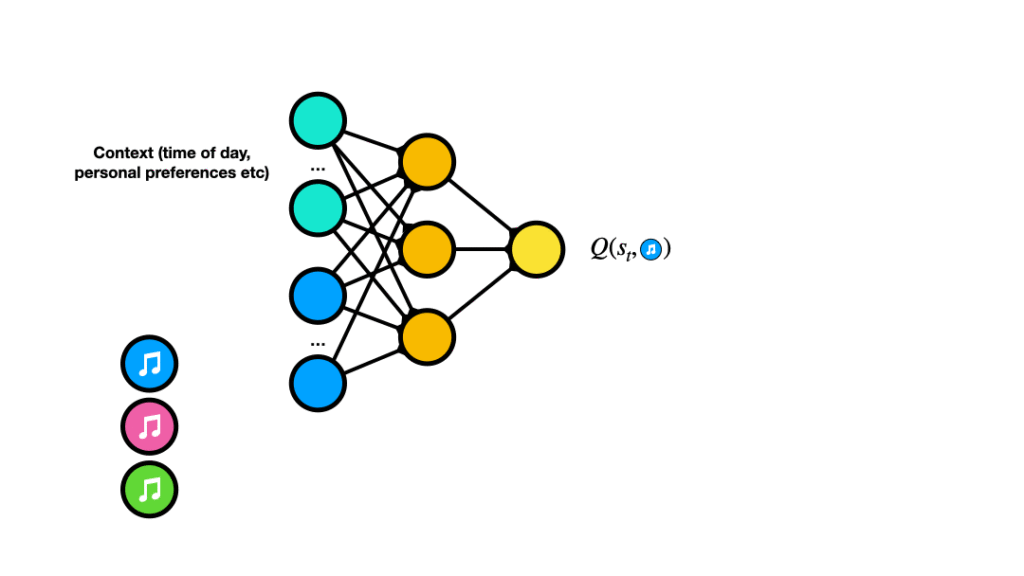
Standard RL algorithms often struggle with the massive state and action spaces inherent in a music library containing millions of tracks. To address this, the team introduced the Action-Head DQN (AH-DQN). Unlike traditional Deep Q-Networks that might struggle with the combinatorial complexity of selecting a full playlist, the AH-DQN iterates through the available track pool, selecting the item with the highest Q-value one by one until the slate is full.
Phase 4: Validation and Deployment
The final phase involved rigorous testing. The team compared their offline performance estimates against live, large-scale online experiments. The results were highly encouraging: the simulated performance metrics showed a strong, positive correlation with real-world user engagement, confirming that the simulator was a reliable proxy for the actual Spotify app.
Supporting Data and Technical Architecture
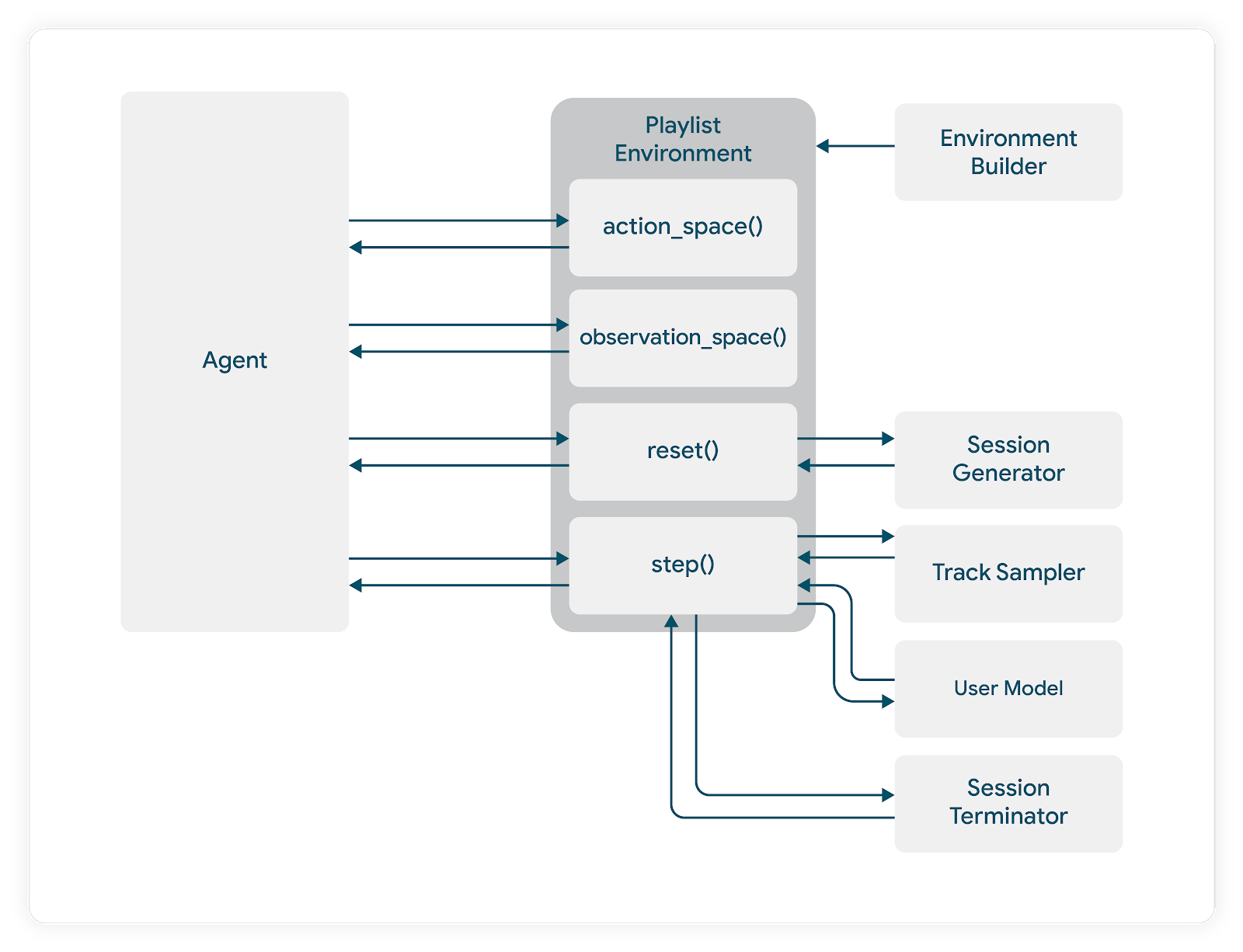
The technical architecture of this system is built on modular abstraction, ensuring that the simulator remains flexible. The system relies on four primary components:

- User Model: A predictive model trained on historical interaction data to simulate listener feedback.
- Track Sampler: A module that converts the agent’s abstract actions into concrete, actionable track recommendations.
- Episode Tracker: An essential tool for auditing. Beyond standard RL metrics, this tracker captures granular data on why an episode terminated, the specific user-content pairs sampled, and the confidence scores of the user model.
- Episode Sampler: The logic that defines the "reset" conditions for a session, ensuring the simulation reflects the reality that most users have specific session lengths and skip thresholds.
The team emphasized that their environment abstraction matches standard TF-Agents primitives, which allowed them to plug in various RL agents—such as Proximal Policy Optimization (PPG) or standard DQN—with minimal refactoring. This "plug-and-play" capability was instrumental in testing different strategies to optimize for long-term user satisfaction rather than short-term clicks.
Official Perspectives: The Value of Simulation
The Spotify team is quick to credit the collaborative nature of this project. In their official documentation, the researchers highlighted the critical support provided by the TensorFlow Agents team.
"We’d like to thank the TensorFlow Agents team for their support and encouragement throughout this project, and for the library that made it possible," the team noted in their acknowledgements.

This project underscores a fundamental shift in how large-scale tech companies treat their AI training processes. By investing in "Model-Based RL," companies like Spotify are essentially creating a digital twin of their user base. This allows for an iterative, fail-fast approach to AI development. When the simulator confirms that a specific policy leads to higher "cumulative reward"—a proxy for user satisfaction—only then is that policy considered for an A/B test in the live application.
Implications for the Future of Personalization
The implications of this research extend far beyond the "Discover Weekly" or "Daily Mix" playlists.
Scaling Personalization
The AH-DQN architecture proves that Reinforcement Learning can handle complex, multi-item recommendation tasks. This could lead to a future where every interface element on the Spotify app—from the podcast recommendations on the home screen to the transition between tracks in an algorithmic radio station—is powered by an RL agent that is constantly learning from the nuances of human behavior.
The "Simulation First" Paradigm
The success of this project validates the "simulation-first" development paradigm. By decoupling the training process from live, real-world consequences, Spotify has created a sandbox that can be used to test radical new recommendation strategies that would have been too risky or inefficient to deploy via traditional methods.
Ethical and User-Centric Design
Perhaps most importantly, this approach addresses the ethical responsibility of AI development. By training in a simulator, the researchers were able to minimize the "exploration" phase’s impact on real people. They avoided subjecting users to potentially irrelevant music while the agent was "figuring out" its strategy. This, in turn, preserves the integrity of the user experience while allowing for the rapid evolution of algorithmic taste.
As Spotify continues to refine these models, the gap between a machine-generated playlist and a human-curated one will likely continue to shrink. The integration of TensorFlow and TF-Agents has not only provided the tools to build these systems but has established a robust blueprint for any platform looking to harness the power of Reinforcement Learning in a complex, real-world environment.

Through the lens of this work, we see a future where technology is not just predicting what we want next, but understanding the underlying, evolving intent of our listening journey. The transition from static recommendations to dynamic, sequential, and agent-driven discovery is well underway, and Spotify is clearly leading the rhythm.