The Return of the Open Book: Joey Castillo’s New "Touch" E-Reader Challenges the Big Tech Walled Garden
In an era where digital consumption is increasingly dictated by proprietary ecosystems, aggressive data harvesting, and the looming threat of remote content revocation, the concept of "owning" one’s digital library has become a radical act of defiance. For those who view e-reading not just as a convenience but as a private sanctuary, the announcement of the Open Book Touch—the latest iteration of developer Joey Castillo’s long-standing open-source hardware project—is more than just a gadget launch; it is a statement of principle.
Six years after Castillo first introduced the DIY "Open Book" to the maker community, he has returned with a polished, consumer-ready successor. The Open Book Touch is designed to bypass the restrictive "walled gardens" of corporate giants like Amazon, offering a truly sovereign reading experience that requires no accounts, no DRM, and absolutely no "phoning home."
The Evolution of an Open-Source Vision
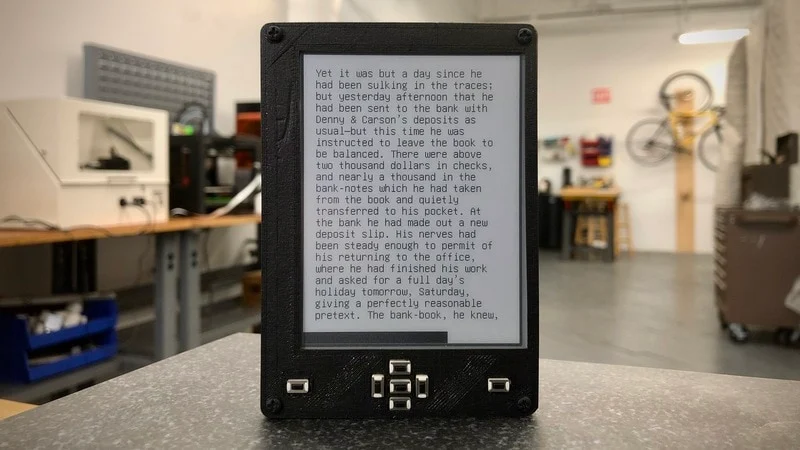
The trajectory of the Open Book project is a masterclass in community-driven hardware development. In 2020, when the original Open Book debuted, it was envisioned as a hobbyist’s dream—a kit that demanded a soldering iron, a steady hand, and a genuine passion for electronics. It was a project that thrived on the "do it yourself" ethos, winning accolades at Hackaday’s "Take Flight with Feather" contest.
While the original iteration saw some success via bare PCB sales on platforms like Tindie, it remained a project for the few. The subsequent years saw the project iterate through various forms, including the RP2040-powered "Open Book Abridged," which stripped away complexity to focus on functionality.
Now, with the Open Book Touch, Castillo has shifted his strategy. By moving toward a more complete, out-of-the-box product available through Crowd Supply, he is positioning the device not just for the soldering-iron-wielding elite, but for any reader who values privacy and architectural transparency.
Key Specifications: A Pocketable Powerhouse
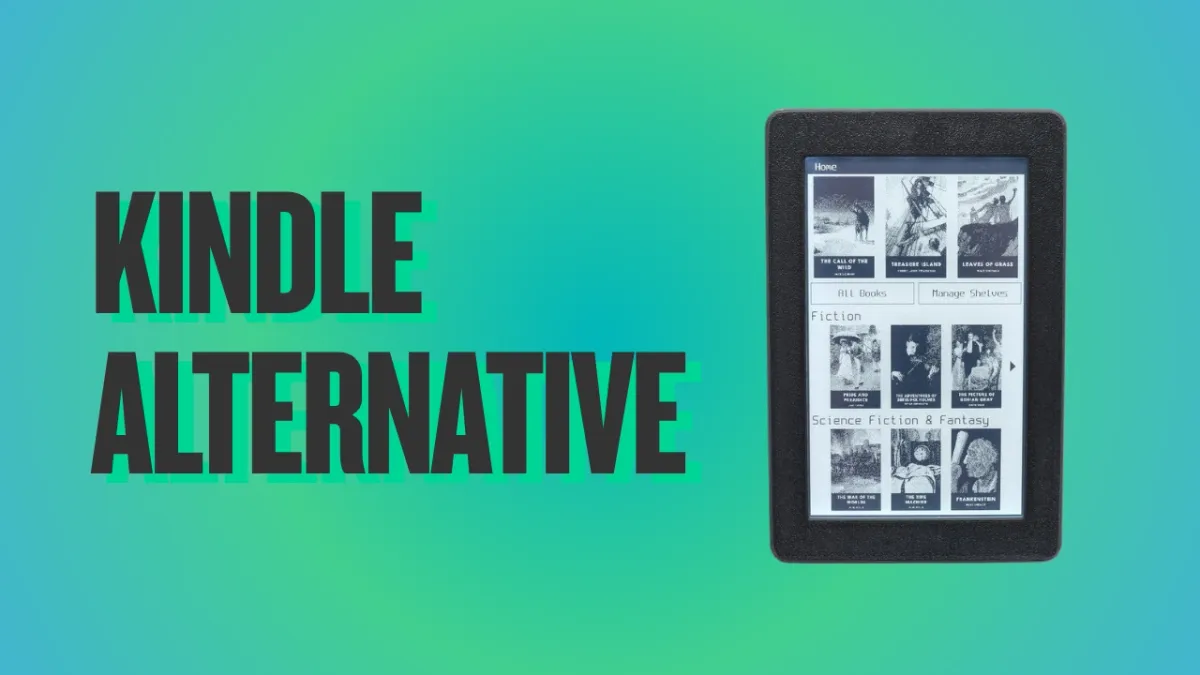
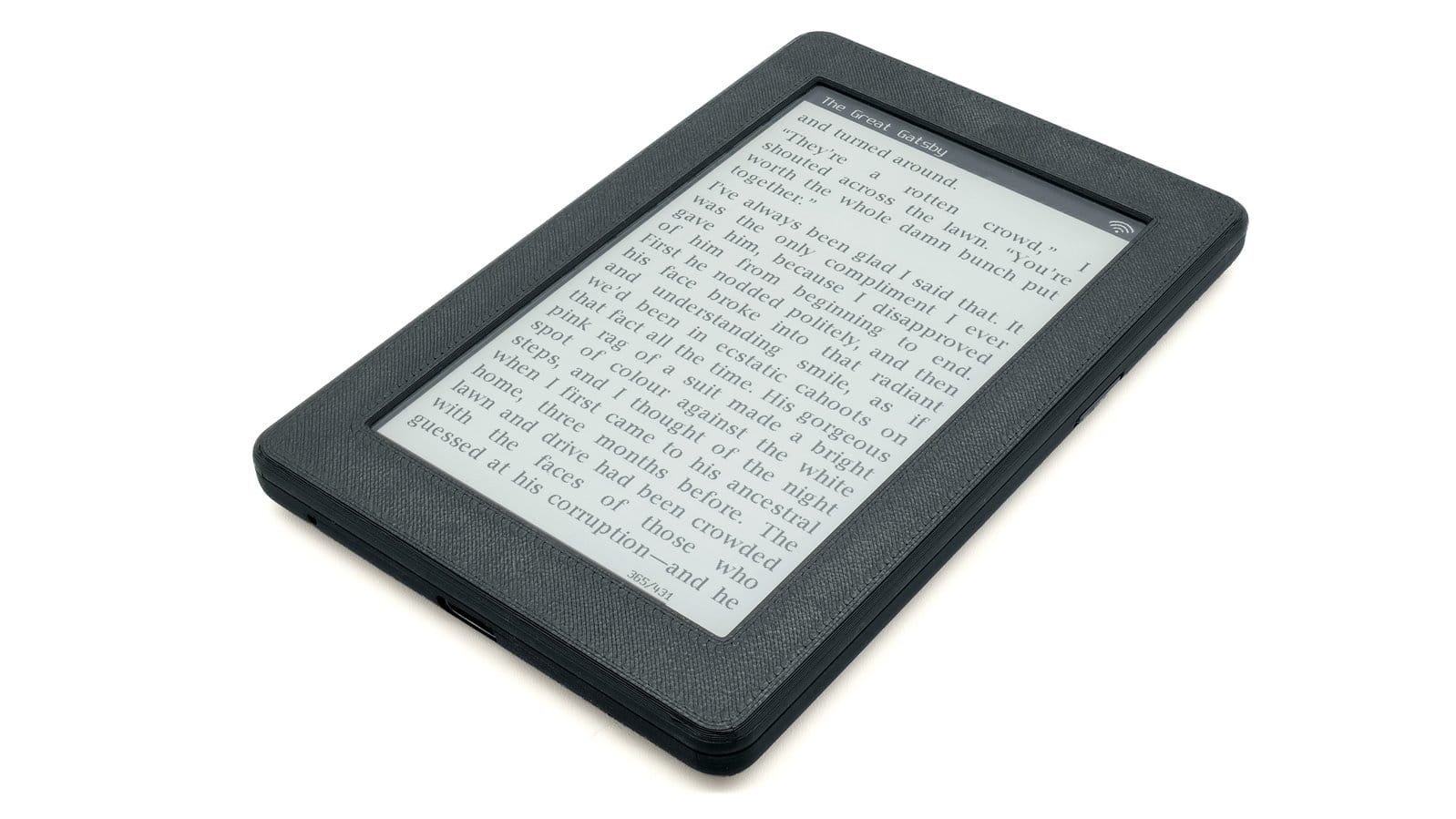
The Open Book Touch represents a fundamental departure from its predecessor’s button-heavy design. Where the 2020 version relied on a physical directional pad and tactile page-turn buttons, the new model adopts a sleek, 1cm-thin "slab" form factor. The interface is now entirely handled via a capacitive touchscreen, allowing for a more immersive and minimalist reading experience.

Technical Breakdown:
- Display: A 4.26-inch E-Paper panel with a resolution of 480 x 800 pixels, providing a crisp 220 ppi density. It operates primarily in 1-bit black-and-white for high-speed page turns, with a 2-bit grayscale mode reserved for high-fidelity rendering of book covers and imagery.
- Internal Architecture: At its heart, the device is driven by an ESP32-S3 microcontroller, paired with 16 MB of flash memory and 8 MB of PSRAM. This hardware configuration is intentionally chosen to handle EPUB parsing without the resource overhead of a full Linux operating system.
- Lighting: The frontlight system utilizes a sophisticated array of five warm and five cool LEDs. This allows users to fine-tune the color temperature to suit their environment, from cool daylight settings to warm, sleep-friendly tones for late-night reading.
- Power: A user-replaceable 800 mAh (minimum) LiPo battery powers the unit. The enclosure itself is a 3D-printed, snap-fit design, ensuring that the device remains serviceable and modifiable for the end-user.
Linguistic Versatility and Typographic Precision
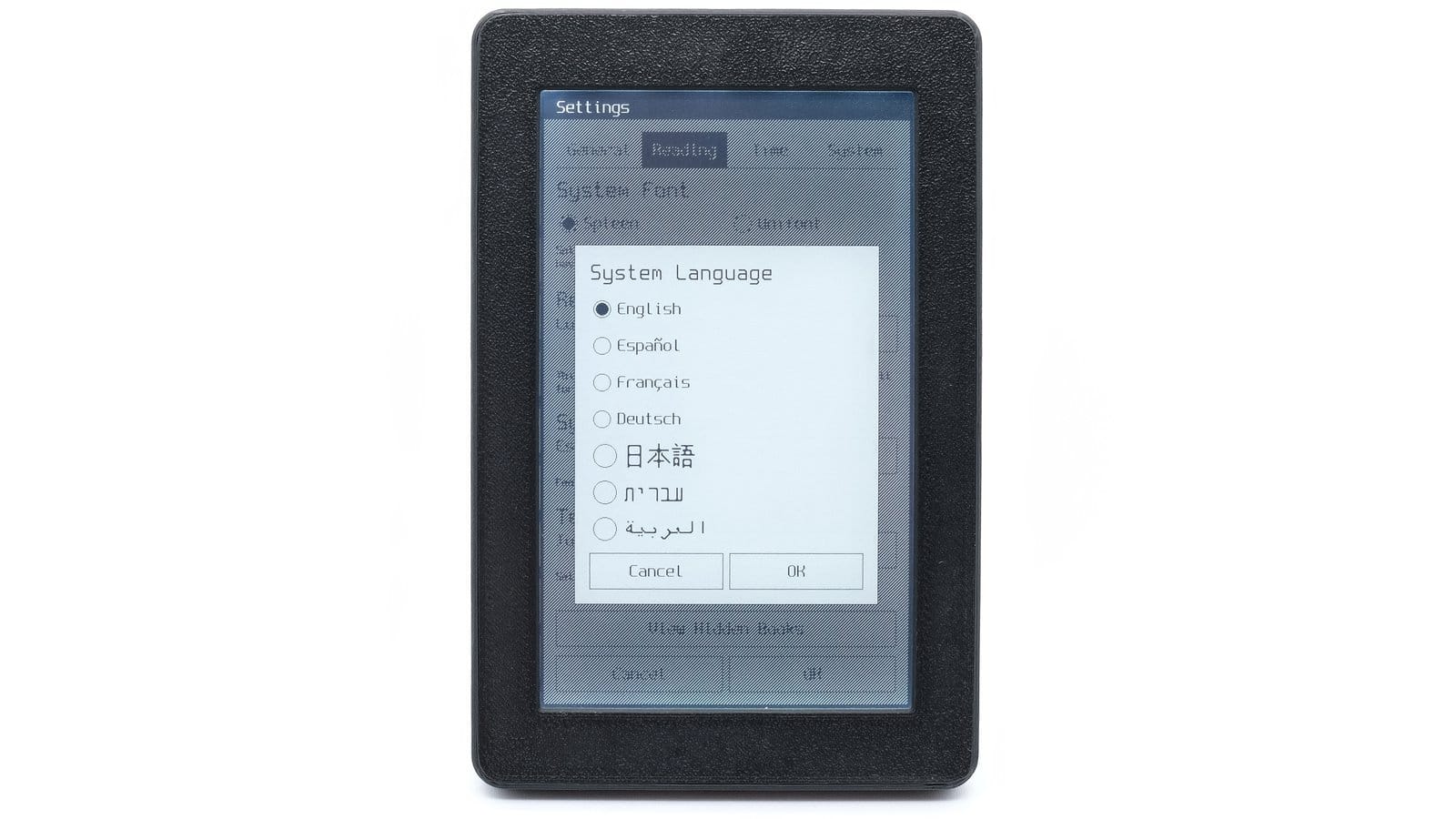
One of the most impressive aspects of the Open Book Touch is its commitment to global accessibility. While many entry-level e-readers struggle with non-Latin scripts, the Open Book Touch handles them with grace.
The firmware includes the GNU Unifont, which provides a fallback for approximately 70,000 glyphs. Furthermore, the device supports right-to-left (RTL) scripts such as Arabic and Hebrew through the implementation of the Unicode bidirectional algorithm. The interface itself is localized into seven languages, ensuring that the reader’s experience is intuitive regardless of their native tongue.
Typographically, the device does not settle for standard system fonts. It utilizes bitmap versions of the open-source Lucida Bright and Lucida Sans fonts, complete with true bold and italic weights. Coupled with support for justified text and proper hyphenation, the reading experience is designed to mirror the aesthetic quality of high-end print publishing.
The Philosophy of "Owning Your Data"
The core value proposition of the Open Book Touch is, quite simply, the absence of corporate interference. By design, the device lacks DRM support and refuses to communicate with external servers.
Users manage their libraries via local Wi-Fi or by loading files directly onto a microSD card. Metadata management is handled through a local SQLite database residing on the device. This approach addresses a growing concern among digital archivists and privacy advocates: the fear that a digital library could be wiped or rendered inaccessible at the whim of a remote service provider.
However, this independence comes with a trade-off: the lack of a cloud-based companion app. Unlike Kindle or Kobo users, those who choose the Open Book Touch will not see their progress synced across a smartphone or desktop computer. For many in the open-source community, this is a fair price to pay for total autonomy, though it serves as a reminder that "sovereignty" often requires a more manual approach to data management.

Project Status and Crowdfunding Logistics
The Open Book Touch is currently live on the Crowd Supply platform, with a funding goal of $45,000. As of the latest update, the project has garnered significant support from the maker and privacy-conscious communities, with over 130 backers already committed to the cause.
The Financial Tiers:
- Standard Edition ($149): The base model containing all the hardware functionality described, with fulfillment slated for early 2027.
- Author’s Edition ($249): A limited-run tier featuring a premium enclosure. While the electronics are identical to the standard model, this tier serves as a collector’s item and a way for backers to provide additional support to the project’s development.
The project is utilizing the manufacturing expertise of NextPCB’s Launchpad program, with e-paper panels sourced from Good Display. While the developer has pledged to eventually open-source the board files, enclosure CAD, and firmware, these assets are currently being kept private to protect the initial manufacturing and fulfillment cycle. This strategy is common in hardware crowdfunding, ensuring that backers receive the exclusive benefit of the early hardware run before the design becomes fully public.
Implications for the Future of Hardware
The success of the Open Book Touch signals a shifting tide in consumer electronics. As proprietary devices become more locked down, a growing segment of the market is signaling that they are willing to pay a premium for hardware that they can truly own, modify, and understand.
By leveraging an ESP32-S3 and an open-source C++ application framework called "Focus," Castillo has demonstrated that it is possible to build a high-quality consumer product without relying on the massive infrastructure of Big Tech.
However, the project also highlights the challenges of independent manufacturing. From the "lost" retail run of the original 2020 Open Book to the current, more controlled rollout, the journey of this device reflects the volatility of small-scale hardware production. Backers are advised to treat the early 2027 delivery date as an estimate, as the complexities of the supply chain—particularly for niche components like e-paper displays—are significant.
Ultimately, the Open Book Touch is not just an e-reader; it is a blueprint for a future where technology serves the user rather than the shareholder. Whether or not it replaces your daily driver, it stands as a testament to what is possible when developers refuse to compromise on the fundamental rights of the user: to read without tracking, to own without permission, and to modify without restriction.