A Year of Innovation: Reflecting on the Evolution of the AWS Builder Center
It has been exactly one year since Amazon Web Services (AWS) unveiled the AWS Builder Center, a digital ecosystem designed to bridge the gap between abstract cloud architecture and hands-on implementation. Launched on July 9, 2025, the platform has rapidly evolved from a simple community hub into a sophisticated infrastructure that supports millions of users, providing them with the tools, sandboxes, and collaborative spaces necessary to navigate the increasingly complex landscape of modern cloud development.
As the platform celebrates its first anniversary, the AWS community is looking back at a period of unprecedented growth. What began as a repository for community profiles and wishlist voting has transformed into an expansive library of technical expertise, interactive workshops, and ephemeral sandbox environments. This article explores the trajectory of the AWS Builder Center, the metrics of its success, and what its evolution signals for the future of cloud engineering.
The Chronology of Growth: From Hub to Ecosystem
The journey of the AWS Builder Center over the past twelve months can be characterized by a rapid, iterative deployment cycle. According to a comprehensive feature timeline curated by Rick Suttles, the platform’s development team prioritized accessibility and community-driven utility.
Phase 1: Foundation and Community (July – December 2025)
In its infancy, the Builder Center focused on establishing a baseline for user engagement. The introduction of community profiles, wishlists, and a centralized toolbox created a "home base" for AWS enthusiasts. By late 2025, the platform began integrating identity management, allowing users to sign in seamlessly using GitHub or Amazon credentials, thereby lowering the barrier to entry for developers already entrenched in the open-source ecosystem.
Phase 2: Technical Depth and Gamification (January – June 2026)
As the user base grew, so did the need for structured learning. The platform introduced a robust badge and streak system in March 2026, gamifying the pursuit of AWS certification and technical proficiency. This period also saw the deployment of "Spaces," a feature enabling community-led groups to organize around specific AWS services or architectural challenges.
Phase 3: Frictionless Development (July 2026 – Present)
The one-year anniversary marks the platform’s most significant milestone yet: the introduction of Sandbox Environments. By allowing users to spin up free, pre-provisioned AWS accounts for workshop exercises without the need for credit cards or personal billing configurations, AWS has effectively removed the financial and administrative hurdles that often discourage experimentation.
Supporting Data: By the Numbers
The success of the AWS Builder Center is not merely anecdotal; it is reflected in an impressive array of engagement statistics. According to a retrospective analysis published by AWS evangelist Jeff Barr, the platform has become a central pillar of the cloud developer community.
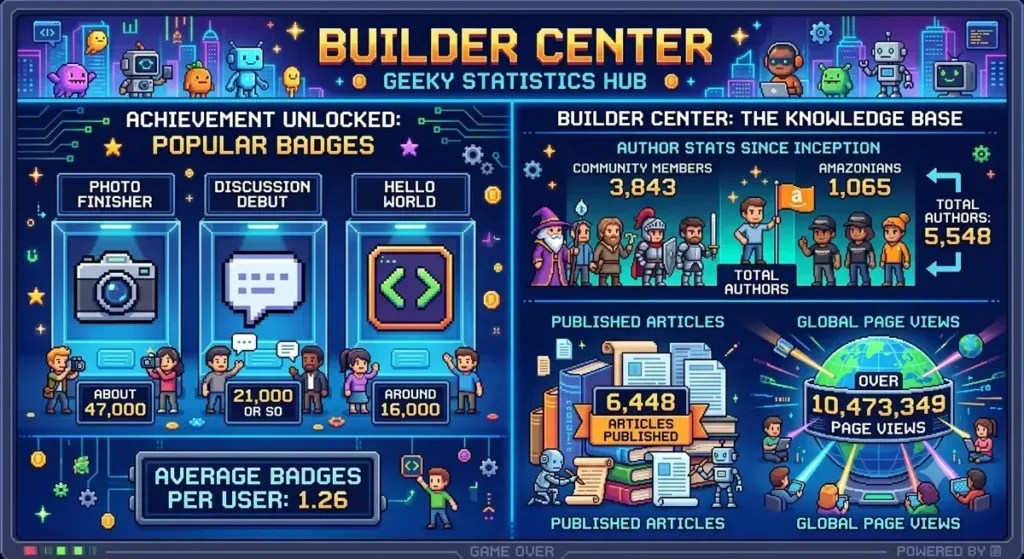
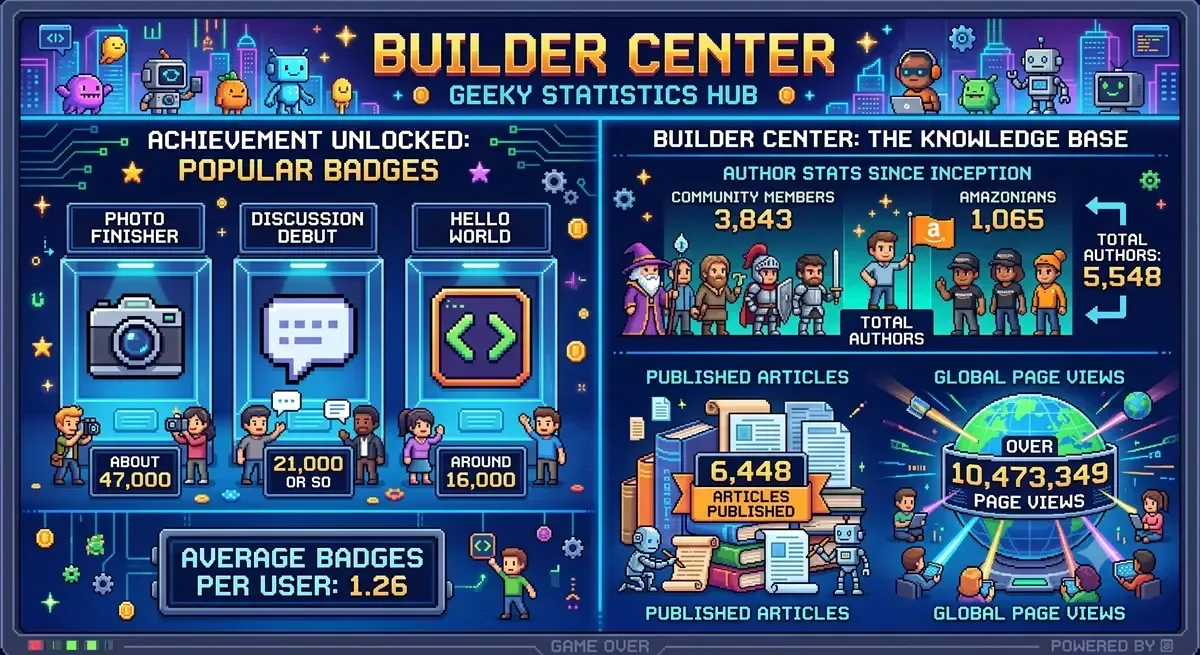
- Content Proliferation: 5,548 unique authors have contributed to the platform, generating 6,448 high-quality technical articles.
- Reach: These articles have garnered over 10.4 million aggregate page views, underscoring the platform’s role as a primary knowledge repository.
- Gamification Success: Since the introduction of the badge system in March 2026, users have earned 99,226 badges, signaling high levels of engagement with structured learning paths.
- Community Influence: The feedback loop between builders and the AWS product team is active and productive. Users have submitted 565 feature "wishes," 10 of which have already been fully implemented, with another 20 currently on the near-term development roadmap.
High-Impact Contributions
The content that drives the most traffic reveals the specific pain points and interests of modern developers. Three articles in particular have defined the platform’s success:
- "Building an AWS Study Buddy with MCP + Strands Agents SDK" (by Dineshraj Dhanapathy): With over 50,000 views, this article exemplifies the community’s deep interest in AI-driven agentic workflows.
- "Migrating an EOL Linux Server to AWS in 8 Hours with Kiro" (by Chris Miller): Garnering 45,000+ views, this piece highlights the practical, time-sensitive needs of IT administrators managing legacy infrastructure.
- "AIdeas: NeuroVoice – Multimodal AI for Early Screening of Neurological Diseases" (by Yash Aggarwal): Reaching 38,000+ views, this article demonstrates how builders are using the cloud to solve complex, real-world healthcare challenges.
Official Perspective: The Vision for Sandboxes
The most significant technological addition to the platform for its anniversary is the Sandbox Environment. In a statement accompanying the launch, Rick Suttles emphasized that the goal is to make "experimentation the default state."
"Sandboxes give you a free, pre-provisioned AWS account to complete a workshop exercise," Suttles noted. "Each environment is active for 8 hours, after which the account and all its resources are automatically de-provisioned. You can have one active sandbox at a time and request one per week. No personal AWS account, credit card, or manual cleanup required."
This move represents a strategic shift in how AWS handles developer onboarding. By providing a safe, ephemeral space for testing, AWS is not only reducing the risk of accidental billing for learners but also fostering a culture of "fail-fast" development that is essential for cloud-native innovation.
Implications for the Future of Cloud Development
The success of the AWS Builder Center suggests a broader trend in the tech industry: the shift toward "developer-centric ecosystems."

1. The Democratization of Expertise
By hosting high-quality, community-vetted content, the Builder Center is helping to democratize cloud expertise. Junior developers or students in regions without extensive physical AWS training facilities now have access to the same high-level, practical knowledge as seasoned enterprise architects.
2. The Feedback-Driven Product Cycle
The fact that 10 community wishes have been implemented within a year is a testament to the influence of the builder community. AWS is increasingly using the Builder Center as a barometer for customer needs, effectively outsourcing a portion of its product roadmap strategy to the very people using the services daily.
3. Sustainability and Resource Management
The ephemeral nature of the new Sandbox Environments aligns with broader corporate sustainability goals. By automating the de-provisioning of resources, AWS is ensuring that test environments do not become "zombie" resources, thereby optimizing their own infrastructure usage while simultaneously providing a cleaner experience for the user.
Conclusion: Building for the Next Year
As the AWS Builder Center moves into its second year, the focus will likely shift from building foundational features to deepening the integration between those features. With 1,500+ services now documented across 37 regions, the challenge for the next year will be discoverability and personalization.
The platform has proven that when developers are provided with the right tools, a collaborative community, and a frictionless way to experiment, they will build solutions that push the boundaries of what is possible in the cloud. Whether it is migrating legacy servers or deploying multimodal AI for medical screening, the work being done in the Builder Center is a microcosm of the wider digital transformation taking place across the globe.
For those looking to participate, the call to action is clear: visit the AWS Builder Center to contribute, learn, or simply explore the wealth of knowledge shared by your peers. As the platform matures, it stands as a testament to the idea that in the world of cloud computing, the best way to predict the future is to build it yourself.