Accelerating Generative AI: AWS Unveils Amazon Bedrock Managed Knowledge Base
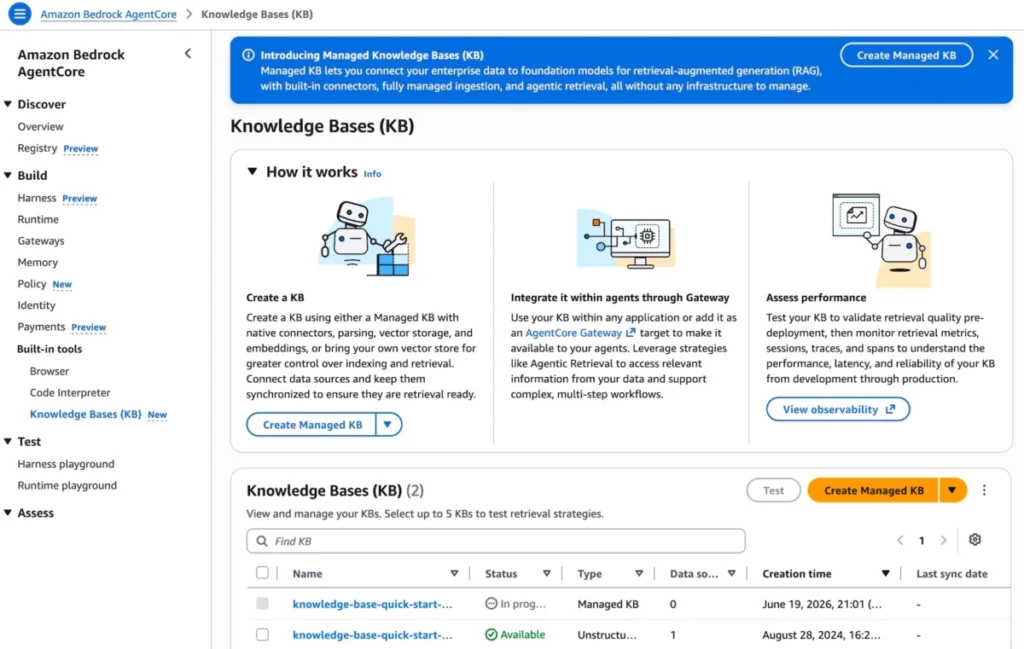
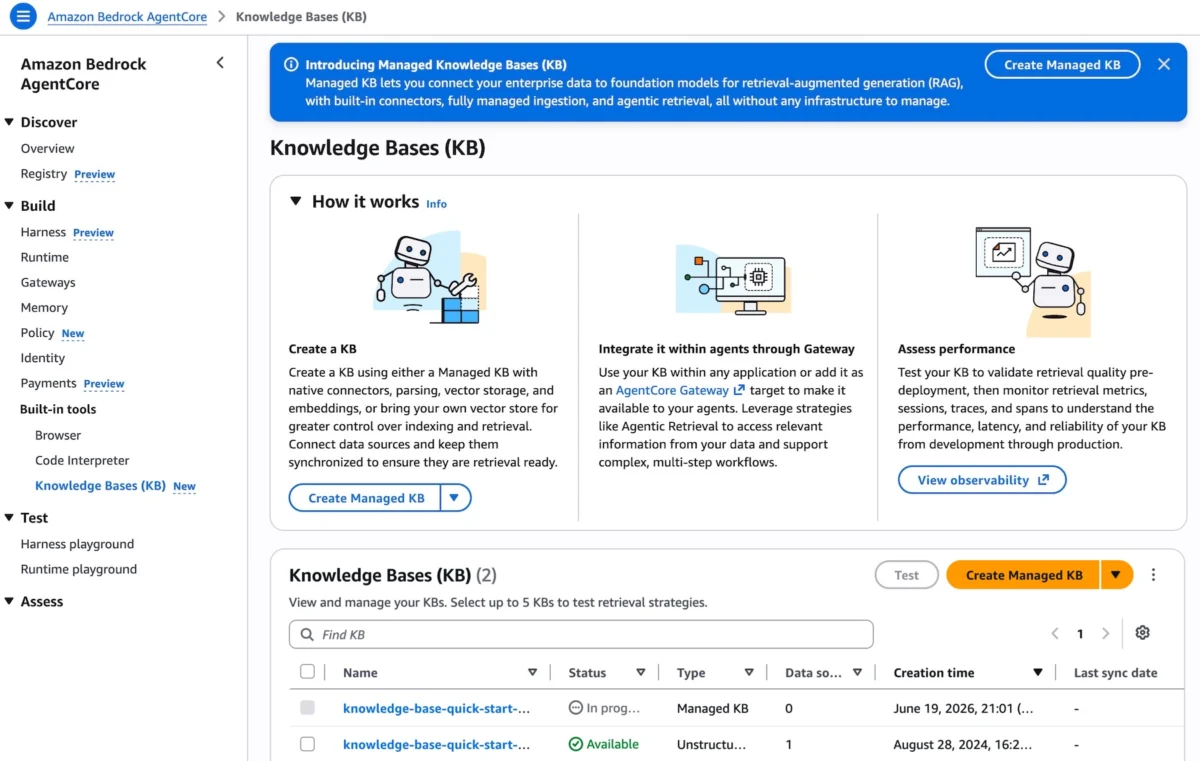
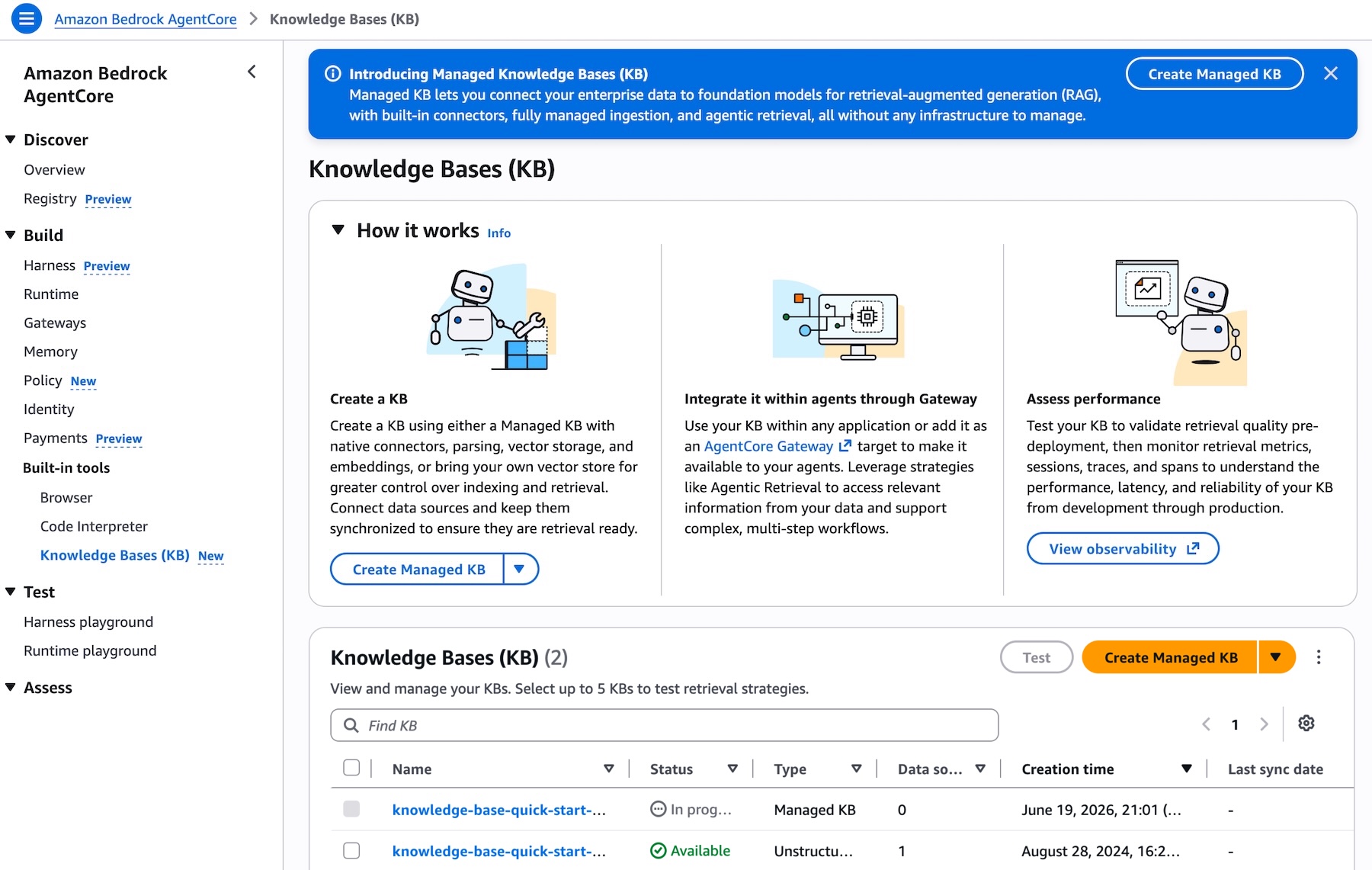
In an era where data is the lifeblood of enterprise innovation, the ability to weave proprietary information into generative AI applications has become a competitive necessity. Today, Amazon Web Services (AWS) announced the launch of Amazon Bedrock Managed Knowledge Base, a transformative suite of capabilities designed to slash the time and technical overhead required to build enterprise-grade retrieval-augmented generation (RAG) pipelines. By abstracting the complex infrastructure required for data ingestion, retrieval, and orchestration, AWS is positioning itself to help organizations move from experimentation to production-ready "agentic" AI in mere minutes.
The Evolution of the RAG Pipeline
For organizations attempting to ground their generative AI models in private data, the path to production has historically been fraught with friction. Developers have been forced to manually engineer and maintain a precarious stack of storage solutions, vector databases, embedding models, and re-ranking mechanisms.
The launch of the Managed Knowledge Base marks a departure from this "DIY" era. By consolidating these disparate components into a single managed primitive, AWS is effectively commoditizing the plumbing of RAG. This release is not merely an incremental update; it represents a fundamental shift in how developers interact with large language models (LLMs) when private data is involved.
Key Pain Points Addressed
The industry has long grappled with three primary bottlenecks that this new service directly targets:
- Infrastructure Complexity: The difficulty of maintaining synchronization between data sources and vector stores.
- Retrieval Accuracy: The challenge of parsing unstructured enterprise data—such as complex PDFs, SharePoint files, or Confluence pages—into formats that LLMs can digest effectively.
- Orchestration Logic: The need for complex reasoning loops that allow AI agents to move beyond simple search to multi-step, "agentic" problem solving.
A Chronology of Integration
The development of this service follows a clear trajectory of AWS’s commitment to "agentic" AI.
- The Foundation: Building upon the existing Bedrock architecture, AWS began by providing the raw models and basic vector storage.
- The Agentic Shift: With the introduction of AgentCore Gateway, the focus shifted toward allowing AI agents to interact with real-world enterprise tools.
- The Current Milestone: By integrating the Knowledge Base directly into the AgentCore lifecycle, AWS has created a seamless pipeline where data ingestion and agentic reasoning are no longer separate operational hurdles.
Technical Innovations: Smart Parsing and the Agentic Retriever
Two standout features of the Managed Knowledge Base are its "Smart Parsing" and "Agentic Retriever" capabilities.

Smart Parsing: The End of Data Wrangling
Data ingestion has traditionally been a week-long trial-and-error process. With Smart Parsing, AWS automates the strategy for interpreting diverse data types. The service automatically determines the best way to extract text and structure from documents, optimizing the information for retrieval without requiring the developer to manually configure parsing rules. This ensures that the context provided to the foundation model is cleaner, more accurate, and better aligned with the original document intent.
Agentic Retriever: Multi-Hop Reasoning
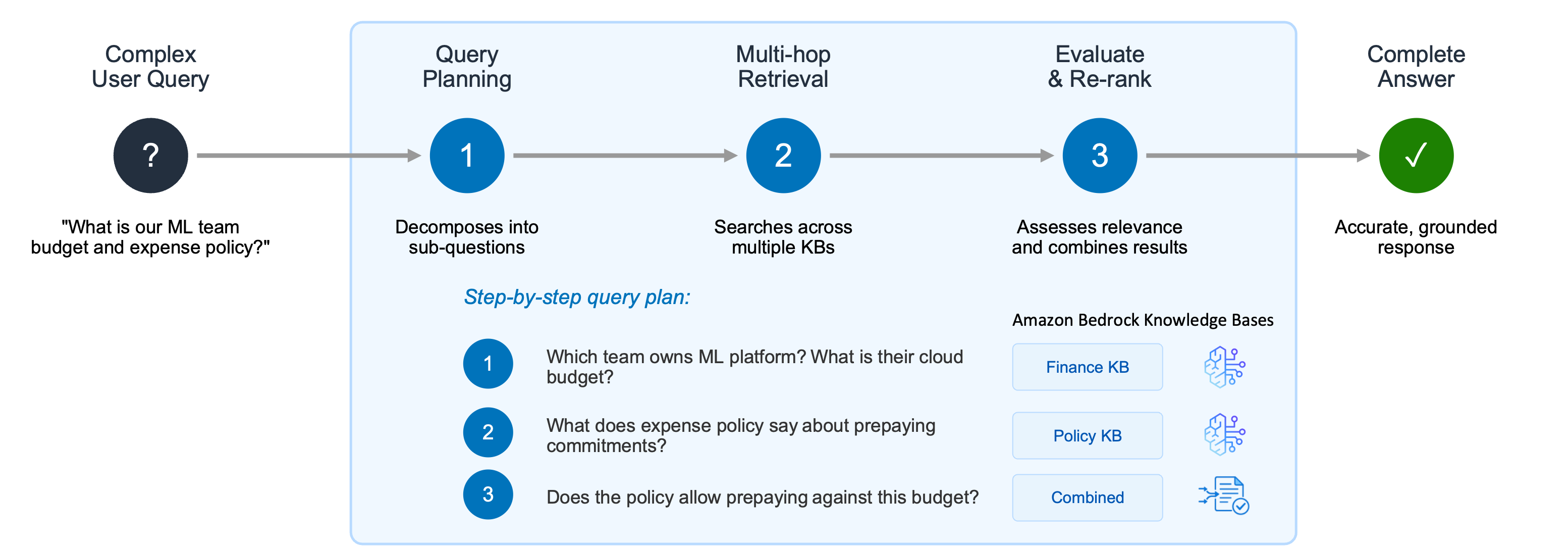
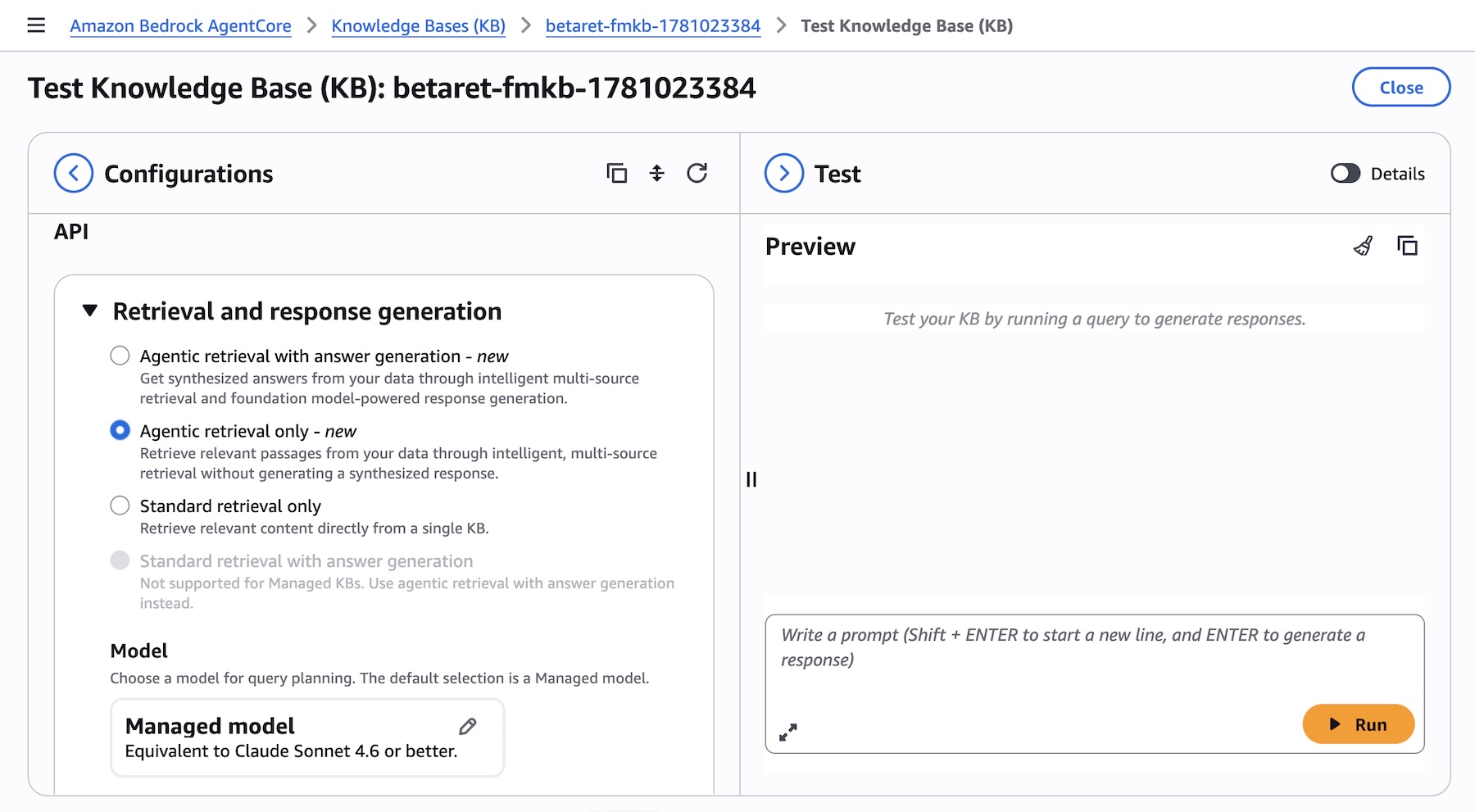
Perhaps the most significant innovation is the Agentic Retriever. Traditional RAG systems often fail at complex, multi-part queries. For instance, if an employee asks, "Does our current expense policy allow the ML team to prepay for annual cloud commitments given our existing budget?" a standard system might only retrieve information about the "expense policy" or the "budget," but fail to synthesize the two.
The Agentic Retriever decomposes such queries into a logical plan:
- Identifying the budget owner and the current allocation.
- Retrieving the relevant clauses from the expense policy.
- Synthesizing the two to provide a grounded, actionable answer.
This multi-hop retrieval loop is performed automatically, effectively allowing developers to build sophisticated reasoning agents without needing to write custom orchestration code.
The Role of the Model Context Protocol (MCP)
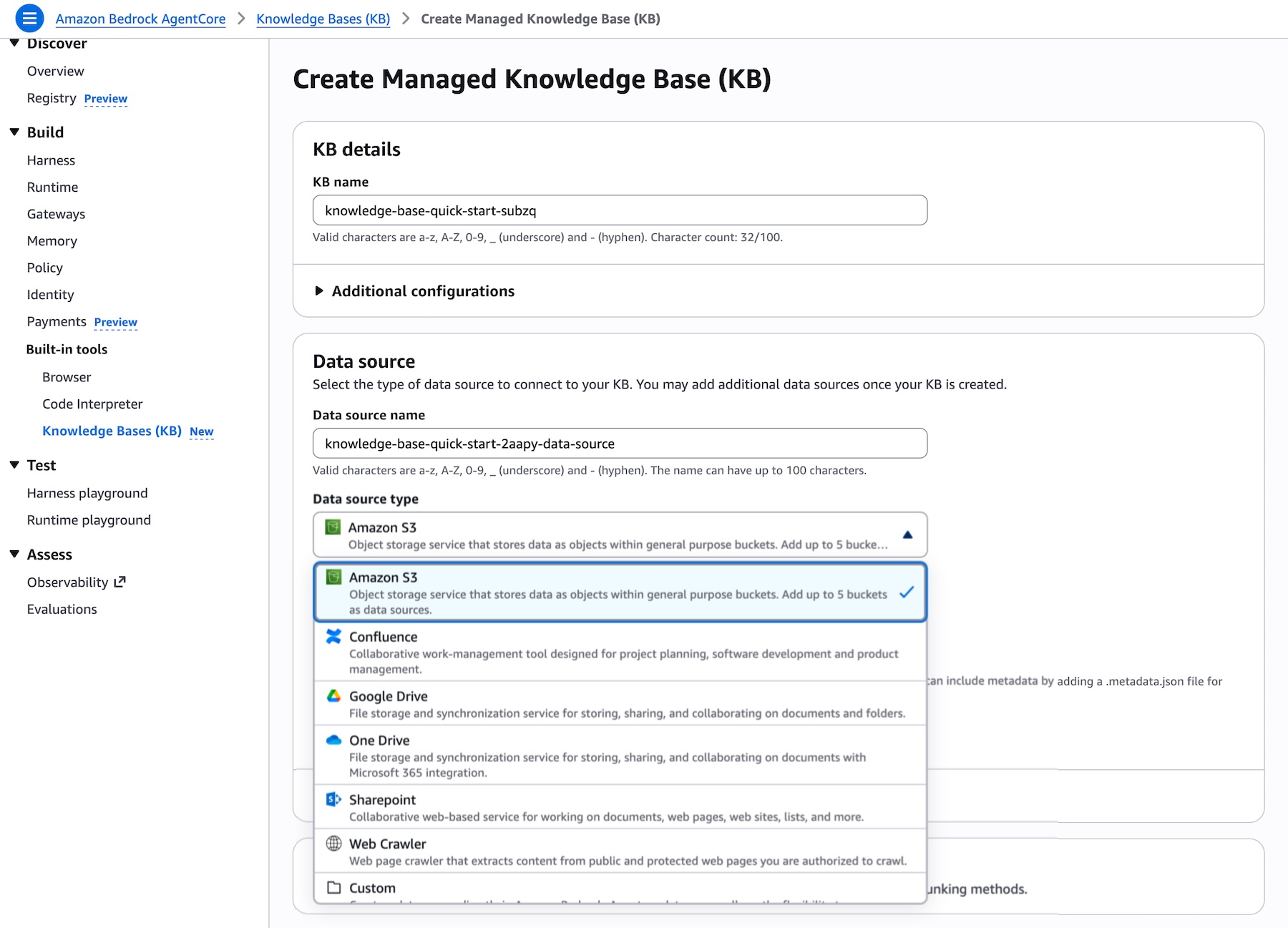
In a move that underscores AWS’s commitment to ecosystem interoperability, the new service utilizes the Model Context Protocol (MCP). This standard ensures that the knowledge base is not a "walled garden."
By exposing the knowledge base through the AgentCore Gateway as an MCP server, developers can plug their data into virtually any framework—including LangChain, LlamaIndex, CrewAI, and LangGraph—without custom glue code. This flexibility is critical for enterprises that do not want to be locked into a single vendor’s specific AI stack.
Implications for the Enterprise
The implications of this launch are far-reaching for IT departments and AI architects.
1. Drastic Reduction in Time-to-Market
By reducing the integration of a knowledge base to "a few lines of code," AWS is effectively lowering the barrier to entry for smaller teams. Organizations that previously lacked the headcount to build complex RAG pipelines can now leverage enterprise-grade retrieval capabilities immediately.
2. Democratizing "Agentic" AI
As organizations move beyond simple chatbots toward agents that can perform tasks, the quality of their "knowledge" becomes paramount. The Managed Knowledge Base provides the guardrails—such as automatic IAM role management and built-in observability metrics—that are required for compliance and security in highly regulated industries like finance and healthcare.
3. Model Agnosticism
While AWS provides a default embedding and foundation model for convenience, the service remains model-agnostic. Organizations can continue to swap out underlying foundation models as new, more capable, or more cost-effective versions emerge, without having to re-architect the data ingestion pipeline.
Official Perspective and Strategic Direction
In his recent updates, Daniel Abib emphasized that the goal is to allow builders to "focus on business outcomes rather than infrastructure management." The service has been optimized for reliability, ensuring that enterprises can trust the outputs generated by their AI agents.
The inclusion of the service within the AWS Free Tier also signals a strategic push to capture the next wave of AI development. By allowing new users to experiment at no cost, AWS is encouraging developers to standardize their RAG workflows on the Bedrock platform before scaling to production.
Future Outlook: The Path Ahead
With availability across major regions including US East (N. Virginia), US West (Oregon), and key international hubs in Europe and Asia Pacific, the infrastructure is now globally accessible.
As the landscape of generative AI continues to evolve at breakneck speed, the winners will be those who can connect their proprietary intelligence to the reasoning capabilities of foundation models. By removing the friction associated with data orchestration, Amazon Bedrock Managed Knowledge Base has provided a vital piece of the puzzle, enabling a new generation of enterprise AI applications that are not just intelligent, but also accurate, secure, and deeply informed by the data that defines their business.
For developers looking to integrate, the path is clear: the Bedrock Knowledge Bases Developer Guide now serves as the primary resource, offering a roadmap for transitioning from raw data to a fully functional, agentic knowledge engine. The era of manual RAG maintenance is effectively coming to a close; the era of managed, scalable, and intelligent enterprise agents has arrived.