Amazon Unveils CloudWatch Omni: A Paradigm Shift in AI Agent Observability and Application Monitoring
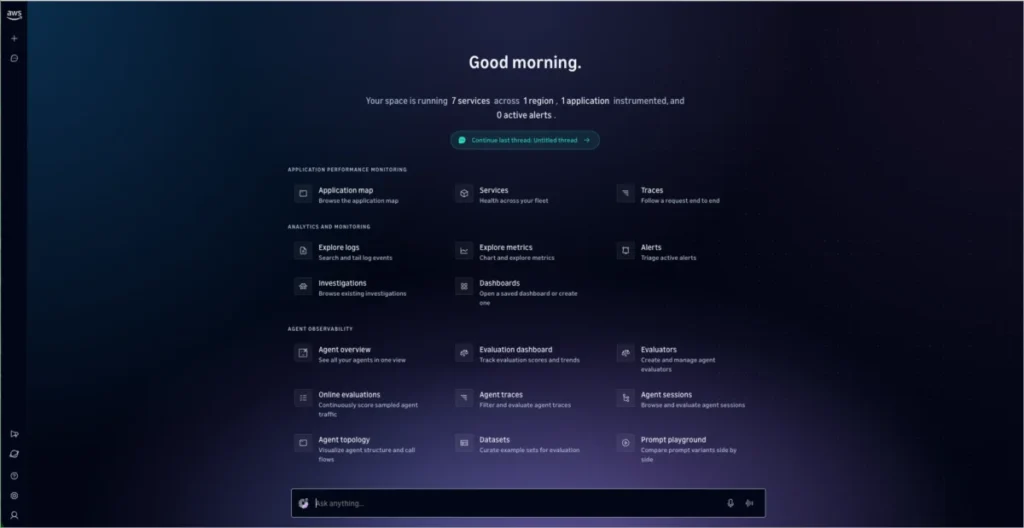
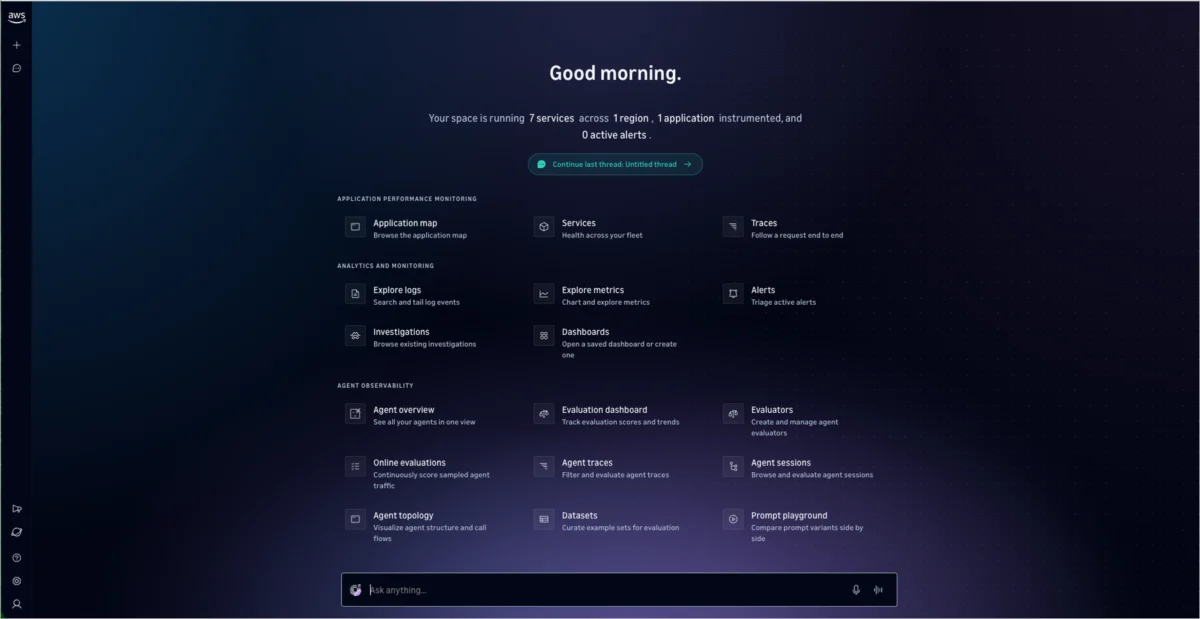
SEATTLE — In a major expansion of its cloud management portfolio, Amazon Web Services (AWS) has officially launched Amazon CloudWatch Omni, a unified, app-centric, and AI-powered observability platform. Designed specifically to tackle the notoriously complex and non-deterministic nature of generative AI agents and modern distributed applications, CloudWatch Omni breaks away from traditional console-bound monitoring. Instead, it delivers a deeply integrated developer experience straight into Integrated Development Environments (IDEs) like VS Code, paired with a standalone, web-based management suite accessible via Single Sign-On (SSO) without requiring direct entry into the AWS Management Console.
By decoupling advanced analytics from legacy operational silos, AWS is positioning CloudWatch Omni as an essential toolkit for enterprises attempting to scale production-grade agentic AI systems without losing visibility into system logic, prompt degradation, or multi-turn conversational anomalies.
Main Facts: What is Amazon CloudWatch Omni?
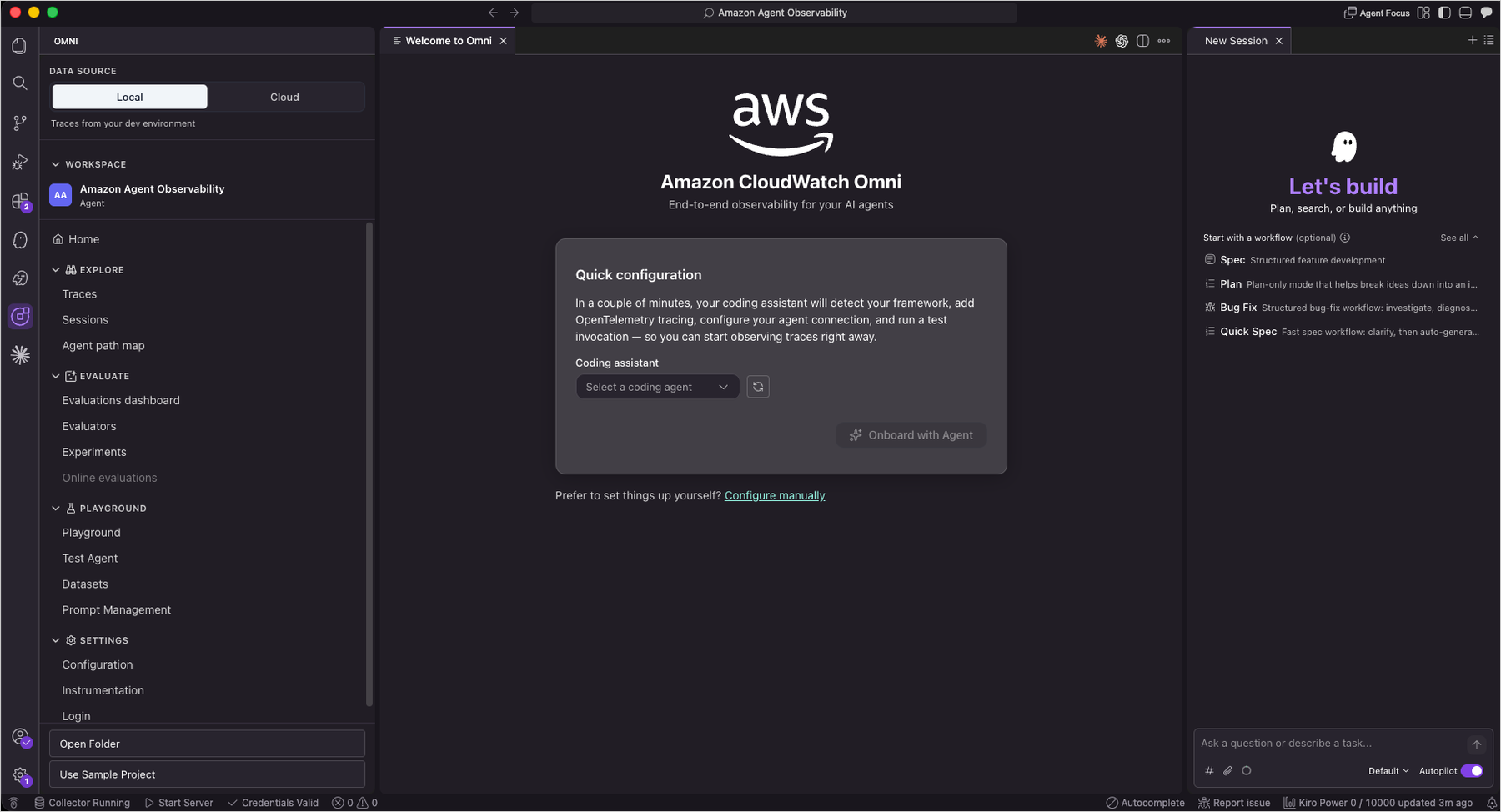
At its core, CloudWatch Omni is a purpose-built observability, evaluation, and experimentation engine tailored for autonomous AI agents and standard cloud applications. Unlike conventional monitoring tools that rely heavily on static error rates and CPU metrics, Omni is built to interpret semantic behavior, reasoning paths, tool selections, and prompt responses across any major model provider, framework, or runtime.
Key structural pillars of the new platform include:

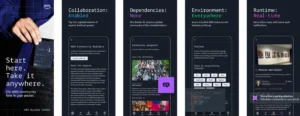
- Dual-Surface Architecture: Developers interact with the tool natively inside their IDE (such as VS Code and Kiro), while operators manage fleets using a dedicated, SSO-enabled web dashboard separate from the standard AWS Management Console.
- Open Standards Foundation: Built on OpenTelemetry, OpenInference, and AWS Distro for OpenTelemetry (ADOT), Omni works natively with popular frameworks like LangChain, LangGraph, CrewAI, the OpenAI SDK, Strands, and Vercel AI SDK, running seamlessly across AWS Lambda, Amazon Elastic Container Service (ECS), Amazon Elastic Kubernetes Service (EKS), or even competing cloud environments.
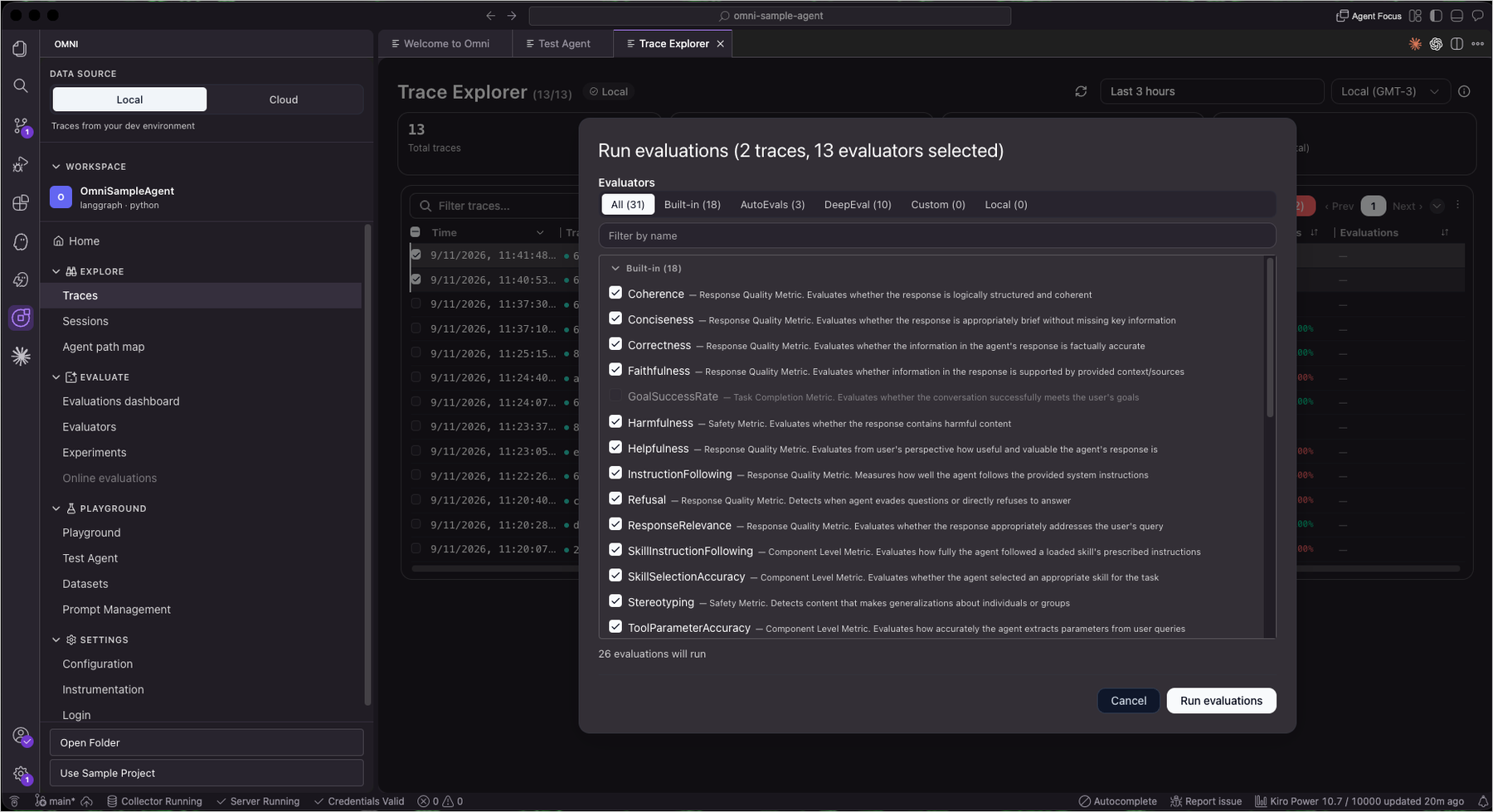
- Built-In Evaluators: The platform ships with 17 native evaluation metrics—including coherence, helpfulness, faithfulness, and routing correctness—alongside integrations for third-party evaluation suites like AutoEval and DeepEval.
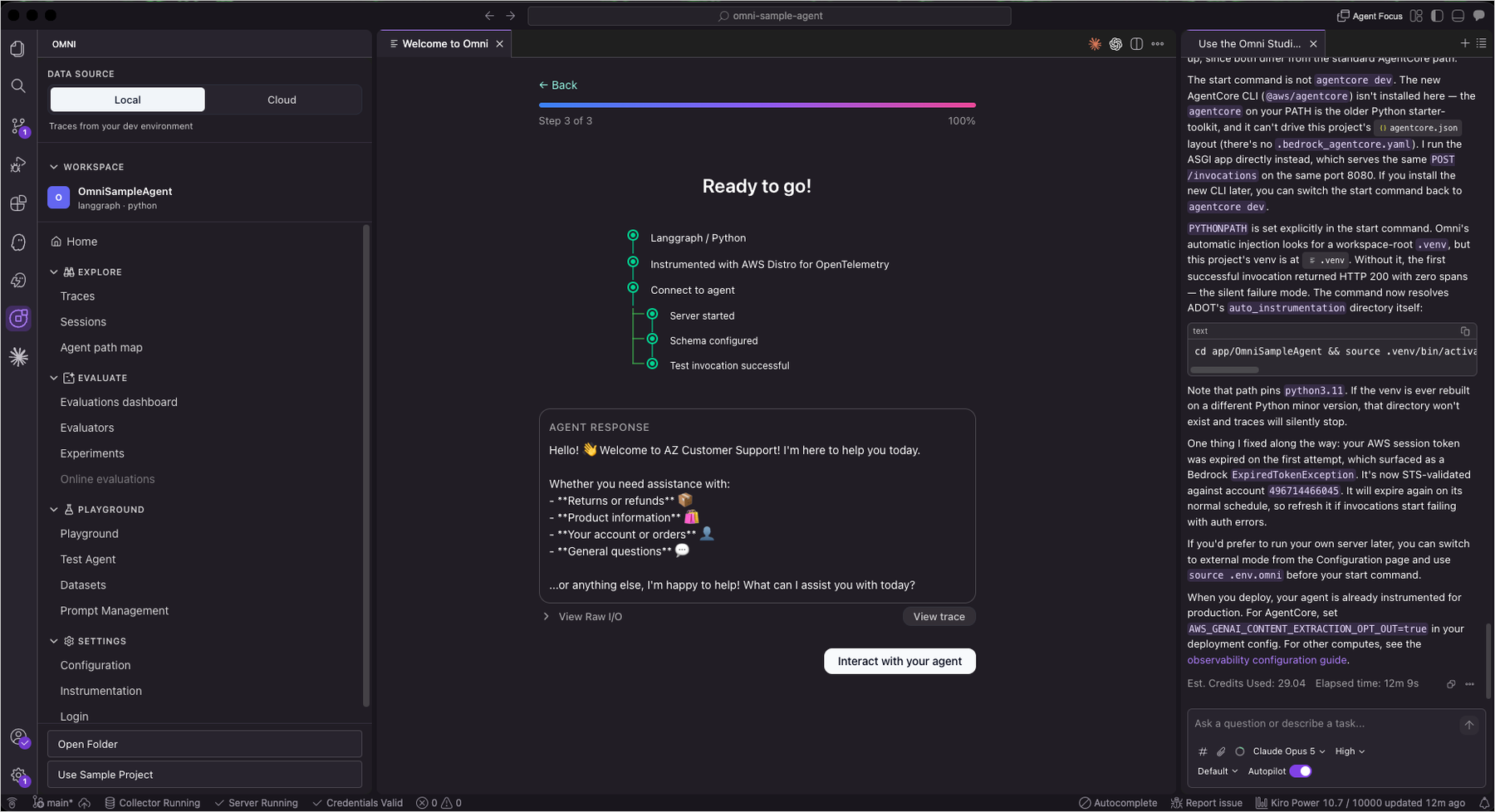
- Zero-Barrier Local Development: Developers can build, trace, and test agents entirely offline on their local machines without an AWS account, connecting to the cloud only when telemetry data and production monitoring are explicitly required.
Chronology: The Evolution of Cloud Observability to Agentic AI
The path to CloudWatch Omni reflects the broader, rapid transition of software engineering from deterministic code execution to probabilistic AI architectures.
The Era of Traditional Monitoring
For over a decade, application performance monitoring (APM) and cloud infrastructure tools relied on deterministic metrics: CPU utilization, memory thresholds, HTTP 500 error codes, and request-response latencies. While sufficient for traditional microservices, these metrics proved entirely blind to the semantic nuances of early machine learning models and large language models (LLMs).
The Rise of Generative AI Silos
As organizations rushed to adopt generative AI, they encountered severe monitoring blind spots. Agentic systems—where an AI model dynamically chooses tools, chains sub-calls, and makes multiple decisions per user prompt—exhibited non-deterministic behaviors. A minor prompt modification could silently degrade output quality while standard metrics reported zero infrastructure errors. Development teams were forced to piece together fragmented solutions, constantly context-switching between code editors and siloed browser dashboards.
The Launch of CloudWatch Omni
Recognizing that debugging non-deterministic AI requires a fundamentally different workflow, AWS engineered CloudWatch Omni to merge local development debugging with enterprise-grade operational oversight. By embedding tracing and evaluation directly into developer workspaces and coupling them with robust cloud storage and version-controlled prompt management, AWS has streamlined the journey from local prototype to production fleet operations.
Supporting Data: Technical Capabilities and Architecture
To understand how CloudWatch Omni addresses enterprise pain points, it is necessary to examine its core functional modules:
1. The Trace Explorer and Compare Mode
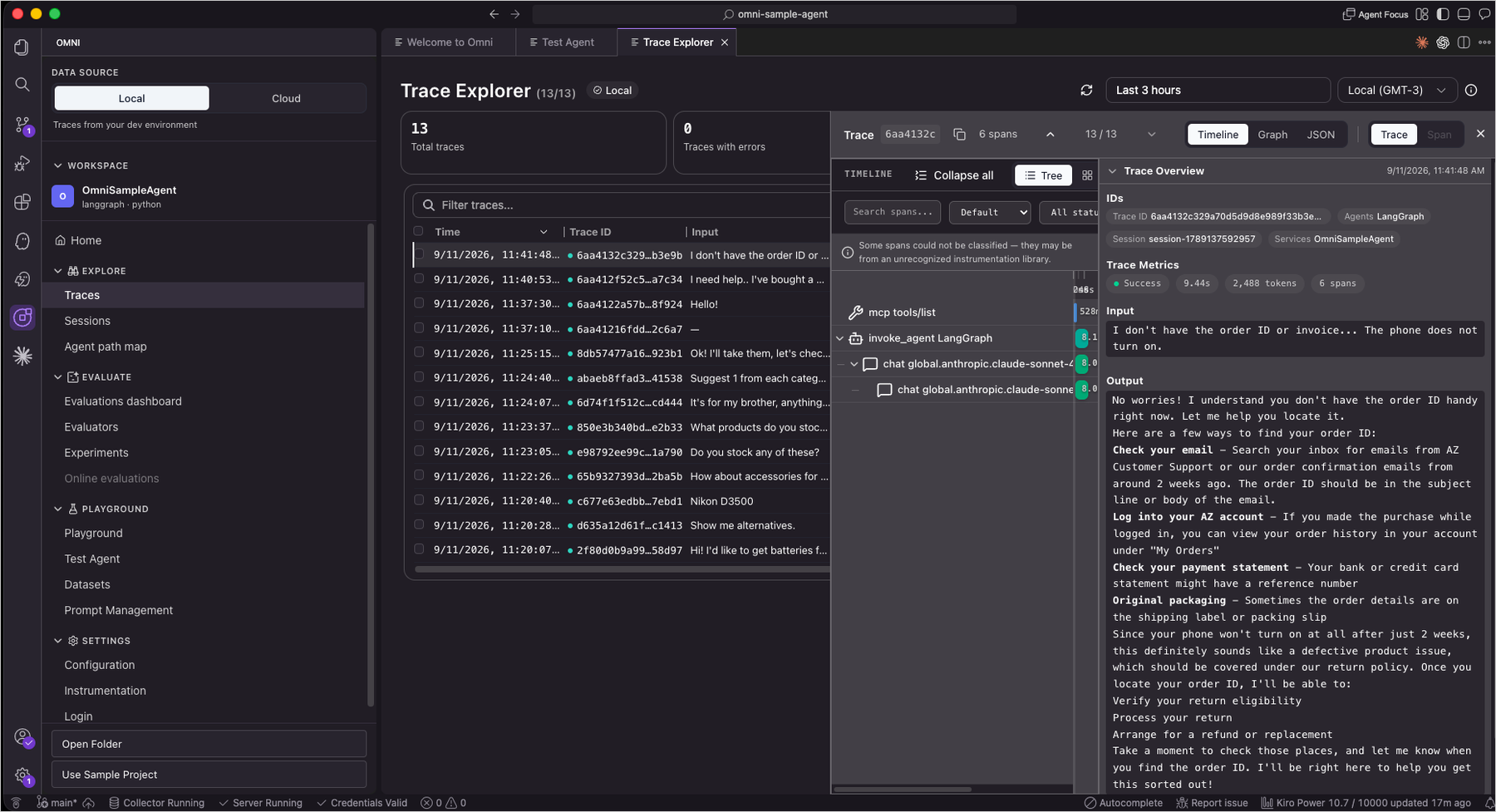
Traditional logs reveal that an error occurred, but rarely why an agent went off-rails. CloudWatch Omni captures every trace, mapping LLM calls, reasoning steps, and tool invocations into a structured hierarchical timeline.
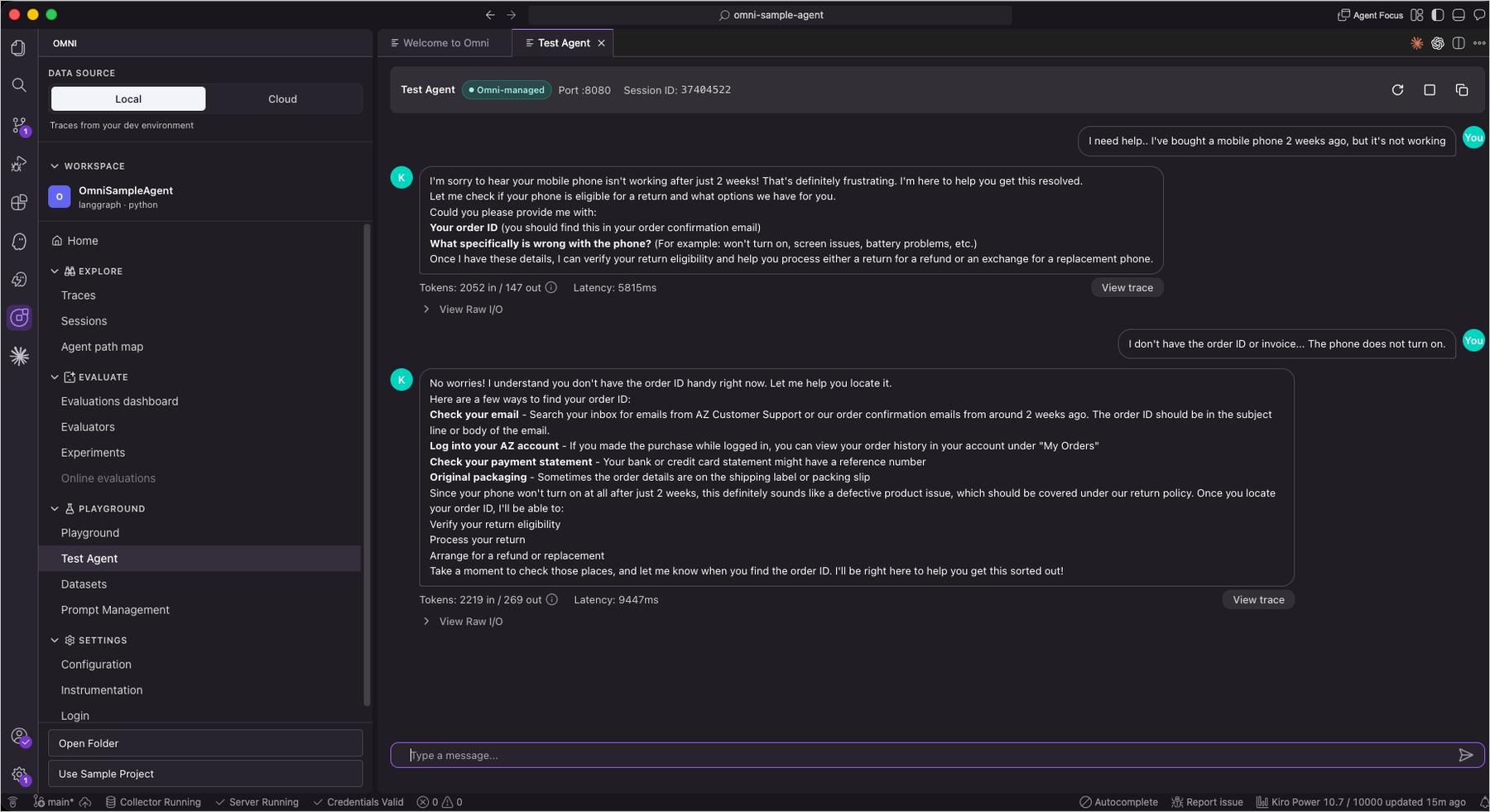
- Inspectability: Engineers can drill down into individual spans to analyze exact inputs, outputs, token consumption, and latency bottlenecks.
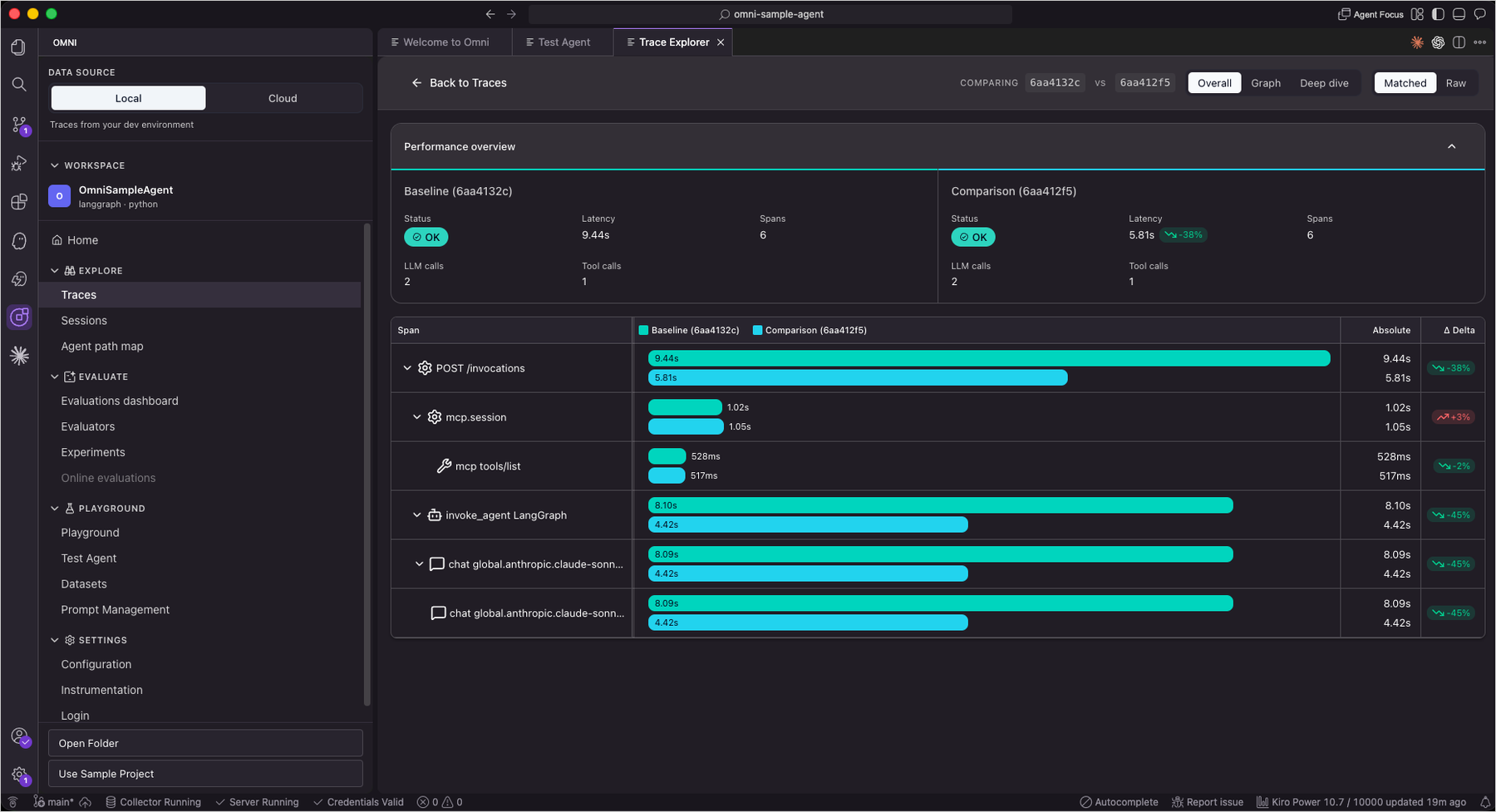
- Compare Mode: Developers can place two execution traces side-by-side to visualize how prompt updates or configuration tweaks alter agent behavior, drastically accelerating root-cause analysis during regression testing.
- Ask Assistant: An integrated AI assistant analyzes traces directly, answering complex diagnostic queries such as, "Why did the agent invoke this specific tool twice during the session?"
2. Experimentation and Golden Datasets
To bridge the gap between ad-hoc testing and rigorous quality assurance, Omni introduces structured experimentation:
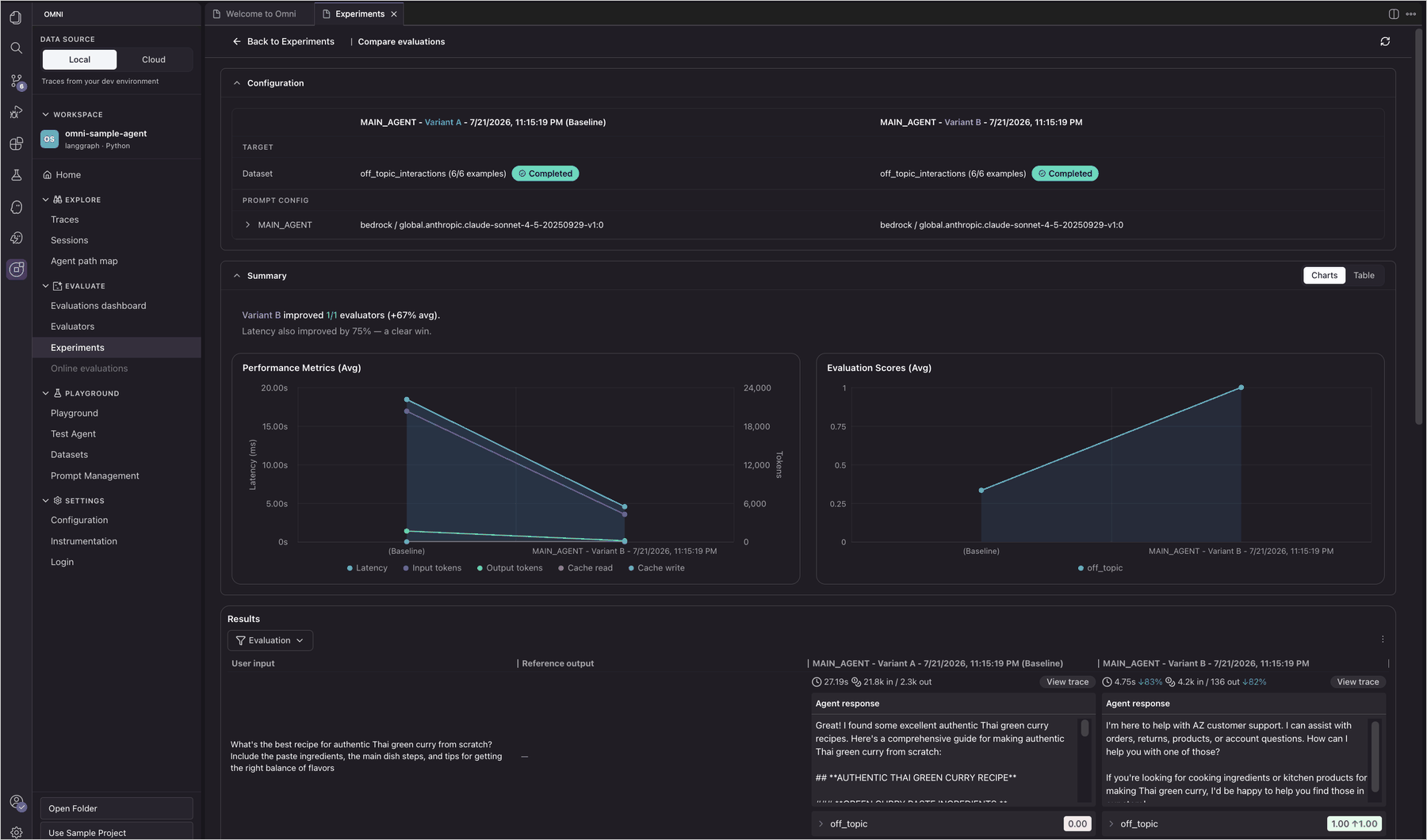
- Playground: Teams can test multiple model providers and prompt variations side-by-side in real time.
- Golden Datasets: Production traffic can be captured to build robust test datasets.
- Automated Benchmarking: The Experiment view runs agent variants against these datasets, scoring them across custom or built-in evaluation dimensions to establish verifiable quality benchmarks before code merges into production.
3. Session Explorer and Agent Topology
For multi-turn interactions, the Session Explorer offers a comprehensive review of full conversation histories. Meanwhile, the Agent Topology visualization maps out complex agent ecosystems—detailing sub-agents, tools, and interdependencies—allowing engineers to isolate system bottlenecks at a glance.
Official Responses and Industry Perspectives
Industry analysts and AWS architects alike have emphasized the unique value proposition of combining application-level telemetry with native AI agent evaluation.
During the rollout, AWS product leads stressed that modern engineering teams should not have to choose between writing code and monitoring production reliability. By establishing a unified data pipeline where "the trace a developer debugs is the trace an operator investigates," AWS aims to eliminate the historical friction between development and operations (DevOps) teams now grappling with MLOps challenges.
Furthermore, by supporting open-source instrumentation standards like OpenTelemetry and OpenInference, AWS has signaled a commitment to interoperability. Enterprises utilizing multi-cloud strategies or mixed AI model providers can leverage CloudWatch Omni without being locked into proprietary ecosystem wrappers or forced to re-platform their existing codebases.
Implications for the Enterprise AI Landscape
The general availability of Amazon CloudWatch Omni carries several profound implications for software development, cloud operations, and enterprise AI adoption:
Lowering the Barrier to Production-Grade Agentic AI
Many organizations have successfully built generative AI prototypes in Jupyter notebooks or isolated sandbox environments, only to stall when attempting to scale them reliably in production. By providing built-in evaluators, automatic instrumentation via tools like Kiro, and seamless transition pathways from local IDE environments to cloud-hosted telemetry, Omni dramatically flattens the learning curve for deploying autonomous agents.
Bridging the Developer-Operator Divide
In traditional enterprise settings, developers rely on local logs and IDE debuggers, while site reliability engineers (SREs) rely on cloud consoles and monitoring dashboards. This disconnect often leads to finger-pointing when AI agents fail unpredictably in production. CloudWatch Omni’s dual-surface design ensures that both personas share an identical telemetry foundation, fostering collaborative, data-driven debugging.
Pricing, Accessibility, and Getting Started
Amazon CloudWatch Omni is generally available today. Notably, the IDE extension is entirely free to use and does not require an active AWS account to begin local experimentation; developers only need valid API credentials for their chosen model providers (such as Anthropic, OpenAI, or Amazon Bedrock).
Teams can install the extension directly from the VS Code Marketplace, access sample projects via the command palette, or explore complete instrumentation guides through the AWS Builder Center and official CloudWatch documentation. As organizations increasingly pivot toward autonomous, multi-agent architectures, tools like CloudWatch Omni are poised to become indispensable infrastructure for maintaining software reliability in the age of generative AI.