ArmSoM Expands the Sige Lineup: Introducing the Sige7s and CM7s
The Single Board Computer (SBC) market is experiencing a significant shift as manufacturers look to balance high-performance computing with cost-effective, specialized designs. ArmSoM, a name that has become increasingly familiar to the Linux community, has officially unveiled its latest offerings: the Sige7s and the CM7s. These new devices signal a strategic pivot toward the RK3588S SoC, a trimmed-down, efficiency-focused sibling of the powerful RK3588 processor.
By offering both a standard SBC form factor and a versatile compute module, ArmSoM is positioning itself to capture both the hobbyist market and the growing sector of embedded industrial design.
Main Facts: What is the Sige7s?
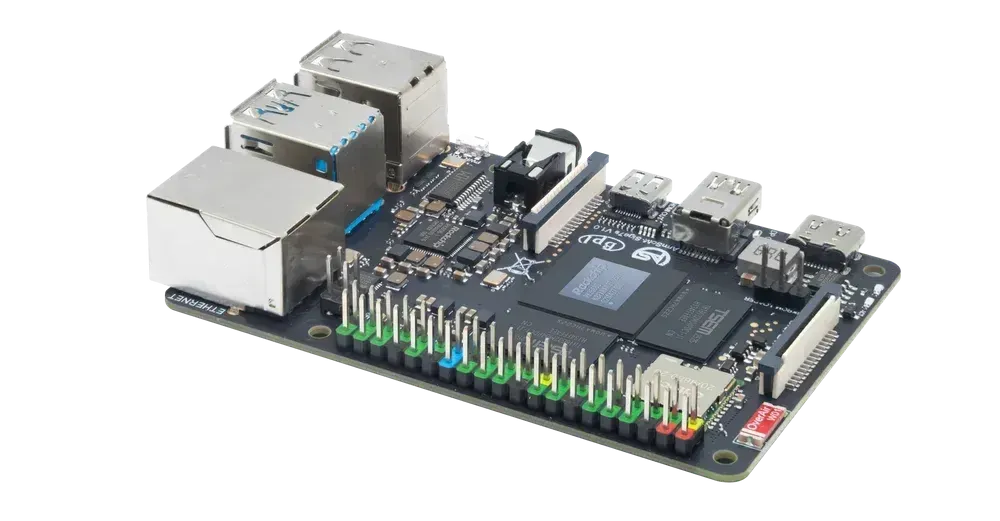
The Sige7s represents a calculated "de-contenting" of the original Sige7. While the original Sige7 was a powerhouse designed for maximum I/O, the Sige7s is built for those who need high-performance compute capabilities without the overhead of massive peripheral bandwidth.
Core Specifications
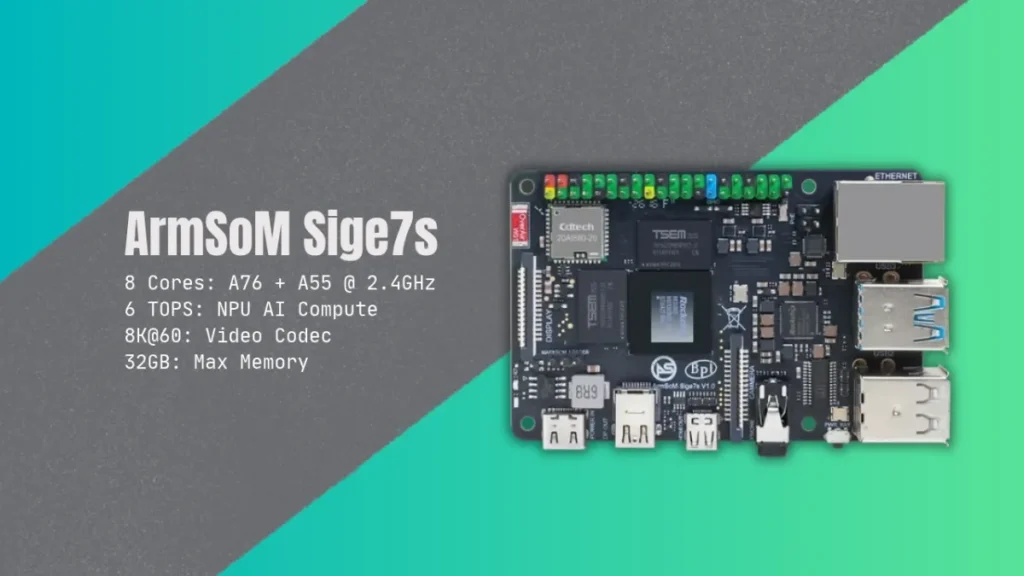
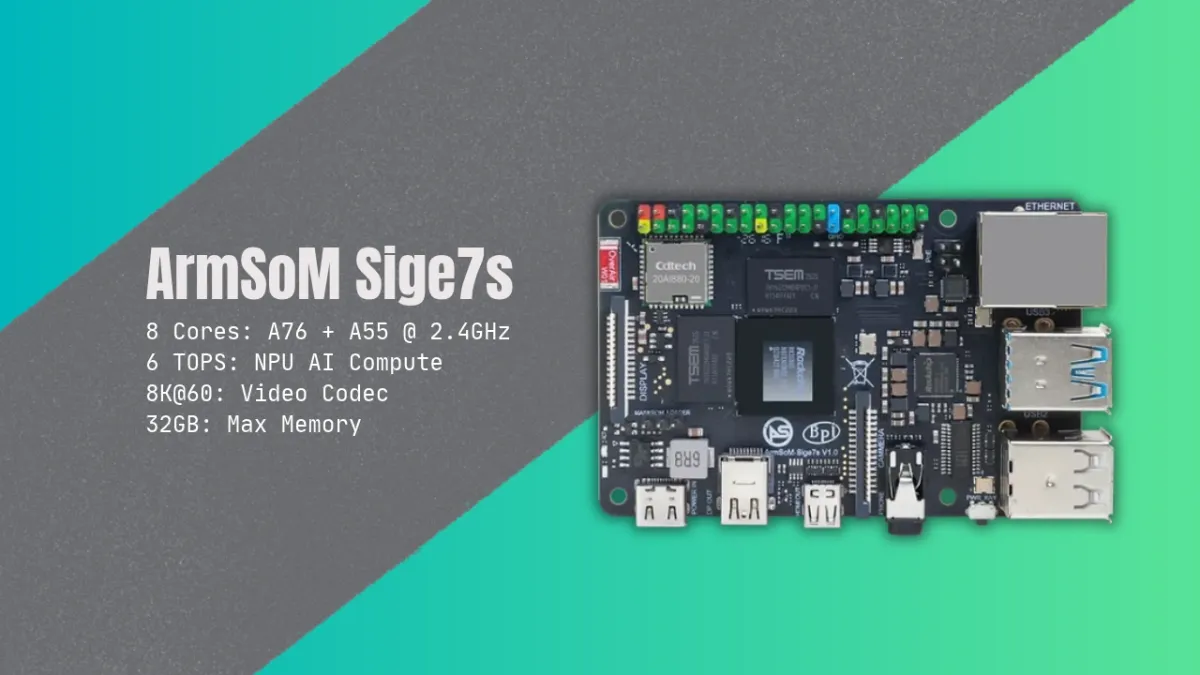
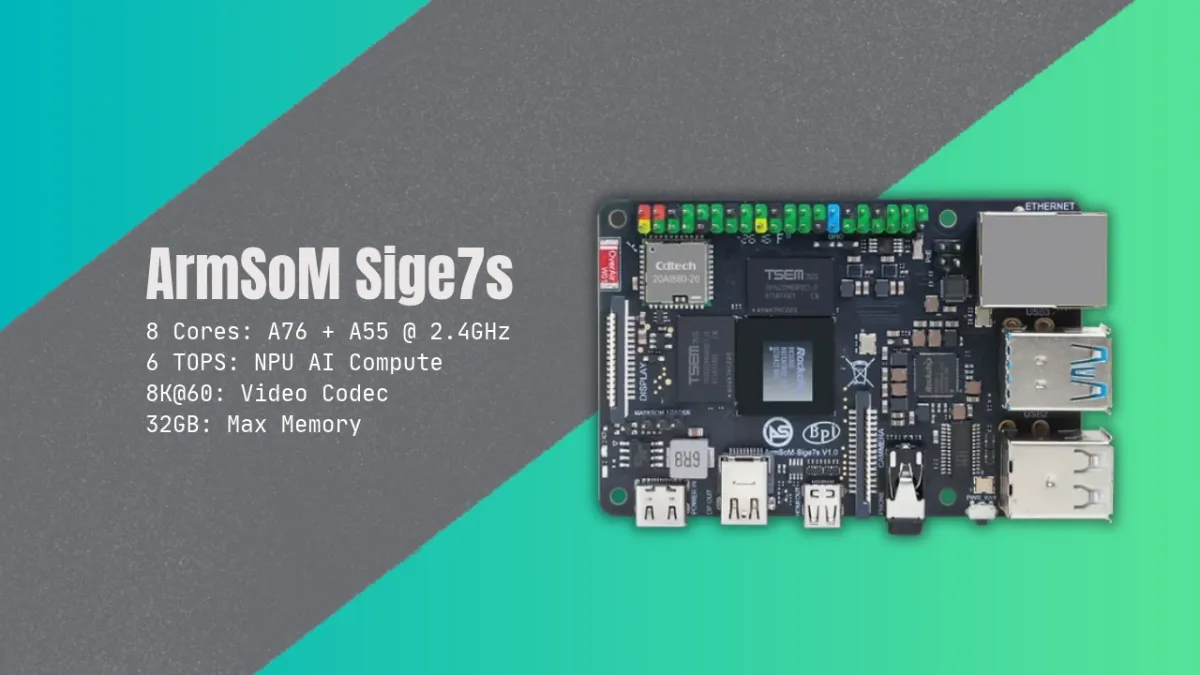
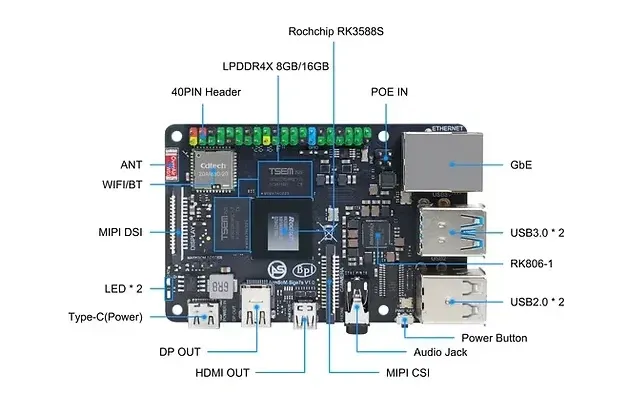
At the heart of the Sige7s is the Rockchip RK3588S. Users receive the same high-tier CPU, the capable Mali-G610 MP4 GPU, and the 6 TOPS NPU found in the more expensive RK3588 variants. However, the "s" suffix brings with it specific hardware trade-offs:
- Peripheral Limitations: The Sige7s omits PCIe 3.0 support, reduces HDMI outputs to a single port, removes HDMI input capabilities, and features a single Gigabit Ethernet controller.
- Power Flexibility: In a major win for versatility, the board accepts a wide 5V to 23V input range, liberating users from proprietary or specific USB-C power adapters.
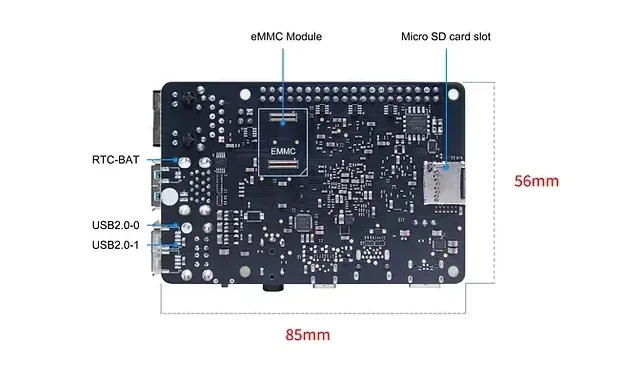
- Storage Innovation: The inclusion of a removable eMMC module is a welcome change, allowing users to upgrade storage or reflash operating systems without the risk of damaging the board’s primary integrated circuitry.
- Media Capabilities: Despite the cost-cutting, the board remains a formidable media center, supporting HDMI 2.1 at 8K@60fps, DisplayPort 1.4 via USB-C, and robust hardware video decoding for H.265/VP9 formats.
For many users, these compromises are not flaws, but rather features. By removing the extraneous lanes and ports, ArmSoM has managed to produce a compact, powerful machine at a more accessible entry price point of $153.
Chronology of Development
The journey to the Sige7s did not happen in a vacuum. It is part of a deliberate expansion of the ArmSoM product family:

- The Early Days (Sige7): The original Sige7 made a splash by offering premium performance, proving that the Rockchip platform could rival more expensive alternatives in the SBC space.
- The Pivot (Sige6): Earlier this year, ArmSoM experimented with the Allwinner SoC in the Sige6, marking a departure from the Rockchip ecosystem to explore different architectural possibilities.
- The Current Iteration (Sige7s/CM7s): With the launch of the Sige7s, ArmSoM has returned to the Rockchip fold, this time focusing on a "compute-first" strategy. This evolution demonstrates the company’s commitment to refining its hardware based on user feedback regarding price-to-performance ratios.
Supporting Data: Understanding the RK3588S Ecosystem
The choice of the RK3588S is critical to understanding the target market for these boards. While the original RK3588 is designed for feature-rich devices like full-fledged desktop replacements or high-end servers, the RK3588S is optimized for space-constrained and cost-sensitive applications.
The Compute Module (CM7s)
For professional engineers and DIY product developers, the CM7s is arguably the more interesting launch. Measuring a mere 55 x 40mm—a form factor comparable to the Raspberry Pi CM5—the CM7s acts as the brain for custom projects.
- Configurability: It supports up to 32GB of LPDDR4/4X RAM and 256GB of eMMC storage.
- Longevity: Perhaps the most vital piece of data for industrial clients is the manufacturing commitment. ArmSoM has pledged to produce the CM7s until at least August 2034. In an industry where components are often discontinued with little notice, this ten-year lifecycle is a massive incentive for companies integrating this chip into long-term commercial products.
- Carrier Board Flexibility: When paired with the CM7s-IO carrier board, developers gain access to a full suite of I/O, including M.2 M-key slots for high-speed NVMe SSDs, multiple USB 3.0 ports, and dedicated MIPI connectors for advanced camera arrays.
Official Responses and Strategic Direction
In discussions regarding the company’s trajectory, it is evident that ArmSoM is leveraging its close relationship with industry partners like Banana Pi. This collaboration has allowed them to share base architectures, which in turn accelerates the development of stable software drivers and community-focused documentation.
One of the most persistent criticisms of smaller SBC manufacturers is the lack of "day one" support and documentation. ArmSoM appears to have taken this to heart. Observers have noted that the quality of documentation for the Sige7s and CM7s is a marked improvement over previous generations. This is a critical factor for adoption; an SBC is only as good as the software support behind it. By prioritizing clearer, more accessible guides, ArmSoM is lowering the barrier to entry for developers who might otherwise be intimidated by the complexities of Rockchip-based Linux boards.
Implications for the Linux and SBC Community
The arrival of the Sige7s and CM7s has several implications for the broader tech landscape:
1. The Death of "Over-Engineering"
For years, the SBC market has been dominated by boards that offer everything but the kitchen sink. By stripping back the peripheral bandwidth, the Sige7s proves that there is a massive appetite for boards that focus on raw compute power rather than superfluous ports. This is a win for efficiency and space-saving.
2. Raspberry Pi Compatibility
By maintaining a 40-pin header that is Raspberry Pi compatible, ArmSoM has effectively tapped into a massive ecosystem of existing HATs, camera modules, and display solutions. This decision minimizes the friction for users looking to migrate from a Raspberry Pi to a more powerful, Rockchip-based system. It acknowledges that the hardware is only part of the puzzle; the accessories are what make the board usable.
3. Industrial Stability
The 2034 production commitment for the CM7s is a significant signal. It suggests that ArmSoM is attempting to move beyond the "hobbyist toy" label and become a legitimate supplier for commercial IoT, digital signage, and edge computing solutions. The inclusion of prepaid customs duties for US-based customers further streamlines the procurement process for professional buyers, removing the uncertainty of unexpected import fees.
4. Pricing and Market Positioning
At $153 for the Sige7s and $179 for the CM7s, the pricing is competitive, though it places them in a premium tier compared to budget-oriented boards. However, when considering the 8K video capabilities, the NPU for AI workloads, and the longevity of the platform, the value proposition remains high.
Final Assessment
The ArmSoM Sige7s and CM7s are not just new pieces of hardware; they are a sign of a maturing ecosystem. By carefully segmenting its offerings—providing a user-friendly, out-of-the-box SBC for the Sige7s and a modular, long-term solution for the CM7s—ArmSoM is addressing the specific pain points of two distinct user groups.
Whether you are a Linux enthusiast looking to build a powerful 8K media server, or an embedded engineer designing a kiosk that needs to last for the next decade, these boards provide a compelling, stable, and well-documented foundation. While the peripheral trade-offs of the RK3588S chip might not satisfy those looking for a workstation-replacement with multiple NVMe drives, for the vast majority of use cases, the Sige7s hits the "sweet spot" of power and price.
As the Linux community continues to demand more power from smaller footprints, ArmSoM has firmly planted its flag as a company that listens to its users, learns from its history, and is prepared to invest in the longevity of its platform. The future of the Sige lineup looks bright, provided the company continues its current trend of improving software documentation and supporting the open-source projects that make these boards run.