TensorFlow Lite Supercharges On-Device AI: XNNPack Integrates Dynamic Range Quantization to Quadruple CPU Performance
SAN FRANCISCO — In a major leap forward for edge computing and machine learning deployment, the TensorFlow team has announced a substantial performance breakthrough for TensorFlow Lite (TFLite). By introducing dynamic range quantization to the Fully Connected and Convolution 2D operators within XNNPack—the default CPU backend for TFLite—developers have successfully quadrupled inference performance compared to single-precision baselines.
This architectural enhancement bridges the historical gap between high-performance execution and broad hardware compatibility. Because CPUs offer the widest reach for machine learning inference across the global device ecosystem, optimizing CPU performance remains a top priority for Google and the broader open-source AI community. With this update, complex, AI-powered features can now run smoothly on older, resource-constrained, and lower-tier mobile and edge devices without requiring specialized hardware accelerators like NPUs or dedicated GPUs.
Main Facts: What is XNNPack Dynamic Range Quantization?
At its core, XNNPack is a highly optimized library of neural network operators designed for various CPU architectures, including ARM, ARM64, x86 (SSE, AVX, AVX512), and WebAssembly. It powers modern flagship processors—such as the Tensor G3 CPU found in the Google Pixel 8 and the Snapdragon 8 Gen 2 in the OnePlus 11.
Previously, developers working with TFLite faced a strict dilemma when optimizing models for CPUs:

- Full Integer Quantization: Weights and activations are stored as signed 8-bit integers. While efficient, this method requires a representative calibration dataset during conversion, is prone to accuracy degradation if the dataset is unrepresentative, and often fails entirely on models containing unsupported operators.
- Floating-Point Inference: Utilizing half-precision (
fp16) or single-precision (fp32) floating-point formats. While maintaining high accuracy, these methods carry heavy computational and memory bandwidth overheads.
Dynamic Range Quantization resolves this trade-off. During model conversion, the weights for Fully Connected and Convolution layers are quantized to 8-bit integers, drastically reducing model size. However, unlike full integer quantization, all other tensors remain in fp32 format.
During runtime inference, floating-point layer activations are dynamically converted to 8-bit integers immediately before execution. The quantization parameters—specifically the zero point and scale for each row of the activation tensor—are computed on-the-fly based on the observed range of activations. This dynamic calculation maximizes accuracy by allowing activations to fully utilize all 8 available bits. Furthermore, the final output of these operators returns to a 32-bit floating-point format. The result is a methodology that captures most of the performance and storage benefits of full integer quantization while retaining the high overall accuracy of floating-point models.
Chronology: The Evolution of TFLite CPU Optimization
The journey toward seamless, high-speed on-device machine learning has been marked by iterative engineering milestones:
- 2018 (The FP16 Era): The launch of the Google Pixel 3 marked an early hardware turning point, introducing native
fp16support. This halved the storage footprint of floating-point values compared tofp32, though CPU instruction efficiency remained limited by hardware maturity. - Late 2023 (Half-Precision Breakthrough): The TensorFlow team published benchmarks demonstrating that half-precision inference could double on-device performance on modern mobile hardware equipped with native
fp16support. - Early 2024 (Integration into Core Products): XNNPack optimizations began silently powering heavy enterprise and consumer features, laying the groundwork for advanced capabilities in Google Meet, Chrome OS audio denoising, and on-device features running via Gemini and MediaPipe.
- Mid 2024 (The XNNPack Dynamic Range Breakthrough): The engineering team officially integrated dynamic range quantization directly into XNNPack’s Fully Connected and Convolution 2D operators.
- TensorFlow 2.17 and Beyond: Dynamic range-quantized XNNPack inference is enabled by default in prebuilt binaries starting with TensorFlow 2.17, making the technology instantly accessible to millions of global developers.
Supporting Data: Benchmarking Performance and Accuracy
To validate the real-world impact of the new operators, the engineering team benchmarked multiple public computer vision and generative models across various hardware configurations, notably using the Google Pixel 8.

Performance Comparisons
In standard multi-model evaluations, models converted using dynamic range quantization frequently rivaled—and occasionally exceeded—the execution speeds of fully integer-quantized equivalents. Most notably, Stable Diffusion’s massive diffusion model—which previously could not even be converted using full integer quantization due to unsupported operator constraints—successfully ran up to 6.2 times faster than the original fp32 baseline model.
Counterintuitively, profiling revealed that dynamic range quantization occasionally outperformed full integer quantization. While full integer math should theoretically execute faster, models running purely on integer arithmetic sometimes suffered from quantization artifacts. If the ratio of input and output scales fell outside optimal operational bounds during static conversion, the hardware was forced down less efficient execution paths. Dynamic range quantization avoids this pitfall by recalculating activation ranges dynamically at runtime.
Mixed-Precision Validation
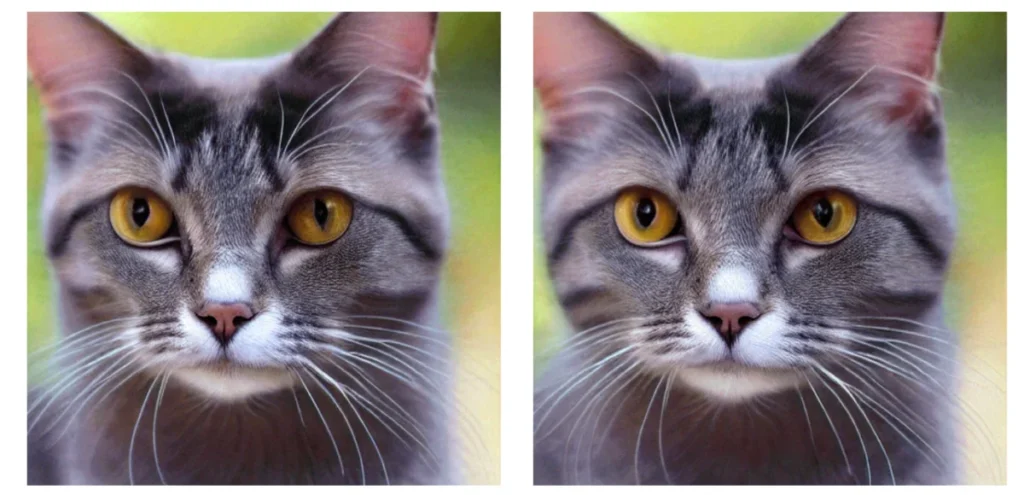
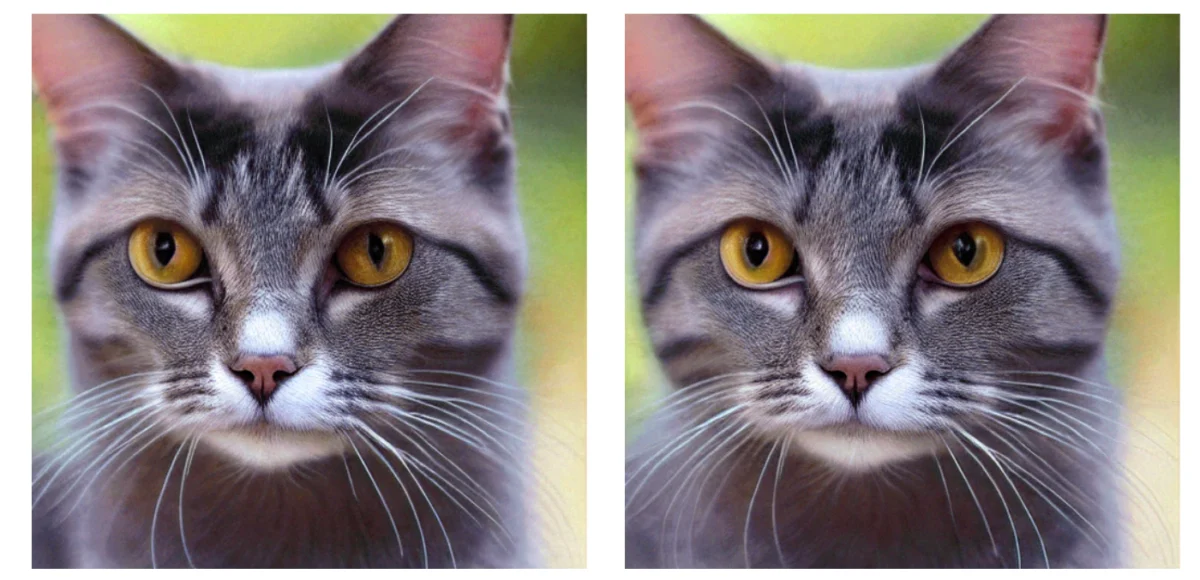
To ensure that performance gains did not come at the cost of output fidelity, researchers conducted side-by-side visual comparisons using Stable Diffusion. By pairing dynamic range quantization with fp16 activations for compute-intensive floating-point operators (such as Batch Matrix Multiply and Softmax), developers leveraged hardware vectorization to process twice as much data per CPU instruction.
When generating images from identical text prompts and random number generator seeds, the output generated via fp16 mixed-precision inference was visually indistinguishable from the traditional fp32 baseline. Both outputs accurately rendered complex subjects (such as detailed portraits of cats) with zero perceptible loss in texture, lighting, or structural integrity.

Official Responses and Engineering Insights
Software Engineer Alan Kelly, writing on behalf of the TensorFlow team, emphasized the accessibility and practical implications of the update for developers worldwide:
"Full integer quantization is hard; converting models is difficult, error-prone, and accuracy is not guaranteed. The representative dataset must be truly representative to minimize quantization errors. Dynamic range quantization offers a compromise… [It is] a game changer for on-device performance."
The development team also formally acknowledged the contributions of key engineers Frank Barchard and Quentin Khan, whose collaborative efforts were instrumental in bringing high-performance dynamic range quantization inference from experimental branches into production-ready TFLite and XNNPack binaries.
Implications for Developers and the Broader AI Ecosystem
The widespread rollout of XNNPack’s dynamic range quantization carries profound implications for the software engineering and artificial intelligence landscapes:

- Lower Barriers to Entry: Because dynamic range quantization requires no representative calibration dataset—and does not fail due to unsupported operators during conversion—non-expert developers can easily optimize complex models without deep statistical knowledge of quantization theory.
- Prolonged Device Lifespans: By quadrupling CPU inference speeds, computationally heavy features like generative image synthesis, real-time audio noise suppression, and local natural language processing can now be pushed down to legacy hardware. Consumers do not necessarily need to purchase a brand-new, NPU-equipped flagship phone to run modern AI features locally.
- Privacy and Latency Benefits: Shifting heavy workloads from cloud servers to local CPUs reduces round-trip network latency to zero and enhances user privacy, as sensitive audio, visual, and textual data never leaves the local device.
- Enterprise Adoption: Already trusted to power foundational experiences across Gemini, Google Meet, and Chrome OS, this open-source architecture gives independent developers enterprise-grade tools to build responsive, offline-capable AI applications.
How Developers Can Get Started
Integrating the new optimization pipeline requires minimal friction:
- Conversion: Enable dynamic range quantization during model conversion by setting the standard flag:
converter.optimizations = [tf.lite.Optimize.DEFAULT]. Models already converted using dynamic range quantization do not require reconversion. - Execution: Upgrade to TensorFlow 2.17 (or utilize current nightly builds), where dynamically quantized XNNPack inference is enabled by default in prebuilt binaries.
As edge intelligence continues to mature, optimizations like XNNPack’s dynamic range quantization ensure that powerful machine learning remains fast, accessible, and universally deployable across billions of consumer CPUs worldwide.