AWS Weekly Roundup: Expanding Latin American Communities and Launching the New Athens Local Zone


By AWS News Desk
Published: August 10, 2026
Main Facts
Amazon Web Services (AWS) has continued its strategic global expansion and community engagement initiatives, highlighted by a major regional tech gathering in São Paulo, Brazil, and the official launch of a new AWS Local Zone in Athens, Greece.
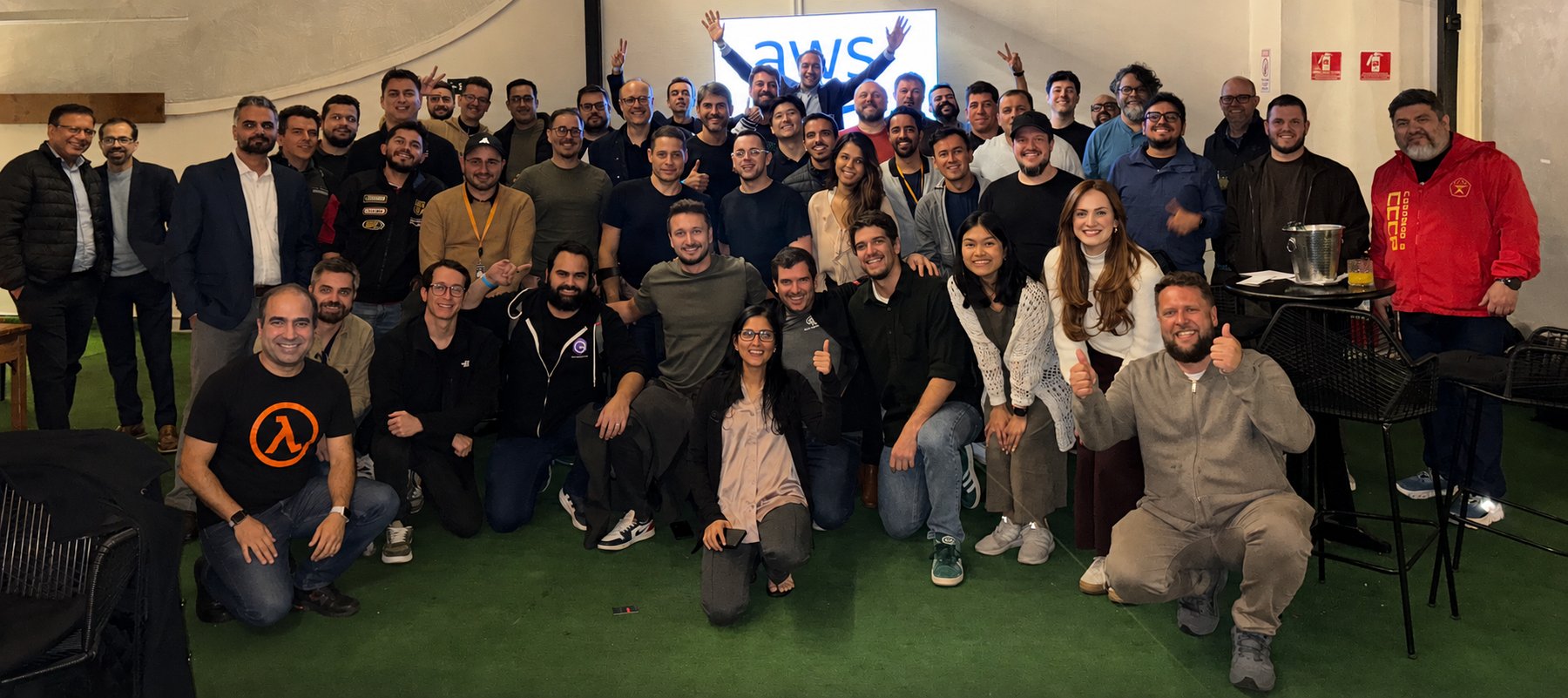
The São Paulo event brought together technical builders, developers, and industry partners from across Latin America for three days of immersive workshops, architectural deep-dives, and networking. The summit underscored AWS’s ongoing commitment to fostering localized technical ecosystems where software architects can collaborate face-to-face.
Simultaneously, AWS announced a major infrastructure milestone in Europe, the Middle East, and Africa (EMEA): the opening of the new AWS Local Zone in Athens. This state-of-the-art facility is engineered to bring cloud computing infrastructure directly into densely populated metropolitan and industrial hubs. Crucially, the Athens Local Zone is only the second Local Zone in the EMEA region to offer native support for Amazon Simple Storage Service (Amazon S3) and Amazon Elastic Block Store (Amazon EBS) Local Snapshots. This capability allows enterprises and public sector organizations to store, process, and protect sensitive data strictly within Greece’s borders, aligning seamlessly with stringent local data residency laws and European regulatory frameworks.
The launch delivers high-performance infrastructure—including Amazon EC2 C7i, M7i, and R7i instances, alongside Amazon Elastic Container Service (Amazon ECS)—capable of supporting ultra-low, single-digit millisecond latency. These technical features are tailor-made for latency-sensitive modern applications, such as real-time gaming, financial trading platforms, healthcare data management, and broadcast-quality media production.
Chronology of Events
The past week’s developments unfolded across two continents, bridging community-driven collaboration in the Southern Hemisphere with hard-infrastructure deployment in Southern Europe.

- Early August 2026 (São Paulo, Brazil): A three-day regional technical summit convened builders from all corners of Latin America. Attendees engaged in hands-on whiteboarding sessions, architecture clinics, and cross-industry dialogues. The event highlighted the sheer velocity of cloud adoption in Latin America and the vital role of physical meetups in bridging disparate developer communities.
- Mid-July to Early August 2026 (Athens, Greece): Following rigorous engineering validation and network integration phases, AWS officially unlocked the Athens Local Zone for general availability. By embedding compute and storage resources physically inside Greece, AWS expanded its footprint to cater directly to organizations requiring ultra-fast response times and strict in-country data handling.
- Present Week: AWS synthesized these updates into its ongoing Weekly Roundup series, encouraging global developers to leverage the new localized infrastructure while engaging online through platforms like the AWS Builder Center.
Supporting Data and Technical Architecture
The deployment of the Athens Local Zone represents a sophisticated engineering feat, designed to extend the AWS global backbone directly into local telecommunications carrier hotels and metropolitan data centers.
Key Technical Specifications of the Athens Local Zone:
- Compute Instances: Deployment of modern, high-performance Intel-powered Amazon EC2 instances, specifically C7i (compute-optimized for high-load workloads), M7i (general-purpose for balanced workloads), and R7i (memory-optimized for heavy databases and analytics).
- Storage and Data Protection: Integration of Amazon S3 (featuring the One Zone-Infrequent Access storage class) and Amazon EBS Local Snapshots. This marks a significant milestone, as it is only the second Local Zone in the entire EMEA region equipped with this level of local snapshot and object-storage integration.
- Container Orchestration: Full native support for Amazon ECS, allowing development teams to deploy and scale containerized microservices locally without routing traffic back to a distant AWS Region.
- Latency Profile: Achieves predictable single-digit millisecond latency for end-users residing in and around the Greek capital.
- Geographic and Regulatory Reach: Designed explicitly to help Greek enterprises, multinational corporations operating locally, and government bodies comply with strict European data sovereignty mandates while bypassing the capital-intensive requirement of building private data center facilities.
Official Responses and Industry Perspectives
Leadership and community advocates within the AWS ecosystem have emphasized that technology is ultimately defined by the people who wield it. Reflecting on the Latin American builders’ summit in São Paulo, organizers noted that despite the abundance of asynchronous digital collaboration tools, physical proximity remains irreplaceable for sparking architectural breakthroughs.
"What struck me most wasn’t any single session, it was the energy of a technical community that so rarely gets to be in the same room," shared an AWS technical lead who participated in the São Paulo event. "People traded architecture ideas over coffee, sketched out solutions on whiteboards, and left with a longer list of things to try than they arrived with. It’s a good reminder that, for all the tooling we build, the community around it is what makes the technology stick."
Regarding the infrastructure expansion in Greece, AWS spokespersons reiterated that the Athens Local Zone directly addresses long-standing customer friction points. Enterprises across regulated industries—such as banking, healthcare, and telecommunications—have historically struggled to balance the high-performance demands of modern cloud-native architectures with strict regional data residency requirements. By placing AWS infrastructure a stone’s throw from local users, the company aims to eliminate this compromise.
Furthermore, community leaders are directing developers to tap into global resources such as the AWS Builder Center to maintain momentum, share localized solutions, and coordinate upcoming virtual and in-person developer gatherings.
Implications for Businesses and Developers
The convergence of community empowerment in Latin America and hard-infrastructure deployment in Greece signals several broader implications for the global cloud computing landscape:
1. Acceleration of Edge-Dependent Workloads
Industries requiring real-time decision-making—such as fintech high-frequency trading, interactive media streaming, and clinical healthcare systems—stand to gain immensely. By pushing services like EC2 and ECS into local zones, enterprises can execute compute-heavy machine learning inferences and data processing locally before synchronizing back to core AWS Regions.
2. Streamlining Compliance and Data Sovereignty
As regulatory frameworks surrounding data privacy (such as GDPR and national data localization laws) tighten globally, enterprises are under pressure to prove where data rests and how it is processed. The Athens Local Zone provides a turnkey solution for Greek entities to harness hyperscale cloud capabilities while guaranteeing that primary data storage and snapshots remain geographically confined.
3. Fostering Regional Tech Hubs
Infrastructure investments inevitably catalyze local digital economies. By establishing low-latency AWS nodes in vibrant markets like Athens and nurturing developer talent pools in regions like Latin America, AWS is effectively decentralizing technological innovation. Smaller startups and independent software vendors (ISVs) in these areas can now build enterprise-grade, highly available applications with a fraction of the infrastructure overhead previously required.
As AWS continues its Weekly Roundup cadence, the broader trajectory remains clear: pairing hyper-local infrastructure deployments with deeply engaged, collaborative developer communities is the cornerstone of modern cloud adoption.