Beyond the Blueprint: How Young Makers are Redefining Failure Through a 3D-Printed Tactile Zoo
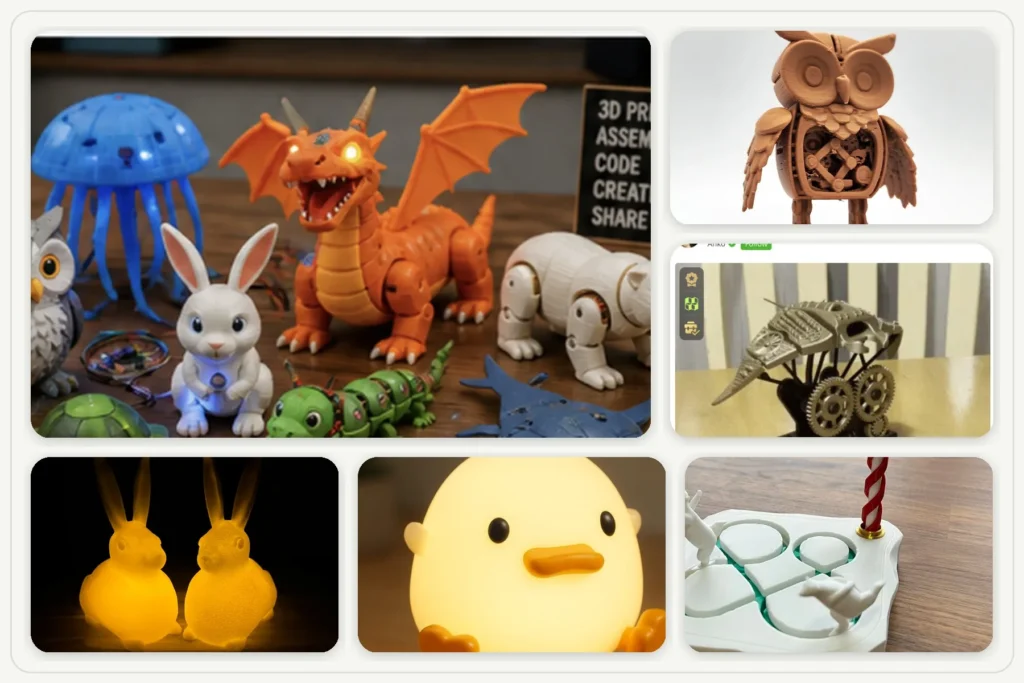
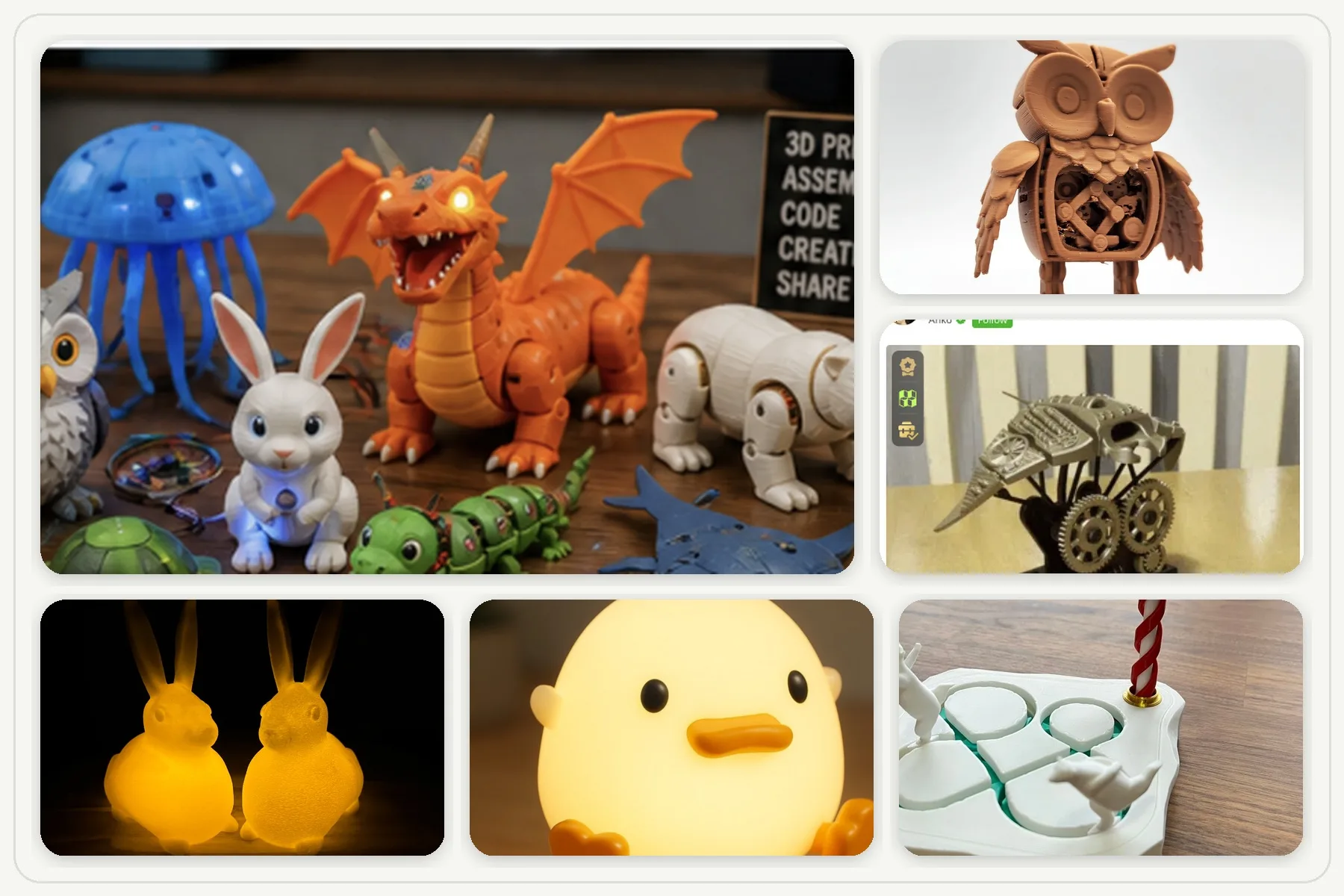
SAN FRANCISCO — In a workshop humming with the rhythmic drone of additive manufacturing and the excited chatter of children, a revolution in education is quietly taking shape. Eschewing the polished, Instagram-ready perfection that so often dominates modern technology showcases, a group of eight- to thirteen-year-olds is preparing to unveil something refreshingly raw: a fully interactive, tactile zoo populated by more than 20 robotic animals.
Complete with blinking LED eyes, whirring motors, intricate gear systems, and responsive push-buttons, these creatures are impressive feats of engineering for makers of any age. Yet, what makes this exhibit stand out isn’t just the final product. When the young innovators take their creations to the upcoming Maker Faire Bay Area, pride of place will be given not to the successes, but to the graveyards of plastic: warped prints, snapped appendages, melted gearboxes, and abandoned prototypes.
By deliberately putting their failures on display, these children are challenging the modern cultural narrative around mistakes. In doing so, they are pioneering a pedagogical framework that turns technical frustration into a masterclass in resilience, iterative design, and creative problem-solving.
Main Facts: The Tactile Zoo Project
The project centers on the creation of a hands-on, tactile zoo where visitors are not only permitted to touch the exhibits but are actively encouraged to press buttons, flip switches, and pry open the robotic animals to inspect the wiring and mechanics within.
Key Elements of the Exhibit:
- The Creators: A cohort of children aged 7 to 13 working collaboratively under mentorship.
- The Menagerie: Over 20 robotic animals, ranging from realistic fauna to entirely mythical or invented beasts.
- The Technology: A blend of 3D-printed enclosures housing modular electronics, including servo motors, metal gears, WS2812 LED matrices, and compact microcontroller boards like the Arduino Nano Matter.
- The Core Philosophy: Radical transparency in the design process, highlighting the trial-and-error methodology through the public exhibition of failed prints alongside finished pieces.
- The Venue: The upcoming Maker Faire Bay Area, where attendees can engage directly with the young creators to discuss technical roadblocks and solutions.
Unlike traditional museum displays encased in protective glass, this zoo invites tactile engagement. It demystifies technology, making the inner workings of robotics accessible to novices while celebrating the gritty, unglamorous reality of invention.
Chronology: From Concept to Completed Menagerie
The journey from a vague mental image to a functioning, motorized robotic animal is rarely linear. Documented extensively on the makers’ project portal, the chronology of the tactile zoo reveals an intensive process of conceptualization, trial, error, and refinement.
Phase 1: Conceptualization and Behavioral Design
The project begins with imagination. Each young maker selects an animal—some choose familiar creatures like armadillos or cats, while others invent fantastical beasts. Crucially, the children do not just design static shapes; they must define behavioral parameters. Will the creature roll into a ball? Will its jaw snap shut when a button is pressed? Will its spine undulate using a series of interlocking gears?
Once the behavioral goal is established, the children choose their workflow. Some model their creatures entirely from scratch using Computer-Aided Design (CAD) software. Others source existing 3D models from online repositories, hacking and modifying them—slicing bodies in half, hollowing out torsos, and redesigning internal architecture to carve out precise chambers for microcontrollers and battery packs.
Phase 2: The Prototyping Labyrinth
Once a digital model is prepared, it is sent to the 3D printer. This is where the true crucible of the project begins.
Consider the case of "Plate the Armadillo," one of the standout creations in the menagerie. The behavioral goal was deceptively simple: Plate needed to roll into a tight, defensive ball upon command. Achieving this mechanical articulation, however, required 11 distinct printing iterations.
- Print #1–3: The initial designs suffered from severe structural rigidity. The joints were too tight, preventing the internal servo motor from achieving torque, resulting in stalled gears and stripped teeth.
- Print #4–7: Adjustments were made to tolerances, but thermal contraction reared its head. The plastic cooled unevenly, causing the shell halves to warp and refuse to snap together smoothly.
- Print #8–10: Internal wire routing proved problematic. Wires kept snagging on the rotating axle, shearing off connections mid-movement. The children had to redesign the internal chassis to include dedicated wire-management channels.
- Print #11: Success. With optimized wall thickness, properly calibrated joint clearances, and an off-axis motor mount that balanced torque distribution, Plate finally rolled into a seamless ball.
Every failed attempt served as a diagnostic lesson. The children learned to read the physical language of their failures: a warped base indicated a drafty room or uncalibrated bed temperature; a snapped hinge pointed to insufficient wall perimeters; a misaligned motor mount revealed shortcomings in spatial planning within the CAD environment.
Supporting Data: Hardware, Modularity, and Architecture
To ensure that other young hobbyists and educators can replicate or adapt the project, the creators have documented the underlying hardware stack. The project relies on accessible, modular components that bridge the gap between mechanical design and electronic automation.
The Electronics Ecosystem
- Motion Control: To manage movement, the children utilized high-torque servo motors equipped with metal gears rather than fragile plastic alternatives. These are capable of enduring the repetitive stress of curious hands pulling and pushing at the Maker Faire.
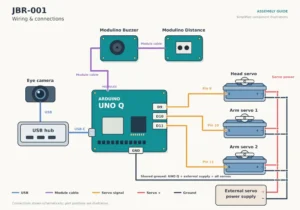
- Servo Management: Managing multiple limbs and interactive elements required robust routing. Using a specialized shield for controlling RC servos paired with an Arduino board, the makers could synchronize complex sequential movements—such as a robotic bird flapping its wings while simultaneously blinking LED eyes.
- Lighting Effects: Visual feedback is driven by WS2812 LED matrices. These individually addressable light strips offer endless color possibilities, allowing creatures to glow, pulse, or change colors based on user interactions.
- Processing Core: The logic and connectivity are managed by compact, powerful boards such as the Arduino Nano Matter. These tiny microcontrollers fit easily inside the hollow bellies of smaller animals while providing ample processing power for basic sensor inputs and motion scripts.
The Economics of Iteration
While exact financial figures for the project’s R&D phase are proprietary to the workshop logs, the material cost of failure is an important metric in educational makerspaces. By utilizing affordable filaments (such as PLA) and open-source hardware, the project demonstrates that robust prototyping does not require industrial budgets. However, it does require a tolerance for wasted material—a cost that the organizers view as a vital investment in human capital rather than financial loss.
Official Responses and Perspectives
The pedagogical approach of the tactile zoo has drawn enthusiastic commentary from educators, technologists, and child development experts who see it as a welcome antidote to modern educational pressures.
"We live in an era of highlight reels," notes a lead coordinator behind the project documentation portal. "Children are constantly exposed to polished final products—whether it is a flawless video game, a perfect digital render, or a gleaming commercial robot. When they try to build something themselves and it fails on the first try, they assume they lack innate talent. By forcing failure out of the shadows and putting it on exhibition, we normalize the messy reality of creation."
Pedagogical researchers emphasize that traditional schooling often penalizes error, framing mistakes as infractions rather than inquiries. In contrast, the makerspace environment reframes the error as data.
"When a 9-year-old spends hours troubleshooting why a 3D print detached from the print bed, they aren’t just learning about thermal adhesion," explains an affiliated STEM educator. "They are developing an executive function. They are learning to isolate variables, form hypotheses, test adjustments, and manage frustration. That is a meta-skill that transcends engineering."
The young makers themselves express a surprising shift in perspective regarding their work. Far from being demoralized by broken parts, several participants noted a sense of pride in their scrap piles.
"At first, when a print failed, I wanted to throw it in the trash," shared one 11-year-old participant. "Now, I look at the broken pieces to figure out what went wrong. Sometimes the failed prints look cooler than the real animals anyway."
Implications: Changing the Future of Maker Education
The implications of the tactile zoo project extend far beyond a single exhibit at the Maker Faire Bay Area. They point toward a broader evolution in how technical education, problem-solving, and resilience are taught to the next generation.
1. Dismantling Perfectionism in STEM
Anxiety and perfectionism are rising concerns among children and adolescents. The pervasive pressure to achieve flawless academic and creative results can lead to paralyzing fear of failure. By publicly celebrating their mistakes, these young makers are engaging in a form of therapeutic exposure therapy for creators. They demonstrate that expert engineers do not get things right the first time; they simply get better at recovering from being wrong.
2. Democratizing Technology Through Transparency
By allowing visitors to physically open the animals, inspect the wiring, and handle the internal components, the project strips away the intimidating aura of "black box" technology. Too often, modern consumer electronics are sealed units designed to be discarded rather than understood. This project teaches children that technology is not magical or impenetrable—it is modular, understandable, and entirely open to modification, repair, and reinvention.
3. Institutionalizing the Iterative Mindset
As educational institutions increasingly adopt makerspaces and STEAM (Science, Technology, Engineering, Arts, and Mathematics) curricula, the challenge has been moving beyond superficial "craft projects" into genuine engineering rigor. The methodology pioneered by this group—where every iteration is logged, analyzed, and built upon—provides a blueprint for how educators can instill true engineering discipline in young students.
Looking Ahead
When the doors open at the Maker Faire Bay Area, thousands of visitors will stream past high-tech displays and corporate booths. Among them, a small table staffed by children aged 7 to 13 will invite strangers to pull apart armadillos, press buttons on mythical beasts, and ask an uncomfortable question about a pile of melted plastic: "What went wrong here?"
The answer, delivered with the hard-earned wisdom of a young maker who has reprinted a gear for the twelfth time, will likely be simple: "Everything. And then we fixed it."