Beyond the RTL-SDR: How WiFi 7 Routers Are Becoming the Next Frontier for Software-Defined Radio
The landscape of Software-Defined Radio (SDR) has long been dominated by a handful of accessible, low-cost devices—most notably the RTL-SDR. Originally engineered as a simple DVB-T digital television tuner, the RTL-SDR gained cult status among radio enthusiasts for its ability to bypass standard firmware and output raw I/Q (In-phase and Quadrature) data streams. This serendipitous utility transformed a mass-produced consumer component into a versatile tool for signals intelligence and radio frequency (RF) experimentation.
However, the hardware hacking community has long sought to diversify this ecosystem. Today, a new development has emerged that pushes the boundaries of repurposed hardware: the discovery that the MediaTek MT7996 radio chip, found within the Gemtek W1700K WiFi 7 router, can be pressed into service as a high-frequency SDR receiver. By leveraging custom code to bypass the router’s standard operating parameters, researchers are now streaming raw RF data directly from a modern WiFi 7 chipset to a Linux-based environment.
Main Facts: A New Tool in the SDR Arsenal
The core of this breakthrough lies in the ability to access the underlying registers of the MediaTek MT7996. While WiFi 7 chipsets are designed for the high-speed orchestration of complex IEEE 802.11be protocols, they are ultimately sophisticated transceivers capable of digitizing wide swaths of the electromagnetic spectrum.
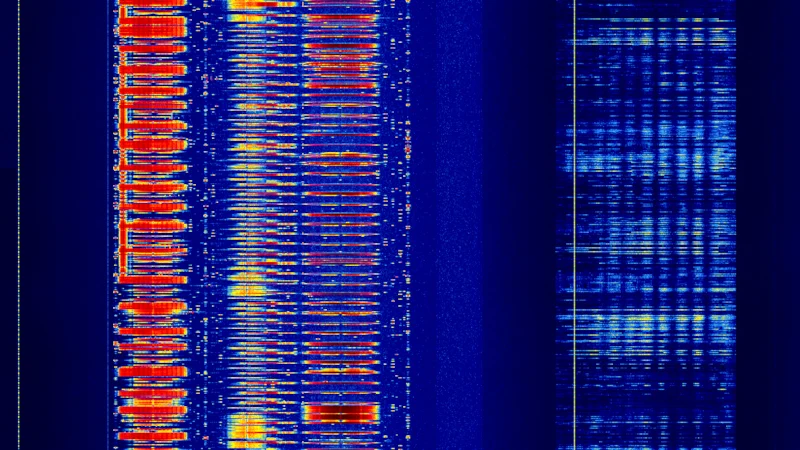
Developer [h0m3us3r] has pioneered a method to extract this data, providing a specialized codebase that facilitates streaming via Ethernet to a host Linux machine. This setup utilizes the router’s internal System-on-Chip (SoC) to handle the heavy lifting, allowing the raw data to be piped to a web-based interface for real-time visualization.
For the average radio enthusiast, this presents a significant jump in capability. The MT7996 operates across the 2.4 GHz, 5 GHz, and 6 GHz bands. While this is restricted compared to the sub-GHz capabilities of traditional SDRs, it opens a window into the increasingly crowded high-frequency spectrum, allowing users to view WiFi packets and other high-frequency signals in a detailed waterfall display.
Chronology: From Network Hardware to RF Tool
The evolution of consumer hardware into SDR tools is rarely a linear process. It typically follows a distinct pattern of discovery, testing, and refinement.
Phase 1: The Discovery of Undocumented Modes
The journey began with the observation that modern WiFi chipsets, specifically those integrated into high-end routers, were significantly more powerful and programmable than their predecessors. Researchers began investigating the firmware of the Gemtek W1700K, looking for ways to access the raw ADC (Analog-to-Digital Converter) output of the MT7996.
Phase 2: Firmware Manipulation
By gaining root access to the router’s Linux-based operating system, hackers were able to interface with the radio driver. The challenge was not just reading the data, but doing so without crashing the SoC or triggering watchdog timers designed to reboot the device if the radio interface became unresponsive.
Phase 3: The Code Release
In the current phase, [h0m3us3r] has released the necessary code to bridge the gap between the router’s proprietary chipset and standard Linux utilities. This allows for the data to be exported over a standard Ethernet connection, enabling remote observation.
Phase 4: Integration and Visualization
The final piece of the puzzle—currently being refined by the community—is the visualization layer. By feeding the I/Q stream into existing SDR software, users can now perform packet analysis and signal monitoring in real-time, effectively turning an off-the-shelf router into a specialized spectrum analyzer.
Supporting Data: Technical Capabilities and Constraints
To understand the utility of the Gemtek W1700K as an SDR, one must examine the technical specifications of the hardware involved.
Frequency Coverage
- 2.4 GHz Band: Useful for legacy WiFi, Bluetooth, and various ISM-band devices.
- 5 GHz Band: Primary domain for high-speed home networking.
- 6 GHz Band: The frontier of WiFi 7 (6E), offering massive bandwidth.
The Up-Converter Problem
A notable limitation is the focus on high-frequency bands. Most traditional amateur radio applications occur in the HF (3-30 MHz) or VHF/UHF (30-3000 MHz) ranges. Because the MT7996 is tuned for 2.4 GHz and above, it is effectively "blind" to common radio signals like FM broadcast, aircraft band, or emergency services.
However, the community is already discussing the development of receive up-converters. Similar to the way ESP32-based SDRs were expanded in utility, a hardware up-converter could shift lower-frequency signals into the range that the MT7996 can digitize. This would effectively broaden the router’s utility by orders of magnitude.
Official Responses and Industry Context
As of this writing, there has been no official statement from MediaTek or Gemtek regarding the repurposing of their WiFi 7 chipsets. Historically, manufacturers are indifferent to these hacks unless they impact network security or violate regional radio frequency regulations (such as FCC Part 15 rules in the United States).
Industry analysts suggest that this trend of "repurposing" is an unintended side effect of the push toward software-defined networking (SDN). Because modern WiFi routers are essentially small computers with high-performance RF front-ends, they are inherently "hackable." While manufacturers aim to lock down these devices to ensure regulatory compliance and performance, the open nature of the Linux kernels used in these routers makes total obfuscation nearly impossible.
Implications: The Democratization of Spectrum Analysis
The repurposing of the MT7996 has profound implications for the future of signal processing and RF education.
1. The Cost Barrier
Professional-grade spectrum analyzers cost thousands—sometimes tens of thousands—of dollars. By utilizing a consumer router, the cost of entry for studying 6 GHz signals drops to the price of a mid-range WiFi 7 router. This democratization allows students, researchers, and hobbyists to explore the high-frequency spectrum without the need for institutional funding.
2. The Rise of "Hidden" SDRs
The success of this project suggests that many other devices currently in our homes contain high-performance SDR capabilities waiting to be unlocked. Every device with a modern WiFi chip is a potential sensor. As we move toward a future of ubiquitous connectivity, the ability to monitor the RF environment becomes increasingly important for security and research.
3. Security Implications
The ability to capture raw I/Q data from a WiFi chip has significant security ramifications. It allows for the monitoring of local network traffic at the physical layer, potentially enabling sophisticated traffic analysis or the detection of "man-in-the-middle" attacks that would be invisible to standard network-level monitoring tools. Security professionals are now viewing these hardware-hacks as essential tools for auditing the radio-frequency hygiene of smart homes and offices.
4. Future Outlook
The "WiFi-as-SDR" movement is still in its infancy. As the community refines the drivers and improves the streaming protocols, we can expect to see more robust software support. We may eventually see plugins for popular SDR software like GQRX or SDR# that natively support WiFi 7 chipsets, further blurring the line between networking hardware and radio laboratory equipment.
Conclusion
The transformation of the Gemtek W1700K into a functional SDR receiver is a testament to the ingenuity of the open-source hardware community. By looking past the intended function of a WiFi 7 router and probing the raw capabilities of the MediaTek MT7996, developers have created a bridge into the high-frequency spectrum.
While the project is currently a specialized niche, the trajectory of such discoveries is clear: hardware is becoming increasingly flexible, and the barriers between consumer devices and professional diagnostic tools are dissolving. As we look to the future, it is highly probable that more undocumented streaming modes will be discovered, fueling a new era of amateur radio exploration. Whether for analyzing the crowded 6 GHz band or for auditing the security of modern wireless protocols, the repurposing of WiFi hardware is set to remain a vibrant and essential area of technological inquiry.
The next time you look at your router, consider that it is more than just a gateway to the internet—it is a sophisticated radio laboratory, waiting for the right code to wake it up.