Bridging the Gap: Introducing Wake Vision, the Game-Changing Dataset for TinyML

In the rapidly evolving landscape of artificial intelligence, a quiet revolution is taking place at the very edge of our digital ecosystem. TinyML—the practice of deploying sophisticated machine learning models onto microcontrollers and ultra-low-power edge devices—promises to make the world around us truly intelligent. However, for years, the field has been hamstrung by a persistent bottleneck: the absence of high-quality, large-scale training data specifically curated for the unique constraints of small-scale hardware.
Today, a team of researchers from Harvard University—including Colby Banbury, Emil Njor, Andrea Mattia Garavagno, and Vijay Janapa Reddi—has unveiled a solution that may redefine the benchmarks of the industry. Their new project, Wake Vision, is a massive, high-fidelity dataset designed to propel research in TinyML computer vision to unprecedented heights. By providing roughly 6 million images, this initiative addresses the critical shortcomings of existing datasets and offers a new foundation for the future of intelligent, energy-efficient devices.
The Evolution of Edge Intelligence: A Chronology of Progress
To understand the magnitude of the Wake Vision launch, one must first look at the trajectory of the TinyML sector. The journey toward "intelligent devices" began with the realization that cloud-based AI was insufficient for real-time, privacy-conscious applications.

- The Early Days of Visual Wake Words (VWW): For several years, the "Visual Wake Words" dataset served as the gold standard for person detection in the TinyML space. It provided a essential starting point, allowing developers to create models capable of recognizing human presence—a foundational task for everything from smart home automation to industrial safety monitoring.
- The Scaling Problem: As researchers began pushing the boundaries of what microcontrollers could achieve, they encountered a plateau. VWW, while groundbreaking, was relatively small. It lacked the diversity and depth required to train production-grade models that could handle the messy, unpredictable nature of the real world.
- The Paradigm Shift (2024): Recognizing that the lack of data was stifling innovation, the Harvard research team embarked on the creation of Wake Vision. The goal was simple but ambitious: build a dataset nearly 100 times larger than its predecessor, optimized not just for quantity, but for the specific, nuanced quality that under-parameterized models demand.
Supporting Data: Why "More" Isn’t Always "Better"
A central tenet of modern AI, particularly with large language models and massive transformers, is that "data is king." The prevailing wisdom has been that with enough parameters, a model can overcome noisy, low-quality labels through sheer scale. However, the Harvard team’s research reveals a fundamental truth about TinyML: for tiny models, quality beats quantity every time.
The Quality-Quantity Trade-off
TinyML models are often restricted to a few hundred kilobytes of memory. Because these models lack the "over-parameterization" found in massive cloud models, they cannot effectively "ignore" or "smooth over" noise in the training data. The Harvard team’s analysis shows that high-quality, accurately labeled data provides a significant performance boost for these constrained architectures.
By providing two distinct training sets—one focused on massive scale and another on high-precision quality—Wake Vision empowers developers to experiment with their training pipelines. The researchers found that the most effective approach often involves a hybrid strategy: pre-training on the massive, general dataset to build foundational knowledge, followed by fine-tuning on the high-quality subset to sharpen accuracy.

Performance Benchmarks
The impact of this approach is statistically significant. Models trained on Wake Vision demonstrate a marked improvement in accuracy, error reduction, and robustness across varied lighting and environmental conditions. The dataset allows developers to simulate real-world scenarios that were previously difficult to capture, such as detecting persons at different distances, in varying light levels, or with occlusions that typically baffle smaller models.
Implications: The Future of "Always-On" Vision
The implications of the Wake Vision project extend far beyond academic research. By lowering the barrier to entry for high-performance person detection, the dataset paves the way for a new generation of consumer and industrial hardware.
Privacy and Local Processing
One of the most profound benefits of the TinyML movement is privacy. When a device can process visual data locally—without sending images to the cloud—user privacy is inherently protected. Wake Vision provides the training foundation necessary to build more reliable, locally-run person detection, making it feasible for cameras and smart sensors to function effectively without ever needing an internet connection to "verify" what they see.

Democratizing AI Development
With a permissive CC-BY 4.0 license, the Wake Vision team has ensured that this resource is accessible to everyone from hobbyists and independent developers to enterprise-level hardware engineers. By integrating with standard platforms and tools, the team has removed the friction associated with dataset acquisition and pre-processing, allowing developers to focus on architecture optimization and deployment efficiency.
Addressing Bias and Fairness
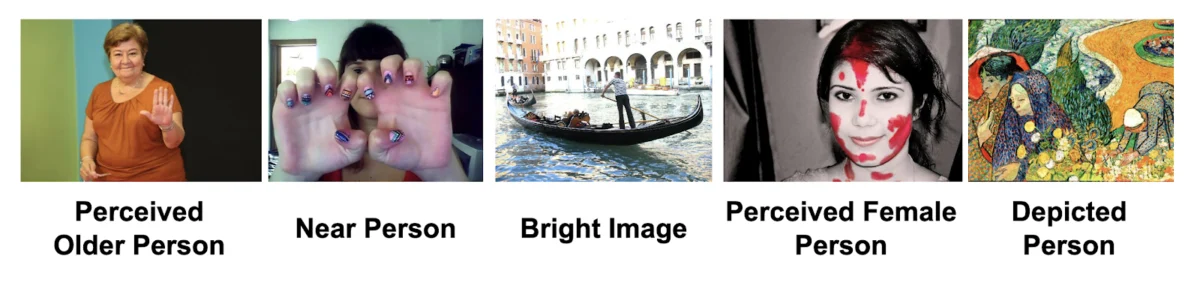
A critical component of the Wake Vision benchmark suite is its focus on fine-grained evaluation. By testing models against specific, categorized scenarios—such as age perception, gender representation, and varying distances—the dataset forces developers to confront potential biases in their models. This transparency is essential for the ethical deployment of AI in public spaces, where models must perform equitably across all demographic groups.
Official Responses and The Path Forward
The researchers behind Wake Vision have emphasized that this is not a "finished" project, but a living resource. By hosting an active Leaderboard, the team is fostering a community-driven environment where developers can track their progress, compare architectures, and contribute their findings to the collective knowledge base.

"We wanted to build something that doesn’t just advance our own work, but advances the entire TinyML community," the Harvard team notes. By making the code, benchmarks, and the dataset itself available through major repositories and hosting services, they have created a "plug-and-play" experience for researchers worldwide.
The Role of the Leaderboard
The Wake Vision Leaderboard is more than just a ranking system; it is a diagnostic tool. It provides a detailed breakdown of how models perform under specific conditions, allowing researchers to see where their models excel and where they falter. This level of granularity is vital for identifying edge cases—those rare but critical moments where a model might fail—and iterating on the model’s design to increase reliability.
Conclusion: A New Horizon for TinyML
The release of Wake Vision marks a transition point for the field of computer vision. As we move away from the era of "everything in the cloud" toward a future of "distributed intelligence," the need for robust, reliable, and efficient training data has never been greater.

By prioritizing the interplay between dataset quality and model constraints, the Harvard research team has provided a blueprint for how to scale AI without sacrificing precision. Whether you are working on a smart home security system, an industrial automation sensor, or a novel application for wearable technology, Wake Vision offers the necessary ingredients to build models that are not only small enough to fit on a chip but smart enough to understand the world around them.
As the industry continues to iterate on these findings, the impact of Wake Vision will undoubtedly be measured in the millions of devices that will soon be smarter, more efficient, and more reliable. For those looking to shape the future of edge computing, the time to start is now. Access the dataset, explore the leaderboard, and begin building the next generation of TinyML applications at WakeVision.ai. The frontier of edge AI is no longer a blank map—it has a vision.