Bringing AI-Powered Gaming Cross-Platform: How Developers Can Port TensorFlow Lite Reinforcement Learning Agents to Flutter
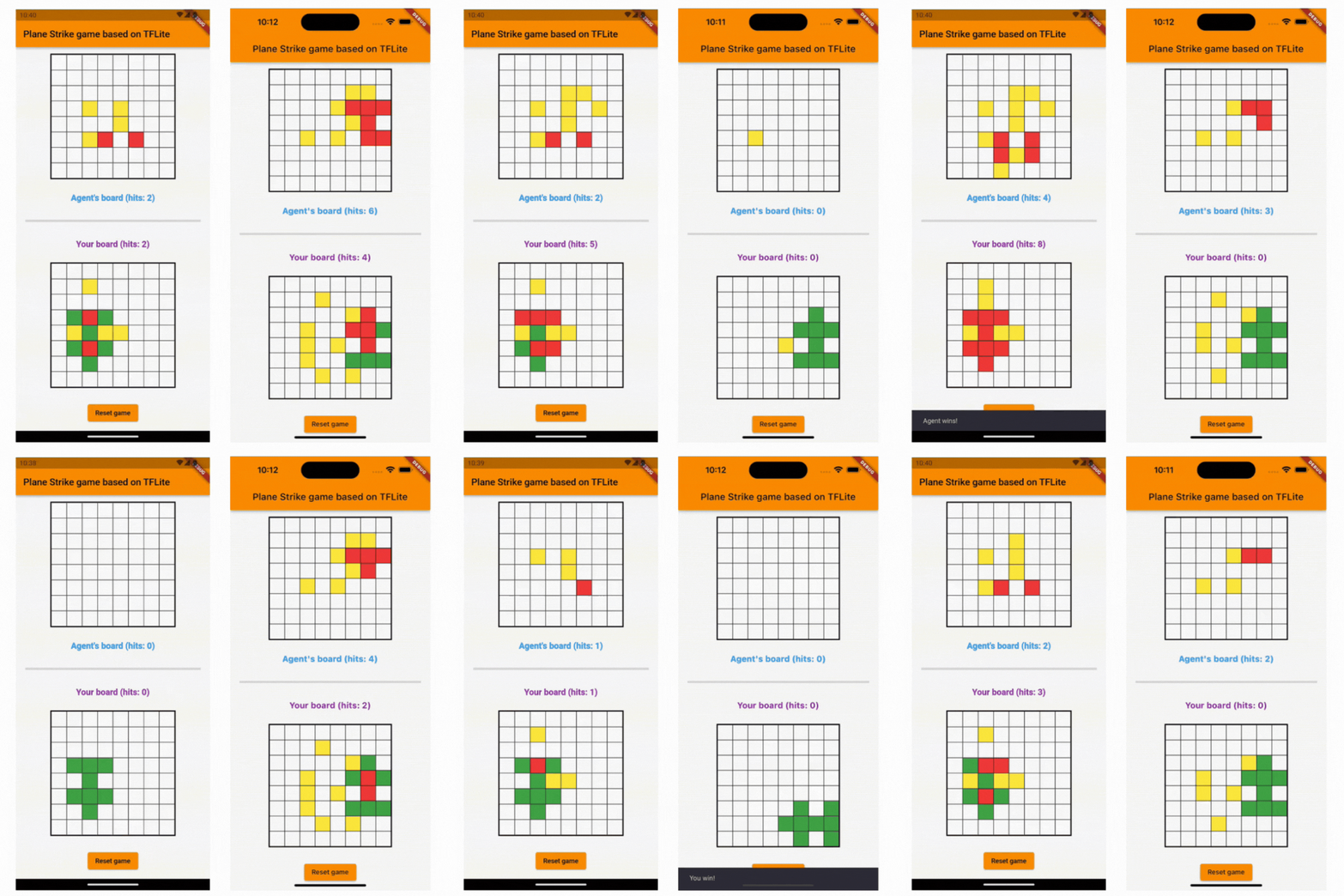
MOUNTAIN VIEW, Calif. — In the rapidly evolving landscape of mobile application development, bridging the gap between advanced machine learning and multiplatform frameworks has long been a primary objective for engineers. Today, that objective becomes significantly more attainable as the TensorFlow team releases its final installment in a celebrated mini-series exploring reinforcement learning (RL) in mobile gaming.
By leveraging the recently launched official TensorFlow Lite (TFLite) plugin for Flutter, developers can now seamlessly port an intelligent reinforcement learning agent—originally built to play the strategic board game "Plane Strike"—from native Android environments to a unified, cross-platform architecture supporting both Android and iOS. This development marks a major milestone for developers seeking to implement high-performance, on-device artificial intelligence without duplicating codebases for different mobile operating systems.
Chronology of the Project: From Native Android to Cross-Platform Flutter
The journey toward a cross-platform, AI-driven board game app spans several key technological milestones developed over the past few years:
- October 2021: The TensorFlow team published the foundational tutorial, "Building a board game app with TensorFlow: a new TensorFlow Lite reference app." This introduction demonstrated how developers could train a basic reinforcement learning agent using TensorFlow and deploy the resulting TFLite model directly into an Android application to play "Plane Strike."
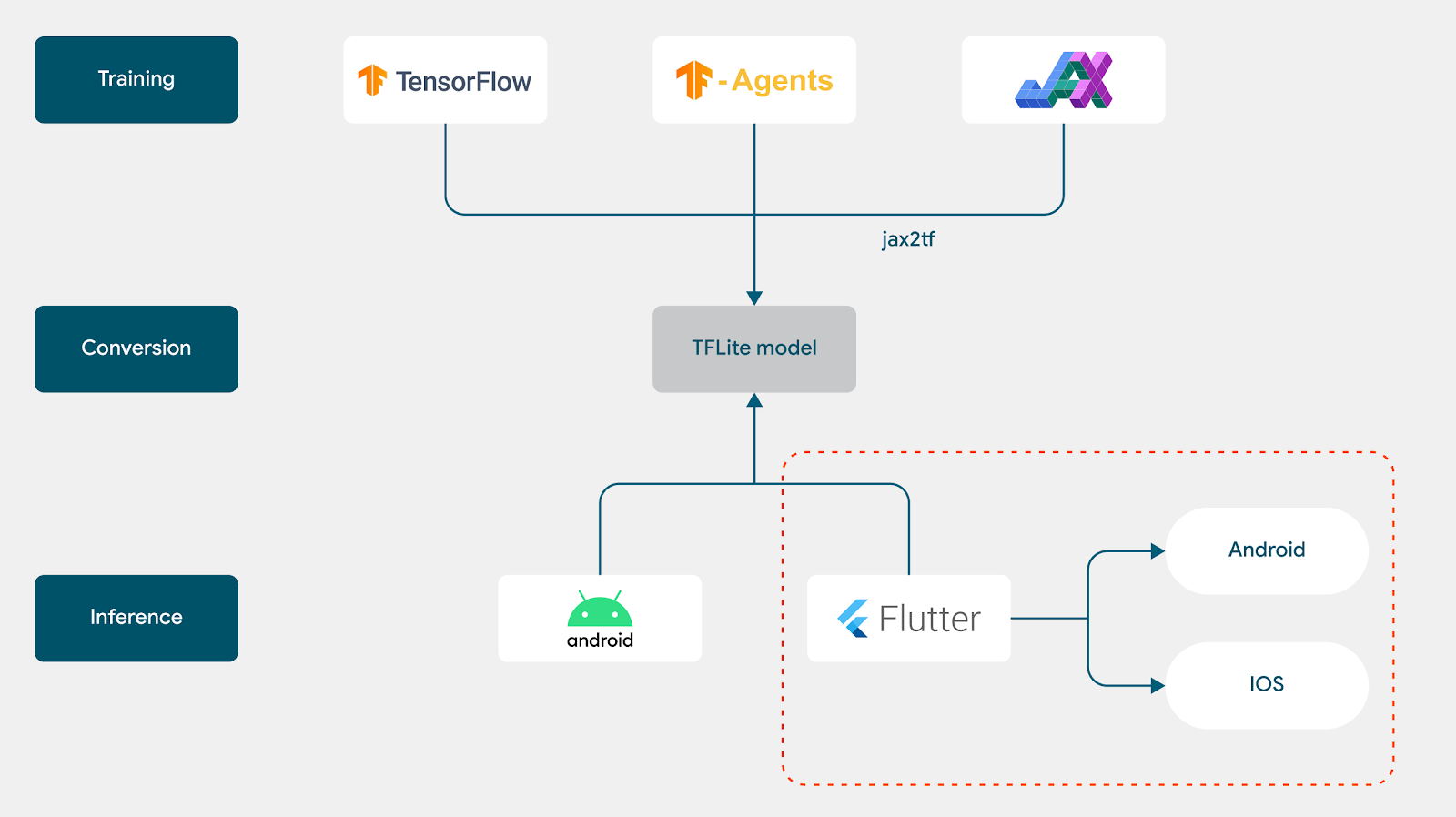
- September 2022: Expanding upon the initial framework, the team released "Building a reinforcement learning agent with JAX, and deploying it on Android with TensorFlow Lite." This update showcased alternative training pipelines using JAX alongside TensorFlow Agents, proving that models generated from diverse machine learning ecosystems could still converge on mobile-optimized TFLite formats.
- August 2023: Google officially launched the long-awaited TensorFlow Lite Plugin for Flutter, opening the door for Dart and Flutter developers to integrate on-device machine learning natively into cross-platform apps.
- Present Day: Fulfilling requests from the broader Flutter community, developer advocate Wei Wei published the concluding guide to porting the "Plane Strike" reinforcement learning application entirely to Flutter using the new TFLite plugin, concluding a multi-year effort to democratize mobile machine learning game development.
Supporting Data and Technical Architecture
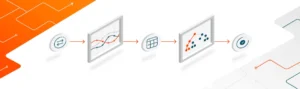
The core architecture of the "Plane Strike" application relies on a streamlined workflow: training an agent to make optimal decisions based on board states, converting the trained weights into a compact TFLite model, and executing real-time inference directly on the client device.
Because the underlying reinforcement learning model had already been trained and converted during the earlier Android-centric phases of the project, the primary challenge of the recent migration involved wrapping the model logic within Flutter’s Dart environment.

1. Initializing the Interpreter
Loading the pre-trained machine learning model in Flutter is handled asynchronously through the TFLite interpreter. Developers initialize the model directly from the application’s asset bundle using the following implementation:
void _loadModel() async
  // Create the interpreter
  _interpreter = await Interpreter.fromAsset(_modelFile);
2. Executing Real-Time Inference
Once the model is loaded into memory, the application passes the user’s current board state to the interpreter. The model evaluates the grid and identifies the most promising position for the AI agent to strike next.
The inference logic utilizes an argmax function to parse the multidimensional output tensor and pinpoint the highest-probability coordinate:
int predict(List<List<double>> boardState)
  var input = [boardState];
  var output = List.filled(_boardSize * _boardSize, 0)
      .reshape([1, _boardSize * _boardSize]);

  // Run inference
  _interpreter.run(input, output);

  // Argmax
  double max = output[0][0];
  int maxIdx = 0;
  for (int i = 1; i < _boardSize * _boardSize; i++)
    if (max < output[0][i])
      maxIdx = i;
      max = output[0][i];


  return maxIdx;
By combining this compact inference script with a responsive Flutter frontend for rendering the game board and tracking user progression, developers achieve near-native execution speeds across both Android and iOS platforms. The complete, open-source repository is publicly available on the official TensorFlow GitHub repository.
Official Perspectives and Developer Impact
The release of the Flutter TFLite plugin and its accompanying reference implementation addresses a persistent pain point for mobile application developers: platform fragmentation. Historically, implementing complex, device-local machine learning features required deep, platform-specific integrations in Kotlin/Java for Android and Swift/Objective-C for iOS.

According to Google’s developer advocacy team, the decision to port the "Plane Strike" reinforcement learning agent was a direct response to community feedback. While native Android tutorials successfully illustrated the feasibility of deploying JAX- and TensorFlow-trained RL agents, the massive market share of Flutter demanded a unified solution.
By leveraging the Flutter plugin, developers can now maintain a single codebase while taking full advantage of hardware-accelerated on-device inference. This approach ensures low-latency gameplay—crucial for interactive applications—while preserving user privacy by running computations entirely client-side without relying on cloud infrastructure.
Broader Implications for Mobile AI and Game Development
The successful culmination of this mini-series carries significant implications for the future of mobile software engineering and casual gaming:
Democratization of On-Device AI
Reinforcement learning has traditionally been viewed as resource-intensive, often restricted to server-side environments or high-powered desktop simulations. By demonstrating that an RL agent trained via TensorFlow or JAX can run efficiently on mobile hardware via Flutter, Google is signaling a shift toward edge AI. Complex decision-making algorithms can now power everyday mobile utilities and games locally, reducing operational costs and eliminating dependency on continuous internet connectivity.
Acceleration of Cross-Platform ML Tooling
The introduction of official plugins bridging frameworks like Flutter with deep learning engines like TensorFlow Lite bridges a historical divide. Developers no longer need to choose between the UI flexibility of cross-platform frameworks and the performance capabilities of native machine learning libraries. As these ecosystems mature, we can expect to see an influx of rich, intelligent applications—ranging from interactive board games to real-time computer vision utilities—built entirely on unified codebases.
Future Horizons for Developers
With the mini-series officially concluded, the focus shifts entirely to the developer community. Engineers are encouraged to take the foundational architecture provided in the "Plane Strike" repository, experiment with custom reward functions, modify neural network topologies, and push the boundaries of what is possible with mobile reinforcement learning.
Developers building innovative applications using these tools are encouraged to share their projects with the global community by tagging @googledevs and @TensorFlow on social media channels.