
Bringing Reinforcement Learning to Cross-Platform Mobile: TensorFlow Lite Lands in Flutter
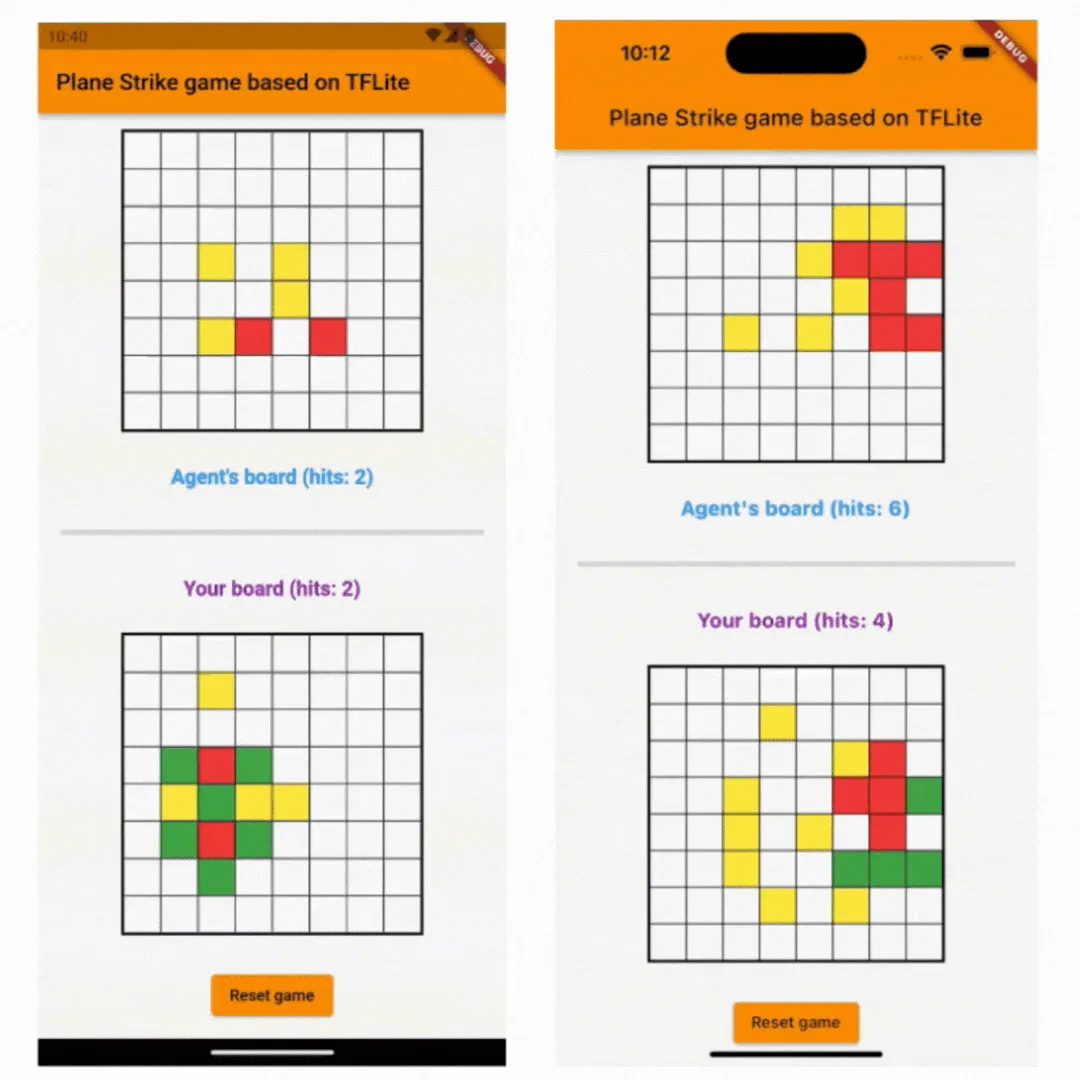
SAN FRANCISCO — In a major development for mobile artificial intelligence engineers and cross-platform developers alike, Google has officially bridged the gap between advanced machine learning and multi-device app creation. Following a popular series of tutorials demonstrating how to build reinforcement learning (RL) board game agents for native Android, the TensorFlow team has released a final, capstone implementation: porting the "Plane Strike" AI board game to Flutter using the newly minted TensorFlow Lite Plugin for Flutter.
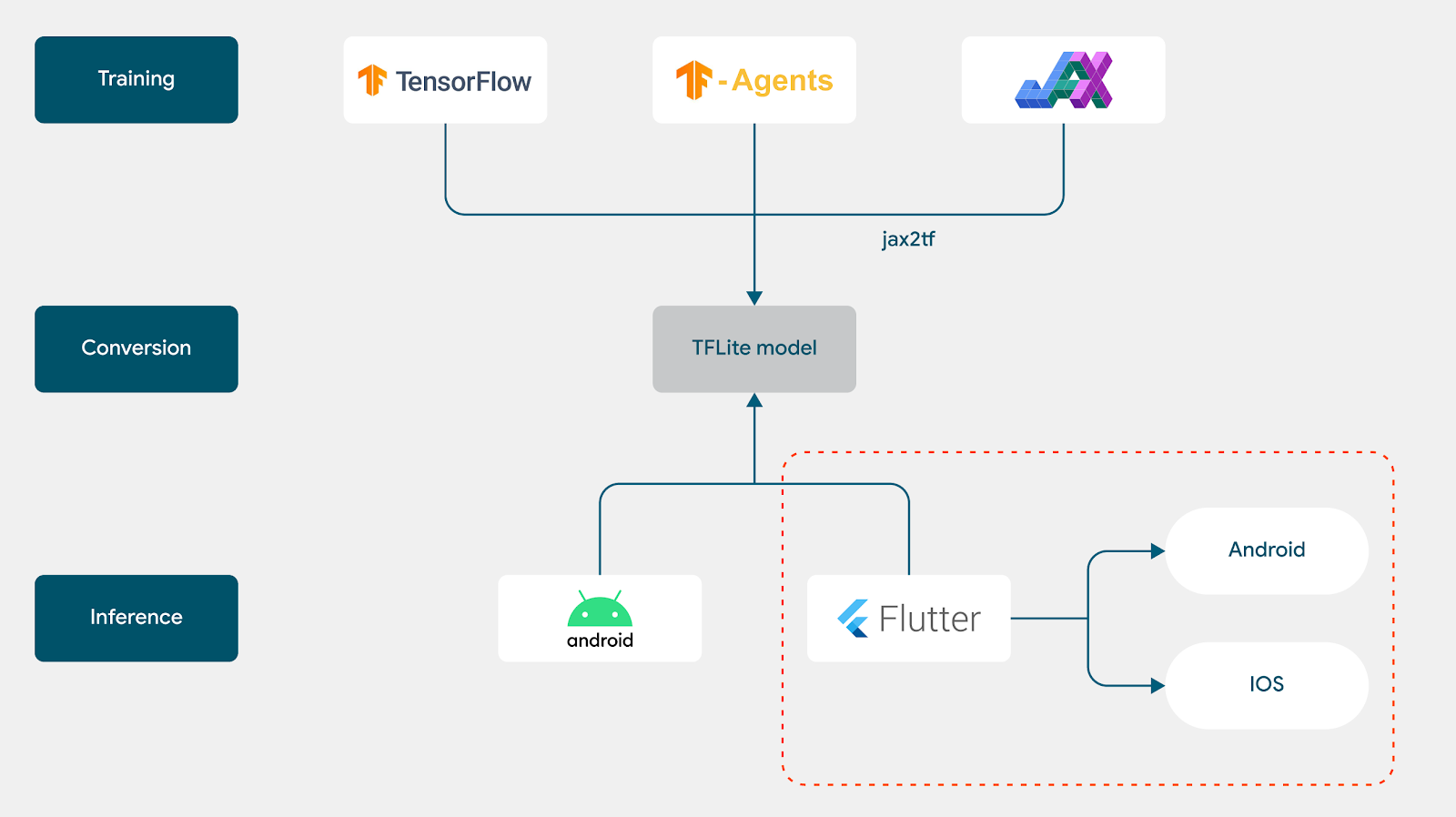
This release marks a significant milestone in the democratization of on-device AI. By combining the training power of TensorFlow, TensorFlow Agents, and JAX with Flutter’s seamless cross-platform rendering engine, developers can now deploy sophisticated reinforcement learning agents to both Android and iOS devices using a unified codebase.
Main Facts: What the Flutter TFLite Integration Means for Developers
The core of this release centers around efficiency, code reuse, and bringing high-performance machine learning models to non-native environments without sacrificing latency.
- Cross-Platform Parity: Previously, developers wishing to deploy TensorFlow Lite (TFLite) models trained via reinforcement learning had to write platform-specific wrappers, particularly for Android. The introduction of the official TensorFlow Lite plugin for Flutter allows developers to target iOS and Android simultaneously.
- Pre-Trained Model Portability: Because the "Plane Strike" reinforcement learning model was already trained using TensorFlow/JAX and converted into a
.tfliteflatbuffer, it required zero retraining to function within the Flutter ecosystem. - Edge Intelligence: By running inference directly on the user’s device (the edge), the game eliminates network round-trips to a cloud server, ensuring instant move suggestions, privacy preservation, and offline playability.
- Open Source Availability: The complete end-to-end implementation—including the TFLite integration code, UI logic, and RL model wrapper—has been published as an open-source example in the official TensorFlow GitHub repository.
Chronology of an AI Journey: From Native Android to Cross-Platform Flutter
The arrival of the Flutter reinforcement learning app is the culmination of a multi-year technical evolution led by Google Developer Advocate Wei Wei and the broader TensorFlow engineering team.
Phase 1: Native Android Foundations (October 2021)
The journey began with the publication of “Building a board game app with TensorFlow: a new TensorFlow Lite reference app.” In this initial phase, the team introduced "Plane Strike," a simplified grid-based tactical game. Developers were shown how to train a basic reinforcement learning agent using TensorFlow and TensorFlow Agents, convert the resulting policy network into a TensorFlow Lite format, and embed it inside a native Java/Kotlin Android application. This established that edge-based RL inference was viable for consumer mobile hardware.
Phase 2: Expanding the AI Stack with JAX (September 2022)
As modern machine learning diversified beyond traditional TensorFlow libraries, the team published a follow-up guide: “Building a reinforcement learning agent with JAX, and deploying it on Android with TensorFlow Lite.” This iteration proved that models trained in JAX—Google’s high-performance numerical computing library—could be successfully exported, converted, and deployed on mobile devices, expanding the architectural horizons for mobile AI developers.

Phase 3: The TFLite Plugin for Flutter (August 2023)
A critical missing link in the ecosystem was a first-party, robust, and well-maintained bridge between Flutter and the TensorFlow Lite C++ runtime. The official release of the TensorFlow Lite Plugin for Flutter changed the landscape. It provided Dart developers with native-like bindings to load models, allocate tensors, and execute high-speed inferences directly within Flutter widgets.
Phase 4: The Cross-Platform Finale (Present Day)
Recognizing overwhelming feedback from the Flutter community asking for multiplatform support, the TensorFlow team published the final tutorial. By porting the "Plane Strike" app to Flutter, the team closed the loop, demonstrating a complete pipeline from server-side model training to client-side cross-platform deployment.
Supporting Data: Under the Hood of the Flutter TFLite Implementation
To understand why this cross-platform release is technically noteworthy, one must examine how the Flutter application interacts with the underlying TFLite runtime. The integration relies on two primary mechanics: model initialization and real-time tensor inference.
1. Asynchronous Model Loading
Because mobile applications must remain responsive to avoid UI jank, loading a machine learning model from app assets is handled asynchronously. Using the Flutter plugin, developers instantiate the interpreter via a clean, concise Dart function:
Interpreter? _interpreter;
String _modelFile = "path_to_model.tflite";

void _loadModel() async
  // Create the interpreter from assets
  _interpreter = await Interpreter.fromAsset(_modelFile);
2. Executing Real-Time Inference with Argmax Selection
During gameplay, the app evaluates the user’s current board state, feeds it into the TFLite model as an input tensor, and reads the output probabilities to determine the AI’s next strike location.
The inference function handles multidimensional tensor reshaping and performs an argmax operation to find the highest-probability coordinate on the game board:

int predict(List<List<double>> boardState)
  var input = [boardState];
  var output = List.filled(_boardSize * _boardSize, 0)
      .reshape([1, _boardSize * _boardSize]);

  // Run tensor inference on the device
  _interpreter.run(input, output);

  // Find the optimal move via Argmax
  double max = output[0][0];
  int maxIdx = 0;
  for (int i = 1; i < _boardSize * _boardSize; i++)
    if (max < output[0][i])
      maxIdx = i;
      max = output[0][i];


  return maxIdx;
This snippet highlights the low overhead of the Flutter plugin. By communicating directly with the native TFLite C++ binaries underneath the Dart layer, execution times remain minimal—crucial for maintaining a smooth 60 frames-per-second user interface animation while simultaneously calculating complex AI decisions.
Official Responses and Developer Community Impact
The developer community has responded with enthusiasm to the completion of this tutorial series. Industry analysts note that cross-platform frameworks like Flutter have historically lagged behind native platforms when adopting cutting-edge machine learning capabilities due to the complexity of bridging performance-heavy C++ libraries with Dart code.
"While native Android and iOS tutorials gave developers a blueprint, the reality of modern app development is multiplatform," noted software engineering leads following the release. "By officially supporting the TFLite Flutter plugin and demonstrating it with a complex workload like reinforcement learning, Google is signaling that cross-platform AI is no longer an afterthought."
Feedback from community forums and GitHub discussions indicates that developers are already looking beyond board games. The architectural pattern established by the "Plane Strike" demo—capturing UI state, formatting it into numerical tensors, running local inference, and updating the UI based on model outputs—serves as a blueprint for more ambitious applications.
Implications: The Future of Cross-Platform Edge AI
The convergence of TensorFlow Lite and Flutter opens up expansive possibilities for mobile software architecture. The implications of this release stretch across multiple domains:
Democratization of Advanced AI
Reinforcement learning has traditionally been viewed as an intimidating domain reserved for server-side architectures, requiring massive GPU clusters and complex API calls. By demonstrating that a trained RL agent can live comfortably inside a mobile app package—running locally on a smartphone CPU or mobile GPU—Google is encouraging developers to experiment with autonomous, adaptive app logic.
Privacy and Latency Advantages
In-app machine learning models process data locally. In the context of a game, this means zero latency and offline capability. In broader enterprise contexts—such as healthcare diagnostics, predictive text, or local image processing—this architecture ensures that sensitive user data never leaves the device, satisfying stringent data privacy regulations like GDPR and CCPA.
The Rise of Intelligent Cross-Platform Apps
As Flutter continues to mature as a dominant framework for startups and enterprise giants alike, the availability of first-party AI plugins ensures that cross-platform apps will not suffer a feature deficit compared to their native counterparts. Developers can build once and deploy smart, context-aware applications to both iOS and Android stores with unified maintenance pipelines.
Getting Started and Next Steps
For developers eager to dive deeper into the code, the complete repository, including the frontend UI rendering logic and state management scripts, is available via the GitHub Flutter TFLite Example Directory.
While this particular blog post concludes the mini-series on leveraging TensorFlow and JAX for board game agents, the overarching ecosystem continues to evolve. The TensorFlow team has encouraged developers to experiment with modifying the network architecture, adjusting reward functions in the training phase, or scaling the grid size of the game, sharing their creations with the global community using the hashtags and handles @TensorFlow and @googledevs.







