Empowering Enterprise AI: OpenAI’s GPT-5.5 and Codex Arrive on Amazon Bedrock
The landscape of generative AI underwent a significant transformation this June 2026 as Amazon Web Services (AWS) officially integrated OpenAI’s flagship models—GPT-5.5 and GPT-5.4—alongside the advanced coding assistant, Codex, into its Amazon Bedrock platform. This strategic alignment represents a major milestone in the convergence of high-performance cloud infrastructure and frontier model capabilities, offering developers and enterprises a more secure, scalable, and versatile environment for building AI-native applications.
Main Facts: The New Frontier in Bedrock
Amazon Bedrock, the fully managed service that provides access to leading foundation models via an API, has officially expanded its portfolio to include OpenAI’s latest technological breakthroughs. The integration allows organizations to leverage GPT-5.5 for high-complexity reasoning and agentic workflows, while GPT-5.4 offers an optimized balance of cost-efficiency and performance.
Crucially, the deployment utilizes the new Responses API, a next-generation inference engine designed specifically by AWS to handle the rigorous demands of enterprise-grade AI. This architecture ensures that high-throughput, low-latency requirements are met without compromising on security or data sovereignty. For organizations operating under strict data residency mandates, the integration is a game-changer: all model processing remains confined within the selected Bedrock region, satisfying the complex regulatory requirements of finance, healthcare, and government sectors.
Chronology of the 2026 Rollout
The introduction of these models was not an isolated event but the culmination of a phased strategy that began earlier this year.
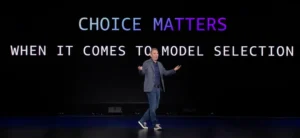
- May 24, 2026: AWS officially announced the upcoming availability of GPT-5.5 and GPT-5.4 during the "What’s Next with AWS" summit, signaling a deepening partnership with OpenAI.
- June 1, 2026: The official launch occurred, marking the debut of the models on the Bedrock platform. AWS clarified that these models were initially supported exclusively through the
ResponsesAPI, with console-based management tools slated for imminent release. - June 3, 2026: AWS demonstrated its commitment to the public sector by extending support for the GPT-5.4 model to the AWS GovCloud (US-West) Region, catering to agencies with stringent compliance and security protocols.
- June 7, 2026: The ecosystem matured further with the announcement of a redesigned Amazon Bedrock console, optimized for managing OpenAI-compatible APIs, streamlining the user experience for developers transitioning from legacy environments.
Supporting Data: Why GPT-5.5 and Codex Matter
The technical specifications behind this integration reveal why developers are prioritizing these models. According to OpenAI, GPT-5.5 is engineered for the "hardest customer workloads," capable of navigating intricate reasoning tasks and maintaining state across long-horizon interactions.
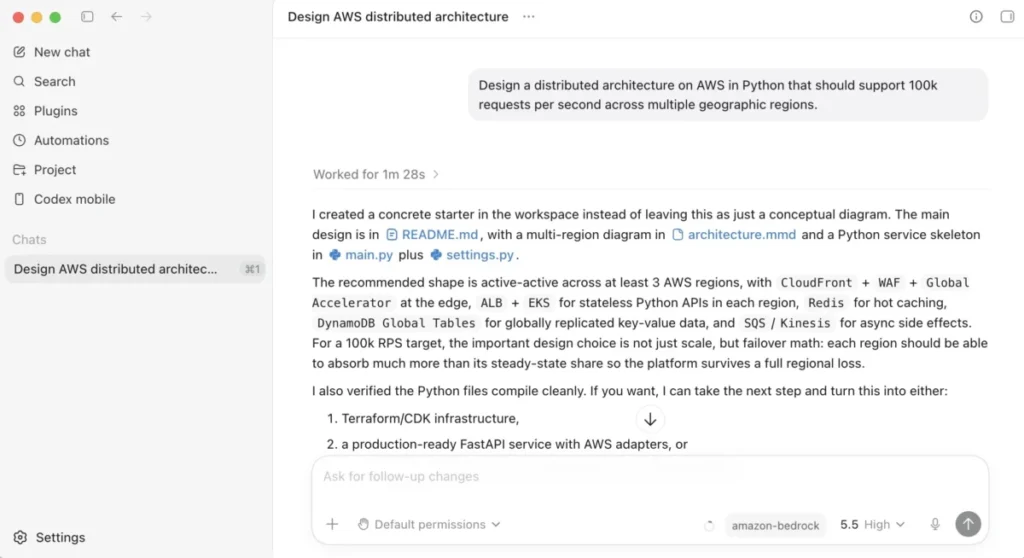
Codex, the specialized coding engine, is already a pillar of modern development, with over 4 million developers interacting with the platform weekly. By routing Codex through the Bedrock infrastructure, developers gain access to a new class of intelligence. The integration is not merely about model access; it is about the "agentic" capabilities. With the Responses API, Codex can now handle multi-turn state management, hosted tools, and complex orchestration that were previously difficult to maintain in stateless API environments.
Performance and Cost Efficiency
Unlike traditional seat-based licensing models that can become cost-prohibitive as teams grow, the Bedrock integration operates on a transparent, pay-per-token model. There are no per-developer commitments, which significantly lowers the barrier to entry for startups and large-scale enterprises alike. By utilizing the bedrock-mantle endpoints, developers can achieve high reliability while maintaining control over their operational costs, a critical metric for production-grade software development.
Official Responses and Technical Integration
The integration is designed to be developer-friendly, supporting standard OpenAI SDKs for Python. As demonstrated in the initial documentation, transitioning an application to use Bedrock is a matter of updating the OPENAI_BASE_URL to the Bedrock-specific mantle endpoint and managing the authentication via the standard AWS credential chain or Bedrock API keys.
Developer Experience (DX)
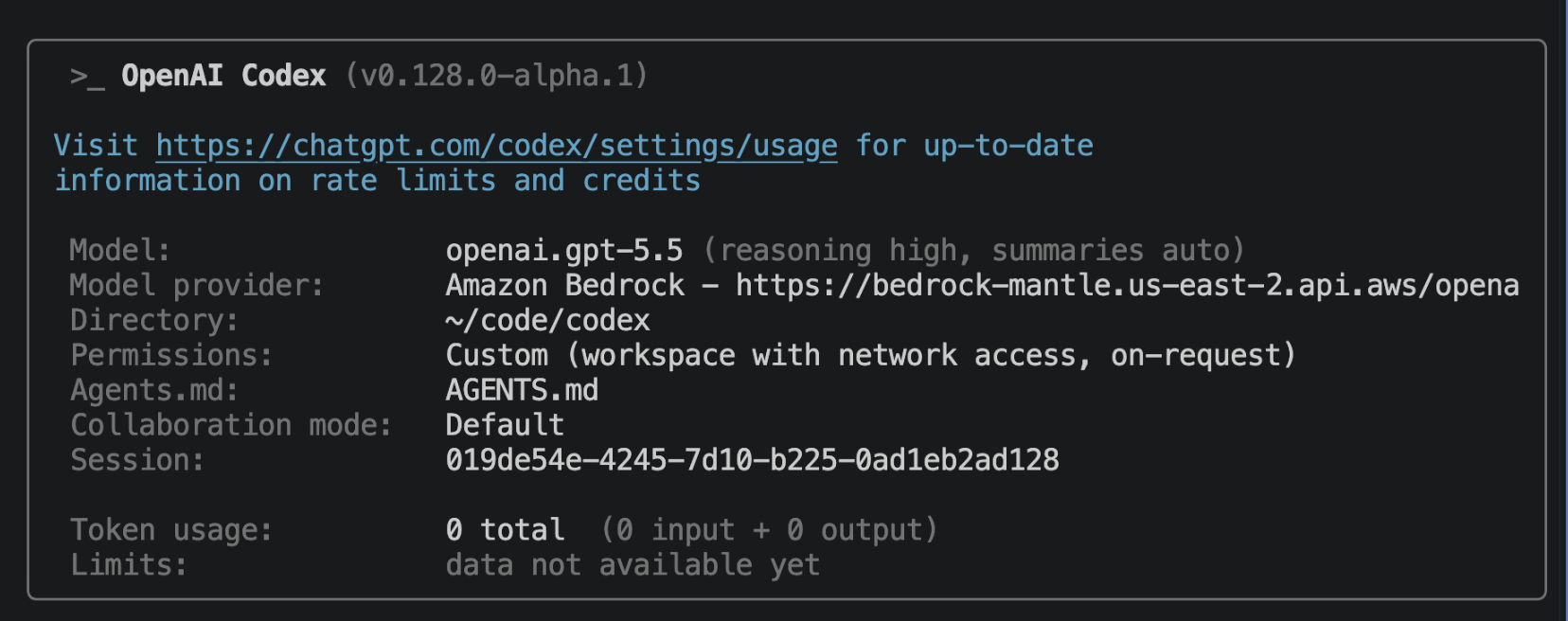
For software engineers, the ability to integrate these models directly into Visual Studio Code, JetBrains, and Xcode via the Codex extension is a major productivity booster. By configuring the ~/.codex/config.toml file, developers can point their local IDEs to the AWS-hosted model provider, effectively bringing the power of GPT-5.5 directly into their coding environment.
"The goal," as Channy Yun of AWS emphasized, "is to remove the friction between ideation and production." By allowing developers to use familiar tools—such as the curl command or the OpenAI Python SDK—AWS ensures that the learning curve remains shallow while the power ceiling remains high.

Implications: A Shift in Cloud-Native AI
The impact of this integration extends beyond mere convenience; it marks a structural shift in how businesses build, deploy, and scale AI.
1. The Death of Model Silos
For years, organizations were forced to choose between the proprietary ecosystem of OpenAI and the infrastructure benefits of AWS. This integration effectively ends that binary choice. By hosting these models within Bedrock, AWS is positioning itself as the "Switzerland" of the AI world—an agnostic infrastructure layer where the best models from any provider can be accessed under one uniform, secure, and performant API.
2. Democratizing Agentic Workflows
The focus on "agentic workflows"—where AI models do not just generate text but actively perform tasks, manage tools, and maintain long-term state—is the next frontier of software development. By providing the Responses API, AWS is giving developers the tools to move beyond simple chatbots and into the realm of autonomous agents that can refactor large codebases, perform complex data analysis, and manage distributed systems architecture.
3. Compliance and Data Sovereignty
The ability to process data within specific regions is a competitive advantage that many standalone AI services struggle to provide. For global enterprises, the assurance that their proprietary code and customer data never leave a designated AWS region is the difference between a "proof of concept" and a "production deployment." This integration likely paves the way for wider adoption of generative AI in highly regulated sectors like banking and defense.
4. Future-Proofing Development
As the industry moves toward faster model iterations, the architecture of Amazon Bedrock is built to accommodate the next generation of models without requiring a total overhaul of the client-side code. Whether it is a transition from GPT-5.4 to 5.5, or future iterations beyond, the standardized nature of the Responses API ensures that engineering teams can focus on product innovation rather than infrastructure maintenance.
Conclusion: A New Standard
The arrival of GPT-5.5 and Codex on Amazon Bedrock is a testament to the maturation of the generative AI market. We are moving away from the era of "AI novelty" and into an era of "AI utility," where the focus is on performance, security, and integration.
For developers, the call to action is clear: by leveraging the Responses API and the robust Bedrock infrastructure, they now have the tools to build the next generation of intelligent software at scale. As AWS continues to update its console and regional support, the barrier to entry will only continue to lower, cementing this partnership as a foundational element of the 2026 enterprise technology stack. Whether you are building a distributed architecture or automating a complex development pipeline, the integration of OpenAI’s models into the AWS ecosystem provides a powerful, reliable, and future-ready foundation for innovation.