
FOSS Weekly: Infrastructure Crises, Security Shifts, and the Evolution of Open Source
In the rapidly shifting landscape of Free and Open Source Software (FOSS), the past week has served as a stark reminder of the fragility inherent in the digital commons. From the quiet withdrawal of corporate infrastructure support to the aggressive legal posturing of copyright holders, the ecosystem is navigating a series of high-stakes challenges. Yet, amidst these headwinds, the community continues to demonstrate remarkable resilience through rapid forking, security innovation, and the persistent pursuit of self-sovereignty.
The Infrastructure Crisis: A Ripple Effect of Withdrawal
The most pressing concern currently reverberating through the open source world is the abrupt termination of DigitalOcean’s infrastructure credit program. For years, this program provided the backbone for countless independent projects, enabling maintainers to host documentation, build systems, and community hubs without the burden of overhead costs.

DigitalOcean’s Quiet Exit
The decision to end this support program has been characterized by many as a disruptive blow to the sustainability of the FOSS ecosystem. While the move was executed with minimal public fanfare, the implications are profound. Many projects, already operating on shoestring budgets and volunteer labor, now face the daunting prospect of finding alternative funding or migrating complex infrastructure on short notice.
The Gentoo Linux Precedent
The fragility of infrastructure reliance is perhaps best exemplified by the current state of Gentoo Linux. The long-standing, community-driven distribution has officially issued a call for new infrastructure sponsors. This follows a period where several long-term backers withdrew their support, leaving the project with a significant gap in its operational requirements.

Gentoo’s situation highlights the multifaceted nature of "sponsorship" in the modern era. The project is currently seeking a diverse array of support: donated physical machines, colocation space, virtualized infrastructure, or direct financial contributions. This "all-hands-on-deck" approach underscores a sobering reality: even pillar projects within the Linux ecosystem are not immune to the volatility of corporate philanthropy.
Legal and Ethical Tensions: The Battle for Open Tools
As FOSS tools become more sophisticated, they increasingly find themselves in the crosshairs of legacy industries and large-scale automated systems.

The IFPI vs. yt-dlp Conflict
The International Federation of the Phonographic Industry (IFPI) has escalated its campaign against yt-dlp, a popular and highly capable command-line media downloader. By submitting the project to the EU’s piracy watchlist, the IFPI is attempting to reframe a general-purpose technical utility as a dedicated piracy tool.
The implications of this move are significant. By targeting the maintainers by name, the IFPI is applying personal pressure on developers who contribute to the project. The community response has been swift, with advocates pointing out that yt-dlp serves a vast range of legitimate use cases, including archival work, accessibility, and content management for creators. This move represents a growing trend where copyright enforcement entities attempt to bypass the nuance of "dual-use" technology by branding the tool itself as the harm.

AI Spam and the Future of Bug Bounties
On the security front, Google has been forced to take drastic measures against a surge of AI-generated spam flooding its Open Source Vulnerability Reward Program (VRP). The influx of low-quality, automated bug reports became so overwhelming that Google has temporarily paused all product vulnerability submissions.
This event signals a new era in software security, where the "noise" created by generative AI threatens to drown out legitimate security research. While Google has indicated that supply chain reports remain welcome and has teased a revamped, more robust program to launch by Q1 2027, the current pause serves as a cautionary tale: as AI tools make it easier to find and report bugs, they also make it exponentially easier to pollute the feedback loops that keep software secure.

Technical Resilience: Forking and Security Hardening
Despite the external pressures, the community continues to innovate and protect its own.
The OpenRadioss Fork and AGPL Protection
When Siemens made the quiet decision to delete the OpenRadioss repository, it appeared to be a significant loss for the engineering community. However, the foresight inherent in the project’s licensing saved it. Because OpenRadioss was released under the Affero General Public License (AGPL), the community retained the legal right to take the code and continue development.

Within days, Rocky Linux co-founder Brian Clemens stepped in to fork the project as OpenCourant. The speed of this recovery—with the project already shipping binaries for both Linux and Windows—demonstrates the "forkability" of FOSS as the ultimate insurance policy against corporate abandonment.
Red Hat’s Lightwell: Proactive Security
Red Hat is flipping the traditional security script with its Lightwell project. Rather than waiting for upstream maintainers to patch vulnerabilities—a process that can often be delayed by bureaucracy or lack of resources—Lightwell focuses on backporting security fixes directly into production Java libraries. Having already successfully cleared 400 vulnerabilities, Lightwell serves as a model for how enterprise-backed FOSS initiatives can provide immediate, tangible value to the wider ecosystem.
Ubuntu and the Shift to Sequoia PGP
Ubuntu 26.10 marks a significant transition in the world of encryption, introducing Sequoia PGP. As a modern, memory-safe implementation written in Rust, Sequoia is designed to eventually coexist with, and potentially replace, the aging GnuPG. This transition is a long-term strategic move aimed at improving the security posture of the entire distribution by moving away from legacy C-based codebases in favor of modern, memory-safe alternatives.
Enhancing the User Experience: Tools and Privacy
Beyond the enterprise-level shifts, the ecosystem continues to improve tools for individual users and privacy advocates.

Nextcloud and Tuta Mail Integration
Privacy-focused email provider Tuta (formerly Tutanota) has deepened its integration with the open-source collaboration suite Nextcloud. With a new app in the Nextcloud App Store and a dedicated plugin, users can now seamlessly upload email attachments to Nextcloud storage and embed video conference links directly into their calendar events. This represents a mature evolution of the "private cloud" ecosystem, offering a viable, open alternative to the integrated suites provided by Big Tech.
The Rise of Obscura VPN
In an era of mass surveillance, Carl Dong, a former Bitcoin Core contributor, is challenging the industry standard of the "no-logs" policy. In his new project, Obscura VPN, Dong argues that "promises" are no longer sufficient. Obscura uses a split-architecture model that separates a user’s identity from their browsing traffic across two independent companies. This "distrust-first" design philosophy suggests that the future of privacy tools lies not in asking users to trust a provider’s word, but in architecting systems where the provider technically cannot violate that trust.

Community Culture: Learning and Engagement
Finally, the FOSS community remains dedicated to its own growth and education.
Linux Tips and Tools
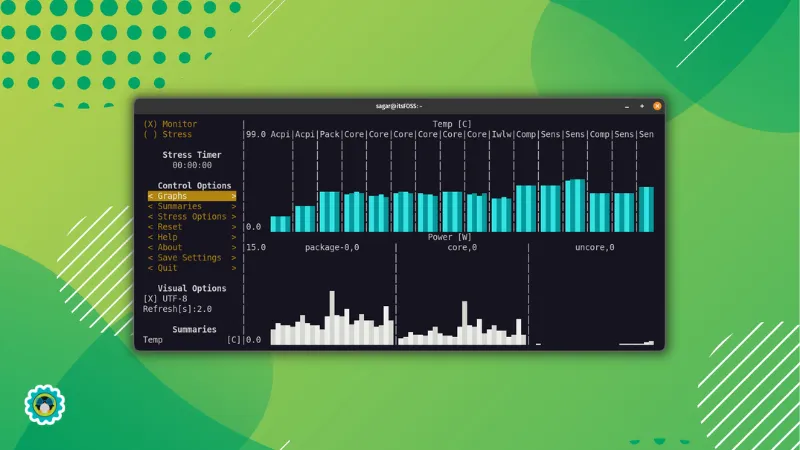
The community continues to highlight essential utilities that make the desktop Linux experience more efficient. Tools like S-TUI, which provides a beautiful, terminal-based interface for monitoring CPU frequency and thermal throttling, are gaining traction. Similarly, the inxi command remains a staple for those needing granular system information at a glance.

For those looking to optimize their workflow, the Nemo file manager’s split-pane functionality—activated by the F3 key—remains a quintessential tip. These small, user-facing improvements form the bedrock of the desktop experience, proving that Linux is not just about server infrastructure, but about a refined, personal computing environment.
The "FOSSverse" and Beyond
Initiatives like the Tuxdle word game and the ongoing discussions in forums regarding projects like the Blanc Browser illustrate a vibrant, self-sustaining culture. The history of technology is also being remembered, with recent commemorations of the "Blue Book" Ethernet specification—which turned a Xerox PARC lab experiment into the networking standard for the world—serving as a reminder that today’s "experimental" open-source projects are often the foundation of tomorrow’s global infrastructure.

Conclusion: Looking Ahead
The past week has highlighted a fundamental tension in the FOSS movement: the reliance on corporate infrastructure versus the inherent resilience of open licenses and community collaboration. While the loss of funding and the rise of automated spam present real threats, the rapid recovery of projects like OpenCourant and the proactive security measures being taken by groups like Red Hat prove that the ecosystem is far from stagnant.
As we move toward 2025 and beyond, the success of the FOSS community will depend on its ability to formalize sustainable funding models, adopt memory-safe languages, and continue the tradition of building tools that prioritize user sovereignty over corporate profit. The infrastructure may change, and the players may shift, but the commitment to an open, secure, and collaborative digital future remains as strong as ever.








