Navigating the Future of Android Development: A Deep Dive into the Android Bench July Update
In the rapidly shifting landscape of artificial intelligence, the utility of a Large Language Model (LLM) is often defined by its domain-specific precision. For the global Android developer community, the challenge has never been a lack of AI tools, but rather a lack of standardized, reliable benchmarks to determine which models actually excel at the nuances of mobile development. Since its inception in March, Android Bench has emerged as the definitive authority for measuring AI performance in real-world Android engineering tasks.
With the release of the July update, the Android team has fundamentally upgraded its evaluation infrastructure, adopted the Harbor framework, and expanded the leaderboard to include eight cutting-edge models. This move marks a significant shift toward greater transparency and community-driven development in the AI-assisted coding era.
Main Facts: The July Evolution
The July release of Android Bench represents more than just a routine update; it is a structural overhaul. The core of this update rests on three pillars: the adoption of the Harbor framework, the addition of eight powerful new LLMs, and the formal invitation for the developer community to contribute directly to the benchmarking dataset.
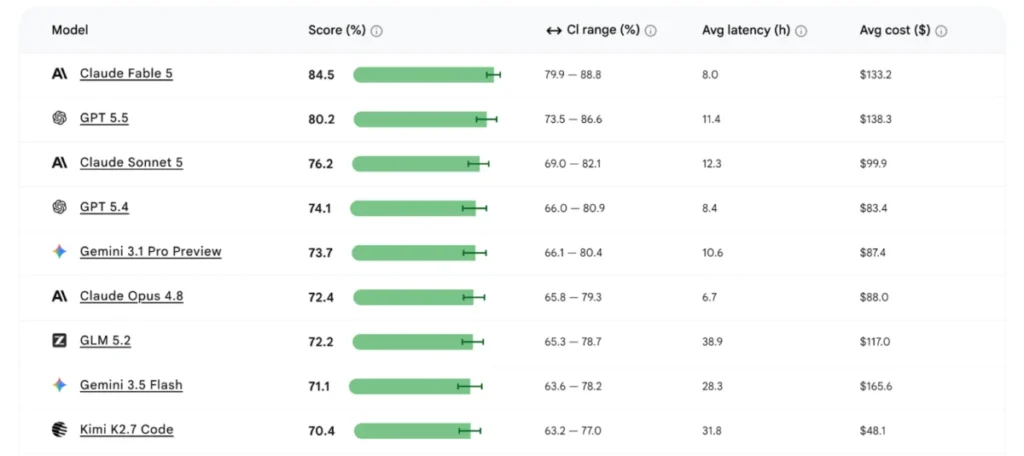
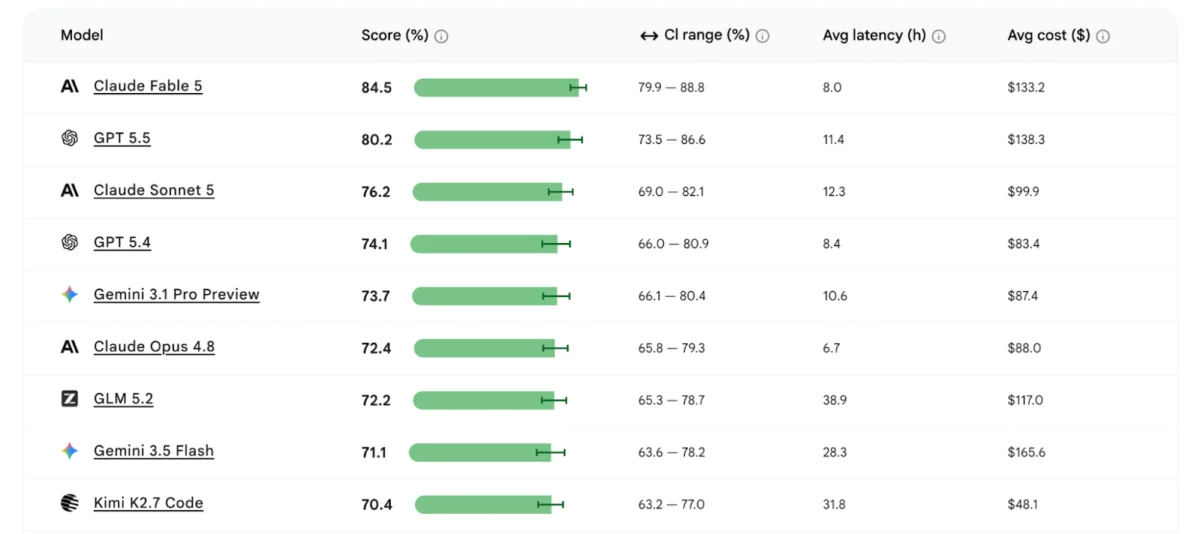
The headline, of course, is the new leaderboard hierarchy. Claude Fable 5 has seized the top spot with a score of 84.5, narrowly edging out the previous titan, GPT 5.5, which now sits at 80.2. In the competitive arena of open-weight models, GLM 5.2 has set a new standard with a score of 72.2. By integrating the Harbor framework, the Android team has ensured that these scores are not merely arbitrary numbers, but are derived from a standardized, reproducible, and industry-aligned testing environment.
Chronology: From Concept to Industry Standard
To understand the significance of this update, one must view it through the timeline of its development:
- March: Android Bench is introduced to the public. The goal is clear: provide transparency for developers who use AI to assist with everything from boilerplate generation to complex Jetpack Compose migrations.
- April–June: The team begins iterating based on community feedback. Recognizing that raw capability is only half the battle, the leaderboard is expanded to include cost-efficiency metrics and a dedicated track for open-weight models.
- July (The Current Milestone): The transition to the Harbor framework is finalized. This move standardizes the benchmarking agent, allowing for greater cross-platform compatibility and, crucially, allowing developers to run their own evaluations using the same metrics as the core Android team.
This progression highlights a shift from a "Google-centric" tool to an "industry-standard" framework. By leveraging the Harbor ecosystem, the Android team has signaled that they are committed to an open, collaborative future for AI-assisted mobile development.

Supporting Data: Understanding the New Leaders
The integration of new models into Android Bench provides a fascinating look at the current state of generative AI. The inclusion of eight new models—Claude Fable 5, Claude Sonnet 5, Claude Opus 4.8, GLM 5.2, Kimi K2.7 Code, MiniMax M3, Qwen 3.7 Plus, and Qwen 3.7 Max—demonstrates how quickly the field is moving.
The Leaderboard Breakdown
| Rank | Model | Score |
|---|---|---|
| 1 | Claude Fable 5 | 84.5 |
| 2 | GPT 5.5 | 80.2 |
| 3 | Claude Sonnet 5 | 76.2 |
| 4 | GLM 5.2 (Open-weight leader) | 72.2 |
| 5 | Kimi K2.7 Code | 70.4 |
Note: Historical data for older models remains accessible in the project archives, ensuring that developers can track their preferred models’ relative performance despite the methodology shift.
The data indicates a clear trend: models are becoming increasingly specialized in code-heavy environments. The high performance of models like Kimi K2.7 Code and GLM 5.2 within the open-weight category suggests that developers no longer need to rely solely on massive, closed-source proprietary models to handle complex tasks like platform API updates or wearable networking debugging.
Official Responses and Methodology
The decision to migrate to the Harbor framework was not taken lightly. The original methodology, which relied on the mini-swe-agent v1, served its purpose in the early days of the project. However, as agentic workflows have become more complex, the need for a more robust, standardized agent became apparent.
"We want to ensure Android Bench is helpful for you," the team noted in their official release statement. By adopting Harbor, the Android team is effectively decoupling the evaluation methodology from their internal infrastructure. This allows for:
- Transparency: Anyone can view the test harness and understand exactly how a score is calculated.
- Reproducibility: Developers can test their own custom setups using the same parameters.
- Extensibility: The community can now contribute new tasks, which is the most significant leap forward for the project’s long-term viability.
Implications: The Power of Community Contribution
Perhaps the most transformative aspect of the July release is the move toward crowd-sourced benchmarks. Historically, benchmarks are "black box" affairs maintained by large organizations. By opening the repository to community-submitted tasks, the Android team is essentially crowdsourcing the "pain points" of real-world development.

If a developer finds that a specific type of migration—such as a complex refactor of an older View-based UI to modern Jetpack Compose—is not being accurately represented in existing benchmarks, they can now submit a task that tests exactly that scenario. This ensures the benchmark remains a living, breathing reflection of what Android developers actually deal with on a daily basis, rather than a curated set of artificial challenges.
How to Get Involved
The Android team has outlined two primary paths for engagement:
- Task Submission: Developers are encouraged to submit real-world coding tasks via the official GitHub repository. These tasks are then vetted by the Android team to ensure they meet the rigorous standards of the benchmark.
- Evaluation Sharing: By utilizing the Harbor Hub, developers can run their own evaluations and share their findings, providing a wider set of data points for the community to analyze.
Conclusion: A New Era for AI-Assisted Android Development
The July update to Android Bench is a testament to the fact that AI in software engineering is moving out of its "experimental" phase and into a "professional" phase. We are no longer asking if AI can write code; we are asking which model is the most efficient, the most accurate, and the most reliable for specific mobile architecture tasks.
For the Android developer, this means less time spent guessing which tool is right for the job and more time building. Whether you are working on a high-traffic e-commerce app or a niche wearable project, the metrics provided by the updated Android Bench offer a clear roadmap for your AI-assisted workflow.
As the industry continues to evolve, the partnership between Google’s infrastructure and the community’s expertise will be the defining factor in how successfully we integrate AI into the software development lifecycle. The tools are there—now it is up to the developer community to shape them, refine them, and use them to build the next generation of mobile experiences.
For those looking to get started, the official GitHub repository serves as the gateway to this new collaborative ecosystem. As we look toward the future, one thing is certain: the bar for AI performance has been raised, and it is the developer who ultimately stands to benefit.