Navigating the Future of Enterprise Connectivity: KORE and Kaleido Host Definitive Webinar on Global IoT Deployments
As enterprise Internet of Things (IoT) ecosystems expand rapidly across borders, continents, and oceans, the foundational architecture supporting them faces unprecedented scrutiny. Modern organizations are no longer connecting merely dozens or hundreds of remote assets; they are orchestrating deployments comprising tens of thousands, and in many cases, millions of connected endpoints.
While the promise of global IoT is vast—spanning supply chain optimization, automated industrial machinery, smart city infrastructure, and healthcare telemetry—the reality of maintaining reliable, secure, and regulatory-compliant connectivity across a fragmented international landscape remains one of the most formidable hurdles in enterprise technology today.
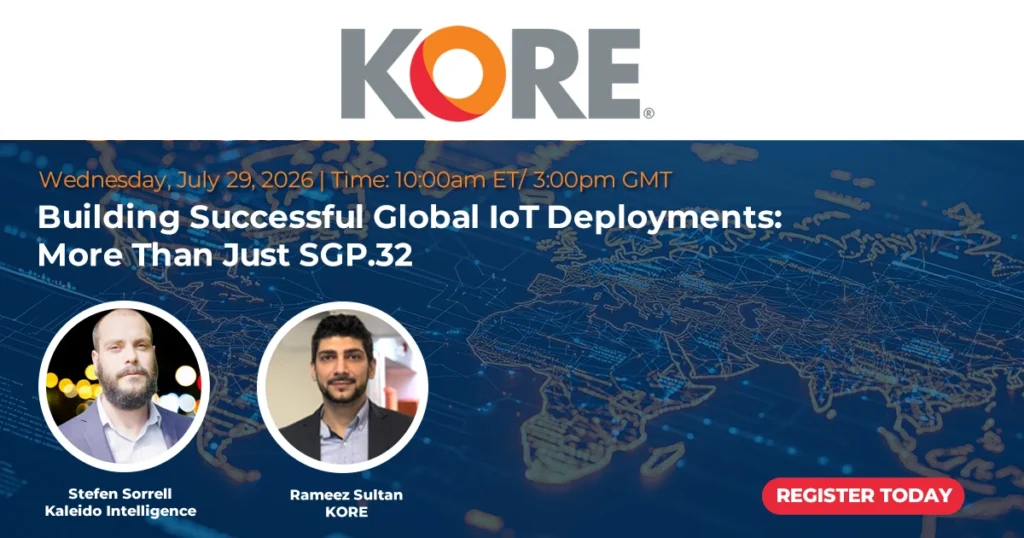
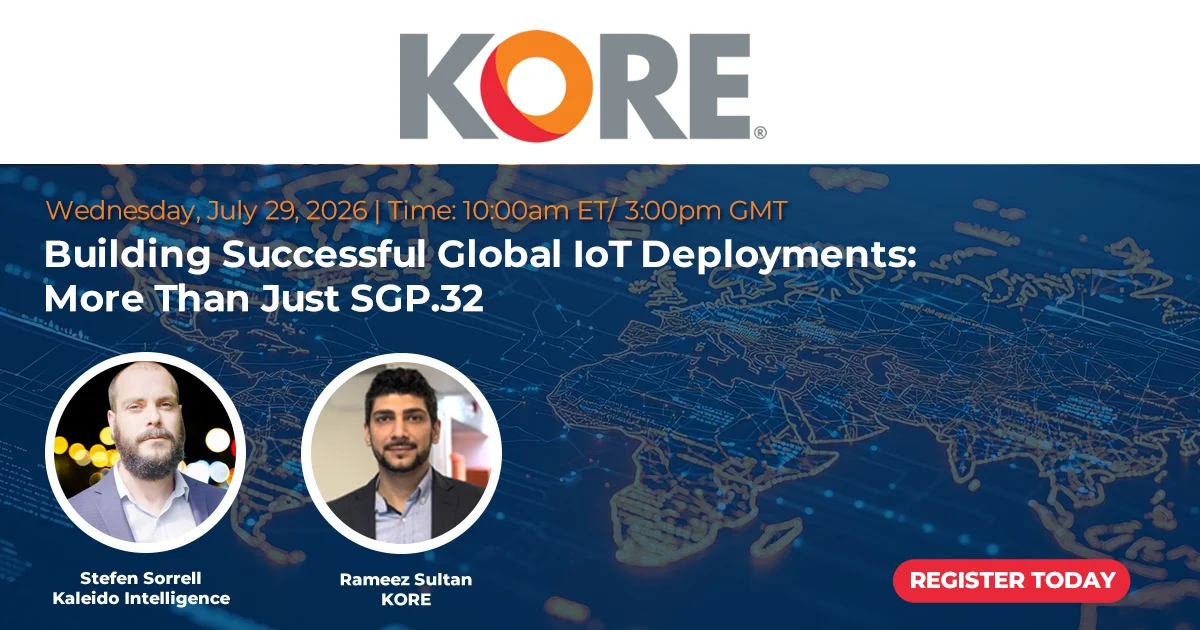
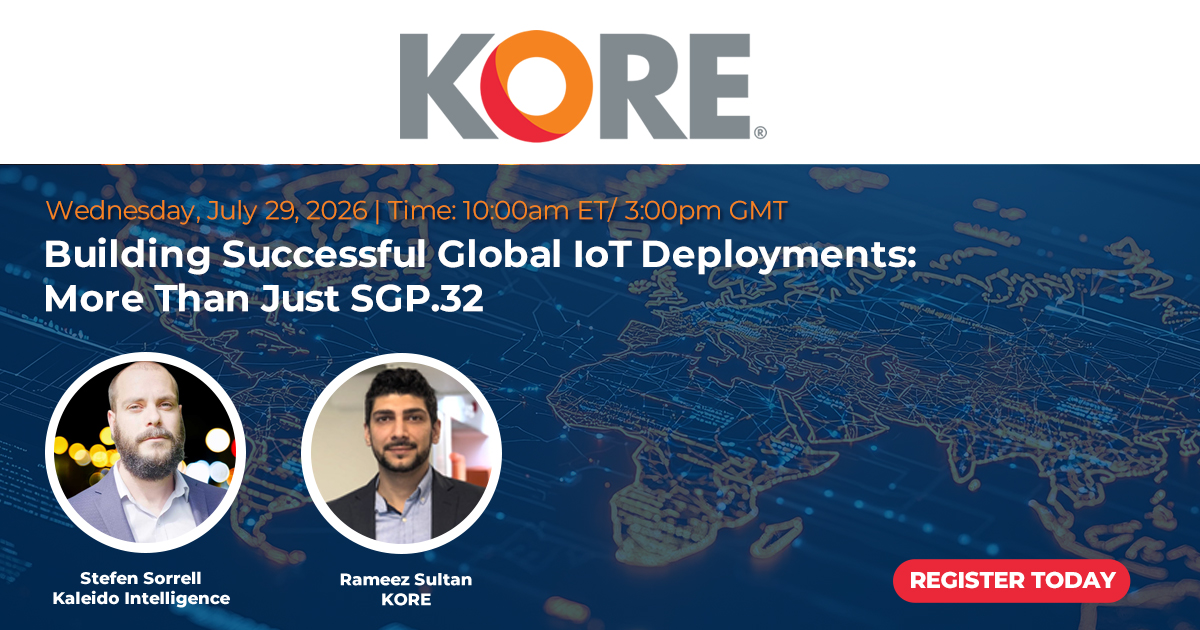
To address these escalating challenges, industry leaders KORE and Kaleido have announced a joint, high-impact webinar titled "Building Successful Global IoT Deployments: More Than Just SGP.32." Scheduled for Wednesday, July 29, 2026, at 10:00 a.m. ET / 3:00 p.m. GMT, the virtual event is designed to move enterprises past the hype of singular technological standards and toward a holistic, resilient, and scalable connectivity framework.
Main Facts: The Anatomy of Modern IoT Expansion
The upcoming collaborative session between KORE—a global leader in IoT solutions and management services—and Kaleido Intelligence—a premier connectivity market research and consulting firm—comes at a critical juncture for the telecommunications and enterprise technology sectors.
Key Event Details:
- Event Building Successful Global IoT Deployments: More Than Just SGP.32
- Hosts: KORE and Kaleido Intelligence
- Date: Wednesday, July 29, 2026
- Time: 10:00 a.m. ET / 3:00 p.m. GMT
- Registration: Secure your spot via GoToWebinar
The core thesis of the webinar centers on a dangerous pitfall common among growing enterprises: treating connectivity as a checklist exercise dominated by the latest hardware or software specifications. While standards like SGP.32 (the GSMA specification for remote SIM provisioning in consumer and IoT devices) represent monumental leaps forward in remote device management, experts emphasize that a single standard cannot serve as a silver bullet for the complex realities of international business.
Chronology of Connectivity: From Static SIMs to Global Orchestration
To understand why KORE and Kaleido are sounding the drumbeat for a comprehensive strategy, it is essential to trace the evolution of IoT connectivity management over the past decade.
1. The Era of Static M2M SIMs (Early 2010s)
In the early days of Machine-to-Machine (M2M) communications, deployments relied heavily on physical, operator-locked SIM cards. If an enterprise deployed smart meters or fleet trackers in Europe and subsequently expanded operations into North America, swapping the physical SIMs was often cost-prohibitive or physically impossible. This era was characterized by high roaming fees, permanent roaming restrictions imposed by foreign regulators, and severe vendor lock-in.
2. The Rise of eUICC and Remote SIM Provisioning (Mid-to-Late 2010s)
The introduction of the embedded Universal Integrated Circuit Card (eUICC) and initial GSMA standards (such as SGP.01 and SGP.02 for M2M) allowed enterprises to dynamically download and change carrier profiles over the air (OTA). This reduced the need for physical truck rolls to swap out SIM cards, marking a major milestone in operational efficiency. However, these early standards were often complex, expensive to implement, and heavily skewed toward high-bandwidth cellular use cases.
3. The SGP.32 Revolution and Modern Complexity (Present Day)
Enter SGP.32, the latest evolution engineered specifically to address the unique constraints of IoT devices—particularly those with constrained processing power, battery limitations, or restricted user interfaces. SGP.32 streamlines remote profile management, empowering enterprises with greater flexibility and control.
Yet, as KORE and Kaleido point out, simply adopting SGP.32 does not insulate an enterprise from the geopolitical, regulatory, and technical friction points of global scaling. Supply chain vulnerabilities, localized data sovereignty laws, shifting carrier agreements, and long-term device lifecycle management remain massive variables that require an overarching strategy rather than a localized technical fix.
Supporting Data & Market Realities: Why Strategy Trumps Specifications
Market research from Kaleido Intelligence consistently highlights a recurring trend: enterprises that treat IoT connectivity as an afterthought experience significantly higher total cost of ownership (TCO) and higher device churn rates than those with a defined lifecycle strategy.
- The Multi-Carrier Imperative: In global deployments, no single Mobile Network Operator (MNO) possesses optimal native coverage across every country. Enterprises must orchestrate multi-carrier agreements that blend Tier-1 cellular networks with robust roaming partnerships to eliminate dead zones.
- Regulatory Fragmentation: Data localization laws (such as GDPR in Europe or localized residency requirements in parts of Asia and South America) mean that data routing and storage must be managed with strict compliance. A connectivity strategy must account for where data travels, not just how it gets there.
- Lifecycle Longevity: Many IoT deployments—such as agricultural sensors, structural health monitors, and smart utility meters—are designed to remain in the field for a decade or more. Technologies evolve, 2G and 3G networks sunset, and carrier partnerships dissolve. A future-proof strategy must account for seamless profile migration and remote troubleshooting over a 10-year horizon.
Official Perspectives: Bridging the Gap Between Standards and Operations
Industry analysts and executives from both KORE and Kaleido stress that the webinar will provide clarity for organizations overwhelmed by the alphabet soup of telecom standards.
"Deploying IoT at a global scale is not merely a matter of plugging in the newest standard and watching data flow," notes industry commentary surrounding the event. "It requires navigating a labyrinth of regulatory frameworks, carrier relationships, security postures, and operational workflows. SGP.32 is a powerful engine, but enterprises still need a clear map, a reliable vehicle, and an experienced crew to reach their destination."
During the upcoming session, experts will break down:

- How SGP.32 fundamentally alters the remote provisioning landscape without rendering existing infrastructure obsolete.
- The symbiotic relationship between advanced SIM standards and robust global connectivity management platforms.
- Practical methodologies for mitigating risk when transitioning fleets across international borders.
Implications for Enterprise Leaders: Who Should Attend and What’s at Stake
The stakes for modern enterprises are remarkably high. A failed international IoT rollout can result in thousands of stranded assets, crippling regulatory fines, catastrophic data security breaches, and millions of dollars in wasted capital expenditure. Conversely, a streamlined, resilient global IoT deployment unlocks real-time visibility, predictive maintenance capabilities, enhanced customer experiences, and new recurring revenue streams.
This webinar has been meticulously curated for professionals tasked with steering these high-stakes digital transformations. Target attendees include:
- Chief Technology Officers (CTOs) and Chief Information Officers (CIOs): Leaders responsible for enterprise-wide architecture, security compliance, and long-term IT roadmaps.
- IoT Product Managers and Directors of Product Development: Professionals overseeing the design, manufacturing, and operational success of connected products.
- Operations and Supply Chain Executives: Leaders managing international logistics, asset tracking, and field service efficiency.
- Network and Connectivity Engineers: Technical specialists charged with implementing SIM management platforms, eUICC architectures, and carrier integrations.
- Enterprise Strategists and Procurement Leaders: Decision-makers evaluating vendor partnerships, total cost of ownership, and global carrier agreements.
Conclusion: Preparing Your Organization for the Future of IoT
As the boundaries of enterprise connectivity continue to expand, organizations cannot afford to rely on short-term fixes or isolated technological standards. Navigating the next generation of global deployments demands foresight, robust partnerships, and a comprehensive strategy designed to withstand the test of time and changing regulatory landscapes.
Join the foremost experts from KORE and Kaleido on Wednesday, July 29, 2026, to discover how leading global enterprises are moving beyond the limitations of standard specifications to build truly resilient, scalable, and secure connected ecosystems.
Don’t leave your global deployments to chance. Register for the webinar today to acquire the actionable insights, strategic frameworks, and technical best practices required to keep your connected devices online, compliant, and operational—wherever business takes you.