Re-engineering Scale: How Meta and Google Transformed Instagram Direct into an AI-Native UI Powerhouse
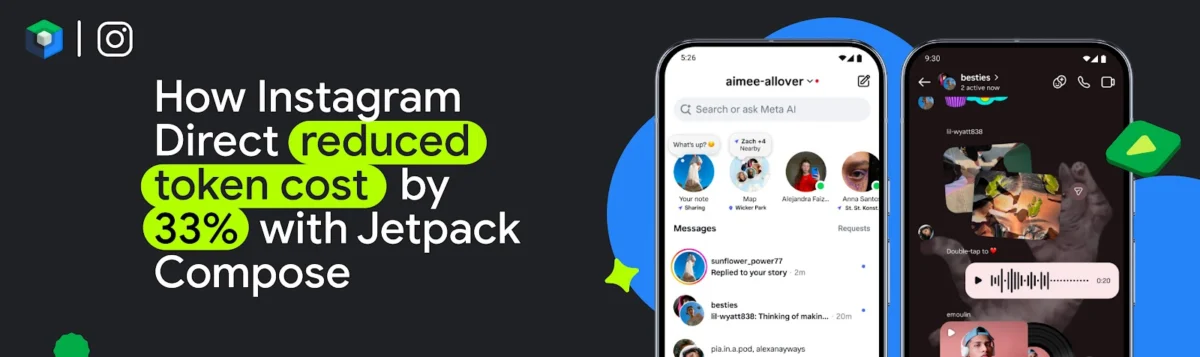
In the high-stakes environment of mobile application development, few challenges are as daunting as modernizing a core, high-traffic surface within a global application. Instagram Direct—a feature handling billions of daily messages—recently underwent a massive architectural overhaul. By moving from a legacy Android View system to Jetpack Compose, the engineering teams at Meta and Google have not only modernized the interface but have effectively pioneered a new paradigm for "AI-native" UI development.
The results of this collaboration are transformative. The new codebase is 50% smaller than its predecessor, delivers a 35% reduction in AI agent execution time, and cuts token costs for AI-assisted coding tasks by 33%. This project serves as a masterclass in how large-scale organizations can leverage declarative UI frameworks to optimize both human productivity and machine efficiency.
The Technical Imperative: Beyond Mere Modernization
For years, the Instagram Direct team pushed the limits of the legacy Android View system. Every micro-optimization had been squeezed out, yet the team faced mounting technical debt. As AI coding assistants became integrated into daily workflows, the team noticed a recurring friction: the legacy imperative UI code was difficult for AI models to reason about. The mismatch between the mutable, side-effect-heavy nature of Views and the needs of modern AI-assisted development created an environment where bugs were hard to reproduce and maintainability was becoming a bottleneck.
.jpg)
The shift to Jetpack Compose was not just a design choice; it was a strategic decision to embrace a declarative architecture. By making the UI structure concise, predictable, and structurally sound, the team created a codebase that AI could navigate with significantly higher accuracy.
Chronology: A Multi-Stage Migration Strategy
Migrating a system that supports hundreds of millions of users required a surgical, phased approach to ensure that the user experience remained seamless. The team broke the migration down into a multi-stage process:
- Preparation and Abstraction: Before touching the UI, the team established a shared knowledge base of reusable "skills" and conventions. This ensured that every engineer and AI agent operated under the same set of best practices.
- The Hybrid Phase: Initially, Compose components were integrated into the existing
RecyclerViewarchitecture. This allowed the team to test components in isolation without rewriting the entire screen infrastructure. - The "AI-Native" Refactor: The team moved away from mixing imperative and declarative code. By enforcing strict boundaries—where Compose code exists as a pure function of its state—they eliminated the "blending" bugs that previously haunted the codebase.
- The Native Transition: Finally, the team began transitioning from
RecyclerViewto the Compose-nativeLazyColumn. This removed the final dependencies on the legacy framework, resulting in an end-to-end declarative experience.
Data-Driven Performance: The Efficiency of Compose
The success of this migration is anchored in hard data. Meta’s internal analytics compared AI agent performance on legacy View code versus the new Compose architecture. The findings were stark:

- Resource Efficiency: As codebases grow in complexity (tracked via a "risk score"), AI agents become less efficient. When a file’s risk score doubles, legacy View-based UI sees a 30% drop in agent resource efficiency. Conversely, Jetpack Compose-based UI saw only a 9% reduction, proving its superior stability and predictability.
- Performance Metrics: The team tracked three primary performance metrics: Frame Drops, Scroll Jitter, and Interaction Latency. By implementing features like "Pausable Composition" and
LazyLayoutCacheWindows, the team successfully matched or exceeded the performance benchmarks of the highly optimized legacy View system. - The Power of Scale: The team discovered that partial migrations were misleading. True performance gains only became apparent once entire surfaces were moved to Compose, eliminating the overhead of "bridging" between different UI frameworks.
Official Perspectives: A Partnership of Giants
The collaboration between Meta and Google was fundamental to this project. According to Pavlo Stavytskyi, Software Engineer at Meta, the goal was never just to rewrite the UI, but to rethink the relationship between the developer, the machine, and the code.
"By focusing on AI-readiness," Stavytskyi noted, "we weren’t just making it easier for humans to write code; we were making it easier for the entire development ecosystem to scale."
Google’s Developer Relations team, led by engineers like Rebecca Franks, worked in tandem with Meta to feed these insights back into the Android framework. This partnership resulted in the inclusion of new APIs in Jetpack Compose, such as LazyLayoutCacheWindow and onVisibilityChanged. These tools are now available to the broader Android developer community, ensuring that the lessons learned at Instagram’s scale benefit smaller developers and large enterprises alike.

Implications: The Rise of AI-Native Architecture
The Instagram Direct migration marks a turning point in mobile engineering. We are moving away from an era where "modernization" meant simply changing the look of an app, toward an era where architecture is designed for "AI-readiness."
1. The Death of Imperative Complexity
The primary lesson is that the paradigm shift to declarative UI is the most effective way to manage AI-assisted coding. When UI is defined by state rather than a series of mutable lifecycle events, AI agents are less likely to "hallucinate" incorrect patterns or introduce subtle, cross-frame bugs.
2. The Power of "Pausable" UI
The introduction of Pausable composition is a significant advancement for high-performance applications. By allowing the system to spread the cost of complex UI rendering across multiple frames, developers can ensure that even the most "heavy" screens remain fluid. This feature, refined during the Instagram migration, is a game-changer for scroll performance on Android devices.

3. Visibility and Analytics
The onVisibilityChanged API is a quiet but monumental addition. In the past, logging user impressions—a critical metric for product quality—required fragile, custom implementations. By baking this into the Compose framework, Google has provided a standardized, performant, and reliable way for apps to understand exactly what the user is seeing.
4. The "Warmup" Advantage
The team also noted that the Compose runtime benefits from a "warmup" effect. Because messaging is a high-traffic surface, the initial overhead of the Compose runtime is quickly amortized. As more surfaces in an app transition to Compose, the entire app becomes more responsive, as the runtime is already primed and ready for interaction.
Future Outlook: A New Standard for Mobile Development
The Instagram Direct project is a testament to the fact that technical debt is not inevitable; it is a choice. By combining the power of Jetpack Compose with a rigorous, AI-first engineering philosophy, the team at Meta has future-proofed one of the most important surfaces on the internet.

For the wider developer community, the implications are clear: the future of UI development is declarative, AI-assisted, and performance-obsessed. As AI tools continue to evolve, the architectural choices made today will determine whether those tools become a source of technical debt or a force multiplier for innovation.
The collaboration between Meta and Google has successfully moved the goalposts for what is possible on Android. As more teams adopt these patterns—utilizing LazyLayoutCacheWindows for smooth scrolling, leveraging onVisibilityChanged for accurate logging, and building with an AI-first mindset—the entire Android ecosystem stands to become faster, more reliable, and more productive.
The era of "retrofitting" is over. We have entered the era of designing for the machine, and the results speak for themselves. The Instagram Direct team has not only cleared their backlog of technical debt; they have set a new gold standard for how to build for the next decade of mobile technology.