SEATTLE — In a major development for cloud architects, DevOps engineers, and enterprise IT leaders, Amazon Web Services (AWS) has officially announced the public preview of the AWS Well-ArchitectedAgent. This groundbreaking, artificial intelligence-powered service is designed to autonomously analyze complex AWS environments, providing targeted, context-aware recommendations to optimize applications across cost, security, performance, and resilience.
Moving beyond traditional static audits and generic checklist approaches, the Well-Architected Agent evaluates cloud infrastructure with the nuance and intuition of an experienced human cloud architect. By dynamically correlating utilization metrics, resource configurations, and application topology against AWS best practices spanning more than 65 services, the new tool aims to drastically reduce the operational overhead associated with maintaining high-performing, secure cloud environments.
Main Facts: What is the AWS Well-Architected Agent?
The AWS Well-Architected Agent represents a paradigm shift in how organizations approach cloud governance and architecture reviews. Historically, maintaining alignment with the AWS Well-Architected Framework required tedious manual assessments, cross-referencing expansive documentation, and piecing together disparate data points across multiple AWS accounts and regions.
The new AI agent automates this heavy lifting. Key aspects of the service include:
Autonomous Multi-Pillar Analysis: The agent continuously reviews environments against the core pillars of the Well-Architected Framework—Cost Optimization, Performance Efficiency, Reliability, Security, and Operational Excellence.
Context-Aware Recommendations: Rather than offering one-size-fits-all suggestions, the agent aligns its insights directly with a business’s declared goals and priorities, ensuring that a cost-saving measure does not inadvertently compromise security or resilience.
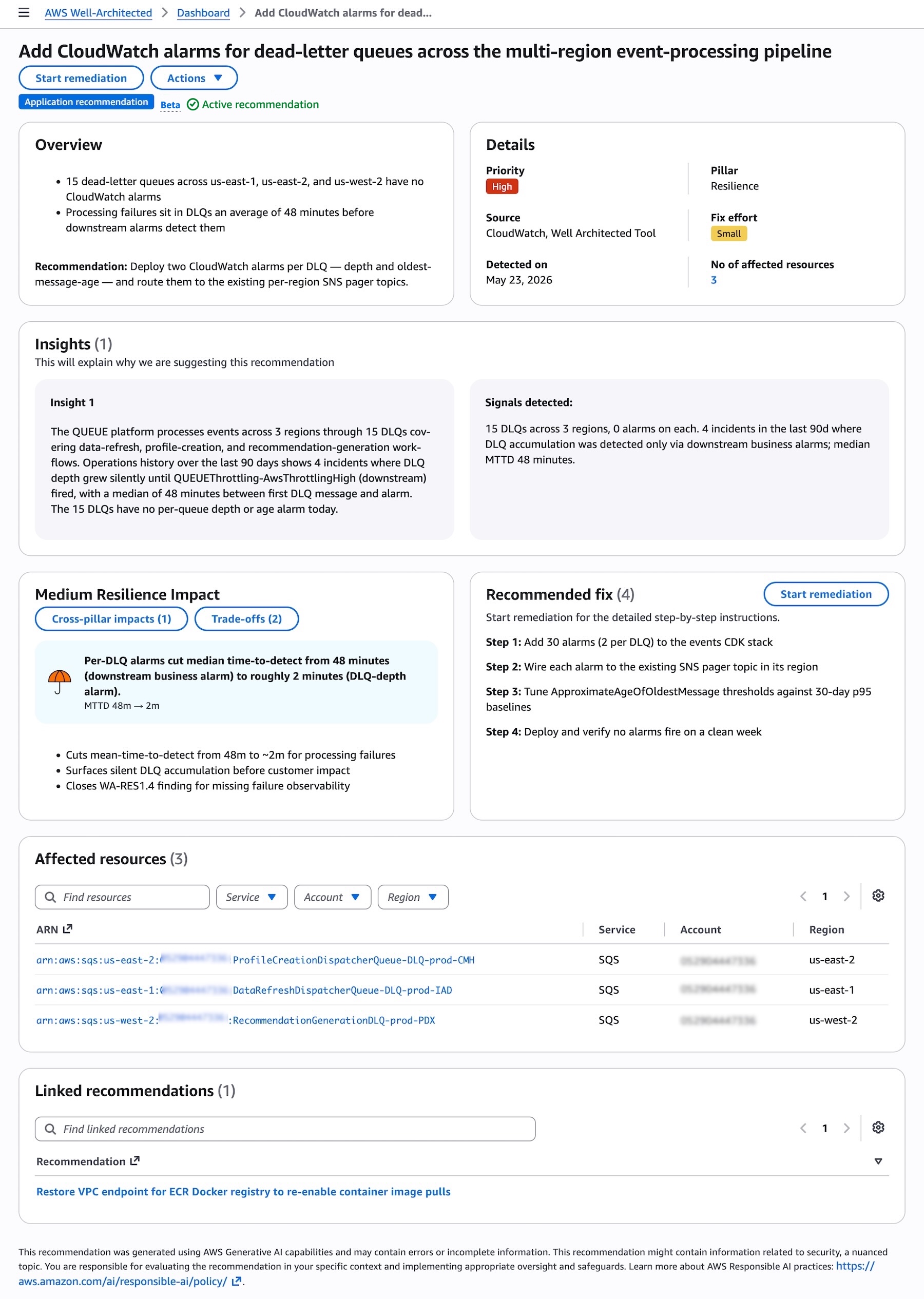
Cross-Pillar Trade-Off Visibility: Complex cloud decisions often involve compromises. The agent explicitly surfaces cross-pillar trade-offs, helping engineers understand the downstream effects of a proposed architectural change.
Actionable Remediation Packages: Every finding generated by the agent comes equipped with ready-to-implement fixes. These include step-by-step console instructions, AWS CLI commands, and automated code patches for Infrastructure as Code (IaC) templates.
Pre-Deployment and Runtime Reviews: Organizations can evaluate running workloads via live environment profiling or audit pre-deployment configurations by uploading IaC projects.
To understand the significance of the Well-Architected Agent, it is helpful to look at the chronological evolution of AWS architecture tooling and how the industry arrived at autonomous, AI-driven governance.
Phase 1: The Manual Era and the Birth of the Framework (2012–2017)
When AWS first introduced the Well-Architected Framework in 2012, it was primarily a static set of whitepapers and best practices. Cloud architects used these documents as guidelines to manually design and review systems. In 2017, AWS launched the AWS Well-Architected Tool, digitizing the framework into a questionnaire-based interface. While this made tracking architectural health easier, the process remained heavily reliant on human memory, manual data gathering, and subjective evaluations.
Phase 2: Automation and Custom Lenses (2018–2024)
Over the next several years, AWS expanded the tooling by introducing custom lenses, API integrations, and tighter alignment with trusted advisor services. Organizations could script certain checks, but stitching together insights across cost management, security posture, and performance metrics still required significant engineering hours. Automated scripts could flag anomalies, but they lacked the holistic "business context" required to prioritize fixes effectively.
Phase 3: The Generative AI Leap (2025–Present)
With the rapid maturation of generative AI and specialized machine learning models in cloud infrastructure management, AWS recognized an opportunity to transform reactive auditing into proactive, autonomous guidance. The announcement of the Well-Architected Agent in late 2026 marks the culmination of this vision. By combining deep infrastructure telemetry with conversational AI and context-aware reasoning, AWS has bridged the gap between high-level architectural design and low-level code remediation.
Supporting Data and Technical Architecture
The AWS Well-Architected Agent integrates deeply into the existing AWS ecosystem while offering flexible deployment and interaction models. Examining its technical workflows reveals how enterprises can safely harness its capabilities.
1. Profiling and IAM Permissions
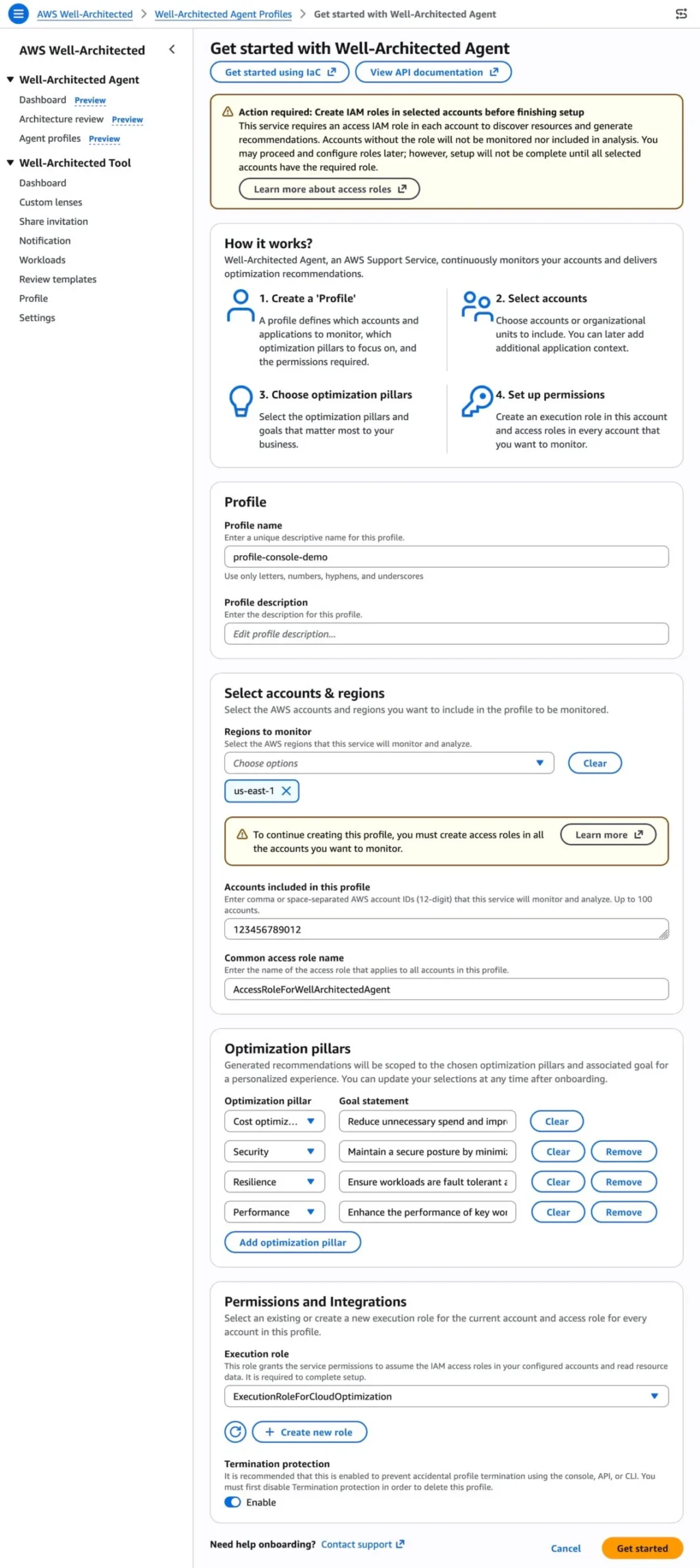
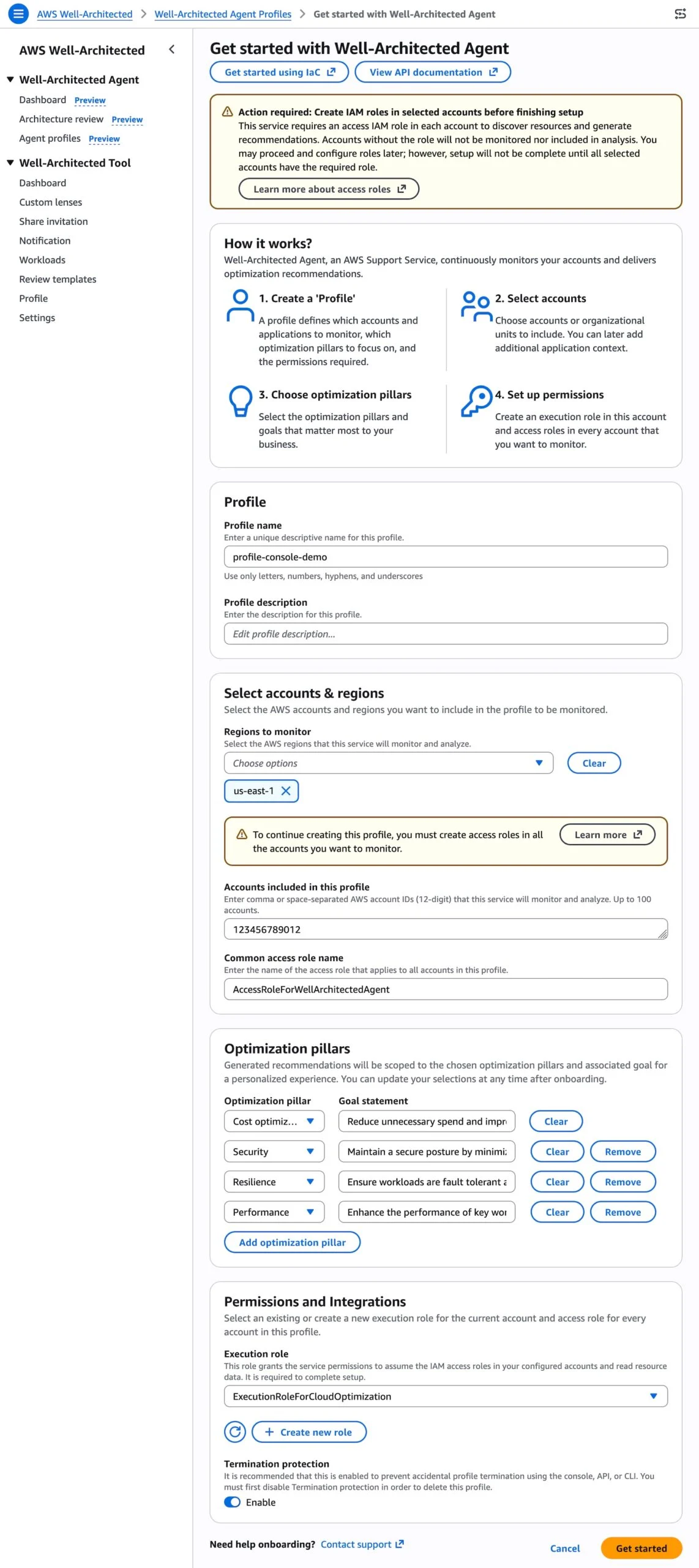
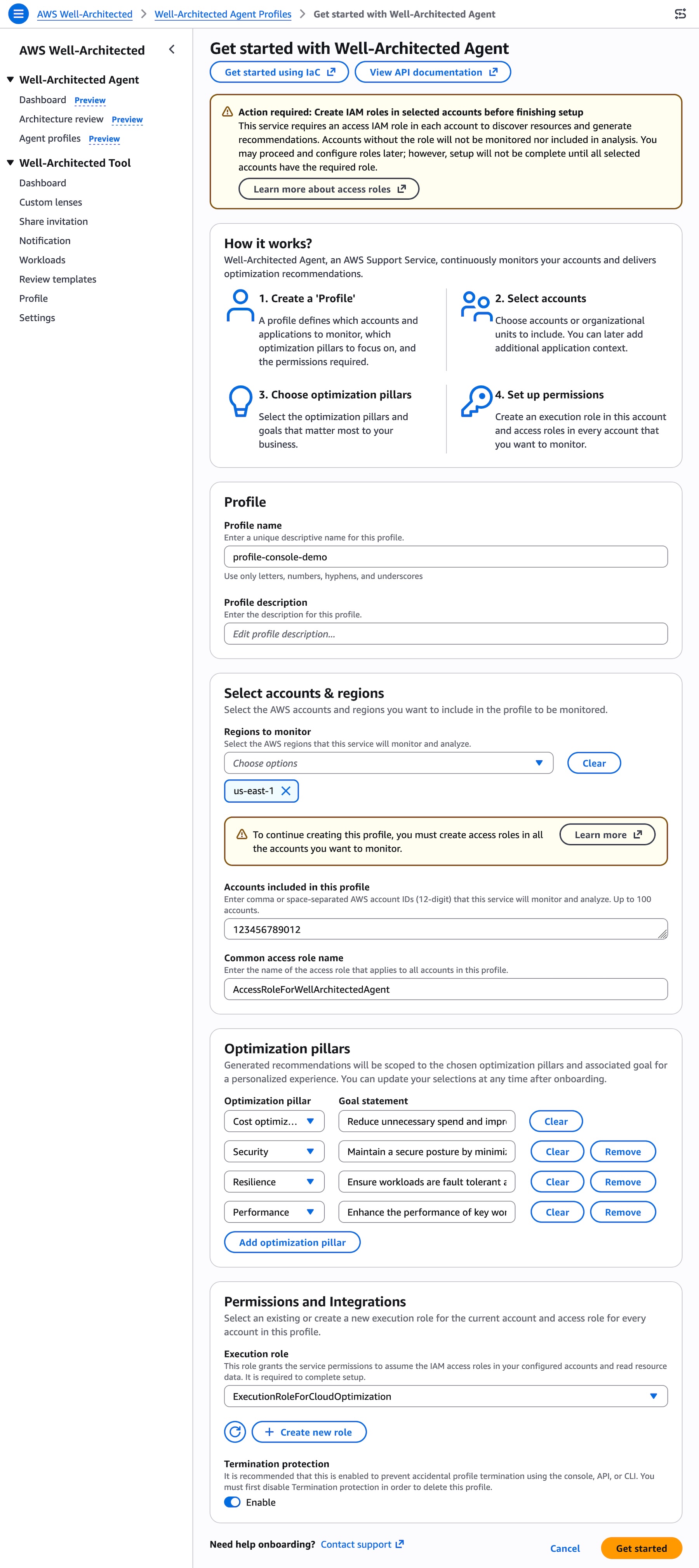
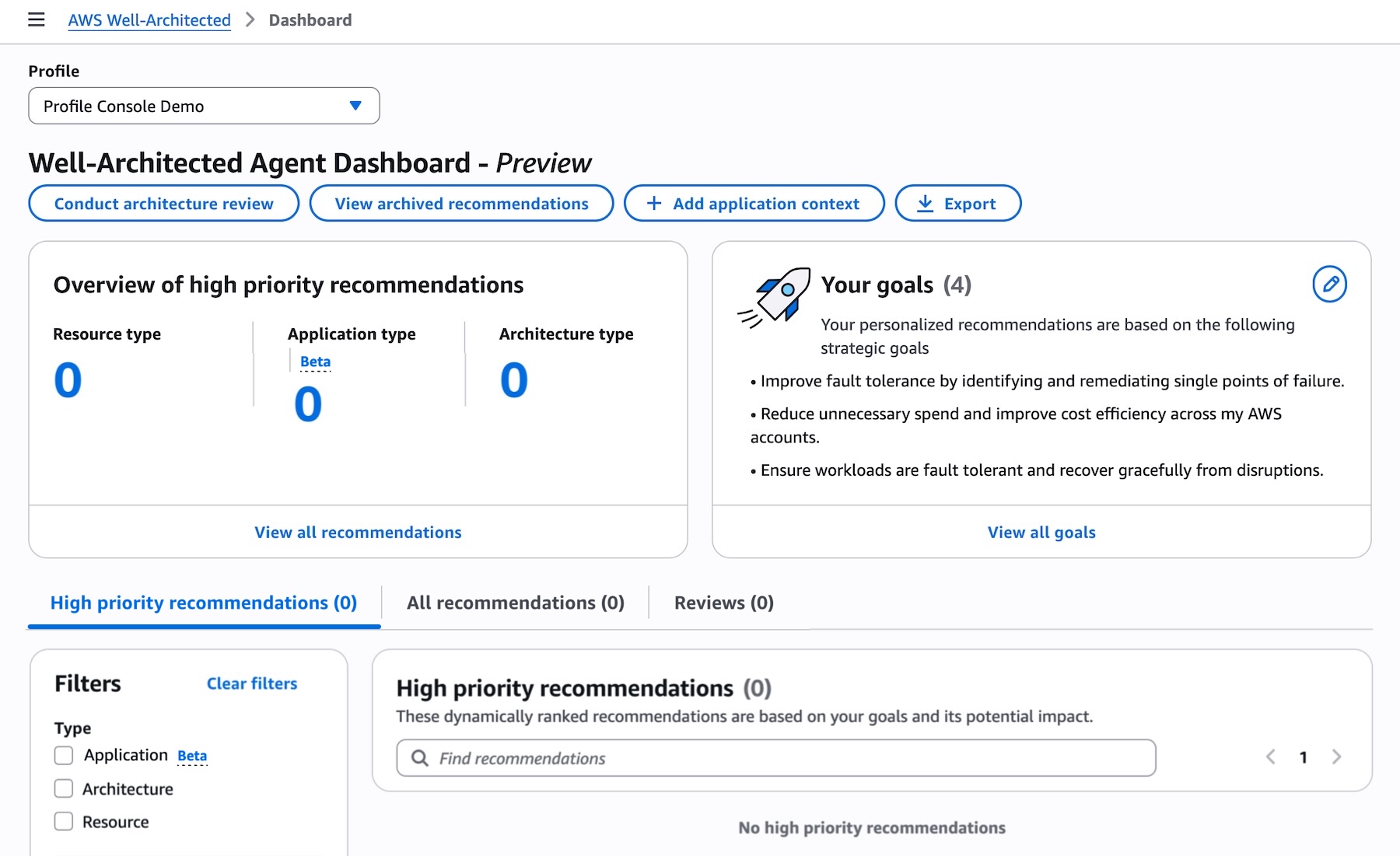
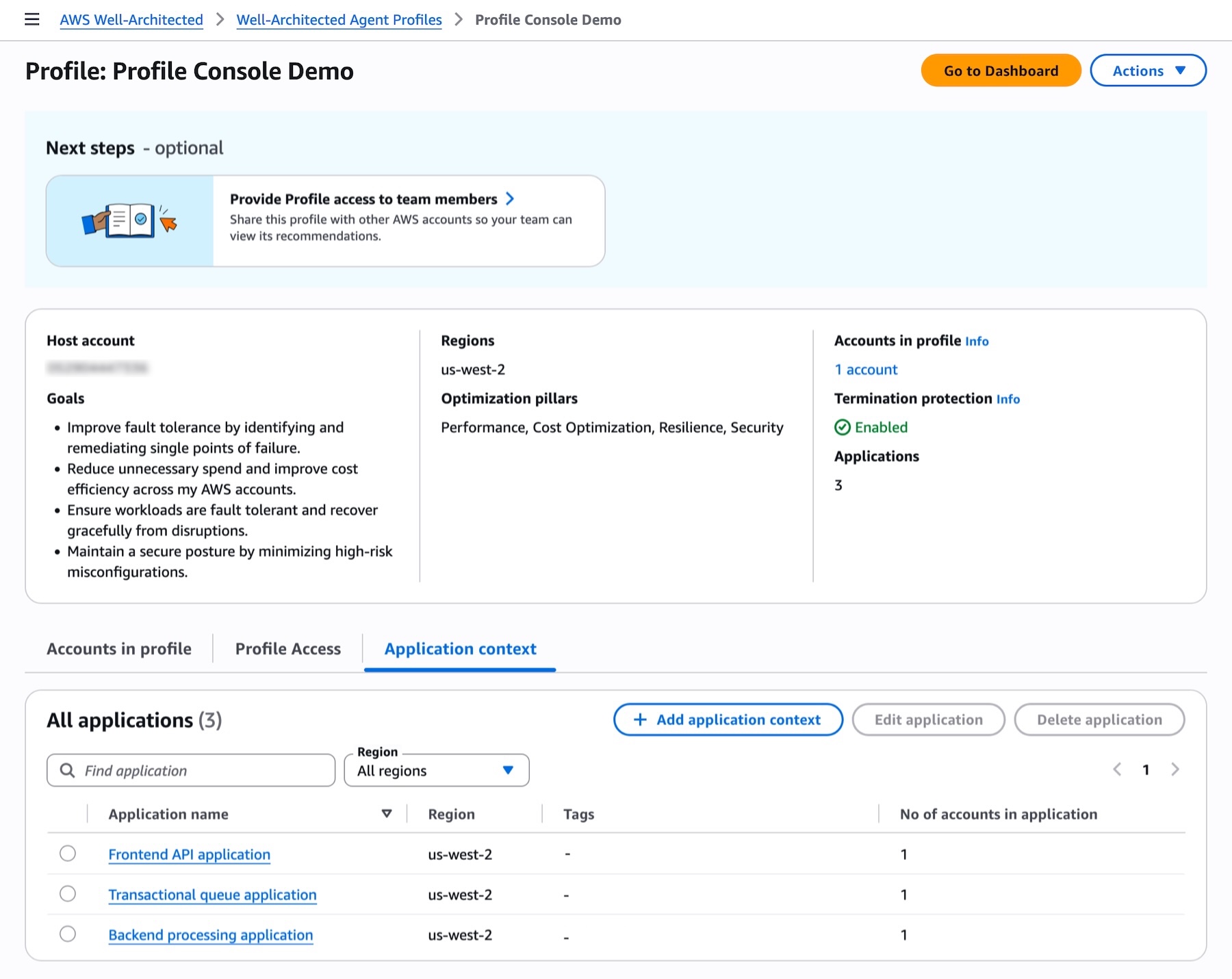
To begin, administrators establish an Agent Profile via the AWS Well-Architected console. This profile defines:
The specific AWS accounts and regions to be monitored.
The optimization pillars and business goals prioritized by the organization.
Customer-managed AWS Identity and Access Management (IAM) roles that grant the agent read-only access to resource configurations, utilization metrics, and application topologies.
Once configured, the agent initiates its first automated scan, generating initial resource and application recommendations within 24 hours.
2. Pre-Deployment Reviews via IaC Integration
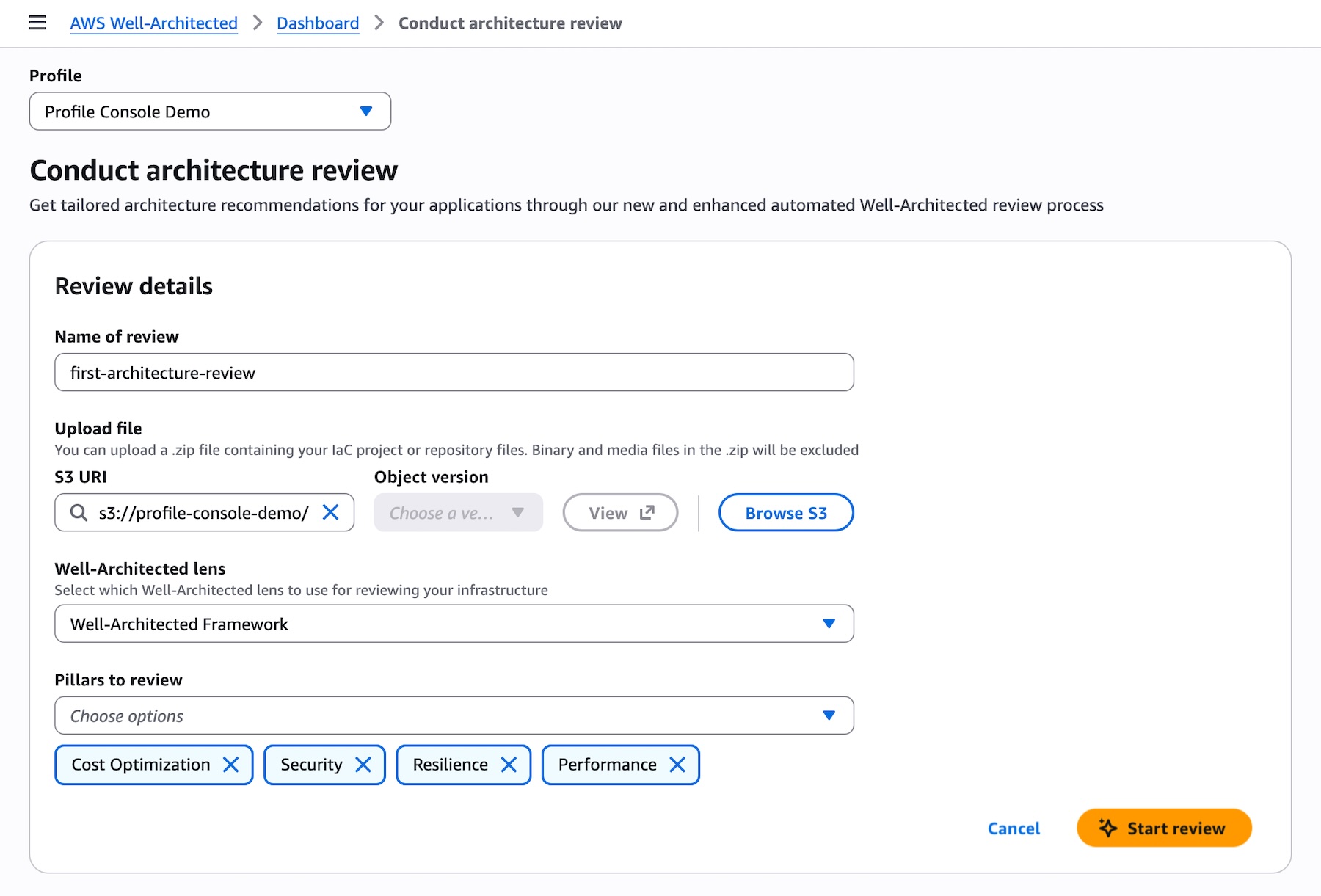
The agent is not limited to running production workloads. Development teams can conduct architecture reviews prior to deployment by packaging their Infrastructure as Code repositories—including Terraform, AWS CloudFormation, or the AWS Cloud Development Kit (CDK)—into a .zip file and uploading it to the dashboard. The agent evaluates the template against chosen Well-Architected lenses, catching architectural anti-patterns before they ever reach production.
3. Application Contextualization
To maximize relevance, users can define specific application boundaries within the dashboard. By linking AWS accounts, regions, services, and resource tags to a named application, engineers ensure that the agent evaluates components within their proper business context rather than as isolated infrastructure fragments.
4. Remediation and Developer Workflow Integration
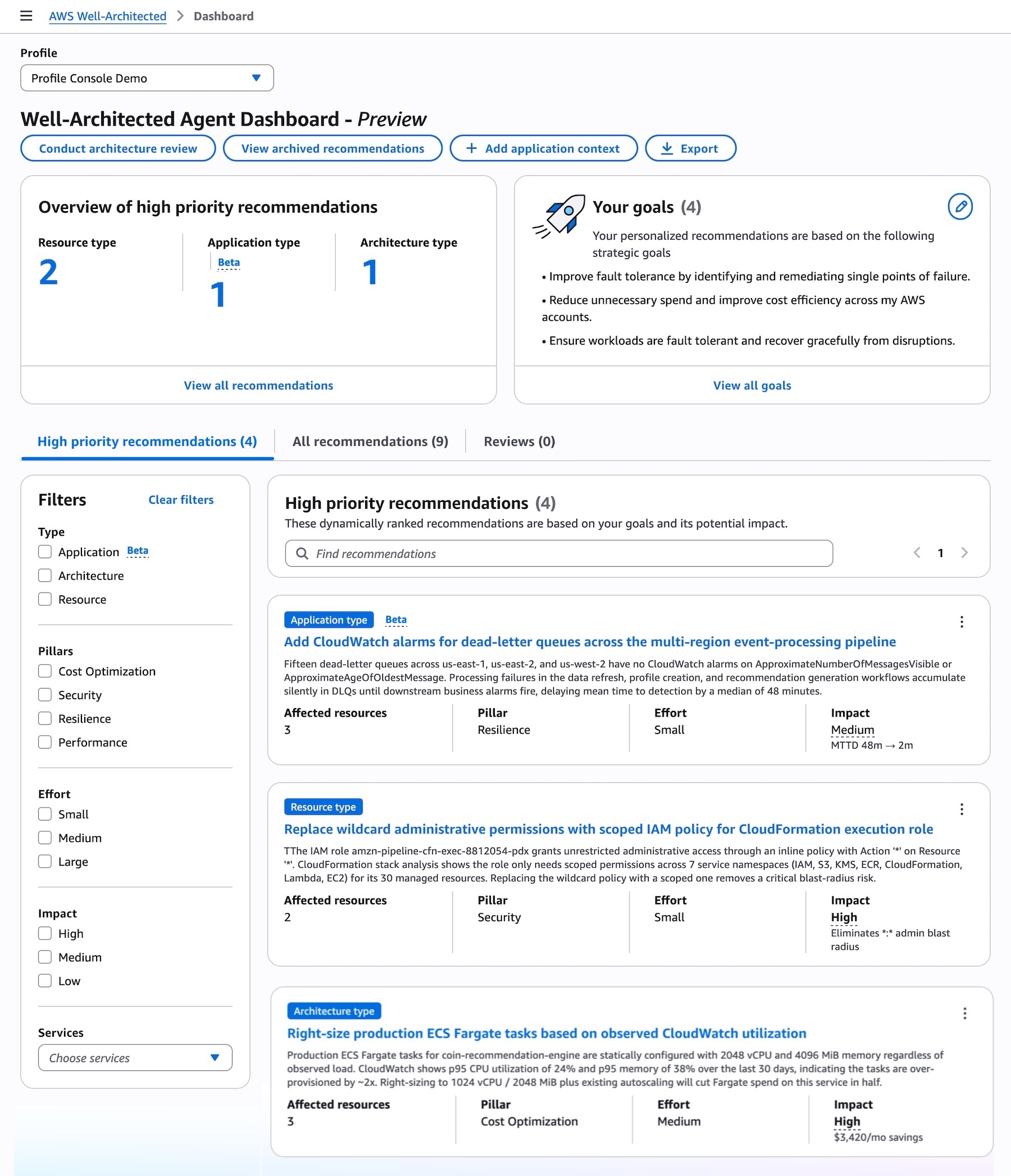
When a recommendation is selected, the agent provides a comprehensive breakdown:
The "Why": Detailed insights explaining the root cause and rationale behind the suggestion.
Impact Analysis: An assessment of how the change will affect cost, security, performance, and resilience.
Fix Options: Direct paths to resolution. For example, if a recommendation involves updating an AWS CDK script, the agent supplies the exact code patch, allowing developers to copy and paste the fix directly into their local codebase.
Furthermore, teams can integrate the agent directly into their existing developer toolchains using the AWS Model Context Protocol (MCP Server) and associated plugins. This allows developers to interact with the agent programmatically, query documentation, and pull recommendations directly inside their preferred AI coding environments.
Official Responses and Industry Perspectives
While the public preview rollout is just beginning, industry analysts and early enterprise users have shared their perspectives on what the Well-Architected Agent means for the future of cloud operations.
Cloud engineering leaders have long grappled with "alert fatigue." Traditional monitoring and security tools often inundate teams with thousands of low-priority tickets, making it difficult to discern which architectural flaws pose genuine risks to business continuity. AWS designed the Well-Architected Agent specifically to counter this phenomenon through weighted prioritization.
"For years, our engineers spent countless hours manually correlating CloudWatch metrics, Cost Explorer data, and Security Hub findings just to prepare for quarterly Well-Architected reviews," notes a lead cloud architect at a global fintech enterprise. "An autonomous agent that not only identifies these gaps with business context but hands us the exact Terraform or CDK patch to fix them fundamentally changes our velocity."
AWS leadership emphasizes that the agent is designed to augment, not replace, human oversight. The existence of the agent does not deprecate the traditional AWS Well-Architected Tool; rather, organizations can continue using manual evaluations and user-defined lenses alongside the agent to maintain rigorous governance standards tailored to specialized internal policies.
Implications for Enterprises and Cloud Professionals
The introduction of the AWS Well-Architected Agent carries profound implications across multiple facets of enterprise technology management:
1. Democratization of Cloud Expertise
Designing enterprise-grade cloud architecture has traditionally required seasoned cloud architects who possess deep, cross-domain knowledge in networking, security, database tuning, and financial management. By encapsulating decades of AWS best practices into an autonomous agent, junior and mid-level engineers are empowered to build and maintain secure, highly optimized workloads with expert-level guidance.
2. Shift-Left Security and Cost Management
By allowing teams to upload Terraform, CloudFormation, and CDK projects for pre-deployment analysis, the Well-Architected Agent enforces cloud governance further to the left of the software development lifecycle. Catching an over-provisioned database instance or a misconfigured security group in an IaC template is exponentially cheaper and less disruptive than remediating it in a live production environment.
3. Transformation of Cloud Support and Governance Roles
As routine auditing and remediation tasks become automated, cloud governance teams and Managed Service Providers (MSPs) will likely shift their focus from discovery to strategic execution. Instead of spending weeks generating compliance reports and architecture review documents, professionals can direct their energy toward high-value business initiatives, innovation, and complex system design.
Availability and Getting Started
The AWS Well-Architected Agent is currently available in public preview for customers operating in the following AWS Regions:
US East (N. Virginia)
US East (Ohio)
US West (Oregon)
Notably, organizations can onboard and analyze workloads running in any AWS commercial Region from these preview hubs. The service is delivered via AWS Support and is available to customers maintaining an eligible AWS Support plan.
To begin exploring the service, administrators can navigate to the AWS Well-Architected console, select Get started with Well-Architected Agent, establish their initial agent profile, and provision the necessary IAM roles. Feedback and feature requests can be submitted through standard AWS Support channels as the service progresses toward general availability.