Revolutionizing Ultra-Low-Power AI: Harvard Researchers Introduce ‘Wake Vision,’ a Massive 6-Million-Image Dataset for TinyML

CAMBRIDGE, Mass. — In the rapidly evolving landscape of artificial intelligence, a quiet revolution is taking place at the extreme edge of computing. TinyML—the burgeoning field dedicated to running complex machine learning models on microcontrollers, IoT sensors, and ultra-low-power edge devices—holds the promise of embedding ambient intelligence into everyday objects without relying on power-hungry cloud infrastructure.
Yet, for years, the progress of TinyML computer vision has faced a stubborn bottleneck: a severe lack of large-scale, high-quality, domain-specific training data. Standard vision datasets, built for overparameterized heavyweights like ImageNet, are fundamentally unsuited for compact models constrained to just a few hundred kilobytes of memory.
To dismantle this roadblock, a team of researchers from Harvard University—including Colby Banbury, Emil Njor, Andrea Mattia Garavagno, and Vijay Janapa Reddi—has officially unveiled Wake Vision. Touted as a breakthrough open-source resource, Wake Vision is a massive, high-quality dataset containing approximately 6 million images specifically engineered to supercharge person-detection capabilities for ultra-low-power devices.
Main Facts: What is Wake Vision?
At its core, Wake Vision is designed to solve the foundational computer vision task for TinyML: accurate, highly efficient person detection. Whether powering smart home appliances that wake up only when a human enters the room, automated industrial safety monitors, or battery-operated security cameras, localized person detection is the bedrock application of edge AI.
The dataset’s headline figures are staggering:

- Scale: Spanning roughly 6 million images, Wake Vision is nearly 100 times larger than the Visual Wake Words (VWW) dataset, which has historically served as the benchmark standard for TinyML person detection.
- Dual Training Architecture: The project provides two distinct training subsets, empowering researchers to explore the delicate, crucial balance between dataset size and data purity.
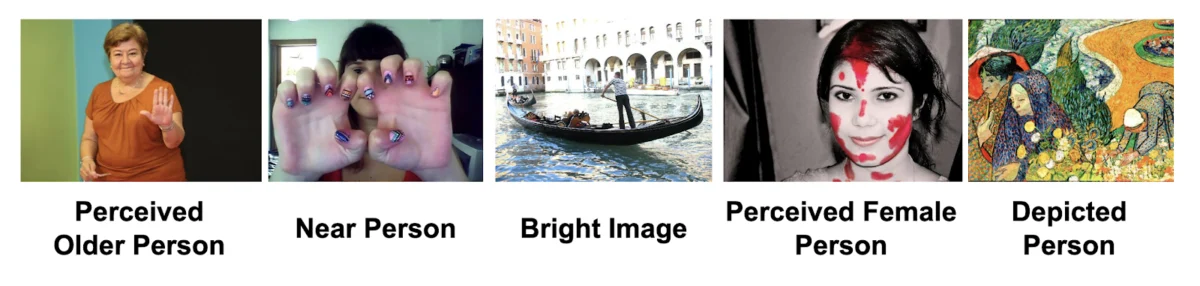
- Fine-Grained Benchmarks: Unlike legacy datasets that offer monolithic accuracy scores, Wake Vision introduces rigorous, real-world evaluation metrics that test models across diverse demographics, lighting conditions, and proximities.
- Open Accessibility: Available under a permissive Creative Commons (CC-BY 4.0) license, the dataset integrates seamlessly with major machine learning repositories and is accompanied by a public leaderboard to foster collaborative competition.
Chronology: The Journey from Visual Wake Words to Massive Edge Scale
To understand the magnitude of the Wake Vision release, it is necessary to trace the developmental timeline of TinyML computer vision datasets and the growing pains of resource-constrained AI.
Phase 1: The Foundations of Edge Vision (2019)
When the Visual Wake Words (VWW) dataset was introduced in 2019, it represented a critical milestone for the scientific community. For the first time, researchers had a standardized binary classification benchmark (determining whether a person was present in an image or not) tailored for resource-constrained hardware. VWW enabled the initial wave of TinyML academic papers and commercial edge prototypes.
However, as edge AI matured, the limitations of VWW became glaringly apparent. With a relatively small footprint, models trained on VWW frequently struggled to generalize in production environments. They suffered from high false-positive rates when confronted with unusual lighting, partial occlusions, or diverse human subjects. The community desperately needed a successor with production-grade depth and variety.
Phase 2: Harvard’s Data-Centric Conception
Recognizing that algorithmic tweaks alone could not overcome foundational data deficits, the Harvard research team embarked on a systematic effort to curate a modern, large-scale alternative. Rather than simply scraping the web indiscriminately, the creators focused heavily on rigorous filtering, diverse sourcing, and meticulous labeling protocols.
The team realized that ultra-small models—those possessing under a million parameters—react to training data fundamentally differently than massive transformer models. This insight led to the creation of Wake Vision’s dual training structure, separating raw scale from high-purity subsets to study how under-parameterized neural networks ingest information.

Phase 3: The Official Launch and Leaderboard Integration
Culminating months of rigorous validation, the Wake Vision project went live, accompanied by comprehensive GitHub repositories, integration pipelines for popular frameworks, and a dedicated online leaderboard hosted at wakevision.ai. Today, the platform serves as the central hub where global researchers can submit models, benchmark performance metrics, and push the boundaries of what is mathematically possible within a few hundred kilobytes of memory.
Supporting Data: Why Data Quality Trumps Mere Quantity in TinyML
For years, the overarching dogma of deep learning—cemented by the scaling laws of large language models and massive vision transformers—has been simple: more data is always better. In overparameterized systems containing billions of parameters, models possess enough capacity to memorize, adapt to, and ultimately smooth over noisy, error-prone training labels.
However, Wake Vision’s empirical research demonstrates that TinyML turns conventional deep learning wisdom on its head.
The Under-Parameterization Paradox
Because TinyML models are tightly constrained by memory and computational budgets (often featuring architectures ranging from 78K to 1.1M parameters), they lack the overparameterization required to absorb noisy data.
Data compiled by the Harvard team highlights a striking revelation: High-quality, clean labels yield significantly greater performance dividends for under-parameterized models than raw, uncurated data volume. When models operate under strict parameter limits, label noise acts as a toxic contaminant that severely degrades convergence and final accuracy.

However, Wake Vision bridges this dichotomy by providing two distinct training tiers. Researchers are no longer forced to choose between pristine quality and massive scale. By employing a sophisticated multi-stage training pipeline—pre-training a model on the larger, noisier subset to capture broad feature representations, followed by fine-tuning on the high-purity subset—developers can achieve unprecedented accuracy gains.
Real-World Stress Testing via Fine-Grained Benchmarks
Deploying AI to the physical world exposes models to confounding variables that standard datasets rarely capture. Wake Vision addresses this by introducing multi-faceted, fine-grained evaluation benchmarks. Models are explicitly tested against sub-categories reflecting real-world complexities:
- Lighting Variations: Performance metrics isolate overly bright or poorly lit environments.
- Proximity Dynamics: Evaluates how models handle subjects close to the sensor versus distant figures.
- Demographic and Typological Diversity: Tests robustness across perceived age, gender presentations, and depictions of human figures (such as mannequins or artistic representations versus living people).
These granular benchmarks allow engineers to catch demographic biases, edge-case failures, and robustness gaps long before physical silicon chips are manufactured and deployed.
Official Responses and Expert Perspectives
The academic and engineering communities have greeted the arrival of Wake Vision with profound enthusiasm, viewing it as a watershed moment for edge computing infrastructure.
Lead researchers emphasized the philosophical shift underpinning the project. In statements accompanying the release, the Harvard team noted:

"The democratization of ambient intelligence relies entirely on our ability to trust models running on billions of cheap, battery-operated microcontrollers. If an edge device fails to recognize a person because its training data lacked environmental diversity, the application fails entirely. Wake Vision was built to bridge the gap between academic theory and bulletproof, real-world edge deployment."
Industry analysts point out that Wake Vision arrives at an inflection point for the Internet of Things (IoT). As privacy concerns mount regarding cloud-based video surveillance, consumers and enterprises increasingly demand "local-first" AI processing where video streams never leave the device. By providing an open dataset capable of training highly accurate, privacy-preserving person-detection models, Wake Vision directly addresses one of the primary commercial barriers to widespread smart-device adoption.
Furthermore, platform maintainers across popular machine learning ecosystems have praised the integration readiness of the dataset. By ensuring native compatibility with standard data loading utilities and coupling the release with a transparent, competitive leaderboard, the creators have ensured a low barrier to entry for university students, independent developers, and enterprise R&D labs alike.
Implications: The Future of Edge AI and Ubiquitous Computing
The release of Wake Vision ripples across multiple domains, carrying profound implications for hardware manufacturers, software developers, and society at large.
1. Accelerating Hardware-Software Co-Design
For silicon vendors manufacturing ultra-low-power microcontrollers (such as ARM Cortex-M, RISC-V architectures, and specialized neural processing units), software performance drives chip adoption. With Wake Vision providing a rigorous, standardized baseline for person detection, chipmakers can now benchmark their hardware accelerators against production-grade models, accelerating the feedback loop between silicon design and algorithm optimization.

2. Privacy-First Smart Environments
By lowering the error rates of tiny, on-device person detectors, Wake Vision facilitates a future where smart homes, offices, and public spaces can operate entirely offline. Devices equipped with models trained on Wake Vision can reliably determine human presence without continuously streaming high-definition video to remote servers. This architecture fundamentally minimizes cyberattack surfaces and safeguards individual privacy.
3. Democratizing Advanced Machine Learning Research
Historically, pushing the state-of-the-art in computer vision required access to massive computational clusters and proprietary datasets guarded by tech giants. By releasing Wake Vision under a permissive CC-BY 4.0 license alongside reproducible code and clear benchmarks, Harvard has leveled the playing field. Researchers in developing nations, academic institutions with modest computing budgets, and lean startup garages can now train world-class edge models using freely available public resources.
Get Started with Wake Vision Today
The transition from theoretical edge computing to reliable, deployed ambient intelligence is accelerating. The Wake Vision team has made the complete dataset, associated training code, and fine-grained evaluation benchmarks publicly available to the global community.
- Explore the Data: Visit the official Wake Vision Website to access download links, documentation, and dataset splits.
- Compete on the Leaderboard: Check out the Wake Vision Leaderboard to review current state-of-the-art models, analyze performance metrics, and submit your own optimized TinyML architectures.
- Integrate and Build: Leverage the permissive CC-BY 4.0 license to incorporate Wake Vision into your next ultra-low-power computer vision project and help shape the future of edge AI.