The Architecture of Uncertainty: Navigating the Rise of CSS random()


In the modern web development landscape, we are witnessing a quiet paradigm shift. For decades, the primary objective of front-end engineering has been the pursuit of absolute, deterministic control. Every pixel, every alignment, and every interaction was expected to be reproducible, predictable, and identical across every viewport. Yet, a new philosophy is emerging, one that embraces the "controlled chaos" of the universe.
The creator of the acclaimed TV series The Good Place, Michael Schur, once explored the "myth of meritocracy" in his book How to Be Perfect, noting that human beings consistently underestimate the role of pure, unadulterated luck in their lives. Today, web design is beginning to mirror this reality. As we move toward a future defined by generative interfaces and AI-driven experiences, the rigid web is softening, giving way to layouts that exist in a state of subtle, beautiful flux—a digital manifestation of the Heraclitean river that you can never step into twice.
The Main Facts: The Emergence of random()
At the heart of this shift is a new, ambitious CSS specification: the random() function. Designed to bring native, declarative randomness to the styling layer, this feature aims to eliminate the need for bloated JavaScript libraries to handle simple aesthetic variations.
The core premise is straightforward: rather than relying on external scripts to calculate positions, colors, or animation delays, developers can simply declare a range within their CSS. For example, a starfield animation can now be randomized natively, with stars fading in and out at unpredictable intervals and tilted at varying angles—all defined within a few lines of CSS code.
However, the implementation of this feature is currently caught in a state of industry fragmentation. Late in 2025, Safari became the first browser to ship support for the random() specification. While the W3C and browser vendors generally adhere to the "Rule of Least Power"—the principle that one should solve problems using the simplest possible tool—the other major browser engines, Chrome and Firefox, have yet to reach parity. This has left developers in a curious "Safari-only" purgatory, sparking a debate on whether this feature is a revolutionary leap or a premature exploration of unpredictable UX.
Chronology of a Feature
The journey of CSS random() is a testament to the slow, deliberate pace of web standards:
- Early 2025: The WebKit team at Apple begins socialising the potential of declarative CSS randomness, showcasing "starfield" and "wheel of fortune" demos that highlight the aesthetic potential of the spec.
- Late 2025: Safari officially ships support for the
random()spec. The community reaction is immediate; developers are both mesmerized by the possibilities and frustrated by the lack of cross-browser support. - 2026: The discussion shifts from "what if" to "how do we bridge the gap?" As browser implementation stalled, the necessity for a polyfill became clear. Independent consultants and open-source contributors began leveraging existing PostCSS plugins and custom JavaScript logic to simulate the functionality.
- Current Status: While Chromium and Mozilla are actively working on the feature, it remains in an "early exploration" phase. The syntax is complex, involving intricate caching and keying semantics, and the W3C has warned that major breaking changes to the specification are still possible.
Supporting Data: Bridging the Gap with Polyfills
The challenge of implementing random() lies in its complexity. It is not merely a random number generator; it is a system that must handle "random caching" and "element-shared" values, ensuring that if a specific element is randomized, its state remains consistent during re-renders or window resizes.
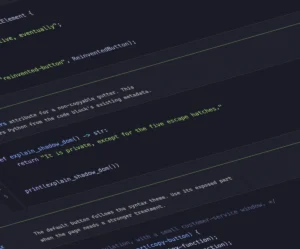
For developers working on projects that require cross-browser compatibility, the reliance on a polyfill has become a pragmatic necessity. A recent implementation developed by independent consultants demonstrates how this can be achieved without the "dark arts" of CSS parsing. By using a script that targets elements with a specific randomized class, developers can intercept computed styles, replace the random() function with pre-calculated values, and inject them back into the DOM.
Why CSS is the Right Home for Randomness
The argument for native CSS randomness rests on three pillars:
- Performance: Moving calculations from the main JavaScript thread to the browser’s internal style engine significantly reduces frame drops and layout thrashing.
- Declarative Syntax: Aligning with the "pave the cowpaths" philosophy, native CSS allows developers to solve common patterns—like confetti bursts or random grid layouts—using HTML and CSS alone.
- The Rule of Least Power: By using the styling layer for visual variations, developers avoid importing heavy JS dependencies, adhering to the principle of using the least powerful tool capable of expressing the intent.
Official Responses and Industry Sentiment
The browser vendors themselves remain cautious. While Apple’s WebKit team has been an enthusiastic proponent, actively encouraging "hackability" and transparency in their engine, the Chromium and Firefox teams are balancing the excitement of developers against the risks of implementing a volatile, evolving specification.
Chris Coyier, a prominent voice in the front-end community, has publicly lauded the starfield demo as "pretty darn compelling," yet the broader developer community remains divided. On platforms like YouTube and GitHub, the discourse is a mix of excitement and skepticism. A common sentiment among developers is the "four-year wait" fear—the worry that by the time a feature is truly cross-browser, the specification will have shifted, rendering current code obsolete.
However, the "hackability" of the web remains its greatest strength. The fact that an independent developer can create a polyfill that functions reliably by "faking" the CSS syntax proves that the community is not willing to wait for the glacial pace of standards adoption.
Implications for the Future of UX
The rise of CSS random() has profound implications for how we perceive the "soul" of a website. For years, the web has been accused of becoming sterile—homogenized by framework-heavy design systems and cookie-cutter component libraries. The return of randomness, however controlled, introduces a "human" element.
The Rise of Generative UI
Generative UI (GenUI) is perhaps the most ambitious, and controversial, application of this technology. If a webpage exists in a state of subtle flux, it challenges the traditional concept of a "brand identity" that is static. If every time a user visits your site, the layout, color palette, or particle effects are slightly different, does the brand become more engaging, or does it become confusing?
There is a fine line between a delightful, serendipitous user experience and a chaotic one. As Google and other tech giants begin experimenting with GenUI in search and discovery, the risk is that we may take the idea too far. The goal should be "controlled chaos"—a design that feels alive without sacrificing the usability that users expect.
A New Standard for Interaction
Looking ahead, the successful adoption of random() will likely depend on the standardization of helper functions. The community is already experimenting with random-item(), a theoretical function that would allow developers to select randomly from an array of predefined values (e.g., a list of brand colors). While this currently requires custom CSS functions and "if" logic to simulate, its eventual native inclusion would effectively turn CSS into a much more powerful, logic-driven language.
Conclusion: Embracing the Flux
As we navigate this period of transition, the lesson is clear: the web is not a static document, but an evolving medium. The introduction of CSS random()—even in its current, polyfilled, and experimental state—is a signal that we are moving toward a more dynamic, expressive future.
Whether or not this feature becomes the backbone of your next project, the underlying shift in mindset is undeniable. We are learning to let go of the illusion of total control, recognizing that sometimes, the most compelling design choices are the ones we didn’t explicitly decide, but rather invited through the power of chance. For now, we continue to bridge the gaps, build the polyfills, and wait for the day when the browsers align, allowing us all to step into the same river, yet experience a different current every time.