The "Dark Side" of Cannabis: Northwestern Researchers Unmask the Neural Circuitry Behind THC-Induced Anxiety
In a landmark study that bridges the gap between pharmacology and neuroscience, researchers at the Northwestern University Feinberg School of Medicine have identified a specific neural mechanism responsible for the paradoxical, anxiety-inducing effects of cannabis. The study, published in the journal Nature Communications, offers the first mechanistic explanation for why, for some users, a substance often sought for relaxation can rapidly trigger intense panic and defensive behavior.
By mapping the interaction between cannabinoid drugs and a specific cluster of neurons in the brain’s "fear center," the research team has provided a blueprint for how environmental stressors and cannabis intake converge to hijack the brain’s threat-response system.
The Paradox of the "Bad Trip"
For decades, clinicians and researchers have grappled with a persistent paradox: while millions of people utilize cannabis for its anxiolytic (anxiety-reducing) properties, a significant subset of users reports the exact opposite effect. Under certain conditions—often involving high doses or high-stress environments—cannabis can precipitate profound anxiety, paranoia, and panic attacks.
"The results of this study could explain why a good trip can turn bad pretty quickly if people consume too much cannabis or the situation they are in turns stressful or scary," says Dr. Sachin Patel, chair of psychiatry and behavioral sciences at Northwestern University Feinberg School of Medicine and the study’s senior author.
While the prevalence of cannabis use has surged globally, so too have emergency department visits related to acute adverse psychological reactions. Despite the clinical relevance, the precise neurobiological "switch" that flips cannabis from a relaxant to an anxiety-inducer has remained largely opaque—until now.
A Chronology of Discovery: From Behavioral Observation to Cellular Silencing
The Northwestern team’s investigation was structured to mimic real-world conditions where external stress meets internal chemical influence.
Phase 1: Behavioral Baseline
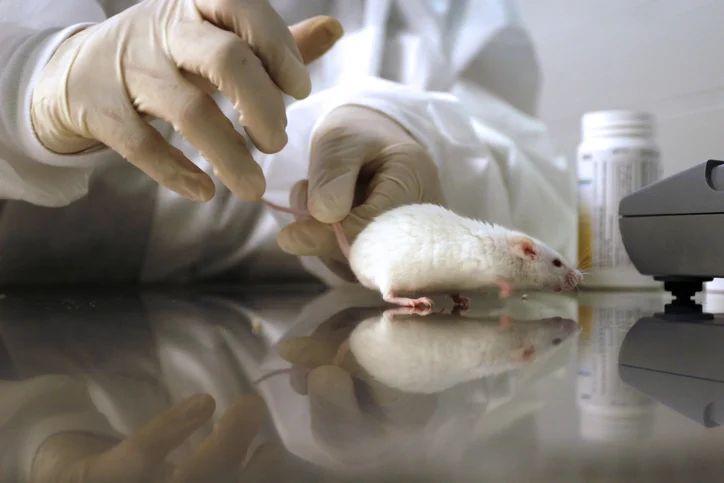
The researchers utilized a mouse model to establish how cannabinoids alter behavior in the presence of a natural threat. Mice were exposed to the scent of fox urine, a standard ecological stressor known to trigger innate fear responses. Before the exposure, one group of mice received a placebo, while another group was administered a synthetic cannabinoid drug.
The results were stark: the mice under the influence of the cannabinoid exhibited significantly higher rates of freezing behavior and demonstrated a diminished willingness to investigate the source of the threatening odor. They were, in effect, hyper-vigilant and paralyzed by the perceived threat compared to their placebo-treated counterparts.
Phase 2: Microscopic Mapping
To observe the brain’s internal "dashboard" during these moments of panic, the team implanted miniaturized microscopes directly into the brains of the mice. This allowed the researchers to visualize real-time neuronal activity as the animals navigated the threatening environment.
The imaging revealed that the cannabinoid drugs were specifically activating a cluster of somatostatin-expressing (SOM) neurons located in the central amygdala (CeA). The CeA is a critical hub for processing fear, stress, and autonomic responses. When the drug was present, these SOM neurons fired with increased frequency, effectively putting the brain’s fear circuitry into a state of "overdrive."
Phase 3: The "Brake" and the Silencing
The final and most critical phase of the study involved testing causality. The researchers hypothesized that if these SOM neurons were the primary drivers of the anxiety, then disabling them should alleviate the behavior.
Using sophisticated genetic silencing techniques, the team muted the SOM neurons in the CeA. The results were conclusive: even when the mice were given the same dosage of the cannabinoid, they no longer exhibited the heightened avoidance or freezing behaviors observed in the earlier tests. The drug had lost its power to induce the "bad trip."

Supporting Data: Understanding the Neural Brake
The researchers delved deeper into the synaptic mechanisms at play, seeking to understand why the SOM neurons became so active in the presence of cannabinoids. Their analysis revealed a sophisticated chemical interaction: the drug effectively disabled the brain’s natural "brake" on these neurons.
Normally, the central amygdala is kept in check by the release of GABA, an inhibitory neurotransmitter that prevents the fear center from becoming over-excited. The study found that cannabinoids suppress the release of GABA from local afferents onto the CeA SOM neurons.
"Our data suggest that the suppression of GABA release from local afferents onto CeA SOM neurons underlies the cannabinoid effects on CeA SOM neurons," the authors wrote. In simpler terms, the cannabinoid removes the inhibitory control that keeps the brain calm, allowing the anxiety-generating neurons to fire without restraint. When combined with an external stressor, this lack of inhibition creates a perfect storm for an acute panic response.
Official Perspectives and Implications
The implications of these findings extend far beyond the study of cannabis. By identifying the CeA SOM neurons as a "final common pathway" for anxiety, the researchers have identified a potential target for therapeutic intervention.
The Broader Clinical View
Dr. Patel and his colleagues believe that their work could lead to new pharmaceutical or behavioral strategies for managing anxiety disorders, regardless of whether cannabis is a factor.
"Suppressing the activity of somatostatin neurons in the central amygdala could represent a final pathway for reducing anxiety symptoms, not just in the context of cannabis side effects," Dr. Patel explained. This offers a glimmer of hope for individuals suffering from chronic anxiety disorders, for whom current medications often come with broad, systemic side effects.
Addressing the Public Health Crisis
The timing of this research is critical. As cannabis legalization spreads across the United States and other parts of the world, public health officials have expressed concern over the lack of public awareness regarding the drug’s potential to worsen underlying mental health conditions.
Previous studies have established a long-term correlation between heavy cannabis use and the development of anxiety disorders. The Northwestern study provides the biological mechanism to explain this association: chronic, long-term adaptations in these specific brain circuits may be the physiological root of how frequent cannabis use can sensitize an individual to anxiety over time.
Conclusion: A New Era for Neuro-Psychiatry
The research team’s paper, Cannabinoid modulation of central amygdala population dynamics during threat investigation, represents a significant milestone in neurobiology. By dissecting the "dark side" of cannabinoid-induced anxiety, the team has moved the conversation from anecdotal evidence to empirical, circuit-level understanding.
The study serves as a reminder that the brain is a delicate ecosystem of excitatory and inhibitory signals. For some, cannabinoids may shift this balance toward relaxation, but for others, the synergy between a drug and a stressful environment can pull the "brake" off the brain’s most primal fear-processing center.
Moving forward, the scientific community now has a clear target for future drug development. If researchers can find ways to modulate the activity of SOM neurons in the central amygdala, they may eventually be able to decouple the therapeutic benefits of cannabinoids from their distressing, anxiety-inducing side effects. For millions of users and clinicians alike, this discovery is the first step toward a safer, more nuanced approach to understanding how the substances we consume interact with the fundamental wiring of our minds.