The Evolution of Mobile Intelligence: How ‘Jetpacker’ is Redefining Android Development
By Android Developer Relations
In the rapidly shifting landscape of mobile development, the integration of Generative AI (GenAI) has moved from a novelty to a necessity. Developers are no longer asking if they should incorporate AI, but how they can do so effectively without compromising user privacy, application performance, or cost-efficiency. To bridge this gap, the Android Developer Relations team has introduced "Jetpacker," a comprehensive technical showcase app designed to serve as a blueprint for the next generation of intelligent, agentic mobile experiences.
Main Facts: The Jetpacker Blueprint
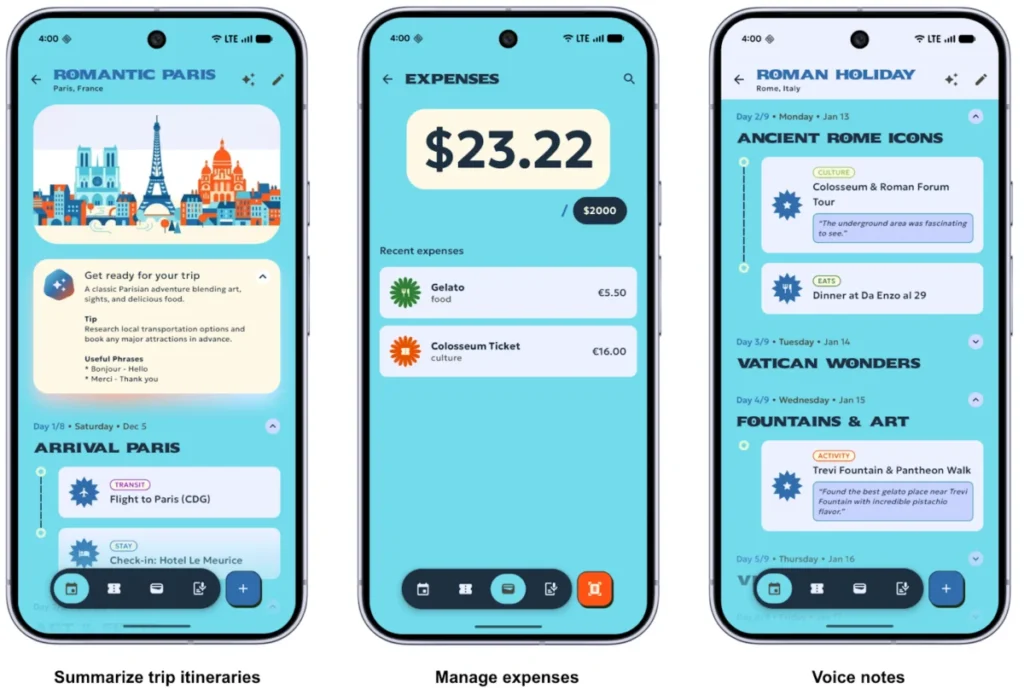
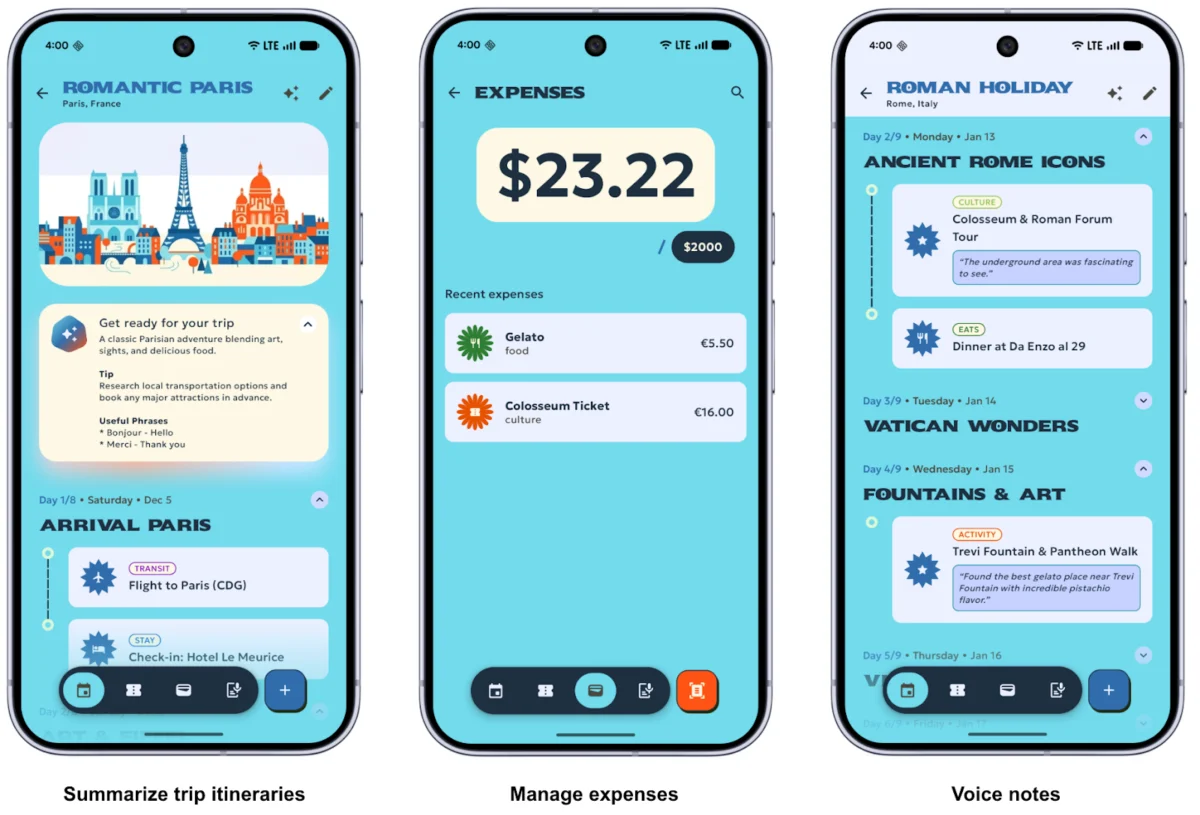
Jetpacker is more than just a demo; it is a full-scale architectural reference built for Google I/O. As a travel companion app, it handles complex tasks ranging from itinerary management and expense tracking to real-time translation and automated bookings.
The core mission of the project is to provide a roadmap for developers navigating the complex triad of GenAI implementation: on-device inference, cloud-based reasoning, and hybrid orchestration. By leveraging the latest in Android’s development ecosystem—including Material Design, the AppFunctions API, and modern AI frameworks—Jetpacker demonstrates how to move from a static application to one that is personalized, intelligent, and agentic.

Chronology: From Static UI to Autonomous Agents
The development of Jetpacker followed a deliberate, layered progression, designed to mirror the actual evolution of AI adoption in modern app development:
- Foundational Architecture: The team began by establishing a robust, expressive Material UI, ensuring that the AI features would be delivered within a highly performant and aesthetically pleasing container.
- The On-Device Era: Recognizing that privacy and offline availability are paramount, the initial AI integrations focused on local inference. This phase proved that models could handle sensitive tasks—like summarizing trip itineraries and parsing receipts—without ever sending data to a remote server.
- Cloud and Hybrid Expansion: As the app’s complexity grew, the team introduced cloud-based models to handle tasks requiring "world knowledge," such as museum grounding and complex web-based search. Hybrid inference was then implemented to intelligently switch between local and cloud resources, optimizing for both cost and latency.
- System-Level Integration: The app was updated to interface with the Android operating system through the AppFunctions API, allowing the app’s capabilities to be exposed at the system level.
- Agentic Future: The final, ongoing phase involves the deployment of autonomous agents—specifically a booking assistant—capable of multi-step reasoning and tool use to complete tasks on behalf of the user.
Supporting Data: Navigating Inference Strategies
The architectural decisions behind Jetpacker are grounded in a clear strategy for resource management. The team has categorized their AI implementation into three distinct tiers:
The Case for On-Device Inference
For privacy-conscious developers, on-device models are the gold standard. By utilizing Gemini Nano and ML Kit, Jetpacker processes voice notes and expense data entirely within the handset’s secure enclave. The benefits are threefold:
- Cost Efficiency: Elimination of server-side inference fees.
- Reliability: Functionality remains intact in airplane mode or areas with poor connectivity.
- Privacy: Sensitive user data remains on the device, providing a "privacy-first" guarantee that is increasingly demanded by modern users.
The Power of Cloud and Hybrid Inference
There are limits to what a local chip can process. When a task requires a massive context window or real-time web grounding, the Jetpacker app pivots to the cloud. The "hybrid" approach is the most sophisticated aspect of this implementation: the application performs a runtime check. If the device is capable, the task is handled locally; if the task requires more compute, it is seamlessly routed to a cloud-based model. This ensures that the application remains accessible to the entire Android user base, regardless of hardware specifications.

The Advent of AppFunctions
One of the most critical technical developments featured in the app is the use of the AppFunctions API. This allows developers to expose their app’s capabilities directly to the Android system. By making the "Jetpacker" functionality discoverable and executable by the OS, the app becomes a participant in the broader Android intelligence ecosystem rather than an isolated silo.
Official Perspectives: The Developer Relations Vision
Jolanda Verhoef, Senior Developer Relations Engineer, emphasizes that the journey into AI is not a "one-size-fits-all" scenario. "Building GenAI features in your app usually means navigating through a maze of models, APIs, and architecture choices," says Verhoef. "Our goal with Jetpacker is to act as a compass. By providing detailed implementation steps, code snippets, and architectural insights, we are helping developers move from conceptual understanding to production-ready implementation."
The team’s commitment to transparency is underscored by the decision to make Jetpacker fully open source. By hosting the project on GitHub, Google is inviting the global developer community to audit the code, experiment with the hybrid inference patterns, and contribute to the evolution of the project.
Implications: The Shift Toward Agentic Workflows
The most transformative aspect of the Jetpacker project is the upcoming introduction of "Agentic Workflows." In traditional AI implementation, a user provides a prompt, and the model provides a single response. In an agentic system, the model is given a goal (e.g., "Book a flight to Tokyo that fits my budget").

The agent then enters an "orchestration loop":
- Reasoning: It breaks the goal into sub-tasks (search flights, check existing bookings, select payment).
- Tool Use: It invokes the app’s internal functions to execute those tasks.
- Adaptation: It adjusts its path if it encounters a hurdle, such as a flight being sold out.
By integrating tools like A2UI and ADK (Android Development Kit), the Jetpacker team is showing that the future of mobile is not just "chatting with an app," but rather "delegating to an app." This represents a paradigm shift where the application functions as an active agent, significantly reducing the friction involved in complex user tasks.
Conclusion: A Roadmap for the Future
The Jetpacker project is more than a technical showcase; it is a manifestation of where Android is heading. As we look toward the future of mobile development, it is clear that intelligence will be embedded into the very fabric of our applications.
For developers looking to stay ahead, the Jetpacker blog series provides a structured path for learning:

- Part 1: High-level architectural overview.
- Part 2: Deep-dive into privacy-first on-device intelligence.
- Part 3: Mastering cloud-to-hybrid inference strategies.
- Part 4: Mastering system-level integration with AppFunctions.
- Part 5 (Coming Soon): Building autonomous in-app agents.
As the mobile industry continues to embrace the potential of GenAI, the lessons learned through Jetpacker will likely serve as the foundational principles for the next generation of Android applications. By balancing privacy, power, and autonomy, developers can build experiences that are not just intelligent, but truly indispensable.
For those ready to dive into the code, the Jetpacker repository is now available on the Android AI Samples portal. The future of mobile is being built today—and it is more agentic, intelligent, and capable than ever before.