The Modular Revolution: Vicharak’s Axon-Lite Challenges the Status Quo of Single Board Computers
For over a decade, the Single Board Computer (SBC) market has been dominated by a relatively static hardware paradigm. Whether you are building a home server, a sophisticated computer vision rig, or a specialized industrial sensor node, the process remains largely the same: you select a board, and you commit to its limitations. If your project evolves to require more audio channels, a different array of sensors, or advanced AI processing, you are typically forced to either stack unwieldy HATs (Hardware Attached on Top) onto your GPIO header or, more frustratingly, purchase an entirely new board.
Vicharak, an innovator in the embedded hardware space, is looking to disrupt this cycle. With the introduction of the Axon-Lite, the company is betting on a philosophy of "reconfigurable computing." By decoupling the primary processing unit from its interface modules, Vicharak aims to provide developers with a platform that adapts to the task, rather than forcing the task to adapt to the hardware.
The Core Philosophy: Modular Versatility
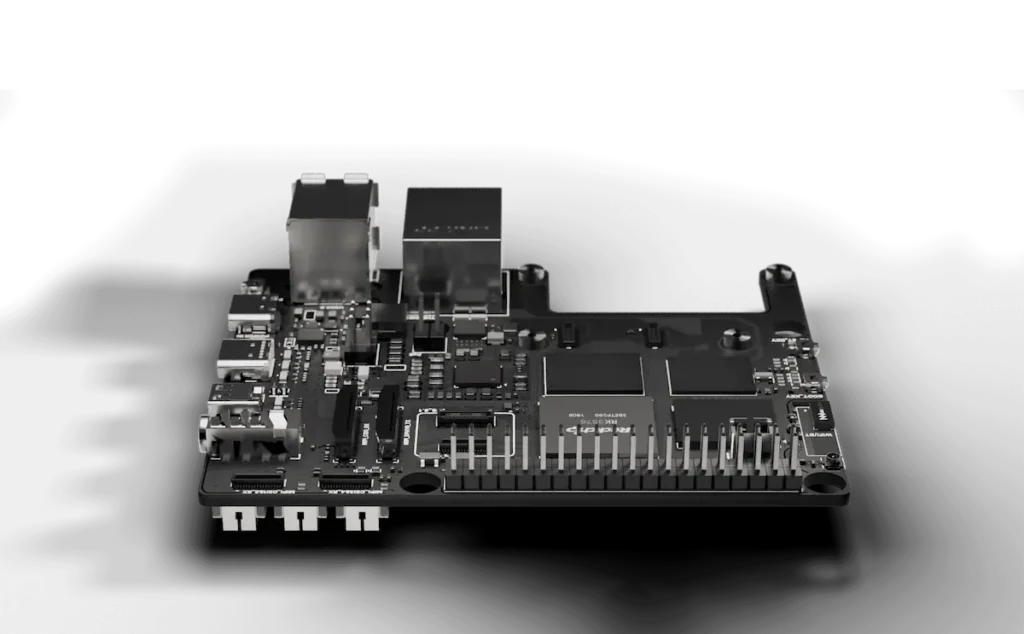
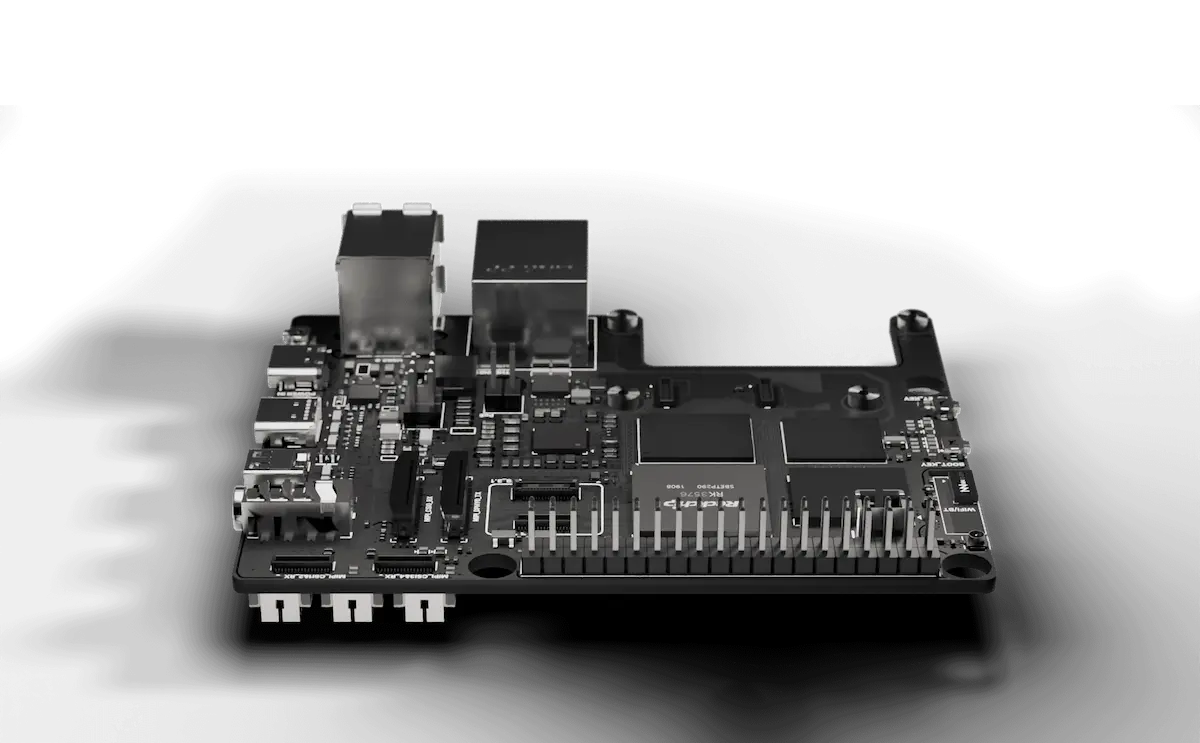
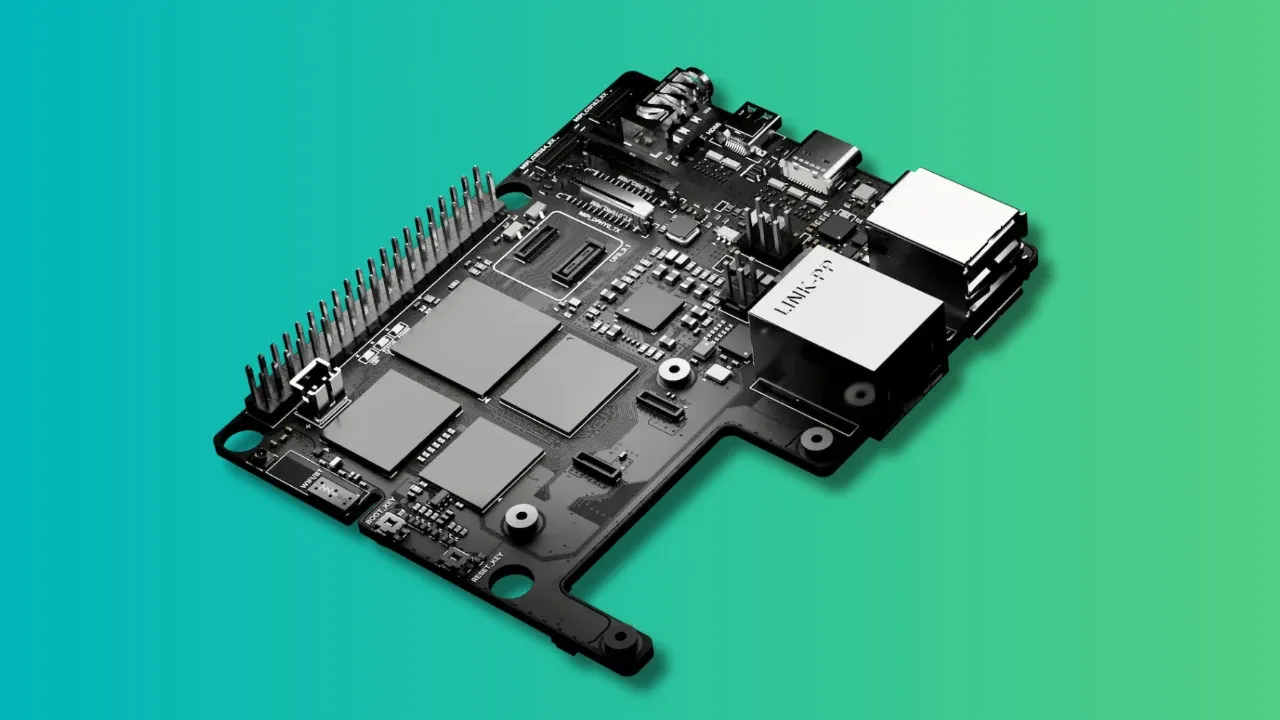
The Axon-Lite is not merely another ARM-based board; it is a conceptual shift in how we approach embedded design. Built on a modular connector interface, the board allows users to swap out specialized interface modules based on the specific requirements of their project.
Vicharak has already debuted four distinct modules to complement the board:
- Voice Processing: Optimized for audio input/output and acoustic signal processing.
- Smart Sensing: Designed for high-density sensor arrays and real-time environmental data acquisition.
- AI Data Hub: Geared toward high-throughput data management for edge computing.
- AI Vision: A dedicated module to handle high-bandwidth camera inputs and image processing pipelines.
Beyond these swappable units, the Axon-Lite supports board-to-board expansion, allowing developers to stack daughter boards for more complex, multi-layered configurations. This flexibility is particularly appealing for product teams who need to iterate rapidly during the prototyping phase without re-spinning custom PCB layouts for every minor design change.
Technical Specifications: The Power Under the Hood
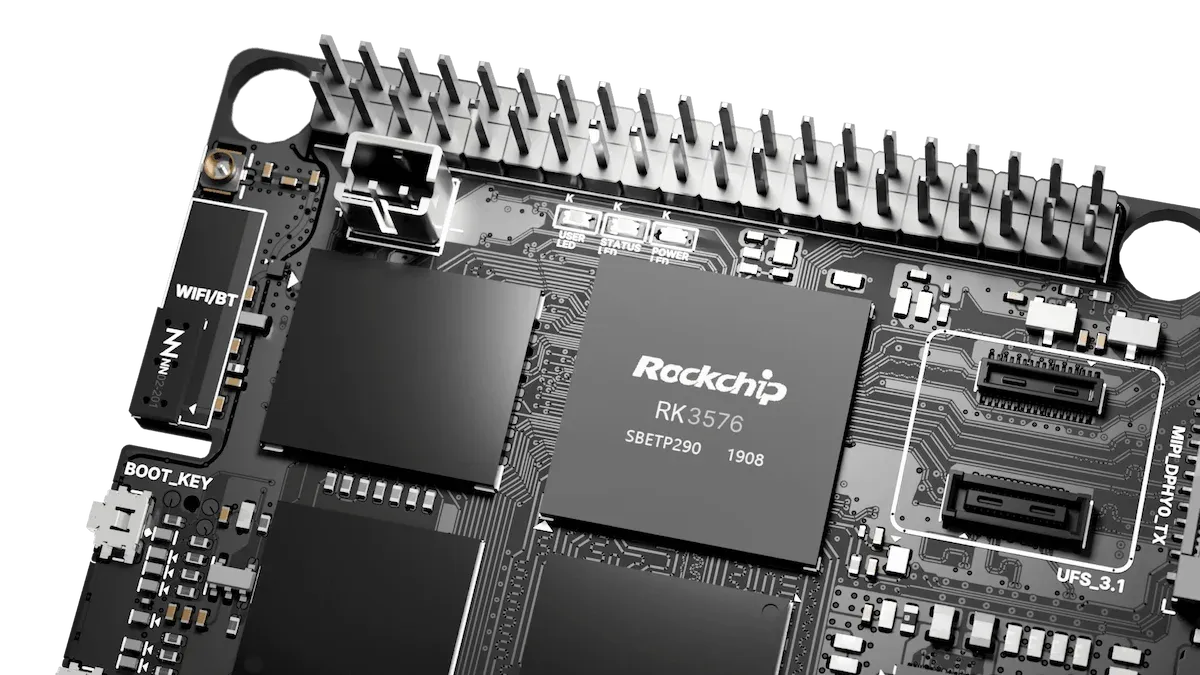
While modularity is the headline, the raw power of the Axon-Lite is equally impressive. At its heart lies the Rockchip RK3576, an octa-core SoC that occupies the "sweet spot" of the modern ARM market. By positioning itself between the entry-level RK3566 and the high-performance, power-hungry flagship RK3588, the RK3576 offers a balanced profile of thermal efficiency and computational throughput.

Key Hardware Highlights:
- Neural Processing Unit (NPU): The board features a 6 TOPS (Tera Operations Per Second) NPU. This capability is significant, as it provides the local processing muscle required for running complex on-device AI models—such as object detection, pose estimation, and natural language processing—without relying on cloud-based latency.
- Advanced Silicon: Built on a TSMC 5nm process, the RK3576 is designed for modern, low-power edge applications, maximizing the performance-per-watt ratio.
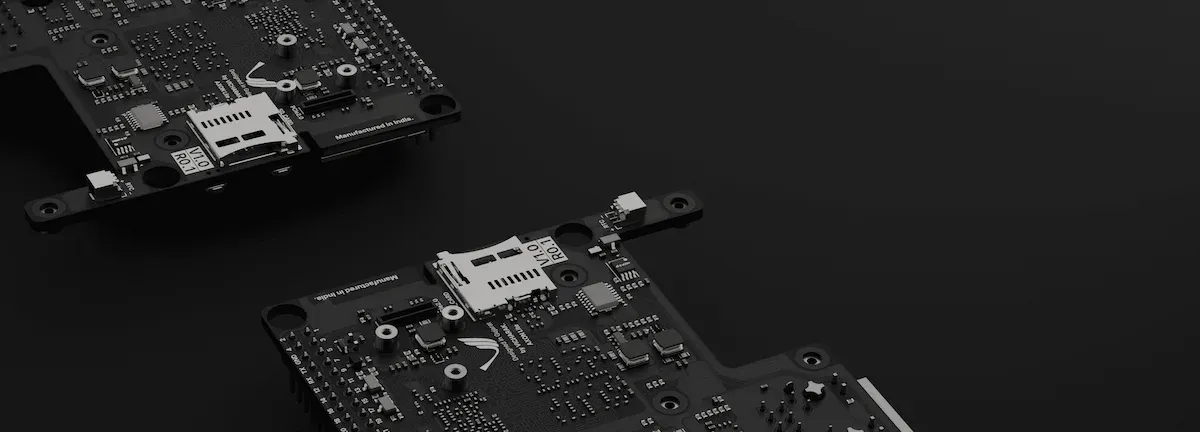
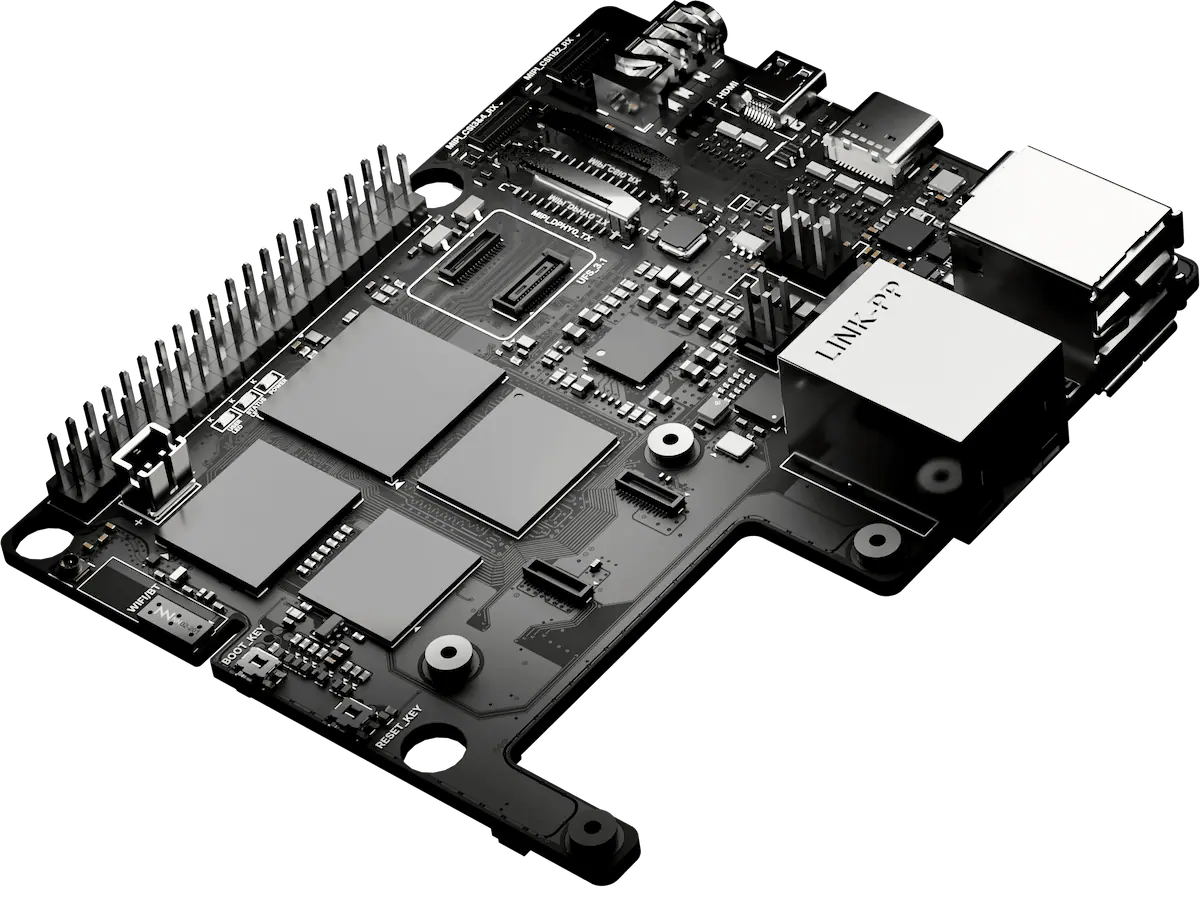
- Memory and Storage: The board supports LPDDR5 RAM, ensuring high bandwidth for memory-intensive AI tasks. For storage, it offers a sophisticated trifecta: eMMC 5.1 for reliability, UFS 3.1 for high-speed performance, and a standard microSD slot for ease of use.
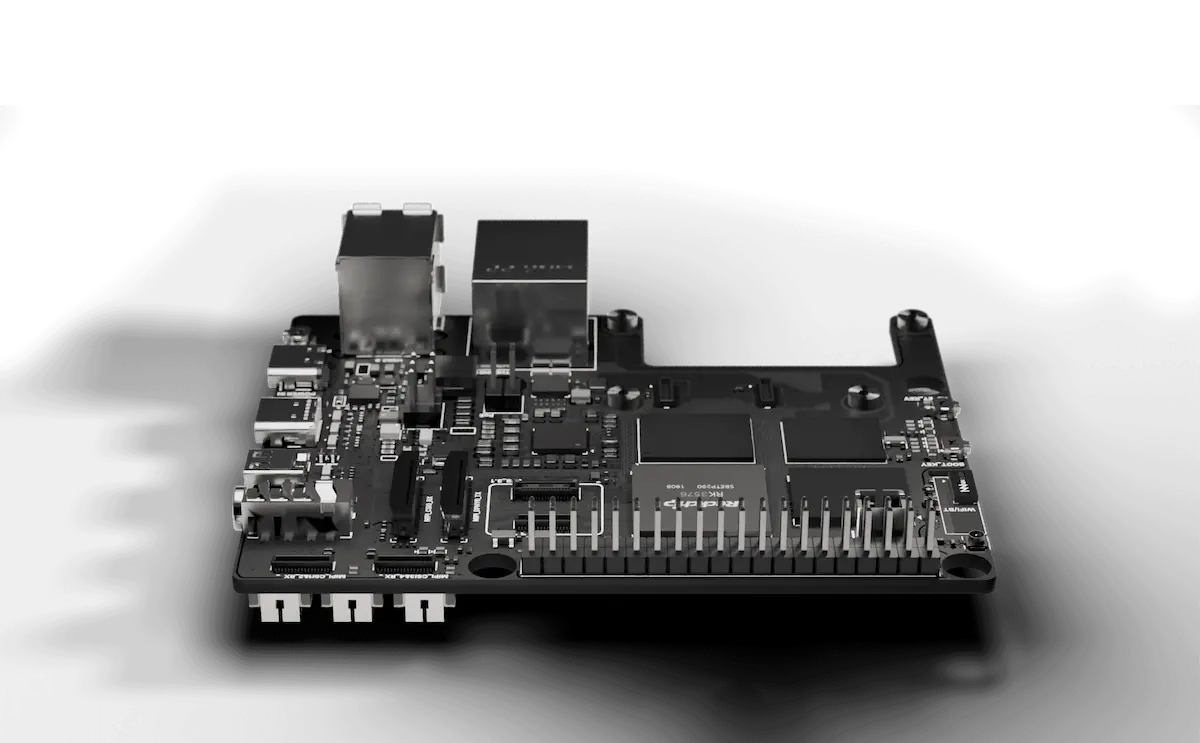
- I/O and Connectivity: For developers focused on computer vision, the board provides a robust array of interfaces: a 4-lane CSI (Camera Serial Interface) plus additional 2-lane paths, a 4-lane DSI (Display Serial Interface), a 16MP ISP (Image Signal Processor), and support for high-resolution output via micro HDMI 2.1 and USB-C. Connectivity is future-proofed with Wi-Fi 6 and Bluetooth 5.2, alongside a Gigabit Ethernet port.
Perhaps most importantly, Vicharak has maintained compatibility with the industry-standard 40-pin GPIO header, ensuring that the vast ecosystem of existing Raspberry Pi HATs and sensors remains accessible. Furthermore, the inclusion of on-board battery charging circuitry signals a clear intent to support portable, untethered, and mobile robotics applications.
Chronology and Evolution of the Vicharak Ecosystem
Vicharak is not a newcomer to the hardware industry. Their journey has been marked by a methodical build-up of specialized hardware. Before the Axon-Lite, the company gained traction with the Vaaman, an FPGA-based board designed for logic design and custom hardware acceleration.
The subsequent Axon line was created to bridge the gap between high-performance computing and embedded accessibility. The Axon-Lite represents the "refined" iteration of this line—a smaller, more efficient board that distills the lessons learned from their earlier, larger-format projects. By moving into the modular space, Vicharak is demonstrating an evolutionary trajectory: from providing raw computational power (Vaaman) to providing flexible, task-oriented ecosystems (Axon-Lite).
Software and The Linux-First Approach
Hardware, regardless of its modular brilliance, is only as good as the software stack that powers it. Vicharak has committed to a "Linux-first" philosophy. The Axon-Lite runs a familiar, Debian-based environment, which ensures that the barrier to entry is minimal for those already comfortable with the standard apt package management workflow.
For the professional developer, the board supports a comprehensive suite of tools right out of the box:
- General Development: VS Code, Git, Python, Docker, and Node.js.
- AI and Robotics: ROS 2 (Robot Operating System), OpenCV for computer vision, GStreamer and FFmpeg for multimedia handling, and Jupyter for rapid experimentation.
- Machine Learning: Full support for TensorFlow Lite and ONNX Runtime, allowing for the deployment of pre-trained models across the board’s NPU.
This software maturity is essential. By aligning with industry-standard frameworks, Vicharak is targeting not just hobbyists, but professional engineers who require a stable, predictable, and extensible development environment for edge AI and industrial IoT projects.
Implications for the Industry
The introduction of the Axon-Lite poses a significant question to the SBC market: Is modularity the future?
The current model—where boards are essentially disposable—is increasingly at odds with the demands of sustainable engineering and professional prototyping. If a developer can purchase one Axon-Lite base unit and simply swap a camera module for a sensor array module, the economic and environmental impact is clear.
However, there is a "but." As with all proprietary modular systems, the platform’s longevity is tied to the manufacturer’s support. If the interface is not an open, industry-wide standard, users are effectively locked into the Vicharak ecosystem. The success of the Axon-Lite will depend entirely on whether Vicharak can maintain a steady, diverse pipeline of new modules and whether they can foster a community that might even build their own third-party modules.
Pricing, Availability, and The Road Ahead
The Axon-Lite is currently available for pre-order, signaling a move toward commercial viability. The pricing structure is segmented by memory capacity:
- 4 GB RAM Variant: Approximately ₹15,930 (roughly $165 USD).
- 8 GB RAM Variant: Approximately ₹18,299 (roughly $200 USD).
The units are slated to ship in January 2027. Prospective buyers should be cognizant of potential regional shipping costs and customs duties, which can vary significantly depending on the destination.
Summary of Strategic Position
| Feature | Benefit |
|---|---|
| Modular Interface | Reduced hardware waste; rapid prototyping. |
| RK3576 SoC | Balanced edge AI performance; efficient power profile. |
| 6 TOPS NPU | Localized, low-latency AI inference. |
| Linux-First Software | Familiar, high-compatibility development environment. |
Final Thoughts
Vicharak’s Axon-Lite is a bold entry into an increasingly crowded SBC market. By prioritizing reconfigurability over the standard "one-size-fits-all" approach, they are offering a compelling value proposition to students, researchers, and professional product teams alike.
If they can successfully execute on their promise of a robust, continuously expanding module library, the Axon-Lite may well become the standard-bearer for a new generation of adaptable embedded hardware. For those tired of the "stack-and-pray" method of hardware configuration, the future of the Axon-Lite is one worth watching closely. It is a reminder that in the world of technology, sometimes the most significant progress comes not from making chips faster, but from making the hardware itself smarter and more versatile.