The Resurrection of a Legend: Inside the "Game Boy Enhance" Revolution
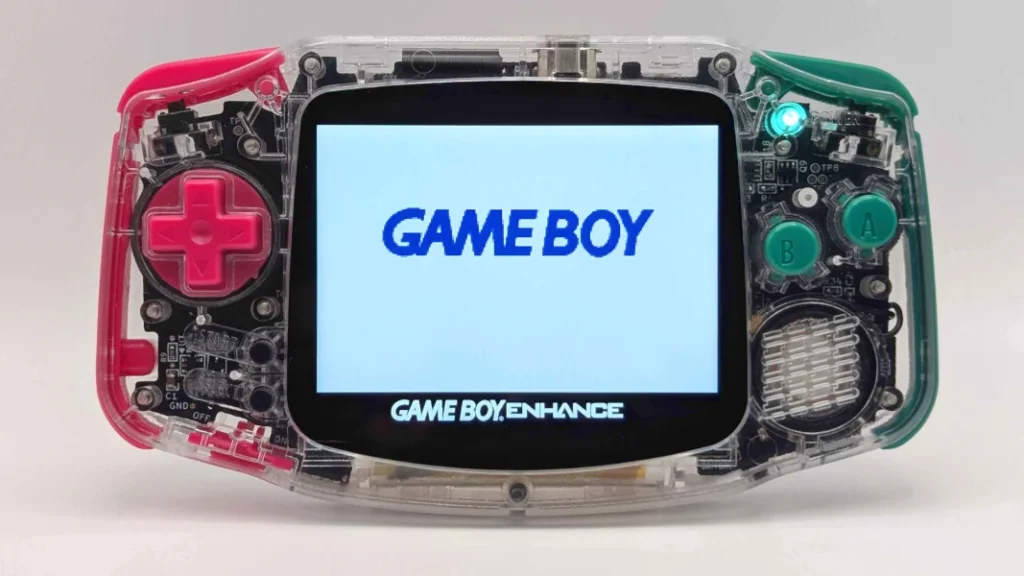
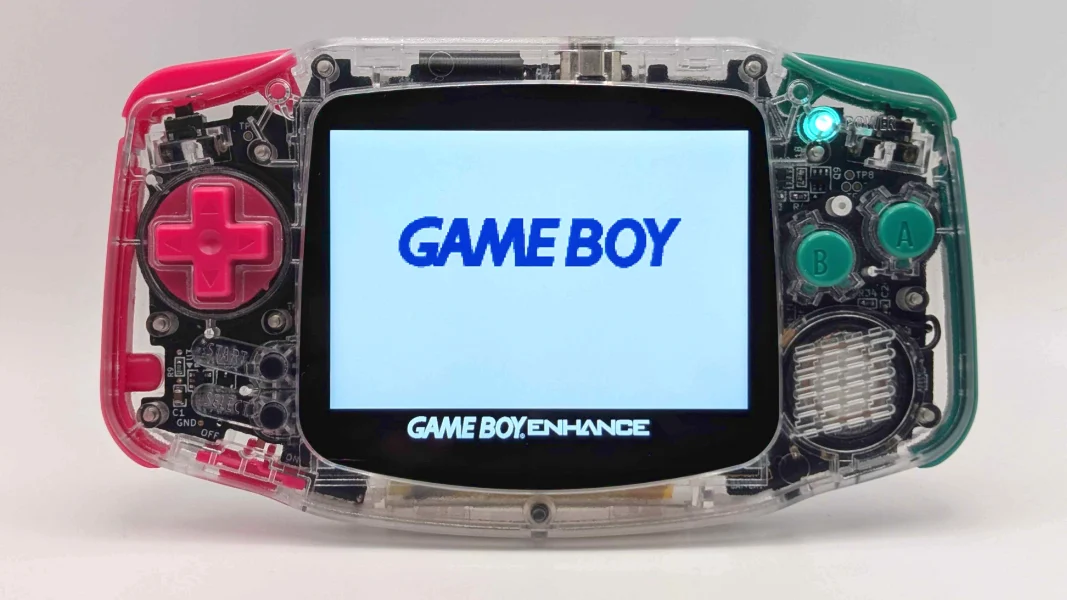
For over two decades, the Nintendo Game Boy Advance (GBA) has occupied a hallowed space in the pantheon of portable gaming. Released in 2001, it was a bridge between the 8-bit era of the monochrome Game Boy and the touch-screen dominance of the Nintendo DS. However, as these units age, the ravages of time—corroded battery terminals, failing capacitors, and degraded screens—have begun to take their toll on the hardware.
Enter [Bucket Mouse], a hardware enthusiast and modder whose latest project, "Game Boy Enhance," aims to do more than just repair these vintage consoles. By designing a custom, ground-up motherboard replacement, he has created a pathway for the GBA to survive well into its third decade and beyond. This project is not merely a modification; it is a full-scale architectural rebirth of a gaming icon.
Main Facts: A New Heart for an Old Console
The "Game Boy Enhance" project is a sophisticated open-source hardware initiative that allows users to replace the original GBA motherboard with a modern, redesigned circuit board. The fundamental premise of the build is to solve the inherent limitations of the 2001 hardware while preserving the authentic experience of playing on original silicon.
The brilliance of the project lies in its minimalism regarding proprietary parts. To build a "Game Boy Enhance," a user only needs to harvest two specific chips from a donor GBA: the original CPU and the RAM module. Every other component—from the capacitors and resistors to the power regulation circuitry—is sourced from modern, off-the-shelf parts.
Key Features of the Enhanced Build:
- Total Motherboard Replacement: The board is designed to fit perfectly within a standard GBA shell, allowing users to salvage consoles that are otherwise relegated to the scrap heap.
- Modern Power Management: By integrating LiPo (Lithium Polymer) battery support, the board addresses the aging power delivery systems of the original GBA, offering significantly longer playtimes and more stable voltage regulation.
- Integrated Audio Fixes: One of the most common complaints among GBA modders is the audio noise floor that often occurs when installing modern backlit screens. The "Game Boy Enhance" board includes a refined audio circuit, providing crisp stereo sound through the headphone jack by default.
- Component Longevity: Because the board uses contemporary electronic components, it is not susceptible to the "capacitor rot" that plagues original boards from the early 2000s.
Chronology: From Nostalgia to Engineering Mastery
The journey to the "Game Boy Enhance" did not happen in a vacuum. It is the culmination of years of iterative development by [Bucket Mouse] within the burgeoning retro-modding community.
2023: The Original Game Boy Quest
The foundation for this project was laid in January 2023, when [Bucket Mouse] documented his "Epic Quest to Build the Ultimate Game Boy." That project focused on perfecting the original DMG-01 (the "brick" Game Boy), proving that it was possible to create custom PCBs that mimicked the original architecture while improving functionality.
2024: Celebrating 25 Years
As the GBA approached its 25th anniversary, the focus shifted to the handheld that defined the early 2000s. The development phase involved mapping the complex GBA pinout, ensuring that the harvestable CPU and RAM chips could interface flawlessly with new traces.
Late 2024: The Public Reveal
Following months of testing, [Bucket Mouse] released the schematics and design files via GitHub. This move transformed the project from a private endeavor into a community resource, allowing enthusiasts worldwide to manufacture their own boards, effectively creating a "new" GBA from scratch.
Supporting Data: The Technical Landscape of Retro Restoration
To understand why a ground-up motherboard replacement is necessary, one must look at the data regarding hardware failure in the retro gaming sector.
The "Capacitor Crisis"
Original Game Boy Advance consoles utilized electrolytic capacitors that have a finite lifespan. By 2024, many of these components are leaking electrolyte onto the circuit boards, causing trace corrosion. Replacing these capacitors is a delicate task that often requires professional-grade soldering skills. The "Game Boy Enhance" bypasses this entirely by using modern, solid-state surface-mount technology that is not prone to leaking.
Power Efficiency Metrics
The original GBA relied on two AA batteries, which were notoriously inefficient when paired with modern, high-brightness IPS (In-Plane Switching) display mods. These screens draw significantly more current than the original reflective LCD panels.
- Original Hardware: With an IPS screen, an original board often draws 300–400mA, leading to a battery life of roughly 3–5 hours on standard AA batteries.
- Game Boy Enhance: Through optimized power rails and modern voltage regulators, the new board minimizes wasted heat energy and allows for the integration of high-capacity LiPo batteries, extending runtime by up to 50% depending on screen brightness settings.
Official Responses and Community Impact
While Nintendo has not issued an official statement regarding the "Game Boy Enhance" project—as the company generally remains silent on the activities of the hobbyist modding community—the reception among retro gaming circles has been overwhelmingly positive.
Influential figures in the restoration community have lauded the project for its documentation. By providing open-source files, [Bucket Mouse] has effectively "democratized" the restoration process. Instead of needing to hunt for rare, working motherboards on secondary markets, collectors can purchase a "haggard" unit—one with a dead board but a pristine shell—and bring it back to life with a high-performance, modern core.
"The goal," notes [Bucket Mouse] in his documentation, "is to ensure these consoles remain playable for another 25 years." By treating the GBA not as a disposable piece of consumer electronics, but as a modular platform, he has shifted the paradigm of retro preservation from restoration to evolution.
Implications: The Future of Retro Gaming Preservation
The "Game Boy Enhance" project carries significant implications for the broader world of hardware preservation and the "Right to Repair" movement.
1. Environmental Sustainability
Every console saved from a landfill by a motherboard replacement is a victory for electronic waste reduction. The "Game Boy Enhance" encourages the reuse of plastic shells, buttons, and screen lenses, which are often the most difficult parts to manufacture with the same "feel" as the original. By focusing on the internal electronics, the project maximizes the life cycle of the physical product.
2. The Shift Toward "Open Hardware"
We are currently witnessing a golden age of retro engineering. Projects like this are part of a larger trend where the community, rather than the original manufacturer, becomes the steward of the platform. This ensures that even if Nintendo were to stop producing official hardware entirely, the Game Boy ecosystem would continue to thrive through community-designed replacements.
3. Raising the Bar for Quality
For years, "modding" a Game Boy meant soldering a few wires to an original board to support a backlight. The "Game Boy Enhance" raises the bar significantly. It forces the community to consider signal integrity, power management, and thermal performance—topics usually reserved for professional electrical engineering. As these custom boards become more accessible, the definition of a "complete" retro console will likely shift from "original and dusty" to "restored and enhanced."
4. A Template for Other Consoles
The success of this project begs the question: what is next? If the GBA can be successfully rebuilt, what about the Game Boy Color, the Nintendo DS, or the PlayStation Portable? [Bucket Mouse] has provided a blueprint that other developers can follow, potentially leading to a wave of motherboard replacements for other legacy handhelds.
Conclusion: A Legacy Reimagined
The "Game Boy Enhance" is a testament to the enduring appeal of 32-bit gaming. It is a bridge between the past and the present, proving that with enough ingenuity, even the most fragile pieces of technology can be made robust.
For the casual gamer, it offers a way to enjoy classic titles on a screen that doesn’t strain the eyes and a battery that doesn’t die in the middle of a boss fight. For the engineer, it is a fascinating case study in how to optimize decades-old architecture for modern components.
As we look back at 25 years of the Game Boy Advance, it is clear that its legacy is not just in the games we played, but in the community that refuses to let it fade into history. Through the work of individuals like [Bucket Mouse], the GBA is no longer a relic of 2001; it is a living, breathing, and evolving platform that will continue to delight players for decades to come. Whether you are a long-time enthusiast or a newcomer looking to build your first "ultimate" handheld, the future of the Game Boy Advance is brighter, sharper, and more efficient than it has ever been.