DJI Redefines Professional Wireless Broadcasting with the SDR Transmission II
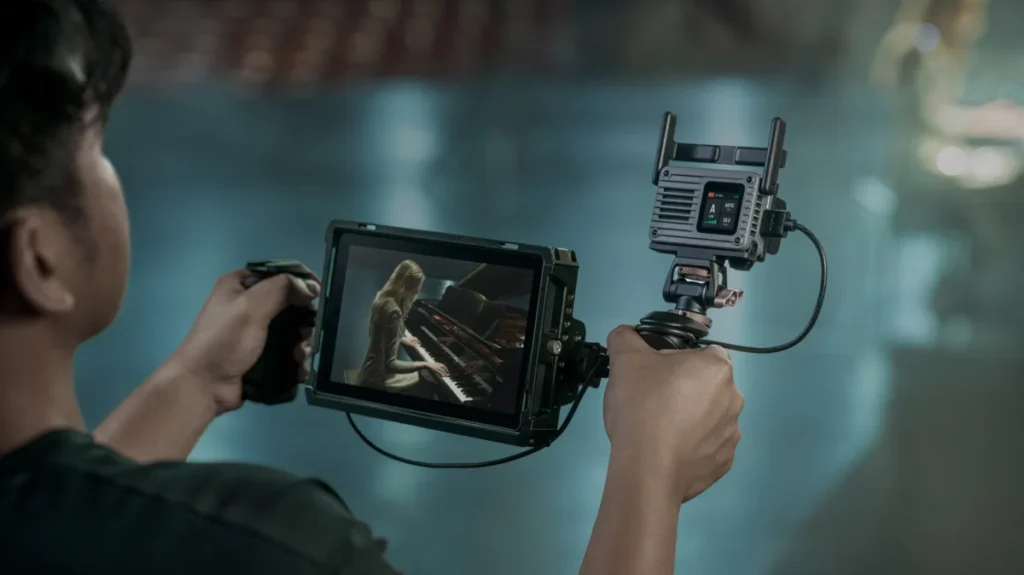
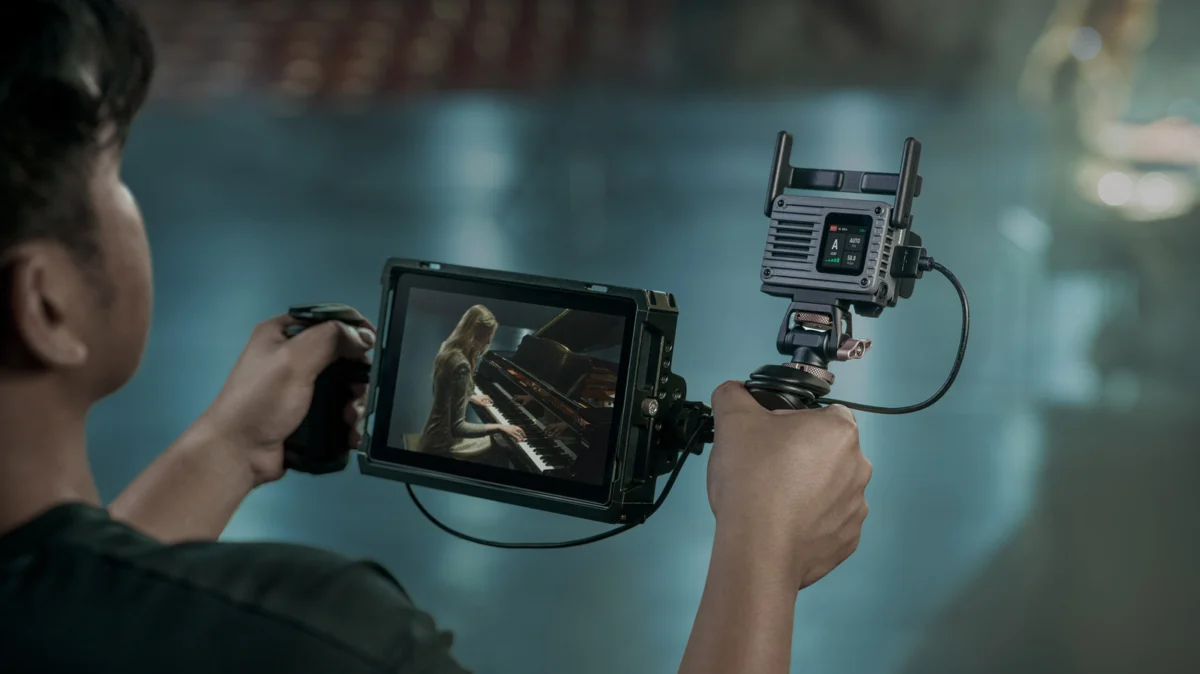
In the competitive arena of professional cinematography and high-stakes broadcast production, the bottleneck has rarely been the camera’s sensor, but rather the umbilical cord of data transmission. For years, the industry has wrestled with the trade-offs between image fidelity, signal range, and latency. DJI, a company that has already revolutionized the skies with its drone-based OcuSync technology, is now aiming to dominate the ground-level professional video market with the launch of its new SDR Transmission II system.
This latest iteration of Software Defined Radio (SDR) technology represents a quantum leap forward for multi-camera productions, promising to bridge the gap between high-end studio gear and the agile, rapid-deployment requirements of modern field production.
Main Facts: The Evolution of Wireless Signal Integrity
The DJI SDR Transmission II is not merely an incremental update; it is a fundamental re-engineering of how professional-grade video is beamed from camera to monitor. Where its predecessor, the original SDR Transmission, carved out a niche by offering reliable 1080p monitoring at a 20Mbps bitrate with a range of 1.8 miles (3 km), the second generation shatters those ceilings.
At the core of the system is the ability to transmit 4K 60 fps HDR video at a robust 50Mbps bitrate. This upgrade is critical for directors and focus pullers who require absolute visual precision to judge depth of field and color grading in real-time. The system’s operational range has been extended to 2.5 miles (4 km), ensuring that even in sprawling stadium environments or complex, multi-terrain location shoots, the link remains rock-solid.
Technical Specifications at a Glance
- Resolution/Frame Rate: Up to 4K at 60 fps (HDR supported).
- Bitrate: 50Mbps (enhanced for professional color and detail).
- Maximum Range: 2.5 miles (4 km).
- Latency: Ultra-low, clocking in at 35 milliseconds.
- Scalability: Supports up to 5 transmitters and 40 receivers in a single, synchronized ecosystem.
- Control Protocols: PTP support for remote adjustment of aperture, shutter speed, ISO, and capture.
Chronology: From Aerial Roots to Ground-Level Dominance
The trajectory of DJI’s transmission technology began with the necessity of flight. To control a drone from a mile away while receiving a stable live feed, DJI developed OcuSync—a proprietary wireless protocol that prioritized low latency and signal resilience in high-interference environments.
For years, this technology was locked behind the chassis of quadcopters. However, as the demand for "cinematic drone" aesthetics trickled down into standard handheld cinematography, the industry began to ask: Why can’t our cinema cameras share this same level of reliability?
- The Incubation Phase: DJI began adapting its internal transmission research for terrestrial use, recognizing that professional camera crews were frustrated by expensive, proprietary wireless video systems that were often clunky and difficult to configure.
- The First Wave (SDR Transmission): The original system introduced the concept of Software Defined Radio to the pro-sumer and entry-level pro market, allowing for flexible frequency hopping and high-quality monitoring.
- The Current Leap: With the SDR Transmission II, DJI has moved away from the "pro-sumer" label, introducing features like PTP (Precision Time Protocol) control and massive multi-receiver scalability that directly challenge established broadcast industry incumbents.
Supporting Data: Why 35ms Latency Matters
In the world of professional focus pulling, latency is the enemy. A delay of even 100 milliseconds can mean the difference between a tack-sharp shot and a sequence that needs to be discarded.
The SDR Transmission II achieves a latency of 35 milliseconds, a figure that is effectively imperceptible to the human eye. This allows a focus puller, watching a remote monitor, to react to the actor’s movement in real-time. By utilizing the 50Mbps bandwidth, the system also ensures that the image being monitored is a true representation of the capture, rather than a heavily compressed, artifact-laden proxy.
Furthermore, the system’s ability to handle complex network topologies is a game-changer. By allowing one transceiver to connect to eight others, and scaling to a network of 40 receivers, DJI has effectively created a "wireless backbone" for live events. The "tap-to-switch" feature, which allows users to cycle between camera feeds without the need to reboot or re-pair, addresses the single most common complaint in live sports production: the time-consuming process of troubleshooting signal drops during a broadcast.
Official Responses and Strategic Positioning
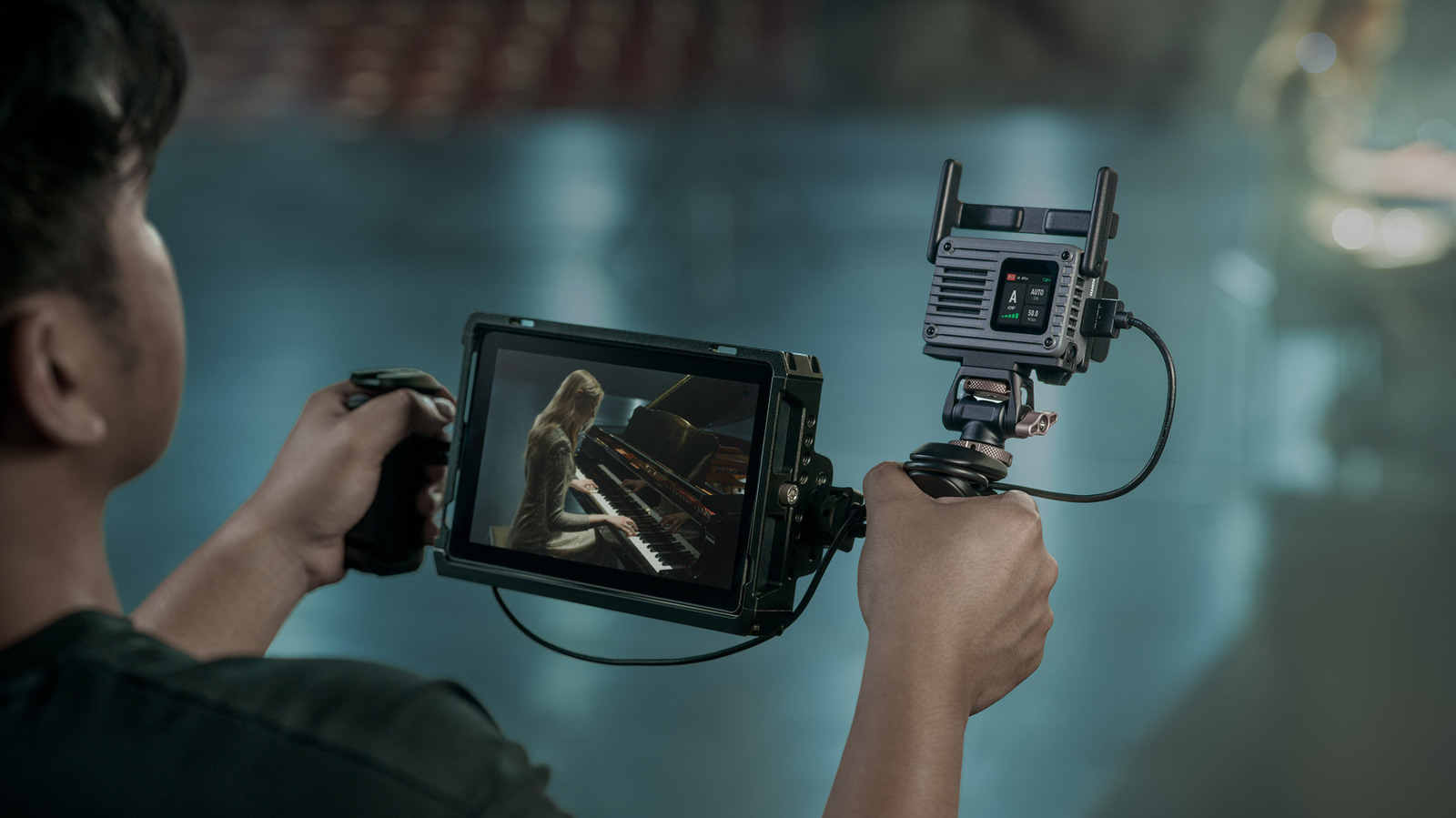
In its official communication, DJI emphasized the versatility of the SDR Transmission II. "A reliable link can be established in various environments—from open stadiums to dense mountain forests, and through demanding car-to-car shots or challenging FPV drone work," the company stated.
Industry analysts note that by integrating PTP control, DJI is effectively positioning itself as a "closed-loop" ecosystem provider. By allowing operators to adjust ISO, shutter speed, and aperture directly through the transmission system, they are reducing the need for multiple wireless systems on a single camera rig. This simplification is highly attractive to production companies looking to minimize the weight and complexity of their camera setups.
However, the product launch is not without its geopolitical complexities. While the product is garnering significant praise for its technical prowess, its availability is currently limited. The US market, which remains the largest for high-end cinema equipment, is currently restricted from the latest DJI products due to ongoing regulatory scrutiny and trade bans. Consequently, the SDR Transmission II is currently targeting European and Asian markets, where the adoption of DJI’s professional gear has been more rapid.
Implications for the Future of Filmmaking
The arrival of the SDR Transmission II marks a shift toward the "democratization of the broadcast chain." Historically, high-quality, long-range, low-latency transmission systems were prohibitively expensive, often costing tens of thousands of dollars. By offering a two-pack combo at a price point of approximately €629 (£559), DJI is forcing established players to rethink their pricing structures.
1. The Death of the "Proxy" Workflow
With 4K 60fps HDR being transmitted in real-time, the need for lower-resolution proxy monitoring disappears. Producers can now see exactly what the sensor sees, allowing for better decision-making on set, which saves time and money during the post-production phase.
2. Complex Multi-Cam Flexibility
The scalability of the system means that even independent filmmakers can now pull off complex, multi-camera setups that were previously reserved for high-budget television productions. The ability to switch between five different camera feeds instantly empowers creators to experiment with dynamic angles without fear of losing their signal.
3. The OcuSync Question
There is a lingering question regarding the future of DJI’s drone technology. The SDR Transmission II utilizes the same foundational wireless architecture as OcuSync. Experts speculate that it is only a matter of time before this 4K 60fps transmission capability is baked directly into the next generation of Mavic or Inspire drones. Such an upgrade would be monumental, providing a fail-safe for filmmakers who rely on internal drone memory, as they would effectively have a high-fidelity "second copy" being beamed to their ground station.
Conclusion
The DJI SDR Transmission II is more than just a video transmitter; it is a signal of intent. DJI is clearly signaling that its future lies not just in the air, but in the entire pipeline of professional video creation. By solving the persistent problems of range, latency, and scalability, the company has provided a tool that meets the rigorous demands of professional sports, high-end film production, and live broadcasting.
As the industry watches to see how the regulatory landscape unfolds, one thing is certain: the bar for wireless video transmission has been permanently raised. The ability to monitor high-fidelity, 4K HDR footage from over two miles away, while simultaneously controlling the camera’s core functions, is the new standard. For those operating within the reach of this technology, the limitations of physical cables and restricted monitoring are rapidly becoming a thing of the past.