The Zen of Simplicity: How the ‘Dinoboy’ Handheld Challenges the Era of Infinite Complexity
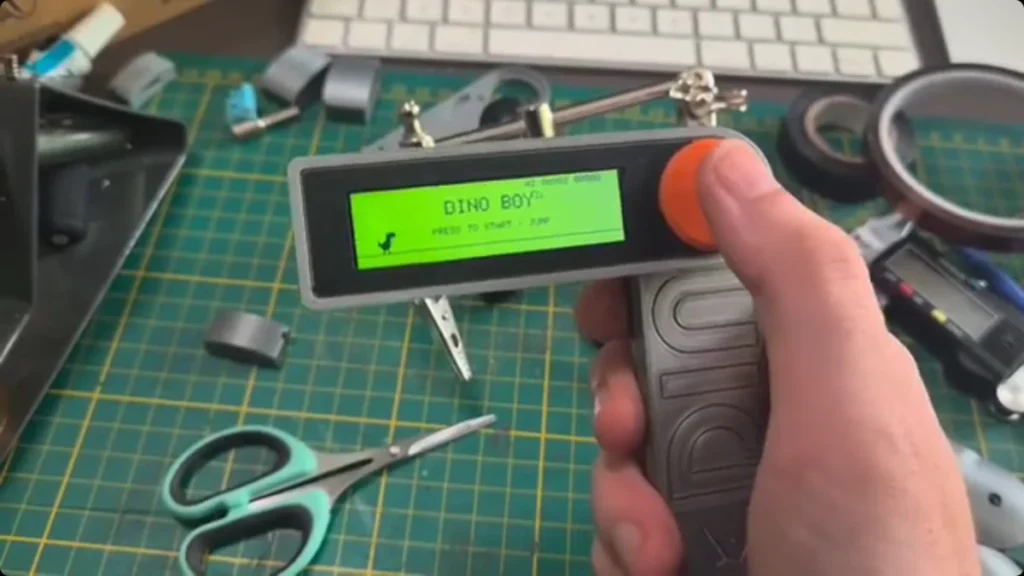
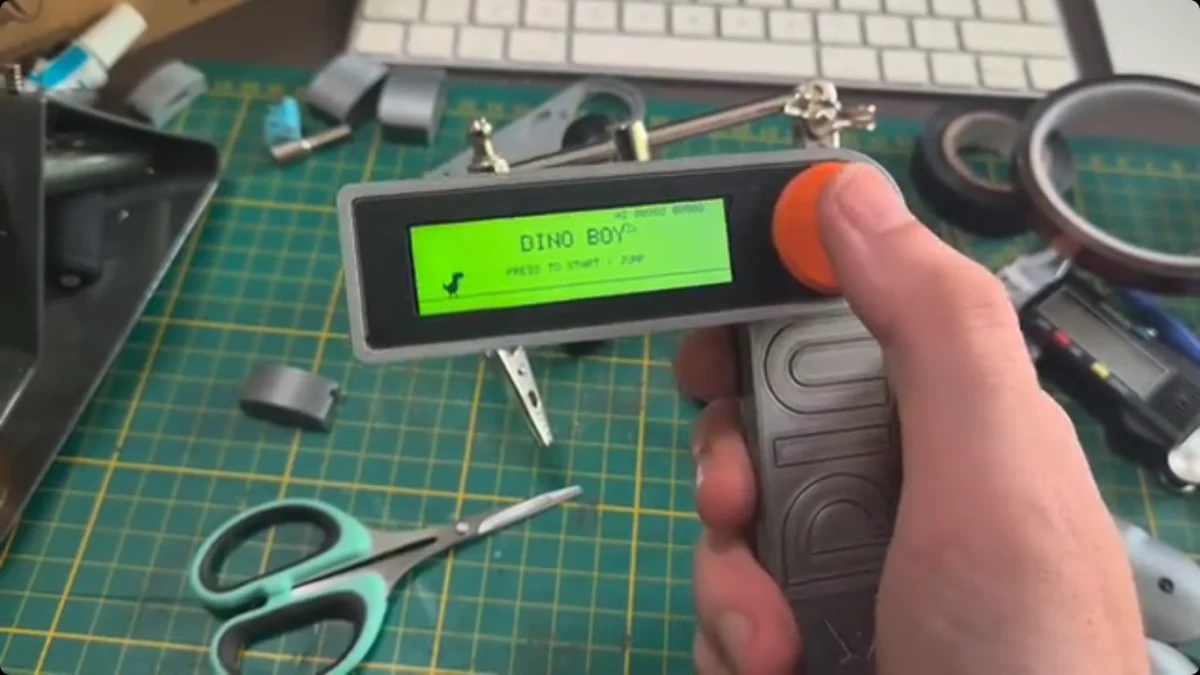
In an era defined by the Steam Deck’s sprawling array of twenty-four inputs, haptic trackpads, and gyro-aiming sensors, the modern gaming landscape has become a theater of maximalism. Yet, a counter-movement is brewing—one that finds beauty in the primitive. Enter the "Dinoboy," a bespoke handheld console designed by developer Paul that strips gaming down to its absolute, singular essence: one button, one jump, and zero algorithms.
By reviving the iconic Google Chrome "T-Rex Runner" game—the digital world’s favorite consolation prize for a lost internet connection—the Dinoboy offers a radical critique of contemporary tech habits. It is not merely a toy; it is a hardware-based intervention against the "doomscrolling" epidemic.
Main Facts: The Architecture of Minimalist Gaming
The Dinoboy is a marvel of intentional design. Its physical form factor deviates from the horizontal "slab" philosophy of modern mobile gaming. Instead, it utilizes a hinged, two-part chassis. When closed, it is a sleek, pocketable totem; when opened, the top half presents a wide, high-contrast display, while the bottom half serves as a dedicated, ergonomic grip.
The primary innovation lies in its input philosophy. Whereas modern controllers demand high cognitive load and finger dexterity, the Dinoboy demands only rhythmic precision. The single button is positioned exactly where the user’s thumb rests during a natural, relaxed grip, mirroring the simplicity of the original space-bar input of the browser game.
The device offers two distinct visual modes: a high-contrast monochromatic style and a nostalgic, dot-matrix aesthetic that pays homage to the 1989 Game Boy. Beneath the chassis, the project utilizes an embedded NFC tag located near the hinge. This specific feature serves a dual purpose: it acts as a tactile anchor for the user’s digital detox, allowing the player to swipe the device against their smartphone to trigger an automated "Airplane Mode" command.
Chronology: From Browser Glitch to Hardware Philosophy
The trajectory of the Dinoboy began not in a silicon valley boardroom, but in the frustration of the everyday user.
- 2014: Google introduces the "T-Rex Runner" in Chrome 39. Originally a hidden "Easter Egg" for users experiencing connectivity issues, it quickly evolves into a cultural phenomenon.
- Early 2024: Paul, the creator, begins experimenting with dedicated hardware for single-input games. The goal is to move the experience off the volatile, ad-supported smartphone environment.
- Mid-2024: The first prototype of the Dinoboy is constructed. The focus is on the hinge mechanism and the tactile feedback of the single-button switch.
- July 2026: Paul expands his vision, creating a full-sized, arcade-style cabinet for the same dinosaur jumper, proving the concept is scalable from pocket-sized handheld to public-facing installation.
- Present Day: The Dinoboy project gains significant traction in the maker community, sparking debates about the nature of "attention economy" design.
Supporting Data: The Cognitive Cost of Complexity
The rise of the Dinoboy coincides with a growing body of psychological research regarding the "attention economy." According to a 2023 report on digital habits, the average smartphone user spends nearly 4.5 hours daily on their device, with over 60% of that time consumed by algorithmic feeds—platforms designed to maximize "time on site."
The Dinoboy project serves as a physical manifestation of "friction-based design." By requiring the user to physically interact with a separate device to disable their phone’s connectivity, it introduces a necessary hurdle to break the dopamine-reward loop.
- Input Comparison:
- Atari 2600: 1 button, 1 joystick (directional).
- Steam Deck: ~24 inputs (buttons, bumpers, triggers, joysticks, trackpads).
- Dinoboy: 1 button.
- The "Airplane Mode" Metric: User studies suggest that manual disconnection from networks reduces stress markers by 15% within the first hour of "offline" play, compared to simply closing an app while staying connected.
Official Responses and Creator Intent
In discussions regarding the project, Paul has been candid about his motivations. "We are living in an era of infinite input," he notes. "Every screen we touch is screaming for our attention, asking us to scroll, swipe, buy, or argue. The Dinoboy is a quiet protest."
The reception from the retro-gaming and hardware-modding communities has been overwhelmingly positive. Critics have praised the "elegance of the limitation," noting that the constraint of a single button forces the user to focus on the game’s mechanics rather than the device’s capabilities.
However, some industry observers suggest that while the Dinoboy is a fascinating novelty, its true value lies in its role as a "behavioral anchor." It does not seek to compete with the high-fidelity experiences of the Nintendo Switch or the PlayStation 5; rather, it aims to exist in the "in-between" moments—the bus ride, the coffee shop, or the quiet evening—where we are most susceptible to the pull of the feed.
Implications: The Future of "Slow Tech"
The implications of the Dinoboy are significant for the future of hardware design. As consumers grow weary of the complexity inherent in modern smartphones, we are seeing a trend toward "Slow Tech"—devices that do one thing well, and nothing else.
The Return of Dedicated Hardware
The Dinoboy challenges the prevailing theory that "convergence" (the idea that one device should do everything) is the pinnacle of engineering. By decoupling the gaming experience from the smartphone, the Dinoboy restores a sense of agency to the user. It proves that a device can be a "tool" rather than a "portal."
Combating Dark Patterns
Dark patterns—design choices that trick users into doing things they didn’t intend—are the bedrock of the modern internet. By automating the transition to airplane mode via an NFC trigger, the Dinoboy provides a "kill switch" for the digital noise. This represents a new frontier in human-computer interaction: hardware that protects the user from software.
A New Aesthetic of Minimalism
If the 2010s were defined by the sleek, glass-and-metal minimalism of the smartphone, perhaps the 2020s will be defined by the "tactile minimalism" of the Dinoboy. The use of a physical hinge and a single, satisfying mechanical button creates a tactile connection that a touchscreen simply cannot replicate.
Conclusion: Reclaiming the Idle Moment
The Dinoboy is a paradox. It is a piece of technology built to make us spend less time with technology. In its humble, jump-only gameplay, it reminds us that we do not always need the most advanced processor or the most complex control scheme to be entertained.
Sometimes, all we need is a dinosaur, a cactus, and the singular, satisfying click of a button that doesn’t track our data, doesn’t suggest a new video to watch, and doesn’t demand we stay for "just one more scroll." In that single jump, we find something that modern tech has lost: the ability to simply play, and then, just as easily, to put the device down and walk away.
As we look toward an increasingly connected, augmented future, projects like the Dinoboy serve as a necessary anchor. They remind us that the most sophisticated piece of technology in any room is still the human brain, and that our attention is a resource worth defending—one jump at a time.