Unlocking the Silicon DNA: The Discovery of the Lost Ferranti-Sinclair Archives
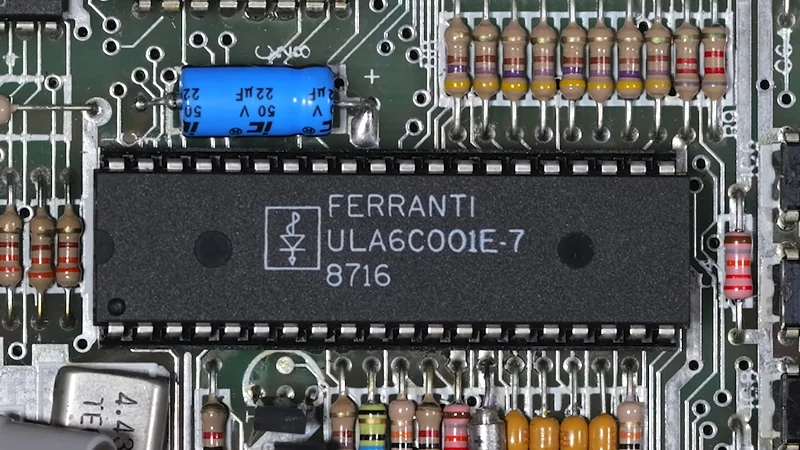
For those who came of age during the 1980s, the name Sir Clive Sinclair is synonymous with the democratization of computing. At a time when home computers were often prohibitively expensive industrial curiosities, Sinclair Research transformed the landscape with machines like the ZX81 and the ZX Spectrum. These devices were not just triumphs of marketing; they were masterclasses in minimalist engineering. Central to this success was the Ferranti Uncommitted Logic Array (ULA)—a bespoke silicon solution that allowed Sinclair to pack complex functionality into a tiny, cost-effective footprint.
For decades, the inner workings of these chips were a "black box," known only to the engineers who designed them and the ghosts of the companies that built them. However, a recent discovery by enthusiast researcher [Happy Little Diodes] has blown the lid off these long-held secrets. A comprehensive cache of original Ferranti design documentation has surfaced, offering an unprecedented look into the hardware that defined an era.
The Heart of the Machine: Understanding the ULA
To understand the significance of this find, one must appreciate the technological context of the early 1980s. When Sinclair was designing the ZX Spectrum, the cost of custom-designed Application-Specific Integrated Circuits (ASICs) was astronomical. To circumvent this, engineers turned to the Ferranti ULA.
The ULA was a "gate array" technology—a pre-fabricated chip containing a library of logic gates that were not yet interconnected. By adding a final layer of metalization (the physical wiring on the silicon die), Ferranti could customize the chip to perform the specific tasks required by Sinclair’s hardware. It was a bridge between the expensive, fully custom silicon of the mainframe world and the limited capabilities of off-the-shelf logic chips.
The ULA handled the complex timing, display generation, and peripheral interfacing that would have otherwise required a circuit board the size of a pizza box. This efficiency allowed the ZX Spectrum to retail for a fraction of its competitors’ prices, fueling a boom in British software development that remains a cultural touchstone to this day.
A Chronology of Discovery: From eBay to the Archives
The journey of these documents is as intriguing as their content. For years, the original design schematics, engineering logs, and hand-drawn logic diagrams were presumed lost to time or destroyed during the turbulent corporate shifts of the late 20th century.
- The 1980s: Ferranti, a British electrical engineering and equipment firm, works in close collaboration with Sinclair Research to develop custom silicon for the ZX series, the ZX Printer, the Microdrive, and the iconic, if short-lived, Sinclair flat-screen TV.
- The Corporate Shuffle: Following the decline of Sinclair and the subsequent acquisition of its assets, the intellectual property associated with these designs migrated through various corporate entities, eventually landing under the umbrella of satellite broadcaster Sky (following its acquisition of Amstrad).
- The eBay Find: [Happy Little Diodes], a researcher specializing in hardware history, stumbled upon a massive collection of physical archives listed on eBay. These were not mere manuals, but the raw, unfiltered engineering files—the "blueprints" of the Sinclair era.
- The Modern Disclosure: Recognizing the historical value of the documents, the team worked to digitize the collection. In a rare and commendable move, Sky—the current IP holder—reviewed the materials and permitted their public release, acknowledging their significance to computer history.
Supporting Data: What Lies Within the Files
The digitized archive, now meticulously cataloged in a public Google spreadsheet, is a treasure trove for computer historians and hobbyists alike. The documents include:
- Engineering Drawings: High-resolution scans of the physical layout of the ULA silicon, showing the placement of logic gates and the routing of interconnects.
- Hand-Written Notes: Margin annotations from Ferranti and Sinclair engineers, detailing the "fix-it" process as they encountered hardware bugs in the wild.
- Project-Specific Schematics: Comprehensive data for the entire Sinclair ecosystem, including the ZX81, the Spectrum (in its various iterations), the ZX Printer, and the Sinclair Microdrive.
Of particular interest to researchers is the documentation regarding the "bug-fixing" iterations. In the 80s, when a hardware flaw was discovered in the ULA, engineers had to redesign the metalization layer to reroute logic. The archive contains the specific technical changes made to address these glitches, providing a "living" timeline of the evolution of the Sinclair machines.
Corporate Stewardship: A Rare Case of Historical Preservation
In the tech world, corporate intellectual property is often guarded with extreme prejudice, usually to prevent competitors from gaining an advantage. In this instance, however, the outcome was different.
When Sky, as the successor to the Amstrad/Sinclair portfolio, was approached regarding the publication of these documents, they did not issue a cease-and-desist. Instead, they recognized that these documents hold no commercial value in the current market, yet possess immense value as cultural heritage. By allowing the release of these files, Sky has set a precedent for how corporations can act as stewards of technological history. This cooperative approach ensures that the documents remain accessible to the community, rather than being buried in a corporate vault or lost to a landfill.
Implications: The Future of Retro-Computing
The release of the Ferranti files has immediate, practical implications for the retro-computing community. For years, enthusiasts have been using "FPGA clones"—devices that use field-programmable gate arrays to mimic the behavior of original chips.
Bridging the Knowledge Gap
While current FPGA emulations of the Sinclair ULAs are highly accurate, they are largely based on "black-box" reverse engineering. This means that while they act like the original chips, they don’t necessarily replicate the original internal logic structure. With these new documents, developers can create "cycle-accurate" hardware clones that are identical in logic to the originals. This is the holy grail for hardware preservationists.
The "Mystery" ULAs
There are several ULA variations that have never been fully understood. Some were produced in limited quantities, and others were interim versions that were quickly replaced. The availability of the original design notes allows researchers to finally decipher the purpose of these obscure chips. We can now answer questions that have persisted for forty years: Why were certain logic paths chosen over others? How did specific timing issues lead to the "rainbow" color banding seen on some Spectrum displays?
Educational Value
Beyond the hardware, these documents serve as a masterclass in 1980s semiconductor design. For students of computer engineering, comparing the Ferranti ULA designs to modern ASIC design is a stark reminder of the constraints engineers once faced. It is a lesson in ingenuity—how to do more with less—that remains relevant in an era where transistors are measured in nanometers rather than microns.
Conclusion: Preserving the Silicon Legacy
The discovery of the Ferranti-Sinclair archives is more than just a win for hobbyists; it is a vital piece of the puzzle in the history of global computing. The Sinclair ZX Spectrum was a gateway for a generation of programmers, engineers, and scientists who went on to define the modern digital age. By uncovering the "DNA" of these machines, we gain a deeper appreciation for the work that occurred behind the curtain.
As we look toward the future of technology, the importance of preserving the past cannot be overstated. The Ferranti files prove that with the right combination of community persistence and corporate cooperation, the "lost" history of our digital foundations can be recovered. For the enthusiasts now diving into these spreadsheets and scans, the work is just beginning. Every schematic, every note, and every layout is a story waiting to be told, ensuring that the legacy of the 8-bit boom remains vibrant for generations to come.