What’s !important (#18): The Evolution of Modern CSS and Web Standards
Welcome to the latest edition of What’s !important. As the seasons shift, so too does the landscape of web development. The past few weeks have been a whirlwind of innovation, bringing us closer to a more declarative, performant, and intuitive CSS experience. From the introduction of experimental selectors to the refinement of browser-native behaviors, the web platform is evolving at an unprecedented pace.
In this edition, we break down the most significant developments in CSS and browser technology, examining how these updates are reshaping the workflow for frontend engineers.
Main Facts: The State of Modern CSS
The current industry trend is moving away from JavaScript-heavy polyfills and toward native browser implementations. This shift is best exemplified by the move toward "Interest Invokers" for UI interactions, the introduction of the <geolocation> HTML element, and the arrival of high-performance syntax highlighting using the CSS Custom Highlight API.
Key highlights from this cycle include:
- The shift to native interactivity: Developers are now moving toward browser-native solutions for common UI patterns like tooltips.
- Performance-first styling: Techniques like the
::highlight()pseudo-element allow for syntax highlighting without the heavy DOM-node overhead associated with traditional libraries. - Declarative layouts: New CSS properties, such as
flex-wrap: balance, are reducing the need for manual media queries and complex alignment hacks.
Chronology of Developments
The Tooltip Revolution: Delay and Precision
The discourse began with Abhishek Jakhar’s exploration of the "delayed-then-instant" tooltip pattern. The logic is sound: users should not trigger tooltips accidentally while moving their mouse across a page. However, once a user has committed to hovering over an element, the tooltip should appear quickly, and upon moving the mouse away, it should vanish immediately to reduce visual noise.
Chris Coyier pushed this further by introducing "interest invokers." By leveraging the new CSS properties interest-delay-start and interest-delay-end, developers can define the temporal behavior of hover states at the browser level. While current support is limited to Chromium-based browsers, it represents a significant step forward in standardizing UI interactivity.
Geolocation and the <geolocation> Element
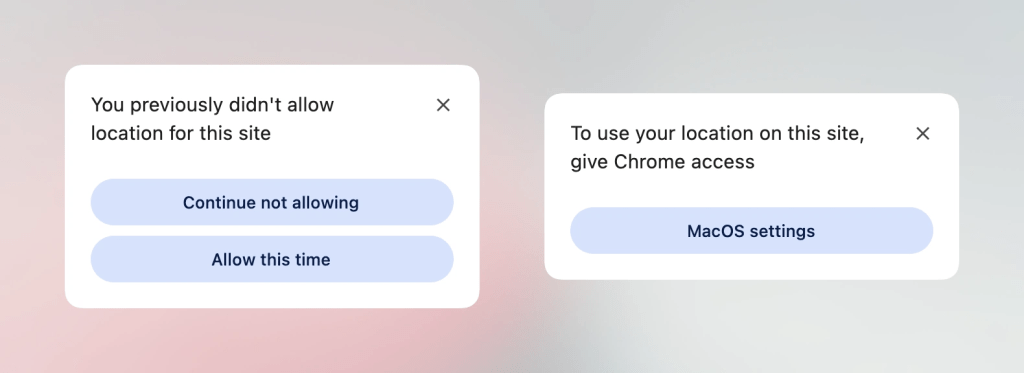
For years, the Geolocation API has been a source of frustration for developers, marred by inconsistent permissions and complex hardware-level dependencies. The new <geolocation> element aims to simplify this. By treating location access as an HTML-integrated feature, the browser handles the permission UI more gracefully. While the element is currently in its nascent stages—with specific styling restrictions that developers must navigate—it is already being implemented via progressive enhancement strategies that allow it to coexist with the legacy API.
Syntax Highlighting with ::highlight()
Dave Rupert’s MicroLighter project has brought the power of the Custom Highlight API to the forefront. Traditionally, syntax highlighters have had to wrap code in thousands of <span> elements, which causes significant performance degradation on large files. By using the ::highlight() pseudo-element, MicroLighter allows developers to apply styles to arbitrary ranges of text without altering the underlying DOM structure.
Supporting Data and Technical Implementation
Grid Information in CSS Variables
Temani Afif has provided a breakthrough for those working with CSS Grid. By leveraging CSS custom properties, developers can now expose the internal structure of a grid—specifically the count of rows and columns—directly to their styles. This enables "hover proximity" effects, where an element’s state can react based on its coordinate index within the grid. While this currently requires uniform column widths, the implications for responsive, data-driven design are profound.
The Class Prefix Selector: A New Standard?
Bramus recently unveiled the proposed "class prefix selector," a syntax feature that could render complex attribute selectors obsolete.
- Current State: Developers currently rely on
[class^="something-"]or[class*=" something-"]to match classes. These are not only verbose but carry higher performance costs for the browser’s CSS engine. - Proposed Future: The syntax
.something-*would allow for native, performant matching of classes starting with a specific prefix. Given the simplicity and the performance benefits, industry observers expect rapid adoption in browser standards.
Feature Detection with named-feature()
The @supports rule is finally receiving a meaningful upgrade. The named-feature() function allows developers to query for specific browser capabilities that were previously "undetectable." Whether it is checking if a browser respects transforms within an anchor-positioned context or validating support for specific layout engines, this tool makes progressive enhancement a much more reliable strategy.
Official Responses and Industry Discourse
The debate surrounding "Dark Mode" implementation has highlighted a schism in modern UX philosophy. Lea Verou argues for a standard two-state toggle, while Bramus advocates for a tri-state approach (Light, Dark, and System Default). The consensus, currently trending toward a "System-Default-until-Overridden" approach, mirrors the broader shift toward respecting user OS preferences as the baseline for web accessibility.
Furthermore, the introduction of flex-wrap: balance by Ahmad Shadeed has been met with enthusiasm. Much like text-wrap: balance improved the aesthetics of headers by preventing "orphaned" words on new lines, flex-wrap: balance ensures that flex items are distributed evenly across rows. This eliminates the awkward visual of a single item dangling on a final line of a flex container.
Implications for the Future of Web Development
The developments of the last few weeks point toward a future where the browser does significantly more heavy lifting. We are transitioning away from the era of "JavaScript-as-a-fix-for-CSS-deficiencies" and entering an era of "CSS-as-a-full-featured-layout-and-interaction-engine."
1. Performance Gains
By moving tasks like syntax highlighting and UI state management (interest invokers) into the browser engine, we are seeing a reduction in the "Main Thread" burden. This is critical for users on mobile devices or lower-end hardware, where bloated JavaScript bundles frequently compromise the user experience.
2. Reduced Technical Debt
The class prefix selector and the @supports named-feature() function will allow developers to write cleaner, more maintainable code. By reducing the reliance on long, fragile attribute selectors, CSS files will become more readable and less prone to regression errors.
3. A Call to Progressive Enhancement
The common thread through all these updates is that they are built with progressive enhancement in mind. Developers are no longer waiting for 100% cross-browser support to begin experimenting. By layering these new features over existing APIs, teams can provide a premium experience to users on modern browsers while maintaining a functional baseline for everyone else.
As we move into the autumn season, the web platform is clearly entering a period of refinement. The tools we use are becoming more expressive, and the browser is becoming a more capable partner in the design and development process. For the CSS developer, the message is clear: the future is declarative, the future is native, and the future is remarkably efficient. Keep experimenting, keep testing, and as always, keep your styles relevant.