
A New Era for Embedded Development: Arduino Core for Zephyr RTOS Reaches Milestone v1.0.0
By Tech & Embedded Systems Desk
Published: October 2026
Main Facts: The Transition to Modern RTOS Architecture
The embedded systems landscape is undergoing a significant paradigm shift. Arduino has officially announced the release of version 1.0.0 of the Arduino core for Zephyr RTOS. This milestone release marks the definitive completion of Arduino’s strategic transition away from the legacy MbedOS-based core, establishing a modern, highly flexible, and future-proof foundation for both current and upcoming Arduino hardware generations.
By fully integrating the Zephyr Real-Time Operating System (RTOS), this new core empowers developers to leverage advanced Zephyr features, networking protocols, security models, and low-power management APIs directly from familiar development tools, including the Arduino IDE, Arduino CLI, and Arduino App Lab.
At its technical core, the v1.0.0 release utilizes an innovative two-component architecture. Instead of compiling a monolithic binary that tightly couples the bootloader, operating system, and user application, the system generates a standalone ELF file. This file is loaded dynamically by a precompiled Zephyr firmware utility known as the "loader." The loader acts as a secure intermediary, seamlessly handling interactions between user sketches and the underlying Zephyr operating system kernel.
Following an initial bootloader installation—a process made fully automatic since version 0.90.0—the loader manages subsequent sketch deployments with minimal friction. Developers can configure the loader’s runtime behavior directly via the Arduino IDE’s Mode menu. In Standard mode, sketches deploy and execute automatically. In Debug mode, the system pauses for interactive input, requiring the developer to type 'sketch' directly into the Zephyr shell, thereby streamlining the troubleshooting of complex multithreaded applications.
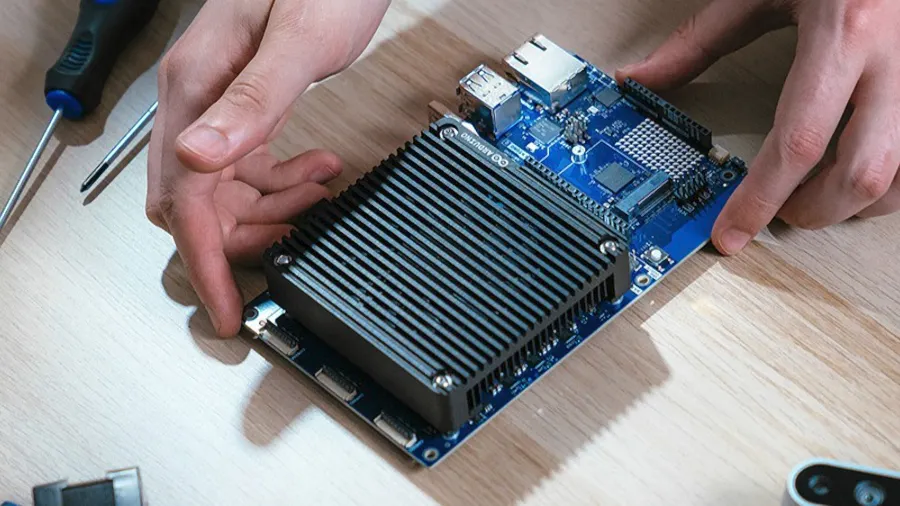
Validated against version v0.16.8 of the Zephyr SDK, the core integrates seamlessly with standard Zephyr ecosystem tooling, such as the west meta-tool and sync-zephyr-artifacts. Furthermore, it relies on advanced mechanisms like llext for dynamic extensions and the zephyr-sketch-tool for sketch compilation, all while preserving backward compatibility through the foundational ArduinoCore-API. Among the first hardware beneficiaries of this robust new architecture is the newly released Arduino UNO Q (and its variants, such as the VENTUNO Q), signaling a major leap forward for IoT device capability.
Chronology: The Road from MbedOS to Zephyr 1.0.0
To fully understand the gravity of the v1.0.0 release, it is necessary to examine the evolutionary timeline that brought Arduino to this strategic crossroads.
Phase 1: The MbedOS Era and Its Limitations
For years, Arduino relied on ARM’s MbedOS to power its higher-end, connectivity-focused boards (such as the Nano 33 IoT and Portenta series). While MbedOS provided a functional RTOS environment with built-in networking stacks, the embedded ecosystem evolved rapidly. Development velocity, community contributions, and long-term maintenance cycles for MbedOS began to plateau, prompting Arduino engineers to look for a more dynamic, community-driven alternative.
Phase 2: The Pivot to Zephyr and Early Prototyping (2023–2024)
Recognizing the momentum of the Linux Foundation-backed Zephyr RTOS, Arduino initiated exploratory integration projects. Zephyr offered a modular kernel, extensive hardware support, native device tree usage, and a rapidly growing enterprise and open-source developer community. Early experimental builds sought to bridge the Arduino API abstraction layer with Zephyr’s low-level kernel primitives.
Phase 3: Decoupling and the Two-Component Architecture (2025)
A major engineering breakthrough occurred with the decision to separate the firmware into a static "loader" and dynamic user sketches. During this developmental phase, architects refined the binary loading mechanism, ensuring that user code could be injected into a running RTOS environment without requiring a full system reflash every time a line of code changed.
Phase 4: Automation and Version 0.90.0
As stability improved, the installation friction points were systematically ironed out. The release of version 0.90.0 marked a critical turning point by making the Zephyr loader installation procedure fully automatic. Developers no longer needed to manually wrestle with complex toolchains just to initialize a supported board.
Phase 5: Reaching Maturity with Version 1.0.0 (Late 2026)
Today, version 1.0.0 signifies production readiness. The deprecation of MbedOS is complete, all core source code and loader repositories are publicly accessible via GitHub, and initial hardware products like the Arduino UNO Q / VENTUNO Q ship with native Zephyr core compatibility out of the box.
Supporting Data & Architectural Deep Dive
To appreciate the engineering complexity of the Arduino core for Zephyr RTOS v1.0.0, one must analyze the under-the-hood components that make this architecture tick.

Architectural Breakdown
| Component | Function / Role |
|---|---|
| Zephyr Loader | Precompiled firmware handling interaction between sketches and the underlying OS. Manages dynamic loading. |
| Standalone ELF | Compiled user sketch generated independently of the base operating system loader. |
llext Mechanism |
Zephyr subsystem utilized for dynamic linking and loading of extension modules. |
zephyr-sketch-tool |
Specialized tool used during the build phase to compile user sketches into loadable formats. |
ArduinoCore-API |
The abstraction layer ensuring code written for traditional AVR Arduinos remains compatible with the new RTOS core. |
| DTS Overlays & Fixups | Device Tree Source files used to handle board-specific pinouts and configurations generically. |
Development Workflow & SDK Dependencies
The core relies on industry-standard build utilities native to the Zephyr ecosystem. Developers utilize west for workspace management and dependency tracking. By standardizing on Zephyr SDK v0.16.8, Arduino ensures that enterprise developers can leverage continuous integration (CI) pipelines, automated testing frameworks, and strict version control without fearing unexpected toolchain drift.
Furthermore, the hardware abstraction is handled via Device Tree Source (DTS) overlays. This means that adding support for a new board no longer requires rewriting core architectural files; instead, board-specific quirks, memory maps, and pin definitions are cleanly isolated within DTS and fixup files.
Official Responses and Developer Community Reactions
The embedded development community has met the release of Arduino core v1.0.0 with overwhelming enthusiasm, tempered by pragmatic discussions regarding migration paths.
Arduino’s engineering leadership has emphasized that this transition was driven by a deep commitment to open-source sustainability. In a joint statement released via the project’s official GitHub repository channels, core maintainers noted:
"The transition from MbedOS to Zephyr was not merely a technical refactoring; it was a strategic alignment with the future of connected hardware. Zephyr provides a vibrant, vendor-neutral ecosystem with regular release cycles and rigorous security auditing. By establishing a clean separation between the loader and user sketches, we have drastically reduced bricking risks while giving professional developers enterprise-grade RTOS capabilities wrapped in the world’s most accessible developer experience."
Early adopters within the industrial IoT (IIoT) space have highlighted the benefits of native multitasking and deterministic thread scheduling. Commercial hardware integrators building edge-computing nodes report that the ability to drop into a standard Zephyr shell via Debug mode drastically accelerates root-cause analysis during hardware-software integration phases.
Implications for the Future of IoT and Embedded Design
The rollout of Arduino core v1.0.0 for Zephyr RTOS has profound implications for hobbyists, educators, and professional IoT product developers alike.
1. Bridging the Gap Between Prototyping and Production
Historically, developers often used Arduino for rapid proof-of-concept builds, only to rewrite their code entirely in native C/C++ using IDF or RTOS SDKs when transitioning to commercial production. Because the new core runs on Zephyr—an operating system widely adopted by Fortune 500 tech and automotive companies—prototypes built on Arduino hardware can now share architectural DNA with final commercial products.
2. Enhanced Security and Power Management
Modern IoT devices demand sophisticated power-saving states and robust security protocols (such as secure boot and cryptographic accelerators). Zephyr provides mature subsystems for power management and network security (including TLS/DTLS stacks and Wi-Fi/BLE management). Exposing these capabilities through standard Arduino interfaces allows developers to build secure, battery-conscious connected devices with unprecedented ease.
3. Long-Term Maintenance and Ecosystem Stability
Unlike proprietary or single-vendor RTOS frameworks that risk abandonment, Zephyr is governed by the Linux Foundation. Its massive contributor base ensures regular security patches, architecture ports, and driver updates. For Arduino, adopting Zephyr guarantees that its hardware catalog remains relevant and supported for the next decade and beyond.
Conclusion
Version 1.0.0 of the Arduino core for Zephyr RTOS is much more than a routine software update. It represents a mature, highly calculated evolution of the world’s most popular embedded ecosystem. By blending the unmatched accessibility of the Arduino IDE with the industrial robustness of Zephyr, Arduino has successfully laid a bulletproof foundation for the next generation of smart, connected devices.
For more information, source code repositories, and installation guides, developers can visit the official ArduinoCore-zephyr GitHub repository.








