Anthropic’s Claude Fable 5.1 Launches on AWS: A New Era for Long-Running, High-Stakes Enterprise AI
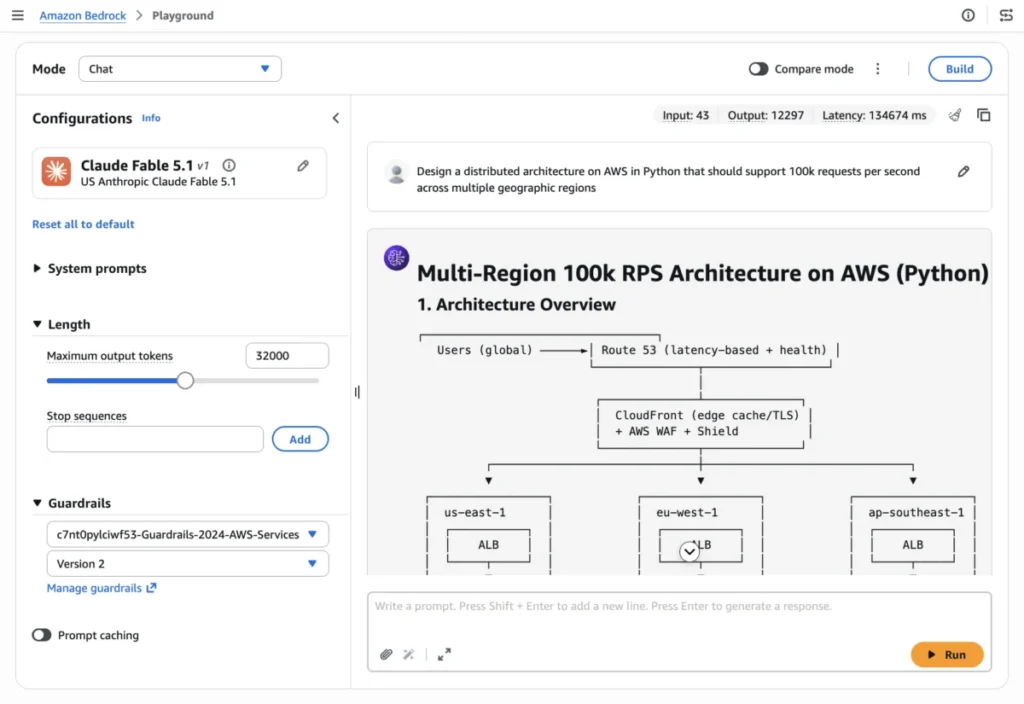
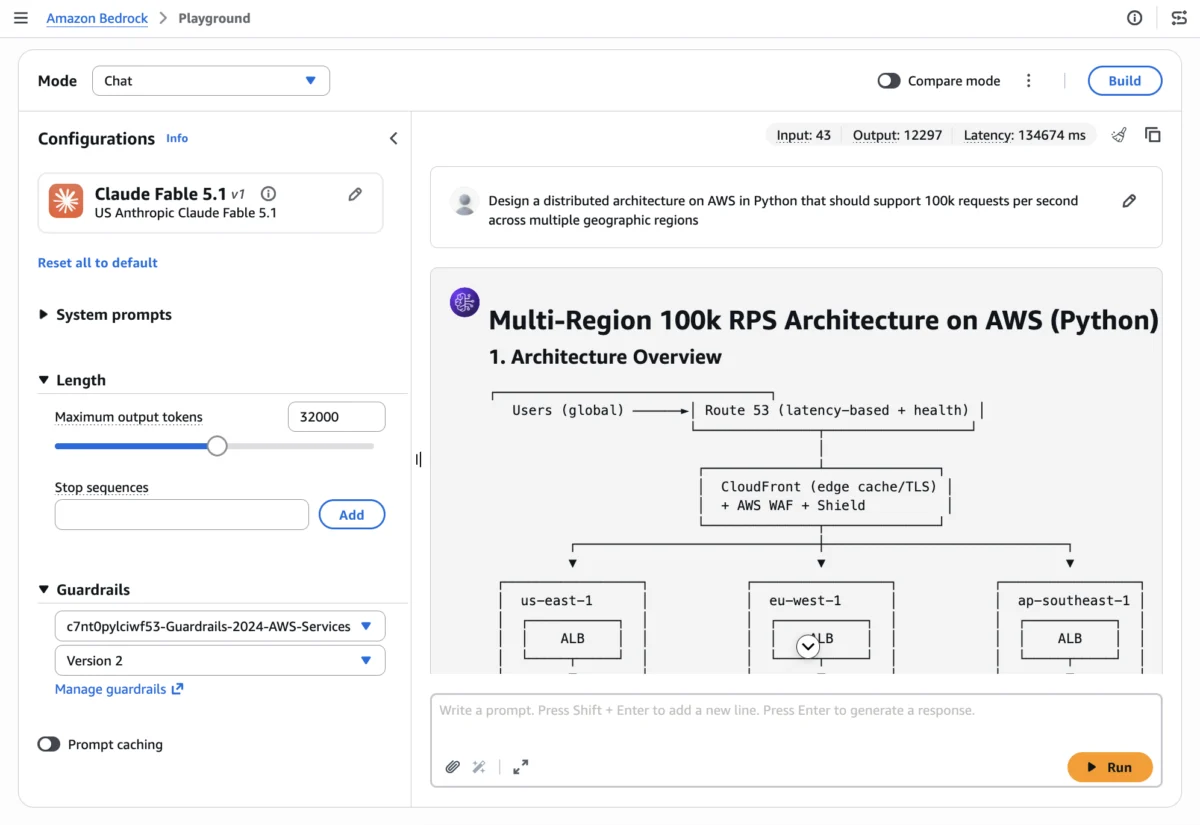
SEATTLE — Amazon Web Services (AWS) has officially announced the availability of Anthropic’s flagship frontier model, Claude Fable 5.1, across its cloud infrastructure. Designed explicitly for ambitious enterprise workflows, complex coding tasks, and intensive scientific research, the model represents a major leap forward in artificial intelligence capability—shifting the paradigm from short, discrete prompt-and-response interactions to autonomous, long-running agentic sessions that can span hours and coordinate across multiple applications.
The integration brings Anthropic’s most advanced reasoning engine directly into the AWS ecosystem, offering enterprise developers and organizations robust tooling to manage massive codebases, conduct rigorous data analysis, and execute mission-critical operations securely. However, alongside its immense capabilities, Claude Fable 5.1 introduces new governance, data retention, and safety frameworks—including the designation of the model as a "Covered Model" backed by specialized security protocols developed jointly by AWS and Anthropic.
Main Facts: What Is Claude Fable 5.1?
Claude Fable 5.1 is engineered to tackle high-stakes, long-duration computing tasks that typically overwhelm conventional large language models (LLMs). According to technical documentation and release notes from Anthropic and AWS, the model’s core attributes include:
- Autonomous Software Engineering: Unlike models that assist with isolated snippets of code, Claude Fable 5.1 is capable of managing substantial portions of an entire software project independently. It can reason across multi-file codebases, implement complex features, execute peer code reviews, and run performance optimizations over extended sessions.
- Frontier Scientific and Enterprise Intelligence: The model is optimized for multidisciplinary research, synthesizing massive datasets, drafting technical architecture documents, and automating intricate enterprise operations.
- Dual Access Points on AWS: Enterprise users can deploy and interact with Claude Fable 5.1 via two primary pathways: Amazon Bedrock, AWS’s fully managed service for building generative AI applications with foundation models, and the Claude Platform on AWS.
- Stricter Safety and Governance Controls: Because of its advanced capabilities, Anthropic has classified Fable 5.1 as a "Covered Model," subjecting it to specialized data retention policies, human safety reviews, and compliance configurations within the AWS cloud boundary.
Chronology: The Road to Fable 5.1 on AWS
The arrival of Claude Fable 5.1 on AWS is the culmination of a rapidly accelerating partnership between Amazon and Anthropic, marked by continuous model iterations and deep architectural integrations.
Early Foundations and Strategic Partnership
The groundwork for this integration was laid through Amazon’s multi-billion-dollar strategic collaboration with Anthropic. By positioning Amazon Bedrock as a primary cloud provider for Anthropic’s foundational models, AWS established a secure pipeline allowing enterprise customers to access cutting-edge AI without compromising data privacy or compliance requirements. Over successive generations, Claude models gained traction in regulated industries such as healthcare, finance, and legal tech.
The Shift Toward Long-Running Agentic Workflows
As enterprise adoption matured, user demand shifted away from simple chatbots toward autonomous agents capable of performing multi-step engineering and research projects. Anthropic responded by developing models capable of maintaining context, planning long-term execution strategies, and self-correcting over hours of continuous operation.
The Official Launch (Early September 2026)
Last week, AWS officially flipped the switch on Claude Fable 5.1. The release was accompanied by updated documentation on Amazon Bedrock, the introduction of the aws_review data retention mode, and the rollout of Enterprise Frontier Safeguards (EFS). These combined updates ensure that while developers gain access to unprecedented intelligence, corporate security teams retain granular visibility and control over model inputs and outputs.
Supporting Data and Technical Architecture
Deploying a frontier model capable of multi-hour autonomous execution requires deep integration between compute infrastructure, storage boundaries, and security layers.
Infrastructure and Access
Customers can provision Claude Fable 5.1 through Amazon Bedrock, leveraging AWS’s dedicated AI accelerators (such as Trainium and Inferential chips) alongside high-performance GPUs. This setup ensures low-latency inference even during sustained, resource-heavy reasoning tasks. Alternatively, teams utilizing the Claude Platform on AWS can configure custom API workflows tailored to specific internal applications.
The aws_review Data Retention Framework
To address enterprise concerns regarding data governance, AWS introduced a specialized configuration protocol for Covered Models like Fable 5.1:
- Data Retention Windows: Prompts and outputs are retained for up to 30 days specifically to facilitate compliance and safety evaluations.
- Human Safety Review: Under the new
aws_reviewretention mode, authorized Amazon personnel may conduct targeted safety reviews within the secure AWS boundary to mitigate risks associated with advanced autonomous capabilities. - Deprecation of Legacy Sharing: The legacy
provider_data_sharemode is deprecated for these models; Amazon Bedrock explicitly ensures that user data is not shared directly back with the model provider (Anthropic) for training purposes, preserving strict corporate data isolation.
Official Responses and Industry Perspectives
The release of Claude Fable 5.1 has generated significant commentary across the cloud computing and artificial intelligence sectors, highlighting both the enormous productivity gains and the delicate balance required in managing frontier AI safety.
Anthropic’s Vision for Autonomous Capability
In statements accompanying the launch, Anthropic emphasized that Fable 5.1 was built specifically for "ambitious tasks" that require sustained cognitive focus. "We are moving past the era where AI is merely a conversational assistant," noted an Anthropic spokesperson in technical briefings. "With Fable 5.1, organizations can entrust models with multi-hour, multi-application projects—ranging from end-to-end software development to complex scientific exploration—knowing the underlying architecture is designed to maintain logical coherence over extended timeframes."
AWS and the Security Mandate
AWS executives underscored that enterprise readiness is just as important as raw intelligence. Through the introduction of Enterprise Frontier Safeguards (EFS)—developed in direct partnership between AWS and Anthropic—eligible enterprise customers can harness the immense power of Covered Models while ensuring that sensitive corporate assets never leave a controlled cloud environment.
"Our enterprise customers demand two things: the absolute frontier of AI performance, and ironclad data security," an AWS product lead stated. "The collaboration on Fable 5.1 bridges that gap, allowing builders to scale automated workflows without compromising their organizational governance structures."

Implications for the Enterprise and Software Development Ecosystem
The integration of Claude Fable 5.1 into AWS carries profound implications for software engineering teams, corporate IT departments, and the broader enterprise software market.
1. The Transformation of Software Engineering
The ability of an AI model to own features across an entire codebase—handling everything from architectural design and code writing to rigorous review and debugging over multi-hour sessions—fundamentally changes the role of the software developer. Rather than writing boilerplate code or fixing isolated bugs, engineers are increasingly stepping into supervisory roles, acting as technical directors who guide autonomous agents through complex project lifecycles.
2. Heightened Standards for AI Governance
As models become more autonomous, the risks associated with unexpected outputs or hallucinated logic multiply. Anthropic and AWS’s proactive establishment of "Covered Models," mandatory safety review modes, and Enterprise Frontier Safeguards sets a new industry benchmark. Other cloud providers and model developers will likely be forced to adopt similar granular data-retention and internal-review frameworks to satisfy enterprise risk-management committees.
3. Accelerated R&D Cycles
In scientific research and high-tech enterprise workflows, the bottlenecks have historically been human-hours spent synthesizing data, cross-referencing documentation, and running iterative simulations. By deploying Claude Fable 5.1 on scalable AWS infrastructure, research institutions and corporate R&D divisions can compress timelines that traditionally took weeks into mere hours of autonomous agentic processing.
Looking Ahead
As organizations begin stress-testing Claude Fable 5.1 across production environments on Amazon Bedrock and the Claude Platform on AWS, industry analysts will be closely monitoring productivity metrics, error rates, and security compliance records.
For builders and developers eager to dive in, comprehensive model cards, integration tutorials, and configuration guides are now live in the Amazon Bedrock documentation library. As Channy and the AWS News Blog team noted in this week’s roundup, the pace of generative AI innovation shows no signs of slowing down, setting the stage for an action-packed conference season as organizations prepare for upcoming events like AWS re:Invent.