Defying Hardware Limits: The Developer Who Brought 3D Graphics to the Playdate
The Panic-developed Playdate has long been celebrated as an exercise in intentional limitation. With its monochromatic, non-backlit 1-bit display, lack of a GPU, and a quirky hand-crank input, it was never intended to be a powerhouse of high-fidelity 3D rendering. However, in the world of game development, constraints are often the most fertile soil for innovation.
Developer Cristina Ramos has recently shattered the perceived technical boundaries of this handheld console, unveiling a stunning 3D technical demo that has left the retro-gaming community and developers alike stunned. By proving that the humble yellow device is capable of rendering 3D environments, Ramos has sparked a conversation about the untapped potential hidden beneath the Playdate’s minimalist exterior.
The Core Revelation: Breaking the 1-Bit Barrier
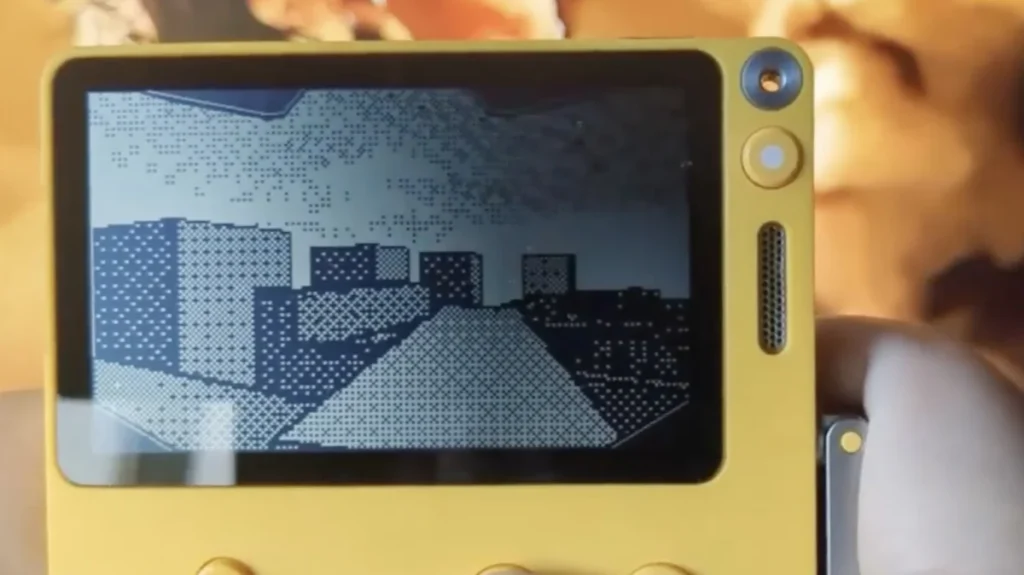
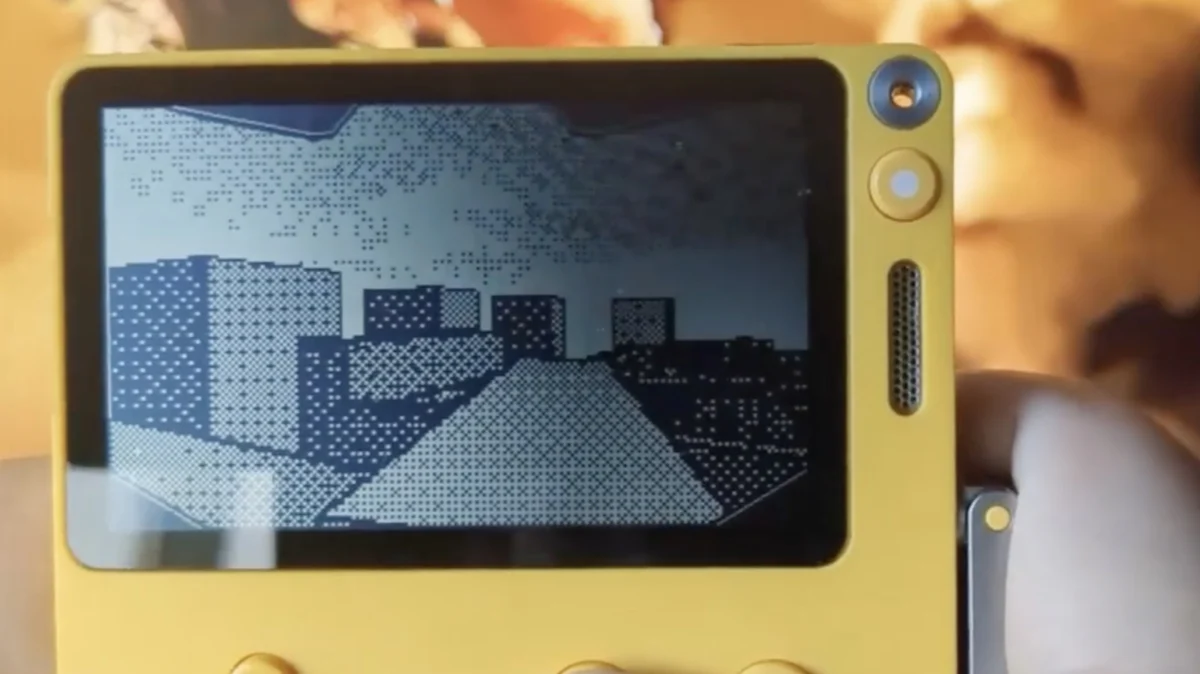
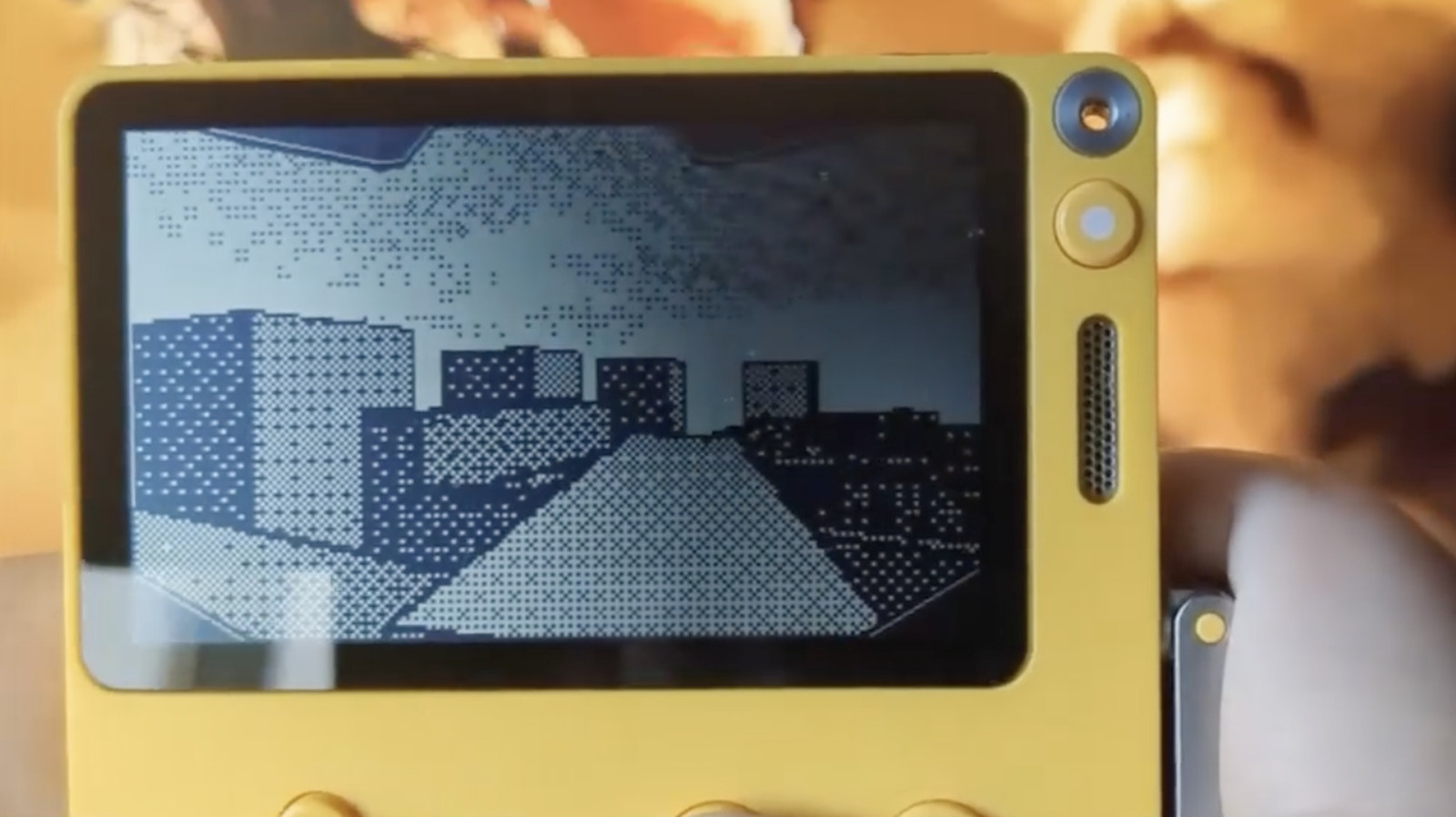
At the heart of this development is a brief but impactful video shared by Cristina Ramos on social media. The footage depicts a character navigating a 3D space, transitioning seamlessly from a complex interior platforming sequence to an expansive, Mirror’s Edge-inspired rooftop environment.
The demonstration is notable not just for the fact that it exists, but for its fluidity. On a device with such limited processing overhead, rendering three-dimensional polygons typically results in severe frame drops or visual artifacts. Ramos’s demo, however, maintains a level of responsiveness that feels native to the platform.
The achievement is a direct rebuttal to the common wisdom circulating in indie dev circles. For years, the community consensus was that the Playdate’s hardware—specifically its lack of hardware-accelerated 3D rendering—made such projects a fool’s errand. Ramos addressed this head-on with a statement that has since gone viral: "I was told you couldn’t do 3D on the Playdate, so I did it. Then I was told there was no way I could create exterior levels like those in Mirror’s Edge, so I proved them wrong again."
A Chronology of Playdate Innovation
To understand the magnitude of Ramos’s breakthrough, one must look at the history of the Playdate since its launch in 2022.
The Initial Vision (2022)
When Panic launched the Playdate, it was marketed as a "fun, portable, and surprising" device. Its library was built around the philosophy of the "Season" model—curated collections of games that leveraged the unique crank input. The device was deliberately positioned as an alternative to the graphical arms race seen in the smartphone and console markets.
The Rise of the "Homebrew" Scene (2023–2024)
As the device matured, developers began pushing the boundaries of the SDK. While the initial games were largely 2D, the community began experimenting with pseudo-3D effects, such as raycasting (similar to Wolfenstein 3D) and pre-rendered 2D sprites that mimicked depth. These were technical marvels, but they were not "true" 3D.
The Technical Pivot (2025–2026)
As the platform entered its third season, developers began seeking more sophisticated ways to utilize the hardware. The emergence of more efficient C-based engines allowed for higher performance than the standard Lua SDK. It was within this environment that Ramos began her work, eventually arriving at the current breakthrough that suggests full 3D geometry is possible on the device.
Supporting Data: Why This Shouldn’t Be Possible
The Playdate’s architecture is remarkably simple by modern standards. It features an ARM Cortex-M7 processor running at 180MHz and a 400×240 pixel screen. Crucially, it lacks a dedicated Graphics Processing Unit (GPU).
In modern game design, the GPU handles the heavy lifting of vertex transformation, lighting, and texture mapping. On the Playdate, the CPU must handle everything. This is a significant bottleneck. For a developer to render a 3D scene, they must manually calculate the perspective projection for every polygon, manage the rasterization of those shapes onto the 1-bit screen, and handle the "dithering" required to simulate grayscale.
Ramos’s work implies a highly optimized rasterizer. By using custom algorithms to handle perspective, she has managed to minimize the CPU cost of the geometry. This allows the Playdate to maintain a playable frame rate—a feat that, on paper, defies the hardware’s intended use case.
Official Responses and Industry Impact
The reaction from the developer community and Panic, the company behind the Playdate, has been one of cautious excitement. While Panic has yet to release an official technical analysis of the demo, the company has historically been a strong proponent of "hacking" their own hardware.
The Playdate’s "open" nature—allowing anyone to sideload games without a proprietary app store—is exactly what facilitates this kind of experimentation. Independent developers, including those who have worked on official "Season" games, have praised the demo for its ingenuity.
"It’s a reminder that hardware is just a set of suggestions, not a set of absolute rules," said one indie developer familiar with the SDK. "When you strip away the massive engines like Unity or Unreal, you see what developers are truly capable of when they have to write their own math from scratch. Ramos is doing the hard work that makes the Playdate feel like a platform for the next generation of engineers."
Implications: Where Does the Playdate Go From Here?
The existence of a 3D engine on the Playdate changes the trajectory of the device’s lifespan.
1. The Renaissance of "Demakes"
We are likely to see a wave of "demakes"—classic 3D games reimagined for the Playdate. Just as the Game Boy Color saw impressive ports of 3D-adjacent titles, the Playdate is now poised to host low-poly adventures that were previously thought impossible.
2. New Genre Possibilities
Before this demo, most Playdate games were limited to platformers, puzzles, or top-down adventures. True 3D opens the door to first-person shooters, immersive sims, and complex 3D puzzle games that rely on spatial awareness.
3. Hardware Longevity
Often, a console’s life is cut short by the limitations of its software. By proving that the hardware can evolve to support more complex genres, Ramos has extended the relevance of the Playdate by several years. It is no longer just a "novelty" device; it is a viable platform for experimental computer science.
4. Beyond Gaming
The versatility of the Playdate has already been noted in non-gaming contexts. We recently saw the device utilized to help synchronize the bells of Big Ben, proving that the hardware is as capable as it is charming. Ramos’s work further cements the device’s reputation as a "little yellow inspiration machine."
Conclusion
The "3D Playdate" demo is more than just a cool project; it is a testament to the resilience of the human spirit in the face of technical limitation. Cristina Ramos has demonstrated that when you strip away the bloat of modern computing, you are left with the raw potential of logic and geometry.
As the Playdate continues to evolve, the community will undoubtedly look back on this moment as a turning point. It is the moment the "little yellow machine" stopped being just a fun, quirky accessory and started being a serious tool for technical exploration. Whether this leads to a new wave of 3D titles or simply serves as a challenge for other developers to push the hardware further, one thing is clear: the Playdate is capable of far more than anyone dared to imagine.
For those who own a Playdate, the future looks significantly more dimensional. For the rest of the industry, it is a humbling reminder that sometimes, the most impressive graphics are the ones you build yourself, one pixel at a time.