Microchip and Marelli Unveil Breakthrough ASA Motion Link Demonstrator to Accelerate Software-Defined Vehicle Architectures
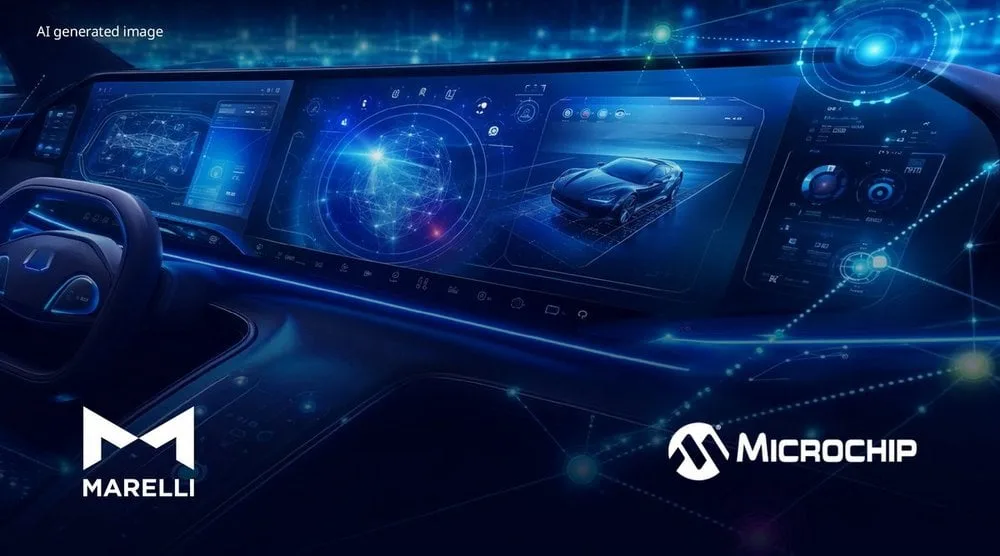
DETROIT & TOKYO — In a milestone development for the automotive electronics sector, Microchip Technology and Marelli have jointly announced a pioneering technical solution designed to bridge the gap between central vehicle computers and in-cabin displays. By leveraging the Automotive SerDes Alliance (ASA) Motion Link (ASA-ML) open standard, the collaborative demonstrator enables high-speed, secure transmission and direct decoding of graphics and video streams generated by a central computing unit.
The announcement arrives at a critical juncture for the global automotive industry. As car manufacturers worldwide race to transition toward Software-Defined Vehicles (SDVs) and highly centralized electronic/electrical (E/E) architectures, the demand for scalable, cost-effective, and interoperable connectivity solutions has never been more urgent. This new joint solution promises to untether automakers from proprietary vendor ecosystems, paving the way for simplified display architectures, optimized system costs, and unprecedented supply chain flexibility.
1. Main Facts: The Core Innovation
At the heart of this collaborative demonstrator is the seamless integration of Microchip’s advanced semiconductor technology with Marelli’s pioneering display-side integration capabilities.
- The Technology: The joint solution utilizes Microchip’s ASA-ML VS7000 serializer-deserializer (SerDes) chipset. This high-performance hardware creates a standardized, high-speed link capable of transmitting complex graphical data over long distances within the vehicle.
- The Functionality: Centrally generated graphics, high-definition camera feeds, complex navigation maps, rich infotainment interfaces, and critical vehicle control dashboards are processed by the vehicle’s central computer and streamed natively over the ASA-ML protocol.
- The Display Integration: Marelli has engineered the display-side architecture to incorporate the ASA-ML deserializer directly. This allows the display unit to decode standardized video streams natively, ensuring precise reception, ultra-low latency, perfect frame synchronization, and efficient distribution across multiple in-cabin screens.
- The Strategic Benefit: By breaking away from proprietary, closed-loop video transmission technologies, automakers can mix and match hardware components from various tier-one suppliers and semiconductor vendors without risking compatibility issues.
2. Chronology: The Evolution Toward Open Automotive Standards
The journey toward this joint Microchip-Marelli demonstrator represents the culmination of years of industry-wide coalition-building and technological maturation.
The Proprietary Era and Fragmentation (Pre-2018)
Historically, the transmission of high-bandwidth video and camera data inside vehicles relied heavily on proprietary SerDes technologies developed by individual silicon vendors. While these solutions met early bandwidth requirements, they created severe vendor lock-in. Automakers found themselves tethered to single-source component suppliers for entire vehicle generations, severely limiting pricing leverage, lengthening development cycles, and complicating multi-vendor supply chains.
The Formation of the Automotive SerDes Alliance (2019–2021)
Recognizing the unsustainable nature of fragmented, proprietary ecosystems, leading automotive manufacturers, Tier-1 suppliers, and semiconductor pioneers joined forces to establish the Automotive SerDes Alliance (ASA). Founded as an open global consortium, the ASA set out to define a robust, standardized, and secure high-speed serial link protocol. Microchip Technology was among the early founding members, committing engineering resources and intellectual property to champion open interoperability.
Expansion from Cameras to Displays (2022–2024)
Initially, standardized SerDes technology primarily targeted camera connectivity for Advanced Driver Assistance Systems (ADAS)—a critical safety application requiring high reliability. However, as modern vehicle cockpits evolved into multi-screen digital expanses featuring pillars-of-displays, passenger entertainment screens, and augmented reality head-up displays (AR-HUDs), the need for standardized display connectivity became paramount. Microchip successfully proved camera-link interoperability, laying the groundwork for the more complex task of display data streaming.
The Microchip-Marelli Collaboration (2025–Present)
The partnership between Microchip and Marelli represents the transition of ASA Motion Link from a theoretical networking standard into a market-ready, deployable reality. By combining Microchip’s cutting-edge VS7000 chipset family with Marelli’s advanced cockpit integration expertise, the companies have built a functional, live demonstrator proving that centralized-to-display architectures can operate seamlessly on open standards.
3. Supporting Data & Technical Architecture
To understand the magnitude of this technological leap, one must examine the fundamental engineering constraints facing modern automotive designers.
The Shift from Distributed to Centralized E/E Architectures
Traditional vehicle architectures relied on dozens of distributed Electronic Control Units (ECUs), each dedicated to a specific function (e.g., one ECU for the instrument cluster, another for the infotainment system, and separate units for individual cameras). This model resulted in massive wiring harnesses—often weighing up to 50 kilograms and representing one of the heaviest and most expensive components in a vehicle.
Centralized computing consolidates these workloads into a few high-performance domain controllers or central vehicle computers. However, moving massive amounts of video data from a central computer to distributed displays requires a physical layer capable of handling gigabit-per-second throughput without EMI (Electromagnetic Interference) issues or signal degradation.
+------------------------------------------------------------+
|                  Central Vehicle Computer                  |
|     (Generates Infotainment, Cluster, Camera Feeds, etc.)    |
+------------------------------------------------------------+
                                             |
                                             | ASA Motion Link
                                             | (Standardized High-Speed SerDes)
                                             v
+------------------------------------------------------------+
|             Microchip VS7000 Serializer Chipset            |
+------------------------------------------------------------+
                                             |
                                             | High-Speed Physical Link
                                             v
+------------------------------------------------------------+
|          Marelli Display-Side Deserializer & Integration    |
|   (Direct Decoding, Synchronization, and Display Output)   |
+------------------------------------------------------------+
                                             |
                                             v
+------------------------------------------------------------+
|                 In-Cabin Digital Displays                  |
+------------------------------------------------------------+
ASA-ML Specifications and Performance Metrics
The ASA Motion Link standard is specifically engineered to meet the stringent demands of the automotive environment:
- High Bandwidth: Capable of multi-gigabit data transmission rates, easily supporting 4K and multi-display cockpit layouts.
- Low Latency: Crucial for safety-critical interfaces, touch-screen responsiveness, and real-time ADAS camera overlays.
- EMC Compliance: Designed to pass stringent automotive Electromagnetic Compatibility (EMC) regulations, ensuring that high-speed data streams do not interfere with sensitive radio frequencies or vehicle communication buses.
- Security: Incorporates robust data protection features to prevent malicious tampering or interception of sensitive video feeds within the vehicle network.
4. Official Responses and Industry Perspectives
Leadership from both Microchip and Marelli emphasized the strategic importance of this collaboration in redefining how next-generation vehicles are engineered.
Kelei Shen, President of Marelli Electronics Business:
"The transition to software-defined vehicles is fuelling demand for more open, flexible and scalable electronic architectures. As an integrator within the automotive ecosystem, Marelli brings together best-in-class technologies from different partners to deliver complete solutions to vehicle manufacturers. This collaboration highlights how open standards can accelerate innovation while delivering the interoperability needed for the next generation of vehicles."
Shen’s remarks underscore Marelli’s role as a visionary Tier-1 integrator. By championing open-standard display integration, Marelli is positioning itself to help automakers navigate the immense software and hardware integration hurdles characteristic of modern SDV development.
Kevin So, Vice President of the Communications Business Unit at Microchip:
"Open standards play a fundamental role in accelerating innovation by reducing dependence on proprietary technologies. Our collaboration with Marelli demonstrates how ASA Motion Link gives automotive manufacturers a secure, interoperable and scalable connectivity solution that simplifies integration across the ecosystem."
So highlighted Microchip’s long-standing dedication to open-market principles, emphasizing that silicon vendors and Tier-1 suppliers achieve greater long-term market growth when they empower customers with choices rather than locking them into proprietary loops.
5. Broader Implications for the Automotive Industry
The successful demonstration of the Microchip-Marelli ASA-ML solution carries profound implications for various stakeholders across the automotive value chain.
For Automakers (OEMs)
- Cost Optimization: By fostering a competitive market for SerDes and display components, OEMs can significantly reduce system-level bill-of-materials (BOM) costs.
- Supply Chain Resilience: Eliminating single-source vendor lock-in protects automakers against supply chain disruptions, component shortages, and sudden price hikes.
- Faster Time-to-Market: Standardized interfaces reduce the engineering overhead required for custom integration work, allowing software teams to focus on user experience rather than hardware compatibility matching.
For Tier-1 Suppliers and Integrators
Companies like Marelli are proving that competitive advantage in the SDV era lies not in proprietary hardware silos, but in superior systems integration capabilities. By mastering open standards, integrators can assemble bespoke, high-performance solutions tailored precisely to an OEM’s unique brand and architectural requirements.
For the Semiconductor Ecosystem
The widespread adoption of ASA Motion Link validates the mission of the Automotive SerDes Alliance. It proves that collaborative, industry-wide standards can successfully displace closed ecosystems, setting a precedent for future standardization efforts in automotive Ethernet, power management, and sensor fusion.
Conclusion
As vehicles continue to evolve from mechanical machines into sophisticated computers on wheels, the internal plumbing—the data networks and connectivity standards—must evolve in lockstep. The joint demonstrator by Microchip Technology and Marelli marks a vital milestone in this evolution. By proving the viability and power of ASA Motion Link for centralized display architectures, the two companies have provided the automotive industry with a clear, scalable roadmap toward a truly open, interoperable, and cost-effective software-defined future.
For further technical documentation, developer toolkits, and detailed product specifications regarding Microchip’s ASA-ML semiconductor solutions, visit the Microchip ASA Motion Link Portal.