The $39 JetKVM Mini Redefines Remote Management: RISC-V, ESP32-P4X, and Open-Source Freedom
In an era where remote server management, headless lab environments, and decentralized IT infrastructures are increasingly common, the hardware barrier to entry for professional-grade tools has traditionally remained high. Traditional Keyboard, Video, Mouse (KVM) over IP solutions have long been divided into two frustrating categories: expensive, enterprise-grade hardware that costs hundreds—sometimes thousands—of dollars, or clunky, proprietary DIY builds that lack reliability and polish.
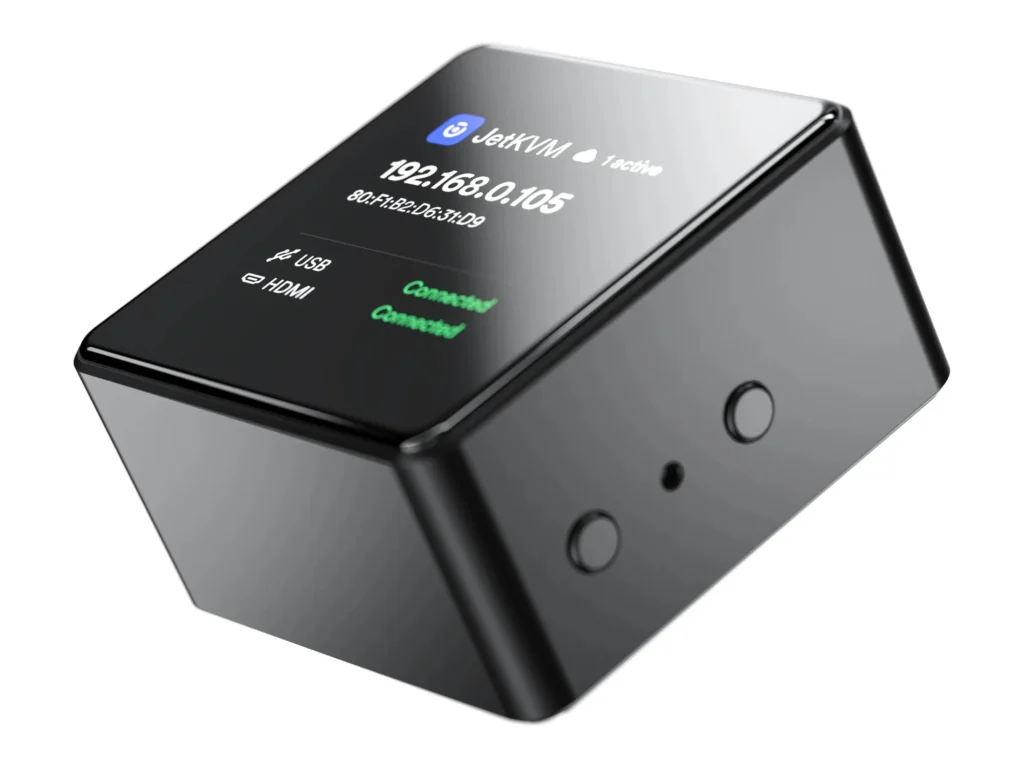
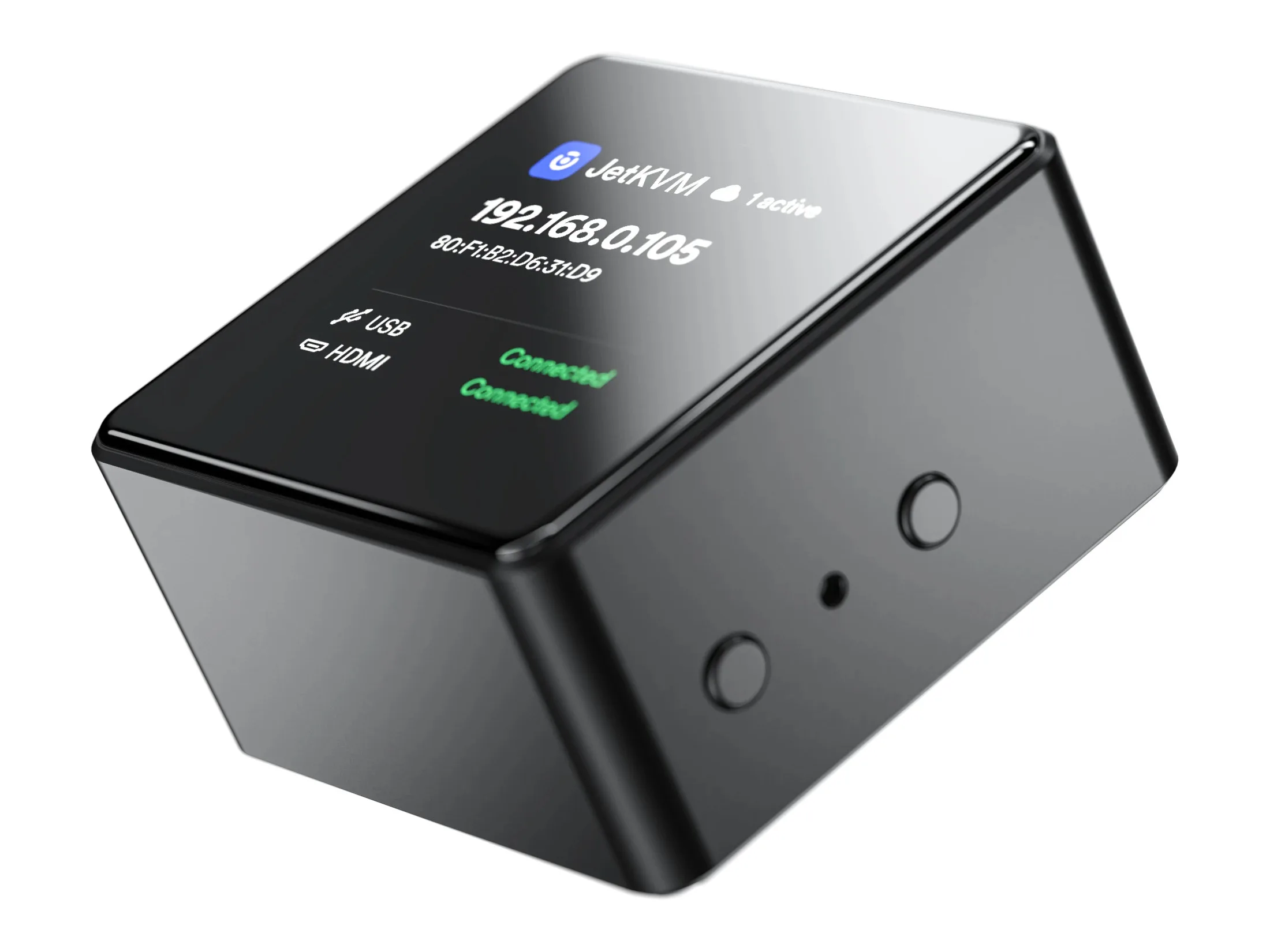
Enter the JetKVM Mini, an ultra-compact, open-source KVM over IP device that shatters cost expectations at an astonishing base price of just $39.
Marking a major architectural evolution from its predecessor, the new Mini pivots away from Linux-powered Rockchip SoCs to Espressif Systems’ cutting-edge ESP32-P4X RISC-V microcontroller. Featuring native H.264 video encoding, WebRTC browser streaming, zero-latency mouse and keyboard emulation, and an array of connectivity options, the JetKVM Mini promises to democratize remote machine access for developers, sysadmins, homelab enthusiasts, and enterprise engineers alike.
Main Facts: What is the JetKVM Mini?
At its core, the JetKVM Mini is a hardware bridge that connects to a target computer’s HDMI output and USB ports, capturing the video signal, translating it into a compressed H.264 stream, and transmitting it over a network via WebRTC directly to any modern web browser. Simultaneously, it emulates a USB keyboard and mouse, tricking the host machine into believing physical input devices are plugged directly into its ports.
Key Specifications & Features
- Processor (SoC): Espressif Systems ESP32-P4X dual-core RISC-V High-Performance CPU running at up to 400 MHz, paired with a 40 MHz Low-Power RISC-V MCU.
- Memory & Storage: 32 MB of PSRAM, 768 KB of HP L2MEM, 16 MB of onboard Flash, and a microSD card slot for virtual media (ISO mounting).
- Video Capabilities: HDMI input supporting up to 720p60 or 1080p30 natively, with 4K resolution supported via JetKVM OS Services. Built-in VPU for H.264 and JPEG encoding.
- Connectivity (Base Model): 100 Mbps RJ45 Ethernet port, two USB 2.0 Type-C ports (one 480 Mbps main port, one 12 Mbps peripheral emulation port).
- Connectivity (Mini W Variant): Adds dual-band Wi-Fi 6, Bluetooth, and 802.15.4 (Zigbee/Thread) via an integrated ESP32-C5 module.
- Form Factor & Power: Measures a remarkably tiny 42 × 42 × 23 mm (easily fitting inside the palm of a hand) and draws 5V/500mA via USB Type-C.
- Display & Status: Features a crisp 240×240 non-touch IPS status screen to monitor device metrics without needing a browser window.
- Software Ecosystem: FreeRTOS operating system running on the ESP-IDF framework, powered by open-source firmware.
- Pricing: $39 for a single Ethernet unit ($33/unit in a 3-pack bundle); $42 for the Wi-Fi-enabled Mini W ($36/unit in a 3-pack).
Chronology: From Linux Rockchip Roots to RISC-V Innovation
To understand the engineering achievement behind the JetKVM Mini, it helps to examine the trajectory of the project.
1. The Original JetKVM Paradigm
The original JetKVM made waves in the open-source hardware community by proving that a reliable, low-cost KVM over IP device could be built outside of traditional corporate supply chains. However, that first iteration relied on a traditional Linux software stack running on a Rockchip RV1106G3 System-on-Chip (SoC). While powerful and capable, running a full Linux distribution introduces heavier boot times, higher power draws, and a more complex operating overhead for a device whose primary mission is simple: capture video, encode it, and forward input commands.
2. The Architectural Pivot to RISC-V
Recognizing an opportunity to optimize performance, reduce power consumption, and streamline the firmware architecture, the development team made a bold strategic pivot. They migrated the core platform to Espressif’s ESP32-P4X, transitioning the project away from proprietary ARM/Linux ecosystems and fully embracing the open-standard RISC-V architecture.
By moving to a lightweight FreeRTOS environment operating on the ESP-IDF framework, the engineering team eliminated the bloat of a traditional Linux kernel. The result is a lightning-fast boot sequence, lower thermal output, tighter integration with hardware accelerators, and an exceptionally lean codebase that is far easier for the open-source community to audit, modify, and extend.
3. Launch and Variant Strategy
The introduction of the Mini and Mini W variants represents the culmination of this hardware transition. By offering both a wired Ethernet version and a wireless-enabled model (Mini W), the project caters to both high-security server racks—where wireless signals are restricted—and mobile test benches or temporary lab setups where pulling an Ethernet drop is impractical.

Supporting Data: Deep-Dive into the Hardware Architecture
The JetKVM Mini punches well above its weight class thanks to a carefully curated selection of silicon and peripheral components.
Inside the ESP32-P4X
Espressif’s ESP32-P4X is an ambitious chip designed specifically for high-performance, human-machine interface (HMI) applications that demand advanced computer vision, video encoding, and robust security.
- Processing Power: The dual-core 32-bit RISC-V HP CPU handles the heavy lifting at 400 MHz, equipped with AI instruction extensions and a single-precision Floating Point Unit (FPU). A secondary 40 MHz RISC-V LP (Low-Power) core manages background tasks and standby states.
- Memory Architecture: With 32 MB of external PSRAM supplementing 768 KB of high-performance L2 memory, the Mini has ample headroom to buffer frame buffers and manage WebRTC data packets without stuttering.
- Hardware Video Processing Unit (VPU): Instead of relying on brute-force CPU cycles, the ESP32-P4X features a dedicated VPU capable of hardware-accelerated H.264 and JPEG encoding, backed by a Pixel Processing Accelerator and a 2D DMA controller. This is what enables the board to seamlessly encode a crisp 1080p30 video stream on the fly.
Interface & Peripheral Layout
Despite its minuscule footprint (42 × 42 × 23 mm), the board packs an impressive array of physical connections:
- HDMI Input: Accepts video feeds up to 720p60 or 1080p30 natively, with scaling support up to 4K via JetKVM OS Services.
- Dual USB-C Ports: The primary USB-C port handles power (5V/500mA) and high-speed data transmission (480 Mbps). The secondary USB-C port operates at 12 Mbps, dedicated strictly to emulating human interface devices (HID)—the keyboard and mouse.
- MicroSD Card Slot: More than just storage, the microSD slot allows users to mount ISO images as virtual media. This feature is critical for remote system recovery, allowing administrators to flash, reinstall, or boot operating systems over the network as if a physical thumb drive were inserted into the machine.
- Onboard IPS Display: A vibrant 240×240 pixel non-touch IPS screen provides real-time diagnostic data—such as IP addresses, stream status, and system health—at a glance, saving administrators from logging into a dashboard just to check if the device is online.
Official Responses and Developer Community Engagement
From its inception, the JetKVM project has maintained an uncompromising commitment to open-source principles. The development team structured the project from day one to ensure that the firmware, capture logic, and transport layers remain transparent and accessible to the public.
All source code, firmware updates, and documentation are publicly hosted and actively maintained via the official JetKVM GitHub Repository.
Community Empowerment and Extensibility
By building the Mini on the ESP-IDF framework and FreeRTOS, the developers have lowered the barrier to entry for tinkerers who want to write custom firmware. Unlike closed-source commercial KVM appliances that lock users into vendor-controlled ecosystems, the JetKVM Mini invites deep modification.
For developers looking to get their hands dirty, the ecosystem supports hands-on experimentation. Educational hardware partners and open-electronics distributors have begun stocking compatible development boards—such as the Espressif ESP32 development kits with Wi-Fi, Bluetooth, and USB-C connectors, as well as ESP32-C6 IoT kits—allowing engineers to prototype extensions, build custom automation scripts, or experiment with local smart-home integrations using the board’s Zigbee and Thread capabilities (available on the Mini W variant).
Implications: Why the JetKVM Mini Matters for IT, Labs, and Home Users
The release of a $39 open-source KVM over IP device carries profound implications across multiple sectors, transforming how remote hardware is managed, troubleshot, and deployed.
1. Rescuing Headless and Out-of-Reach Machines
Every systems administrator knows the dread of a "kernel panic" or a failed BIOS update on a machine located in a remote server rack, a distant data closet, or an unmonitored home lab shelf. Without a KVM, fixing such an issue traditionally required a physical trip to the machine, hauling out a bulky monitor, a keyboard, and a mouse.

Because the JetKVM Mini operates entirely at the hardware level—independent of the target computer’s operating system—it grants out-of-band access to the BIOS, UEFI, bootloaders, and pre-boot diagnostic screens. If a machine crashes halfway through a remote Linux kernel upgrade, the admin can simply open a web browser, view the boot screen via WebRTC, and select the correct recovery option without leaving their desk.
2. Democratizing the Homelab
Enterprise KVM over IP switches (such as those from Raritan, Vertiv, or Dell) frequently cost upwards of $500 to $2,000 per unit, putting professional-grade remote management entirely out of reach for hobbyists, students, and indie developers. At $39 to $42, the JetKVM Mini bridges the digital divide, allowing home lab enthusiasts to wire up multiple mini-PCs, test benches, and custom servers with the same robust remote-control capabilities found in enterprise data centers—all without breaking the bank.
3. Security, Privacy, and Self-Hosting
Many commercial cloud-connected KVM solutions force users to route video streams and remote keystrokes through third-party proprietary relay servers, raising valid security and privacy concerns. Because the JetKVM Mini runs open-source firmware and communicates natively via WebRTC, organizations and privacy-conscious individuals can configure the device to operate entirely within a local network. Keystrokes and video feeds never have to touch an external cloud broker, ensuring maximum data sovereignty and security compliance.
4. Edge Computing and Remote Field Deployments
The inclusion of the Mini W variant—with its Wi-Fi 6, Bluetooth, and Zigbee/Thread support—opens up fascinating possibilities for remote edge computing deployments. Whether managing solar-powered weather monitoring stations, remote IoT gateways, or digital signage displays installed in awkward physical locations, technicians can establish secure wireless remote management links without being tethered to a physical Ethernet infrastructure.
Conclusion
The JetKVM Mini is more than just a clever piece of budget hardware; it is a masterclass in modern embedded systems design. By successfully transitioning a complex video-capture and streaming pipeline onto Espressif’s RISC-V ESP32-P4X platform, the project has achieved a rare trifecta: enterprise-grade functionality, radical affordability ($39), and uncompromising open-source transparency.
Whether you are a seasoned enterprise network engineer looking to cost-effectively manage a fleet of remote servers, a developer building automated testing rigs, or a homelab enthusiast tired of swapping HDMI cables in the dark, the JetKVM Mini stands out as an essential tool for the modern digital age.
To explore the source code, review schematics, or track ongoing firmware updates, visit the official JetKVM GitHub Repository.