The Final Stamp: International Reply Coupons Set for Global Extinction


A quiet revolution has swept through the world of international correspondence, leaving behind forgotten relics of a bygone era. Among them, the International Reply Coupon (IRC), a venerable tool that once bridged postal gaps across continents, is now on the precipice of complete obsolescence. For those of a certain age, or with a penchant for traditional communication methods, this news might evoke a pang of nostalgia for a system that once symbolized global connectivity. The United States Post Office ceased selling IRCs in early 2013, a move that went largely unnoticed by the broader public. Now, the Universal Postal Union (UPU), the international body that governs their existence, has decreed their definitive end: by December 31, 2026, IRCs will no longer be available for purchase anywhere in the world, marking the definitive close of an intriguing chapter in postal history.
This impending extinction highlights a broader trend in global communication, where the tangible act of sending and receiving physical mail has steadily given way to the instantaneous and ubiquitous digital realm. While the IRC might be a footnote in the grand narrative of technological progress, its demise offers a moment to reflect on the ingenuity required to facilitate cross-border interaction in a world vastly different from our own.
Main Facts: The Quiet Demise of a Global Postal Icon
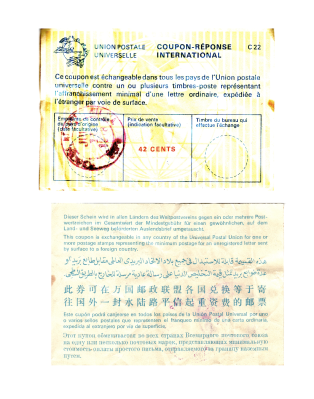
The International Reply Coupon (IRC) is an unsung hero of pre-digital global communication, a paper voucher designed to simplify the payment of return postage from a foreign country. Its core function was elegantly simple: a sender in one country could purchase an IRC and include it in a letter to a recipient in another country. The recipient could then exchange the IRC at their local post office for postage stamps equivalent to the cost of a surface letter to any UPU member country. This ingenious system circumvented the immense logistical challenges and currency exchange headaches of trying to acquire foreign postage stamps.
For decades, the IRC served as an indispensable tool for a diverse array of users. Ham radio operators and shortwave listeners relied on them heavily to receive QSL cards – tangible confirmations of successful radio contacts from distant stations. Pen pals exchanged them to maintain their global friendships, while academics and researchers used them to facilitate communication with international colleagues. Even small businesses occasionally employed IRCs for minor transactions requiring a physical reply.
However, the dawn of the internet age and the proliferation of digital payment systems rendered the IRC increasingly superfluous. The U.S. Postal Service, a major player in the global postal network, discontinued sales of IRCs in early 2013, an early indicator of their declining relevance. This was followed by similar decisions in other developed nations, including the United Kingdom and Germany. The final nail in the coffin came from the Universal Postal Union itself, which has scheduled the complete cessation of IRC sales worldwide by the end of 2026, effectively consigning them to the annals of postal history. This marks not just the end of a specific postal product, but the symbolic conclusion of an era dominated by physical mail for complex international interactions.
A Journey Through Time: The Chronology of International Reply Coupons
The story of the International Reply Coupon is one of innovation born from necessity, charting the evolution of global communication from its nascent stages to its modern, digital form.
Genesis: Birth of a Global Standard (1906)
The concept of the International Reply Coupon emerged from a fundamental challenge in early 20th-century international correspondence: how could one reliably and conveniently pay for return postage from a foreign country? Sending a letter overseas was one thing, but ensuring the recipient could reply without incurring out-of-pocket postage expenses in their local currency was another entirely. The common domestic solution, the self-addressed stamped envelope (SASE) or simply enclosing loose stamps, was utterly impractical for international mail. A U.S. stamp held no value in, say, France, and acquiring French stamps from the U.S. was a near impossibility for the average citizen.
Recognizing this critical barrier to global communication, the Universal Postal Union (UPU) stepped in. Founded in 1874, the UPU is a specialized agency of the United Nations responsible for coordinating postal policies among its 192 member countries. Its foundational mission was to facilitate the seamless exchange of mail across borders, treating the entire world as a single postal territory for the purpose of international mail exchange. At its 1906 Congress in Rome, the UPU formally introduced the International Reply Coupon. The idea was groundbreaking: a standardized voucher, purchasable at any member post office, that could be exchanged for local postage in any other member country. This simple yet profound innovation effectively created a universal currency for return postage, leveling the playing field for international correspondents regardless of their location or local currency. It was a testament to multilateral cooperation, designed to foster communication and understanding across diverse cultures.
The Golden Age: Connecting a World Without Internet (Mid-20th Century)
For much of the 20th century, particularly from the post-World War I era through the late 1980s, IRCs experienced their zenith. They were an indispensable tool for a myriad of activities that relied on reliable international mail.
One of the most prominent uses was within the vibrant communities of ham radio operators and shortwave listeners. These enthusiasts would spend countless hours tuning into distant signals, hoping to "pull in" rare stations from across the globe. Upon making a successful contact or hearing a unique broadcast, the next step was often to send a "reception report" to the station, detailing the time, frequency, and content heard. In return, the station would send a "QSL card" – a postcard-sized verification of the contact. These cards were highly prized trophies for hobbyists, confirming their skill and equipment. However, mailing thousands of QSL cards internationally was a prohibitive expense for many stations. This is where IRCs became vital: the hobbyist would enclose an IRC with their reception report, ensuring the station could afford to send back the coveted QSL card. Without IRCs, the global exchange of QSL cards would have been severely hampered.
Beyond radio, IRCs facilitated personal connections through pen pal programs, allowing individuals from different countries to forge friendships through written correspondence, unburdened by postage concerns. Academics, researchers, and hobbyists with niche interests used them to exchange information, documents, and small items that required return postage. For many, the IRC was more than just a postal instrument; it was a tangible link to the wider world, a small piece of paper that represented global connection and the promise of a reply from afar. The variety of designs and security features on IRCs over the decades also made them collectible items for philatelists and postal history enthusiasts, further cementing their place in the cultural landscape.
The Slow Decline: A Fading Relevance (Late 20th Century – Early 21st Century)
The advent of transformative technologies beginning in the late 20th century initiated the slow, inexorable decline of the International Reply Coupon. The rise of email in the 1990s was perhaps the most significant blow. Instant, virtually free, and global, email rapidly displaced traditional airmail for personal correspondence, academic exchanges, and many business communications. The need for a physical letter, and by extension, a physical reply coupon, diminished dramatically.
Following email, the proliferation of the internet brought about a host of other digital solutions. Online forums, chat rooms, and later social media platforms provided new avenues for global interaction, often negating the need for any postal exchange whatsoever. Furthermore, the development of robust digital payment systems like PayPal, credit card processing, and later, various fintech solutions, offered far more efficient and secure ways to transfer small sums of money internationally. If a radio station needed to collect a small fee for postage or processing, a digital payment was now infinitely simpler than handling a physical coupon.

As demand dwindled, individual postal administrations began to re-evaluate the cost-effectiveness of selling and redeeming IRCs. The administrative burden of stocking, selling, and accounting for a product with increasingly low sales volume and minimal profit margins became untenable for many. The United States Postal Service was an early mover, discontinuing IRC sales in early 2013. This decision reflected the reality that the vast majority of Americans no longer had a practical use for them. Other developed nations followed suit, with countries like the United Kingdom’s Royal Mail and Deutsche Post in Germany also ceasing sales. The anecdotal evidence from Royal Mail, stating that the average post office sold "less than one IRC per year" at the time of its withdrawal, perfectly encapsulates the product’s fading relevance. These early withdrawals by major postal networks were clear harbingers of the IRC’s eventual global phase-out.
The Final Chapter: UPU’s Decision and the 2026 Deadline
The ultimate decision to discontinue International Reply Coupons entirely came from the Universal Postal Union itself. Faced with steadily declining global sales, increasing administrative overhead for its member countries, and the undeniable dominance of digital alternatives, the UPU concluded that the IRC had served its purpose and was no longer a viable or necessary component of the international postal system.
The UPU’s decision means that by December 31, 2026, the sale of International Reply Coupons will cease worldwide. Furthermore, the ability to redeem existing IRCs will also be phased out, though specific redemption deadlines might vary slightly by country, typically extending for a period after the sale cessation. This definitive deadline marks the end of an era, a formal recognition that the challenges IRCs were designed to solve have either been overcome by new technologies or have simply ceased to be relevant in the modern world. The UPU’s final act is a testament to its commitment to modernizing postal services, even if it means retiring a historical tool that once played a vital role in connecting the world.
Supporting Data and Anecdotes: Quantifying the Wane
The decline of the International Reply Coupon is not merely a matter of technological advancement but is demonstrably reflected in hard data and compelling anecdotes from postal administrations worldwide. These insights underscore just how marginalized IRCs had become before their official termination.
Declining Sales and Print Runs
Perhaps the most telling piece of evidence illustrating the IRC’s dwindling demand comes from the Universal Postal Union itself. In its later years, the UPU drastically reduced the print runs for new editions of IRCs. While earlier designs might have seen print runs in the millions, recent editions were produced in staggeringly low quantities – sometimes as few as 1,000 or even 500 copies globally. This stark reduction in production volume is a direct reflection of plummeting sales figures across its 192 member countries. Maintaining the infrastructure for a product with such negligible demand becomes economically indefensible. The cost of design, printing, distribution to national postal administrations, and the subsequent accounting and redemption processes far outweighed any potential revenue or strategic benefit.
The anecdote from the United Kingdom’s Royal Mail further solidifies this point. When the Royal Mail ceased selling IRCs, they publicly stated that the average post office in the UK sold less than one IRC per year. This figure is astonishingly low, highlighting the complete disconnect between the product and the needs of the vast majority of the public. It also points to the administrative inefficiency of maintaining stock, training staff on a rarely used item, and managing its accounting for such minimal transactions. For a global postal system built on volume and efficiency, such low usage rates made the IRC an operational liability.
The Niche of the Enthusiast: Ham Radio and Shortwave
While the general public largely abandoned IRCs, their utility persisted within certain niche communities, most notably among ham radio operators and shortwave listeners. These enthusiasts, who formed a passionate global network, continued to rely on IRCs for the exchange of QSL cards. The process was deeply ingrained in the culture of these hobbies: making a contact, sending a detailed report, and awaiting the physical QSL card as proof. For these communities, the IRC was not just a means to an end but a fundamental component of their global interaction.
The slow demise of IRCs has naturally presented a challenge to these hobbyists. While many have adapted to digital alternatives like eQSL (electronic QSL cards) and online logging services, the tangible charm of a physical card, often beautifully designed and personally signed, remains potent. The end of IRCs forces these communities to find new, often less standardized, ways to manage return postage for physical cards, such as direct PayPal payments for postage, or simply accepting that not all contacts will yield a physical QSL. This highlights that while the IRC’s overall economic impact was minimal, its cultural significance within specific, dedicated communities was considerable.
The Ponzi Connection: A Curious Historical Footnote
Beyond its practical postal applications, the International Reply Coupon gained a peculiar notoriety in the annals of financial history. It served as the basis for the original Ponzi scheme, conceived by Charles Ponzi in 1920. Ponzi, an Italian immigrant in Boston, observed that the exchange rates for IRCs varied significantly between different countries. He realized that an IRC purchased cheaply in a country like Italy, where post-war currency devaluation made them inexpensive, could be redeemed for a higher value of postage in the United States.
Ponzi proposed an arbitrage scheme: he would buy IRCs in bulk in Europe, ship them to the U.S., redeem them for U.S. postage, and then sell the stamps for cash, pocketing the difference. He promised investors exorbitant returns, often 50% in 45 days. The scheme, however, was fundamentally flawed. While the theoretical arbitrage existed, the practical challenges of acquiring and transporting millions of IRCs, converting them to stamps, and then selling those stamps for cash at a profit, quickly proved insurmountable. The logistical costs, coupled with fluctuating currency exchange rates and the sheer volume required to generate substantial returns, made genuine profits minuscule. Ponzi sustained his scheme not by actual arbitrage, but by paying early investors with money from newer investors – the classic definition of a pyramid scheme that now bears his name. This historical footnote, while a dark chapter, inadvertently highlights the inherent global transferability and perceived value of the IRC system, even if it was exploited for illicit gains.
Official Responses and Operational Challenges
The decision to retire the International Reply Coupon was not made lightly but stemmed from a comprehensive assessment by the Universal Postal Union and its member postal administrations, weighing historical utility against modern realities and operational costs.
The Universal Postal Union’s Stance
As the governing body for international postal services, the Universal Postal Union (UPU) was the architect of the IRC system in 1906 and, ultimately, its terminator. The UPU’s primary mandate is to facilitate global mail exchange efficiently and economically. Over the past two decades, their stance on IRCs evolved from maintaining a useful tool to recognizing an outdated relic. The official reasoning behind the discontinuation centers on several key factors:
- Declining Utility and Demand: As evidenced by the drastically reduced print runs and national post office sales figures, the practical need for IRCs had plummeted. The digital revolution provided superior alternatives for both communication and payment, rendering the IRC largely obsolete for the vast majority of international interactions.
- Cost-Effectiveness and Administrative Burden: For the UPU and its 192 member countries, maintaining the IRC system involved significant administrative overhead. This included designing and printing new editions, distributing them globally, managing complex accounting for sales and redemptions in various currencies, and training staff on a product rarely used. For a product generating minimal revenue, these operational costs became increasingly difficult to justify.
- Modernization and Efficiency: The UPU is committed to modernizing global postal services. Continuing to support a labor-intensive, paper-based system that could be easily replaced by digital means ran counter to its strategic goals of promoting efficiency and adopting new technologies. The decision to discontinue IRCs is part of a broader effort to streamline international postal operations.
The UPU’s official communications on the matter, often found in its circulars and congress resolutions, reflect a pragmatic approach: acknowledging the IRC’s historical significance while prioritizing the future needs and efficiencies of the global postal network. The 2026 deadline provides a clear timeframe for member countries to manage the final phase-out and for users to redeem any remaining coupons.
National Postal Administrations’ Perspectives
Individual national postal administrations, such as the USPS, Royal Mail, and Deutsche Post, played a crucial role in the IRC’s phased withdrawal. Their early decisions to cease sales were driven by similar, pragmatic concerns, often predating the UPU’s final global decree.
- Low Transaction Volume: As previously noted, the sales figures in many developed countries were abysmally low. For a large postal network, processing transactions that occur less than once a year per branch represents a significant drain on resources without commensurate benefits.
- Administrative Complexity: IRCs added a layer of complexity to postal operations. Staff needed to be trained on their sale and redemption, separate accounting procedures were required, and security measures had to be in place to prevent fraud (as demonstrated by the Ponzi scheme). For a product with such low demand, this complexity was an unnecessary burden.
- Storage and Logistics: Maintaining a stock of IRCs, particularly with various editions and security features, added to inventory management challenges for post offices.
- Customer Confusion: As IRCs became less common, many customers and even postal employees were unfamiliar with them, leading to potential confusion or delays in transactions.
- Focus on Core Services: National postal services are increasingly focused on core mail and parcel delivery, often competing with private carriers. Diverting resources to an antiquated, low-demand product was seen as inefficient and distracted from strategic priorities.
By discontinuing IRC sales, national postal administrations were able to streamline operations, reduce administrative costs, and reallocate resources to more relevant and frequently used services. Their early withdrawals paved the way for the UPU’s eventual global decision, demonstrating a collective shift away from the IRC as a viable tool in the modern postal landscape.
Implications: What the End of IRCs Means for Global Communication
The impending end of International Reply Coupons is more than just the retirement of a postal product; it is a symbolic marker of a profound transformation in how the world communicates and interacts across borders.
The End of an Era for Traditional Mail
The demise of the IRC is inextricably linked to the broader decline of traditional physical mail for personal and non-commercial international communication. For centuries, the postal service was the primary conduit for connecting people across distances. Letters were meticulously crafted, stamps carefully chosen, and the wait for a reply was an exercise in patience and anticipation. IRCs were a crucial enabler of this system, simplifying the most challenging aspect: ensuring a response.
Today, the tactile experience of receiving a letter, especially from overseas, has become a rarity, often reserved for official documents, greeting cards, or niche interests. The IRC’s disappearance underscores this shift. It represents the final unbinding of international communication from the limitations and ingenious workarounds of the physical postal system, fully embracing the digital age where distance is no longer a barrier to instant interaction. While a touch of nostalgia might linger for the romance of a handwritten letter and an IRC-secured reply, practicality and efficiency have undeniably won the day.
Impact on Niche Communities
For communities that relied heavily on IRCs, particularly ham radio operators and shortwave listeners, the transition presents both challenges and opportunities. The traditional method of QSL card exchange, heavily dependent on IRCs, must now adapt. Many have already embraced digital alternatives like eQSL.cc, which provides electronic confirmation of contacts that can be viewed and stored online. Online logging services allow operators to digitally verify contacts without any physical exchange.
However, for those who cherish physical QSL cards, new systems are emerging. These might include direct PayPal payments for return postage, or the use of "QSL bureaus" which consolidate cards for bulk international shipping, though these often involve membership fees. The shift highlights a generational divide within these hobbies, with newer enthusiasts more readily adopting digital methods, while purists may lament the loss of a tangible tradition. The end of IRCs encourages innovation within these communities to maintain their unique forms of global connection, even if it means moving further away from the original physical exchange.
The Triumph of Digital Solutions
The ultimate reason for the IRC’s demise is the overwhelming superiority of digital alternatives. Modern technology has provided solutions that are faster, cheaper, more secure, and infinitely more convenient than a physical coupon.
- Email and Instant Messaging: For personal and professional correspondence, these platforms offer instantaneous delivery, rich media capabilities, and global reach at virtually no cost.
- International Money Transfer and Digital Payment Systems: Services like PayPal, Wise (formerly TransferWise), Stripe, and even direct bank transfers have revolutionized international payments. They allow for secure, rapid, and often cost-effective transfers of funds, making the concept of exchanging a paper voucher for local postage entirely redundant. Whether paying for postage, a small product, or a service, digital payments offer unparalleled ease.
- Online Postage Purchase: In some countries, it is now possible to purchase and print international postage labels online, further simplifying the process for businesses and individuals who still need to send physical mail.
- Cryptocurrencies: For some tech-savvy niche communities, even cryptocurrencies offer a decentralized and rapid means of value exchange across borders, though not directly for postage.
These digital innovations have not just replaced the IRC; they have fundamentally reshaped global communication, fostering a level of interconnectedness that was unimaginable when the IRC was first conceived.
A Symbol of Progress and Loss
The International Reply Coupon, in its journey from groundbreaking innovation to obsolete artifact, stands as a poignant symbol of technological progress. It represents humanity’s continuous drive to overcome barriers to communication and trade. Its creation in 1906 was a testament to international cooperation and ingenuity, a brilliant solution for a pre-digital world. Its eventual retirement, driven by the very progress it helped to foster, is a bittersweet moment.
While we gain immense convenience, speed, and efficiency through digital means, there is a small loss of the tangible, the quaint, and the historically rich methods that once defined global interaction. The IRC leaves behind a legacy not just as a postal instrument, but as a reminder of a time when connecting across oceans required more effort, more patience, and a small, universally recognized piece of paper that promised a reply. Its final stamp marks the definitive end of a unique postal era, ushering in a future that is undeniably faster, but perhaps a little less romantic.