The Home Fabrication Revolution: Is a 3D Printer Right for You in 2026?
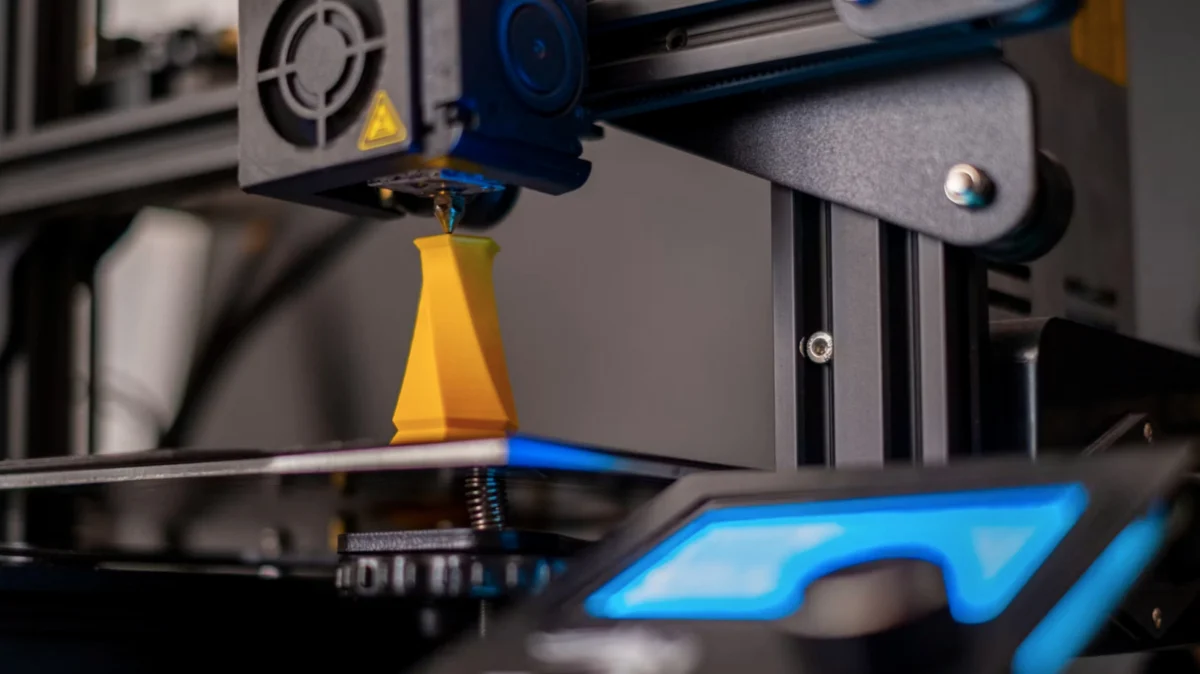
The promise of the 3D printer was once relegated to the realm of science fiction—a "replicator" that could manifest any object from thin air. More than a decade ago, the industry experienced a tidal wave of hype as early consumer-grade machines hit the market. While the initial fervor cooled, the technology didn’t disappear. Instead, it matured in the background, evolving from a temperamental hobbyist niche into a sophisticated, accessible, and increasingly essential household tool.
As of 2026, the barrier to entry has never been lower. With entry-level devices frequently priced between $200 and $400, and robust mid-tier systems ranging from $750 to $1,500, the "home factory" is now a viable reality for the average consumer. But beneath the glossy marketing and the allure of creating custom Batman masks for your pets lies a complex reality of technical demands, material costs, and steep learning curves.
Chronology: From Hobbyist Novelty to Household Appliance
The trajectory of 3D printing is a classic story of technological democratization. In the early 2010s, desktop 3D printing was defined by "RepRap" culture—an open-source movement where users built their own printers from scratch. These machines were notoriously difficult to calibrate, often requiring hours of manual adjustments for a single print.
By the mid-2010s, companies like MakerBot and Ultimaker began refining the experience, moving toward "plug-and-play" aesthetics. However, high costs—often exceeding $2,000 for a reliable unit—kept the technology in the hands of engineers, designers, and affluent enthusiasts.
The post-2020 era marked the most significant shift. Manufacturers began integrating automatic bed leveling, high-speed core kinematics, and AI-driven print monitoring. Today, a $300 printer in 2026 is exponentially more reliable and faster than a $2,000 professional model from 2015. This evolution has transformed the machine from a project about printing into a tool for making.
The Utility Paradigm: Why Own One Today?
The modern value proposition of a 3D printer is rooted in three primary areas: solving recurring mechanical problems, rapid prototyping, and specialized customization.
Solving Recurring Problems
The most pragmatic use for a home 3D printer is the "fix-it" mentality. Household infrastructure is prone to small failures: a plastic latch on a dishwasher breaks, a custom shim is needed to level a heavy bookshelf, or a specific adapter is required to mount a camera to a tripod. In the past, these failures meant buying an entirely new product or searching for obscure spare parts. Today, you can download an open-source design or CAD your own solution and have the part in your hands within hours.
Rapid Prototyping and Small Business
For entrepreneurs and small business owners, the home 3D printer is a game-changer. The ability to iterate on a physical product without outsourcing to a prototyping firm—which often charges thousands of dollars and requires weeks of lead time—drastically lowers the risk of innovation. If a design flaw is discovered, the maker simply adjusts the digital file and hits "print" again, turning what was once a multi-month product development cycle into a weekend endeavor.
The Tabletop Gaming Renaissance
Perhaps the most enthusiastic demographic for 3D printing is the tabletop gaming community. Modern resin printers—which use ultraviolet light to cure liquid resin into high-detail solids—have reached a level of precision that rivals professional injection molding. Players can now print highly detailed miniatures, modular dungeon terrain, and custom organization trays, turning a standard game night into an immersive, bespoke experience that would be prohibitively expensive to source from commercial suppliers.
Supporting Data: The Cost-Benefit Analysis
While the upfront cost of the machine is low, the total cost of ownership (TCO) is a frequently overlooked metric. Prospective owners must weigh the initial hardware investment against recurring expenses.
- Consumables: Filament (PLA, PETG, TPU) and resin typically cost between $15 and $30 per kilogram/liter. While this is cheaper than retail parts, failed prints—a common occurrence during the learning phase—can turn a $20 spool into a pile of plastic waste, significantly increasing the cost per successful part.
- Maintenance: Nozzles, build plates, and PTFE tubing are "wear items." Owners should budget for approximately $50–$100 annually in replacement parts, depending on usage intensity.
- Software and Design: While platforms like Sketchfab, CGTrader, and Free3D offer vast libraries of free designs, high-end professional files or specialized design software often command a subscription or per-file fee.
Industry Perspectives: The Experts Weigh In
Industry analysts suggest that we are currently in the "plateau of productivity" for home 3D printing. According to recent reports from additive manufacturing experts, the focus has shifted from "can we print it?" to "how reliably can we print it?"
"The hardware has finally caught up with the ambition of the user," says a lead engineer at a major additive manufacturing firm. "We’ve solved the mechanical bottlenecks—speed, leveling, and thermal consistency. The current challenge is software and material science. We want the printer to be as intuitive as a paper printer, where the user doesn’t need to know the physics of how the ink hits the page."
Conversely, critics in the sustainability sector point out the environmental impact of 3D printing. "The proliferation of plastic ‘doodads’—cheap, disposable items that end up in landfills—is a concern," notes an environmental analyst. "However, the counter-argument is that 3D printing promotes a repair-and-reuse economy. If you print a part to fix a vacuum instead of throwing the vacuum away, the net environmental gain is positive."
Implications: The Frustrations of Modern Making
Despite the advancements, a "steep learning curve" remains the industry’s most significant hurdle. While modern printers feature auto-leveling, they cannot magically fix:
- Dirty Nozzles: A clogged nozzle can ruin a 20-hour print, leading to significant frustration.
- Environmental Factors: Humidity can ruin filament, while temperature fluctuations in a room can cause "warping" in large parts.
- Slicer Proficiency: To get the most out of a machine, a user must understand "slicer" software—the bridge between a 3D model and the printer’s G-code. This involves managing print orientation, support structure density, and infill patterns.
The Verdict: To Buy or Not to Buy?
If you are considering a 3D printer, ask yourself a simple question: Do I have a specific, recurring need for physical parts, or am I just enamored with the novelty?
If you are an avid tabletop gamer, a tinkerer who enjoys mechanical repairs, or an aspiring inventor, a 3D printer is likely one of the best investments you can make in 2026. The ability to manufacture on demand is empowering and economically sound in the long run.
However, if your primary goal is to print toys, knick-knacks, or random internet-found trinkets, you may find that the novelty wears off after a few weeks. The machine will inevitably end up collecting dust in a closet, taking up valuable space.
Recommendation: Before purchasing, visit a local makerspace or a print-on-demand service. Have them print a few of the files you’re interested in. If you find yourself frequently wanting more—and if you’re prepared to troubleshoot the inevitable mechanical hiccups—then join the community of makers. If you find the process tedious or the results underwhelming, you’ve saved yourself the cost of a machine and the headache of maintenance.
In 2026, the 3D printer is a powerful tool, not a magic wand. Approach it with patience, clear objectives, and a willingness to learn, and it will reward you with a world of possibilities limited only by your own design skills.