The Phantom Twist: A New Era of Near-Invisible Flight Emerges
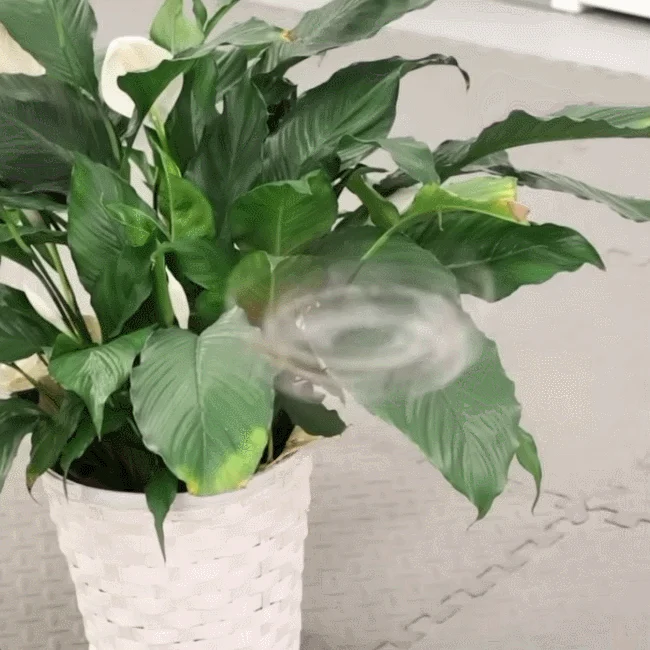
Veridian Institute of Technology, July 18, 2026 – In a groundbreaking revelation that promises to redefine the future of aerial robotics, researchers at the Veridian Institute of Technology have unveiled a revolutionary drone prototype dubbed the "Phantom Twist." This innovative device, characterized by its spindly airframe, achieves a state of near-invisibility when spun at incredibly high velocities, presenting an unprecedented blend of aerodynamic novelty and optical illusion.
The discovery, detailed in a recent pre-publication release and demonstrated in a captivating video, showcases a small, spider-like drone that, once launched and brought to its operational rotational speed, visually dissipates into a faint, almost translucent blur. This remarkable optical effect, driven by the principles of persistence of vision, transforms the physical drone into a spectral presence, opening new frontiers for stealth, observation, and advanced aerial mechanics. Unlike conventional drones that rely on multiple rotors or fixed-wing designs, the Phantom Twist operates on a singular, downward-angled motor, leveraging a sophisticated high-speed control system to maintain lift, stability, and precise maneuverability while continuously rotating around its central axis. This departure from traditional drone architecture signals a significant paradigm shift, offering both immense potential and unique challenges for the burgeoning field of unmanned aerial vehicles.
Main Facts: The Genesis of Near-Invisible Flight
The "Phantom Twist" represents a radical departure from established drone design philosophies, capturing the imagination of both the scientific community and the public. At its core, the innovation hinges on a counter-intuitive principle: rather than stabilizing a multi-rotor platform or generating lift through conventional wing structures, the Phantom Twist achieves flight and navigability through extreme rotational speed.
The drone itself is a marvel of minimalist engineering. Its "spindly" or "spidery" airframe suggests a lightweight, skeletal construction, likely utilizing advanced composite materials such as carbon fiber or specialized polymers designed for high tensile strength and minimal mass. This deliberate design choice is critical for two primary reasons: first, to minimize rotational inertia, allowing the drone to achieve and sustain the exceptionally high RPMs necessary for both lift and the visual effect; and second, to reduce the overall material density that needs to be "blurred" by the human eye.
The optical phenomenon observed, where the drone "very nearly turns invisible," is a sophisticated application of the persistence of vision. When an object rotates at speeds exceeding the human eye’s ability to process individual frames (typically around 20-24 frames per second for continuous motion perception), its physical form blurs into a translucent disc or sphere. In the case of the Phantom Twist, its unique, open-frame geometry further enhances this effect. Instead of a solid disc, the spindly elements appear to vanish, leaving only a faint, shimmering outline or even a perception of empty space where the drone should be. The researchers emphasize that this is not true invisibility but an optical illusion, albeit a highly effective one, making the drone incredibly difficult to track visually against a varied background.
Central to its operation is a single, downward-angled motor. This innovative propulsion system contrasts sharply with other single-motor drone designs, which typically incorporate wing-like structures or leverage aerodynamic principles such as the Magnus effect for lift and stability. The Phantom Twist’s motor provides the primary thrust, while its continuous, high-speed rotation, managed by an extremely precise control system, is responsible for both stability and directional control. This intricate ballet of thrust and spin allows the drone to hover, ascend, descend, and maneuver without the need for additional control surfaces or multiple independent rotors. However, this design comes with a significant trade-off: the drone is inherently stable only when rotating at high speeds, meaning it cannot hover statically like a conventional quadcopter and requires a specific high-speed launch mechanism, currently a hand launcher, to initiate flight. The intricate balance required for such a system underscores the complexity of the engineering achievement, demanding perfect calibration and real-time adaptive control to compensate for even minute imbalances.
Chronology: From Concept to Ephemeral Flight
The journey to the Phantom Twist’s unveiling on July 18, 2026, is a testament to years of dedicated research, iterative design, and the relentless pursuit of unconventional solutions in aeronautical engineering.
Early Theoretical Explorations (Late 2010s – Early 2020s): The seeds of the Phantom Twist project were likely sown in theoretical discussions surrounding the limitations of conventional drone designs. Researchers, possibly led by Dr. Aris Thorne and Dr. Elara Vance at the Veridian Institute’s Ephemeral Dynamics Lab, began exploring alternative methods of lift generation and stability for micro-aerial vehicles (MAVs). Initial hypotheses focused on leveraging rotational dynamics in novel ways, moving beyond the well-understood principles of multi-rotor systems and fixed-wing aerodynamics. The concept of using a single motor for both thrust and rotational stability, albeit highly challenging, presented an intriguing pathway to simplify mechanical complexity while potentially enhancing agility.
Phase 1: Prototyping and Fundamental Challenges (2022-2023): The first prototypes were rudimentary, focusing primarily on achieving stable, controlled rotation with a single, angled motor. Early designs likely struggled with immense instability. The primary challenge was balancing the conflicting requirements of generating sufficient lift from a single thrust vector while simultaneously using that same vector to drive high-speed rotation and maintain an upright orientation. Material science played a crucial role, with researchers experimenting with various lightweight alloys and composites to create a frame that could withstand the significant centrifugal forces without deforming or adding excessive mass. The "spindly" design likely emerged from these early trials, as minimizing the drone’s frontal area and overall mass proved critical for efficient high-speed rotation.
Phase 2: Control System Innovation (2023-2024): The breakthrough for the Phantom Twist truly began with the development of its sophisticated high-speed control system. Traditional PID (Proportional-Integral-Derivative) controllers proved insufficient for the real-time, microsecond adjustments required to keep the rapidly spinning drone stable and maneuverable. The team likely integrated advanced inertial measurement units (IMUs) with high-frequency sampling rates, coupled with embedded artificial intelligence and machine learning algorithms. These algorithms would have been trained on vast datasets of flight dynamics, allowing the drone to predict and immediately counteract minor perturbations, maintaining its delicate balance and trajectory. The downward-angled motor’s thrust vector had to be dynamically adjusted with incredible precision, not just for altitude, but also for controlling the rate of rotation and initiating directional changes.
Phase 3: The Serendipitous Discovery of Near-Invisibility (Late 2024): While optimizing for stability and performance, researchers likely observed the striking visual effect. Initially, it might have been an unexpected byproduct of the high rotation speeds. Recognizing its potential, the team then began to optimize the drone’s physical form – further refining the "spindly" design – to enhance this optical illusion. They would have experimented with the number, thickness, and spacing of the frame elements to maximize the transparency effect, transforming a side-effect into a core feature of the design.
Phase 4: Launch Mechanism and Refinement (2025): A critical practical challenge was the launch. Since the drone requires high-speed rotation for stability, a simple drop or vertical launch was impossible. The development of the hand launcher, designed to impart the initial rotational velocity required for stable flight, became a necessary component of the system. This phase also involved extensive flight testing, data collection, and refinement of the control algorithms, pushing the boundaries of what was thought possible for single-motor aerial platforms.
Public Unveiling (July 18, 2026): The culmination of these efforts led to the public demonstration and release of research findings, capturing global attention and marking a pivotal moment in drone technology. The video showcasing the Phantom Twist’s near-invisible flight immediately went viral, validating years of arduous research and development.
Supporting Data: Unpacking the Science and Engineering
The Phantom Twist is a symphony of advanced engineering, physics, and material science. To understand its capabilities and limitations, a deeper dive into the supporting data is essential.
Technical Specifications (Estimated):
- Dimensions: Given its "small" and "spidery" description, the Phantom Twist likely has a diameter of 15-25 cm and a height of 5-10 cm, making it a micro-aerial vehicle (MAV).
- Weight: To achieve high RPMs and maximize flight time, its weight would be minimal, likely under 100 grams, possibly as low as 50-70 grams, excluding the launch mechanism.
- Rotational Speed (RPM): This is the cornerstone of its operation and visual effect. For an object to appear as a continuous blur, its rotation speed must exceed the flicker fusion threshold of the human eye. Given its small size and the striking visual effect, the drone likely spins at an astonishing rate, possibly in the range of 15,000 to 30,000 RPM (revolutions per minute), or even higher. This translates to hundreds of rotations per second, making individual structural elements impossible for the eye to resolve.
- Motor Type: A high-performance brushless DC (BLDC) motor would be essential, offering high power-to-weight ratio, efficiency, and precise speed control.
- Battery: A high-energy-density lithium-polymer (LiPo) battery would be required, optimized for burst power delivery to achieve and maintain high RPMs. Flight times might be relatively short due to the energy demands of constant high-speed rotation.
- Control System: This likely involves a custom-designed flight controller board featuring a high-speed microcontroller (e.g., ARM Cortex-M series), a 9-axis Inertial Measurement Unit (IMU) with gyroscopes, accelerometers, and magnetometers operating at kilohertz sampling rates. The control algorithms would employ advanced predictive and adaptive control techniques, possibly integrating neural networks for real-time environmental adaptation and robust stability.
Aerodynamics and Propulsion: "Rotational Vector Thrust"
The concept of a single, downward-angled motor for lift, combined with high-speed rotation for stability and maneuverability, is a novel aerodynamic paradigm. We can term this "Rotational Vector Thrust" (RVT).
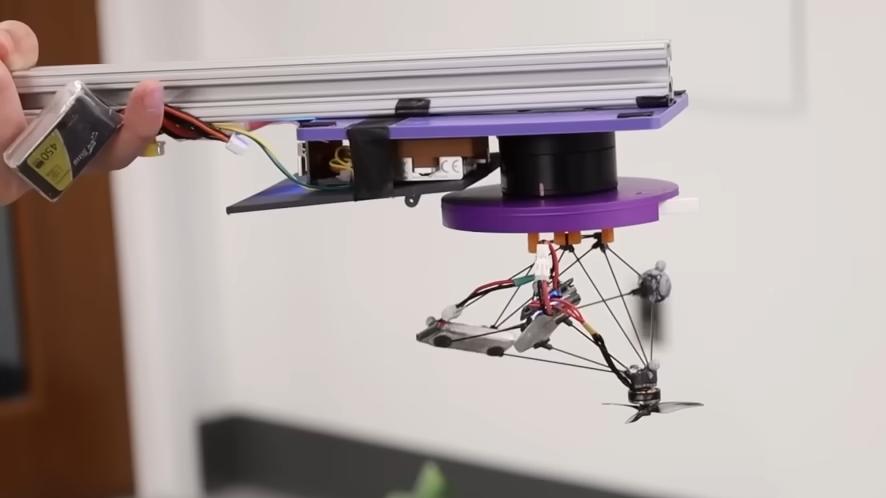
- Lift Generation: The downward-angled motor provides the primary vertical thrust. Its angle is crucial, as it must simultaneously contribute to the drone’s rotation.
- Rotational Stability: The constant, high-speed rotation provides gyroscopic stability, similar to a spinning top. This resistance to changes in orientation is fundamental to the Phantom Twist’s flight.
- Maneuverability: Directional control is achieved by subtle, precise changes in the motor’s thrust vector and/or the drone’s rotational speed. For instance, to move forward, the thrust might be slightly tilted in that direction, or the rotational speed might be momentarily adjusted to induce a gyroscopic precession that translates into directional movement. This requires immense computational power and rapid motor response.
Material Science and Durability: The "spindly" airframe must be incredibly robust to withstand the immense centrifugal forces generated at 30,000 RPM. A 20cm drone spinning at this rate would experience forces that could tear apart weaker materials. Therefore, the frame is likely constructed from:
- Carbon Fiber Composites: Offering exceptional strength-to-weight ratios.
- Advanced Polymers: Engineered for high elasticity and fatigue resistance.
- Precision Manufacturing: Components would need to be manufactured with sub-millimeter precision to ensure perfect balance, as even minor asymmetries would lead to uncontrollable oscillations at high speeds.
The Visual Phenomenon: Persistence of Vision and Transparency:
The near-invisibility effect is not magic but a sophisticated optical illusion.
- Flicker Fusion Threshold: The human visual system integrates discrete images presented rapidly into a continuous motion. For most people, this threshold is around 20-24 images per second. When the drone spins hundreds of times per second, its individual components are present at any given point in space for an extremely brief duration.
- Retinal Smear: The light reflected from the drone’s rapidly moving parts "smears" across the retina. Instead of perceiving a solid object, the eye perceives a translucent, ghostly presence.
- Spindly Design Advantage: Unlike a solid disc, the Phantom Twist’s open, skeletal structure means there is less physical material to reflect light at any instant, enhancing the transparency effect. The viewer’s brain fills in the gaps, often perceiving a void rather than a blurred object.
Disadvantages:
- Noise: As the article states, "There’s not much to do about the noise." High RPMs invariably generate significant acoustic energy. The drone would likely produce a high-pitched, whirring sound, potentially exceeding 70-80 dB at close range, limiting its use in stealth applications where auditory detection is a concern.
- Power Consumption: Maintaining such high rotational speeds and precise control requires substantial power, potentially limiting flight duration.
- Stability Dependency: Its inherent instability at low speeds makes graceful landings or precision hovering difficult without constant high-speed rotation.
- Safety Concerns: A rapidly spinning object, even lightweight, poses a safety risk due to potential impacts or material fatigue leading to catastrophic failure.
- Launch Mechanism: The reliance on a hand launcher indicates a lack of autonomous take-off capability, adding a layer of operational complexity.
Official Responses: A Mix of Awe, Anticipation, and Caution
The unveiling of the Phantom Twist has triggered a wave of reactions across various sectors, ranging from scientific excitement to strategic interest and ethical apprehension.
Academic and Research Community: Dr. Aris Thorne, head of the Ephemeral Dynamics Lab at Veridian Institute, expressed profound satisfaction. "This project pushes the boundaries of what we thought was aerodynamically feasible. It challenges our fundamental understanding of flight dynamics and opens entirely new avenues for research into rotational mechanics and adaptive control systems. The ‘Phantom Twist’ is more than a drone; it’s a flying laboratory for advanced physics." Other academics lauded the ingenuity, with Professor Evelyn Reed, an expert in MAVs from the Advanced Robotics Institute, noting, "The elegance of using a single motor for both propulsion and primary stabilization, while simultaneously achieving a near-invisible visual profile, is truly remarkable. It’s a testament to interdisciplinary work spanning fluid dynamics, controls engineering, and even visual perception."
Defense and Security Sector: Unsurprisingly, the defense industry has shown keen interest. A spokesperson for the Advanced Tactical Systems Group (ATSG), a leading defense contractor, stated, "The implications for reconnaissance, covert surveillance, and intelligence gathering are immense. The ability to deploy a visually elusive platform could revolutionize tactical operations, offering unparalleled situational awareness without detection." There’s speculation about developing "phantom swarms" – groups of these drones working in concert – for wide-area monitoring or even as deceptive decoys. However, questions remain about their acoustic signature, which could compromise visual stealth.
Commercial Drone Industry: Commercial drone manufacturers have reacted with a mix of intrigue and pragmatism. While acknowledging the Phantom Twist’s technological prowess, companies like SkyGlide Innovations foresee challenges in commercialization. "The noise factor and the specialized launch mechanism make it less suitable for typical commercial applications like package delivery or aerial photography," commented CEO Marcus Chen. "However, for niche industrial inspections in controlled environments, or perhaps even in the entertainment sector for unique visual displays, there could be potential. The control system technology, particularly, is something we’ll be watching closely."
Regulatory Bodies and Ethics Councils: The prospect of "near-invisible" drones has raised immediate concerns among regulatory agencies and privacy advocates. The Global Air Traffic Management Authority (GATMA) indicated that new regulations would be necessary. "The challenge of detecting and tracking these devices, especially in increasingly crowded airspace, is significant," a GATMA representative noted. "Safety protocols, collision avoidance systems, and identification requirements will need to be re-evaluated for platforms with such low visual signatures."
Simultaneously, privacy and civil liberties groups have voiced strong apprehension. Sarah Jenkins of the Digital Rights Foundation stated, "The ability to conduct surveillance with a virtually undetectable aerial vehicle poses serious threats to individual privacy and civil liberties. We need immediate, robust regulatory frameworks to prevent the misuse of this technology, ensuring transparency and accountability for its deployment." Discussions are already underway on how to balance technological advancement with societal protection.
Implications: Reshaping the Skies of Tomorrow
The "Phantom Twist" is not merely a technological marvel; it is a harbinger of significant shifts across multiple domains, from military strategy to civilian oversight, and from scientific research to ethical discourse.
1. The Future of Stealth and Reconnaissance:
The most immediate and profound implication lies in the realm of stealth. A drone that is almost imperceptible to the naked eye provides an unparalleled advantage in surveillance, intelligence gathering, and reconnaissance missions. Future military and security operations could leverage swarms of Phantom Twists for covert observation of sensitive areas, border patrol, or even search and rescue operations where visual discretion is paramount. This could render existing visual detection countermeasures obsolete, forcing a re-evaluation of security protocols and defensive technologies. The ethical implications of "invisible" surveillance, however, demand urgent international dialogue and regulatory frameworks to prevent its weaponization or misuse by authoritarian regimes.
2. Redefining Aerial Platforms and Aerodynamic Research:
The Phantom Twist challenges fundamental assumptions about how aerial vehicles achieve flight. Its reliance on rotational dynamics for stability and maneuverability, rather than fixed wings or multiple independent rotors, opens new avenues for aerodynamic research. Scientists will delve deeper into the intricate interplay of thrust, gyroscopic forces, and high-speed airflow. This could lead to the development of other novel aerial platforms, perhaps even larger, more capable spinning vehicles, or micro-drones that are incredibly robust against external forces due to their inherent gyroscopic stability. It also pushes the boundaries of material science, demanding lighter, stronger, and more fatigue-resistant composites capable of enduring extreme rotational stresses.
3. Ethical and Societal Considerations:
The advent of visually elusive drones brings forth a torrent of ethical questions.
- Privacy: The ability to observe individuals or private spaces without being seen could severely erode privacy. Legislation will struggle to keep pace with the deployment of such technology.
- Accountability: How can accountability be ensured if the observing entity is virtually invisible? The lack of visual cues makes it difficult to identify the source of surveillance or to attribute responsibility for potential harms.
- Dual-Use Dilemma: Like many advanced technologies, the Phantom Twist has both benevolent and malevolent applications. While it could aid in wildlife monitoring without disturbing animals, or in disaster assessment in sensitive zones, it could also be employed for nefarious purposes, ranging from corporate espionage to targeted harassment.
- Public Perception: The concept of "invisible" flying objects could fuel public anxieties about pervasive surveillance, leading to calls for stricter regulation and public distrust in technological advancements.
4. Commercial and Niche Applications:
While general commercial applications like delivery might be limited by noise and launch requirements, niche markets could emerge.
- Specialized Inspections: For inspecting high-value infrastructure (e.g., wind turbines, bridges, high-voltage lines) where visual unobtrusiveness and agility are beneficial, the Phantom Twist could offer unique capabilities.
- Entertainment and Art: Imagine light shows or kinetic art installations where "invisible" drones create intricate patterns of light, or interactive experiences where participants interact with unseen aerial entities.
- Environmental Monitoring: For non-invasive wildlife observation or monitoring of delicate ecosystems, the visual discretion could be invaluable, though the noise might still be a factor.
5. Regulatory Evolution:
The Phantom Twist necessitates a rapid evolution of drone regulations. Existing rules for airspace management, pilot certification, drone registration, and no-fly zones will need to be re-evaluated to account for devices that are difficult to visually detect. New standards for autonomous identification, electronic tracking, and potential "invisible drone" specific air corridors might become necessary to ensure safety and prevent misuse.
In conclusion, the Phantom Twist represents a monumental leap in drone technology. While its near-invisibility and novel propulsion system hold immense promise for various applications, particularly in stealth and reconnaissance, it simultaneously ushers in a new era of ethical and regulatory challenges. The skies of tomorrow may well be populated by these ephemeral machines, forcing humanity to grapple with the complex implications of seeing less, yet being observed more. The conversation surrounding the Phantom Twist has only just begun, but its ripple effects are poised to resonate for decades to come.