Unlocking the Relational Web: Google Releases TensorFlow GNN 1.0 for Large-Scale AI
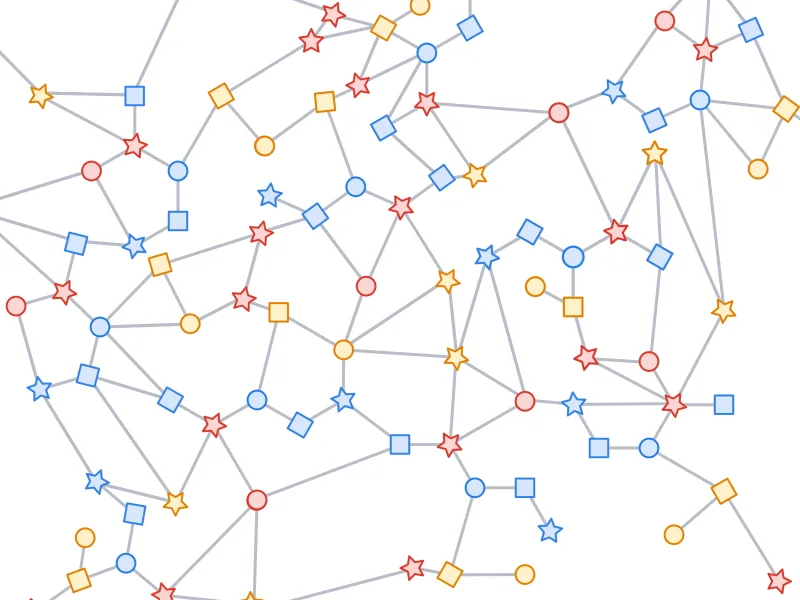
In the modern era of data science, the most profound insights often lie not in the objects themselves, but in the intricate web of relationships connecting them. Whether mapping the complex interactions within a global transportation network, decoding the structure of a knowledge graph, or predicting user behavior in massive social ecosystems, the "graph" has become the fundamental unit of representation for our connected world.
To meet the demands of these non-Euclidean data structures, Google has officially announced the release of TensorFlow GNN 1.0 (TF-GNN). This production-tested library is designed to bridge the gap between traditional deep learning and the high-dimensional, irregular connectivity of graph-based data. By integrating graph neural networks (GNNs) into the TensorFlow ecosystem as a first-class citizen, Google is providing researchers and engineers with a robust framework to build, train, and scale sophisticated AI models that treat relationships as primary data.
Main Facts: The Architecture of TF-GNN
At its core, TF-GNN addresses a longstanding limitation in machine learning. While traditional neural networks excel at processing regular, grid-like data—such as pixels in an image or linear sequences of text—they often struggle to adapt to the irregular, arbitrary connections found in graphs.
TF-GNN solves this by introducing tfgnn.GraphTensor, a composite tensor type that functions seamlessly within the TensorFlow ecosystem, including tf.data.Dataset and tf.function pipelines. This architecture allows developers to define trainable transformations of graph data using the familiar high-level Keras API.
The library is built specifically for heterogeneous graphs, where different types of nodes (e.g., "author," "paper," "institution") and edges (e.g., "wrote," "cites," "affiliated with") coexist. By maintaining these distinct types, TF-GNN enables models to learn specific, nuanced representations for different kinds of entities, moving beyond the "one-size-fits-all" approach of older graph embedding algorithms like DeepWalk or Node2Vec.

Chronology: From Academic Interest to Production-Scale Utility
The journey to TF-GNN 1.0 reflects the broader evolution of AI research. For years, GNNs existed primarily in the domain of academic literature, characterized by theoretical advancements in message-passing neural networks (MPNNs).
- Pre-2020: The rise of foundational research into graph-based machine learning, focusing on how to translate discrete relational structures into continuous, latent representations.
- 2021-2022: As Google and other tech giants began applying these techniques to production problems—such as recommendation systems and fraud detection—the need for a unified, scalable software stack became apparent. Initial research papers on the methodology were published, and internal testing began across various Google product teams.
- February 2024: The formal launch of TF-GNN 1.0 marks a transition from experimental codebases to a stable, production-ready library. This release represents the culmination of a multi-year, cross-disciplinary collaboration between Google Research, Google Core ML, and Google DeepMind.
Supporting Data: Why Graphs Matter
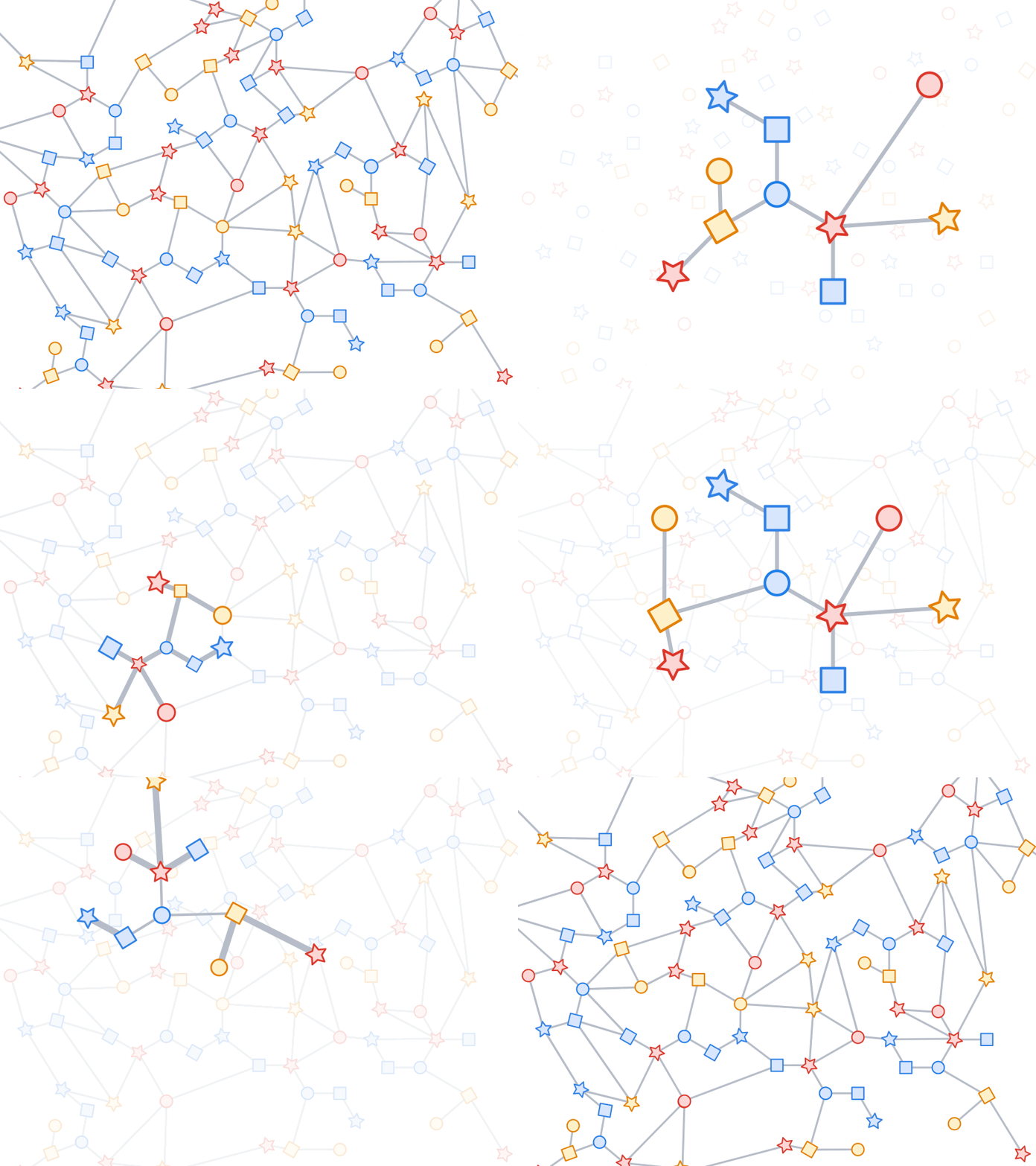
The necessity of GNNs is underscored by the sheer scale of modern data. In a citation database, for instance, a model might need to predict the subject area of a paper based on millions of nodes and billions of edges. Standard neural networks cannot process these datasets in their entirety, necessitating the use of subgraph sampling.
TF-GNN revolutionizes this process by moving away from static, pre-computed sampling. It introduces a flexible Python API that supports:
- Interactive Sampling: Ideal for rapid experimentation within Colab notebooks.
- In-Memory Sampling: Optimized for smaller datasets that reside on a single training host.
- Distributed Sampling: Leveraging Apache Beam to process massive, multi-terabyte datasets stored on network file systems.
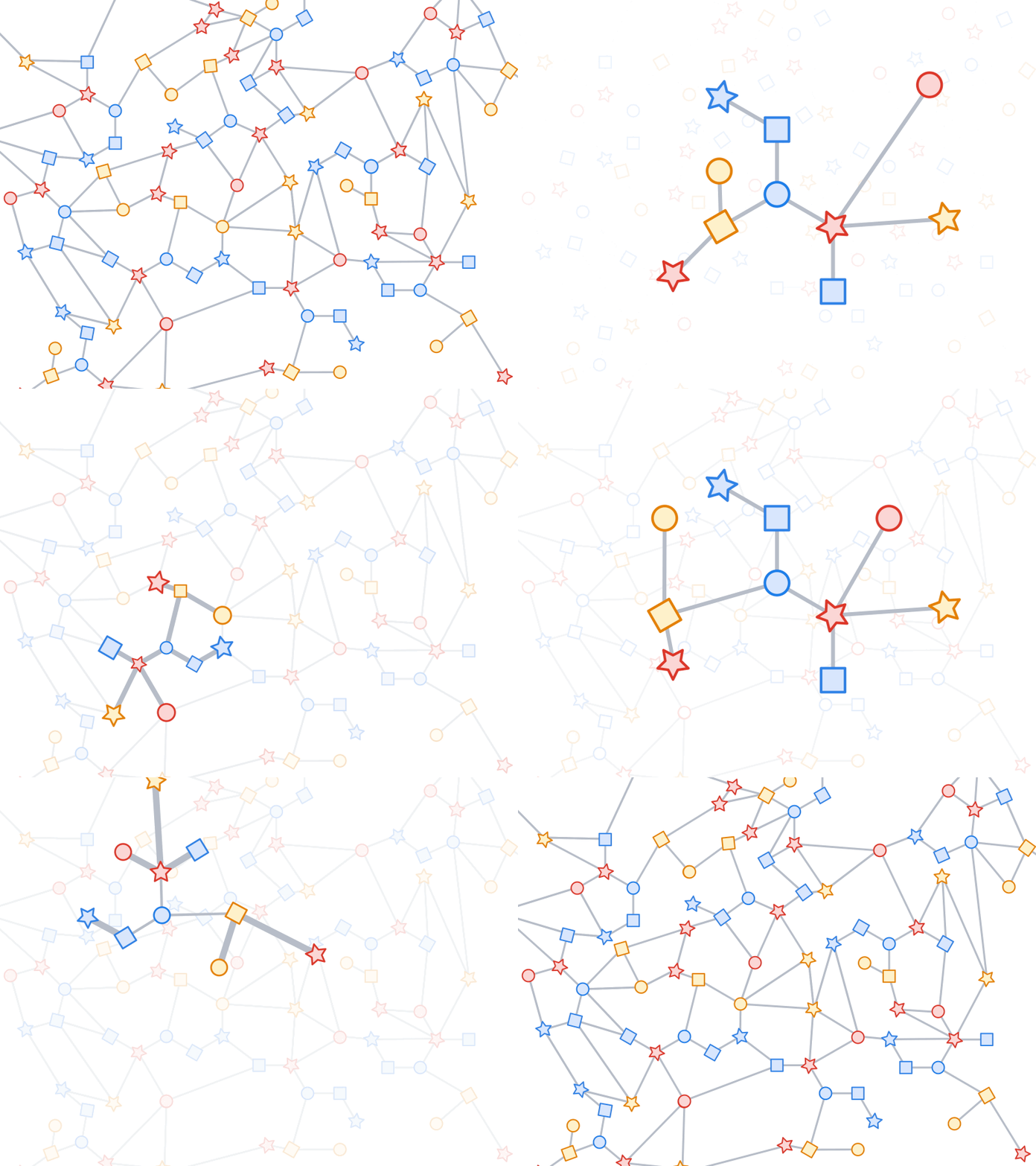
This dynamic approach allows for the creation of tractable, smaller subgraphs that maintain the essential relational context of the original data. As the network propagates messages from neighbors to the root node over multiple rounds, the GNN effectively "learns" the topology of the neighborhood, resulting in a hidden state that captures far more than just individual attributes.
Official Responses and Collaborative Development
The development of TF-GNN 1.0 was a significant logistical undertaking, requiring the synchronization of researchers and engineers from three major divisions of Google.
The project was spearheaded by Dustin Zelle (Software Engineer, Research) and Arno Eigenwillig (Software Engineer, CoreML). In their official announcement, the authors emphasized the role of the library in "fueling further innovation." The collaborative effort involved:
- Google Research: Focus on the mathematical foundations, message-passing algorithms, and the integration of advanced loss functions.
- Google Core ML: Ensuring the library integrates seamlessly with the broader TensorFlow infrastructure, including hardware-accelerated training on TPUs.
- Google DeepMind: Contributing deep expertise in graph representation learning and advanced neural architecture design.
This cross-pollination of expertise is visible in the library’s modular design, which allows users to choose between using pre-curated, industry-standard model templates or writing custom GNN architectures from scratch using low-level primitive operations.
Implications: A New Era for Deep Learning
The arrival of TF-GNN 1.0 has profound implications for the future of AI development across several key domains:
1. Enhanced Interpretability
One of the most exciting features in the new release is the inclusion of integrated gradients for model attribution. In many high-stakes fields—such as healthcare or finance—understanding why a model made a decision is just as important as the decision itself. By mapping gradients back to the original graph structure, TF-GNN allows developers to visualize which nodes and edges exerted the most influence on a specific prediction, effectively "opening the black box" of the graph neural network.
2. Bridging Supervised and Unsupervised Learning
TF-GNN enables "joint training," where supervised tasks (predicting a specific label) and unsupervised tasks (learning general graph embeddings) occur simultaneously. This allows a model to learn a rich, continuous representation of a graph that is informed by both structural properties and specific downstream goals. This dual-purpose learning ensures that the resulting embeddings are not only accurate but also robust and transferable to other tasks.
3. Democratization of Complex Modeling
By providing the TF-GNN Runner, Google has lowered the barrier to entry for large-scale graph learning. The Runner handles the "heavy lifting" of distributed training, padding graphs for compatibility with Cloud TPUs, and managing multi-task orchestration. For developers, this means shifting focus from infrastructure management to architectural experimentation.
4. Future-Proofing AI Infrastructure
As we move toward a future where "Knowledge Graphs" are the backbone of search, reasoning, and generative AI, the ability to process relational data at scale becomes a competitive necessity. TF-GNN is not just a tool for today; it is a foundational piece of infrastructure for the next generation of AI systems that require a sophisticated understanding of context, provenance, and connection.
Conclusion
The release of TensorFlow GNN 1.0 is a clear signal that graph-based machine learning has moved from the periphery to the center of the AI research agenda. By providing a stable, performant, and flexible library, Google has equipped the global research community with the tools necessary to tackle the most complex, interconnected problems of our time. Whether through the provided Colab tutorials or the detailed documentation for distributed deployment, TF-GNN stands ready to transform how we model the world around us, one node at a time.