The "Undo" Button for Infrastructure: AWS Revolutionizes Kubernetes Stability with EKS Version Rollbacks
For nearly a decade, the Kubernetes community has operated under a sobering technical reality: upgrading a cluster’s control plane is a "one-way door." In the open-source ecosystem, once the transition to a new minor version begins, there is no native mechanism to revert. This architectural constraint has forced organizations—from agile startups to heavily regulated financial institutions—to adopt grueling, months-long upgrade cycles characterized by elaborate "bake periods," staggered deployment groups, and exhausting manual sign-offs.
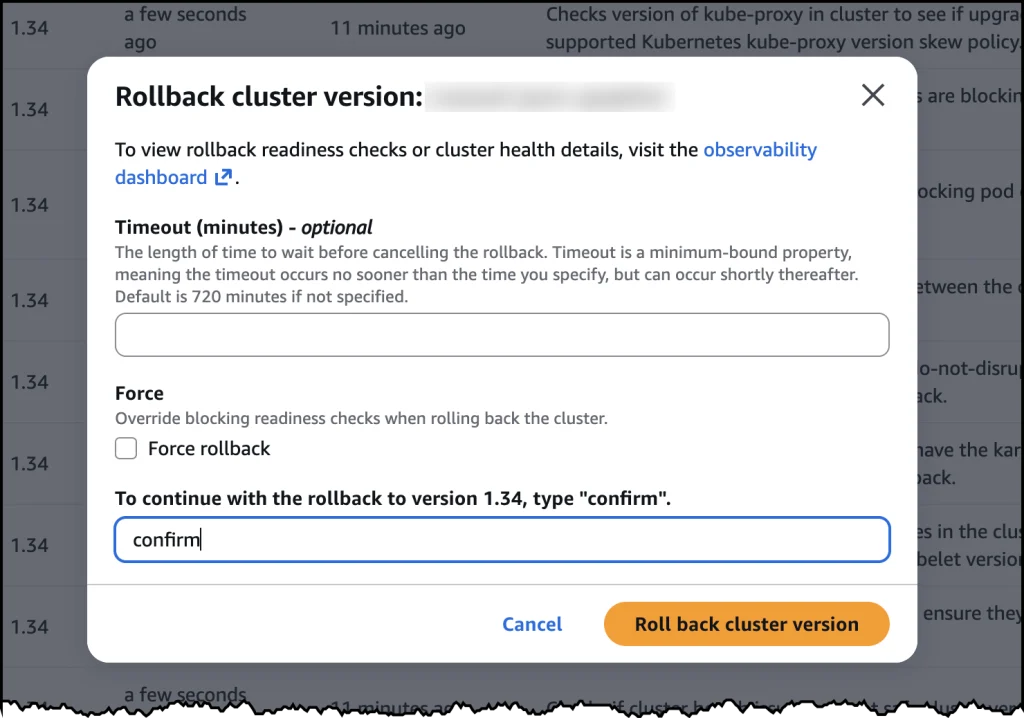
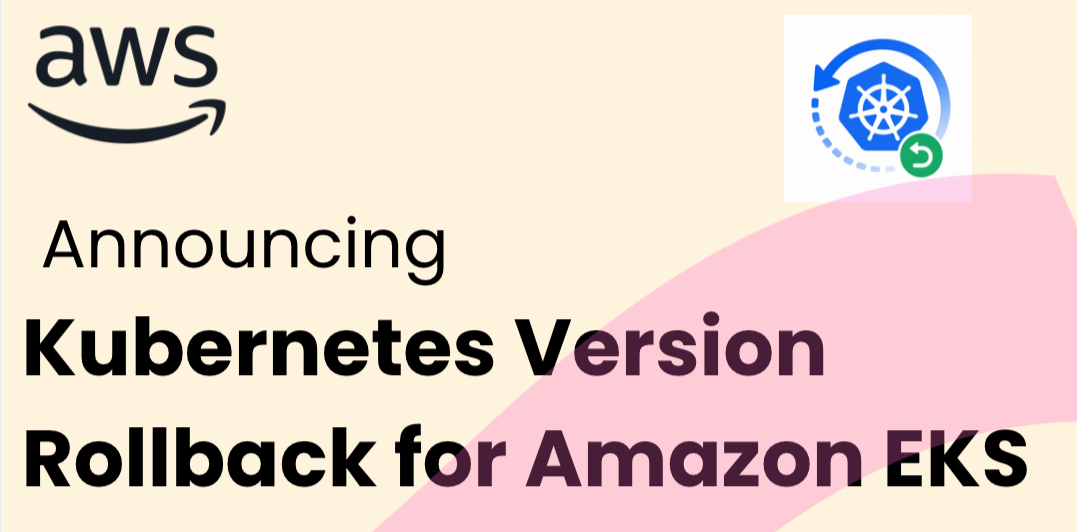
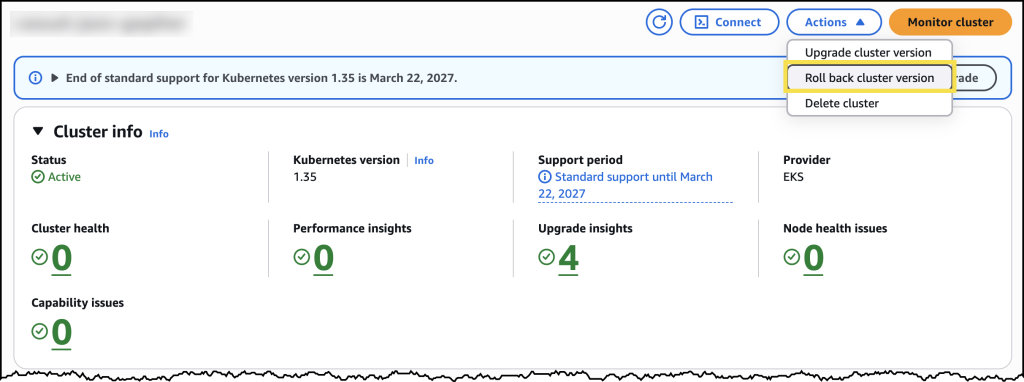
Today, Amazon Web Services (AWS) has fundamentally altered that landscape. With the announcement of native Kubernetes version rollbacks for Amazon Elastic Kubernetes Service (Amazon EKS), AWS is offering administrators a safety net that has been at the top of the community’s wish list since the platform’s inception. This feature provides a reliable "undo" button for cluster upgrades, allowing administrators to revert to a previous, fully functional version within a seven-day window.
The Core Innovation: Why Rollbacks Matter
In the standard open-source Kubernetes model, the inability to roll back has created a culture of risk aversion. With the community releasing three minor versions annually, the pressure to maintain compliance and security patches is constant. However, the fear of a "failed upgrade"—which could render a cluster unstable or incompatible with proprietary applications—often leads to delayed maintenance. When teams wait too long, they inevitably run up against the end of extended support timelines, creating a compounding technical debt.
AWS’s new rollback capability changes this calculus by decoupling innovation from the fear of catastrophic failure. Unlike previous attempts in the industry—such as "emulated versions" which keep clusters in a transitional, often unstable state—EKS rollbacks restore the cluster to the exact state of its previous, production-proven version. This is not a simulation; it is a restoration of a known-good environment.
Key Technical Advantages:
- Production-Verified State: The rollback reverts to the previous minor version that was actively running your workloads, ensuring full compatibility.
- Seven-Day Window: Administrators have a generous one-week period to identify compatibility issues or performance regressions before the rollback option expires.
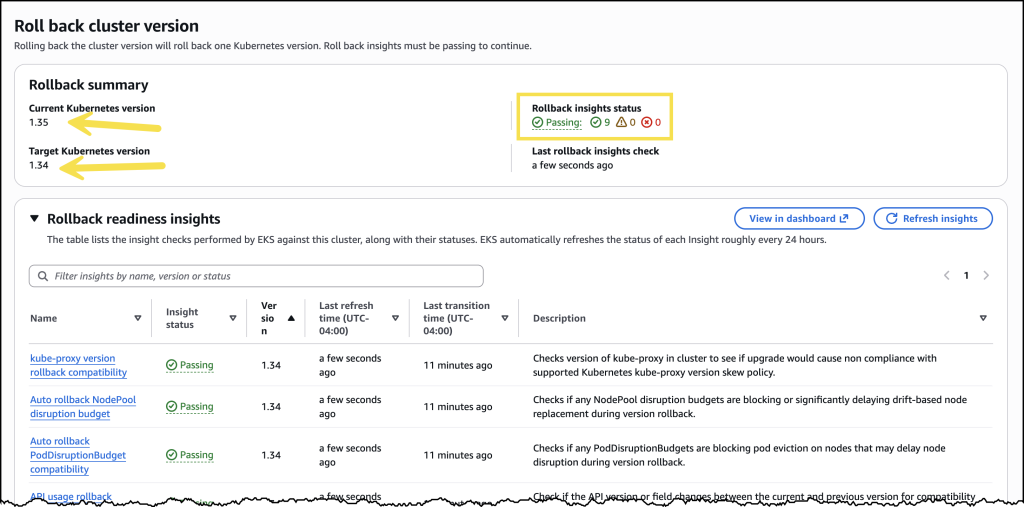
- Safety-First Design: The process is supported by EKS "cluster insights," which automatically scan for node version compatibility and add-on dependencies before a rollback is triggered.
A Chronology of the Development Cycle
The path to this release reflects the evolving maturity of EKS. For years, the AWS team has observed customers building complex, custom-engineered "compensating mechanisms" to mitigate the risks of upgrades. These included creating parallel clusters, blue-green deployment strategies, and snapshot-heavy disaster recovery protocols.
- The Era of One-Way Upgrades: Since the inception of EKS, the industry-wide constraint of non-reversibility forced users to perform "leap of faith" upgrades.
- The Rise of KEP-4330: The Kubernetes Enhancement Proposal (KEP) process began addressing this issue through emulated versions, but the community acknowledged that emulation was a stop-gap measure rather than a true operational solution.
- Development of EKS-Specific Rollbacks: Recognizing that "emulated" states were insufficient for high-stakes enterprise environments, AWS engineers began developing a direct restoration path.
- Beta and Validation: Throughout the early months of 2026, AWS tested the rollback mechanism across various production workloads, ensuring that the process could maintain service availability during the transition.
- The July 2026 Launch: AWS officially rolled out the feature to all commercial regions, providing a unified interface within the EKS console and through the API.
Supporting Data: Operational Efficiency in Practice
The implementation of this feature is not merely a convenience; it is a shift in operational metrics. In typical Kubernetes environments, a failed upgrade can lead to days of downtime, manual troubleshooting, and "scramble" recovery efforts.

By allowing a rollback to occur in approximately 20 to 30 minutes—the same time frame as a standard upgrade—AWS is significantly reducing the Mean Time to Recovery (MTTR).
Performance Metrics:
- Control Plane Restoration: The core control plane rollback is consistently completed within 20 minutes, depending on cluster complexity.
- EKS Auto Mode Integration: For customers using EKS Auto Mode, the rollback includes a managed node transition that honors existing Pod Disruption Budgets (PDBs).
- Cost Efficiency: AWS has confirmed that this feature carries no additional cost. Users pay only for the standard EKS cluster management fee and compute resources, effectively providing high-availability infrastructure management as a native service component.
Empowering EKS Auto Mode
While the rollback feature is available for all EKS clusters, it shines most brightly within EKS Auto Mode. This environment automates compute, networking, and storage, making it the preferred choice for teams that want to focus on application code rather than infrastructure plumbing.
The challenge, however, is that rolling back an "Auto Mode" cluster involves more than just the control plane; it requires synchronized management of the managed nodes. AWS has introduced a robust Cancel API, which provides a granular layer of control. If an administrator realizes that a rollback is taking too long—perhaps due to a conservative Pod Disruption Budget that prevents pods from moving—they can pause the process, adjust their policies, and then resume or pivot their strategy. This transparency ensures that the system never sacrifices workload stability for the sake of the rollback itself.
Implications for the Enterprise
The availability of version rollbacks is expected to have a profound impact on the "Kubernetes adoption curve" for highly regulated industries such as healthcare, finance, and government.
1. Accelerated Security Posture
With the "safety net" now in place, security teams can be more aggressive in applying critical patches. The fear of breaking the control plane is no longer a valid reason to defer security updates, which will lead to a more secure ecosystem across the board.
2. Streamlined Compliance Audits
In regulated environments, the "undo" button provides an audit trail and a recovery mechanism that satisfies auditors. Demonstrating that a system can revert to a known, stable state within minutes is a significant checkmark for risk mitigation frameworks.
3. Lowering the Barrier to Entry
For smaller teams, the technical expertise required to manage a "Kubernetes disaster" has been a significant barrier to entry. By automating the recovery process, AWS is effectively democratizing the management of complex clusters. Smaller teams can now operate with the confidence that they have the same recovery capabilities as massive, specialized DevOps organizations.
4. A Shift in Vendor Expectations
The move by AWS sets a new bar for managed Kubernetes providers. Other managed service providers (MSPs) and cloud providers will likely face pressure to implement similar, non-emulated rollback mechanisms. This competition will ultimately benefit the entire open-source ecosystem, potentially accelerating the upstream development of native rollback capabilities within the Kubernetes core.
Conclusion: A New Standard for Infrastructure Management
The introduction of EKS version rollbacks is more than just a new feature; it is a fundamental acknowledgment of how production-grade infrastructure must behave. By moving away from the "one-way door" paradigm, AWS has removed the single biggest point of anxiety for Kubernetes administrators.
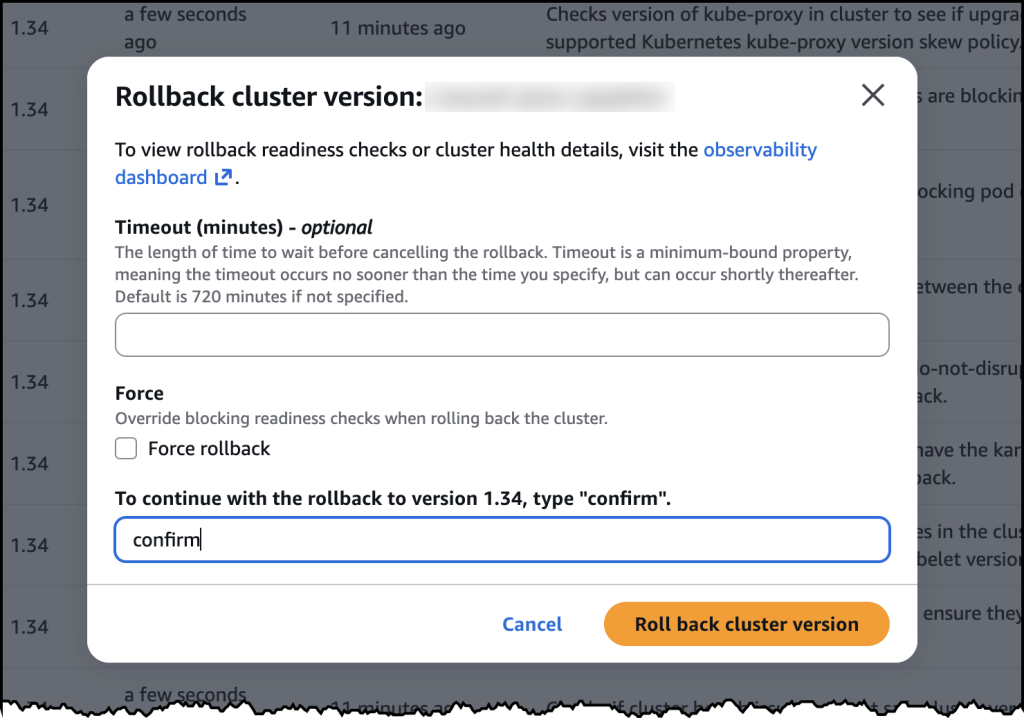
As we look toward the future of cloud-native development, this "undo" functionality will likely become a baseline expectation for all managed services. For now, EKS users can breathe a sigh of relief. The next time an upgrade hits a snag, they won’t be staring at an emergency ticket—they will simply be hitting a button, waiting twenty minutes, and returning to a state of stability.
To get started, administrators can access the new rollback features directly via the AWS Management Console or through the EKS API. With full support for clusters in both standard and extended support tiers, there is no barrier to enabling this safety net for your production environment today.