Efficiency at the Edge: Exploring the New ESP32 Low-Power Module
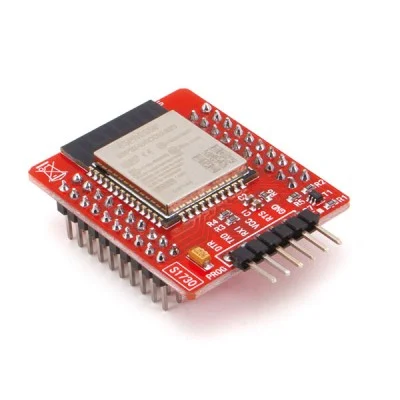
The landscape of the Internet of Things (IoT) is undergoing a significant shift. As developers move away from resource-heavy, always-on devices toward more sustainable, battery-operated edge computing, the demand for hardware that balances performance with power efficiency has reached a fever pitch. Enter the MINIESP32LP, the latest offering from the Espressif ecosystem, designed specifically to strip away the unnecessary overhead of traditional development boards in favor of streamlined, ultra-low-power operation.
Main Facts: A Leaner Approach to Connectivity
The MINIESP32LP is not merely a miniaturized version of the classic ESP32 module; it is a strategic redesign aimed at professional deployment. While the standard MINI ESP32 has long been a staple in the hobbyist and industrial prototyping world, its inclusion of an onboard USB-to-Serial interface—while convenient for debugging—acts as a significant source of power leakage and physical bulk.
The MINIESP32LP addresses this by omitting the USB interface entirely. This design decision serves two primary functions:
- Physical Footprint Reduction: By removing the bulky USB-C or micro-USB components, the module achieves a smaller, more modular form factor suitable for space-constrained enclosures.
- Power Optimization: The USB-to-Serial converter chip typically draws a quiescent current even when idle. By removing it, the module allows for a much cleaner implementation of deep-sleep modes, which is essential for projects running on lithium-ion batteries or energy-harvesting technologies (like solar or thermoelectric generators).
Despite these reductions, the module retains the core power of the Espressif ESP32 SoC. It remains fully compatible with the standard MINI ESP32 software ecosystem, meaning developers can leverage the robust Arduino IDE environment, Espressif IoT Development Framework (ESP-IDF), and a vast library of existing code. It features a high-performance 802.11 b/g/n Wi-Fi transceiver and dual-mode Bluetooth (Classic and BLE), ensuring that connectivity is never compromised in favor of efficiency.
Chronology: The Evolution of ESP32 Efficiency
To understand the significance of the MINIESP32LP, one must look at the trajectory of Espressif Systems’ hardware development.
- 2016: The original ESP32 was launched, disrupting the market by offering Wi-Fi and Bluetooth in a single chip for under $5. This shifted the industry standard from fragmented solutions to integrated SoCs.
- 2018–2020: The rise of "MINI" modules. As manufacturers began integrating ESP32 into commercial products, the need for standardized, surface-mountable modules (like the ESP32-MINI-1) became paramount. These modules standardized antenna performance and FCC/CE certification paths.
- 2022–2023: The "Low Power" movement. As IoT networks grew to include thousands of remote sensors, the industry realized that battery life was the primary failure point. The market began demanding hardware that could operate for years on a single coin cell.
- 2024: The release of the MINIESP32LP. By stripping the "convenience" features of development boards (like USB programmers), the module returns to the "bare metal" philosophy, providing a professional-grade component that bridges the gap between a development board and a final production-ready device.
Supporting Data and Technical Specifications
For engineers and product designers, the technical specifications of the MINIESP32LP are where the real value lies. The module is built around the dual-core Xtensa® 32-bit LX6 microprocessor, capable of operating at clock frequencies up to 240 MHz.

Connectivity and Performance
The module maintains the high standard of radio performance expected from the ESP32 series. Its integrated antenna design is optimized for consistent signal strength, which is often a point of failure in custom PCB designs.
- Wi-Fi: 802.11 b/g/n (up to 150 Mbps).
- Bluetooth: Dual-mode, supporting Bluetooth 4.2 and Bluetooth Low Energy (BLE).
- Memory: Integrated Flash memory tailored for firmware storage and OTA (Over-the-Air) updates.
Power Consumption Analysis
In a traditional ESP32 development board, the "Deep Sleep" current is often measured in the milliampere range due to the onboard power LED, the voltage regulator’s quiescent current, and the USB interface chip. In contrast, the MINIESP32LP, when paired with an efficient external power management IC (PMIC), can bring that consumption down to the microampere level. This allows for applications such as:
- Environmental Monitoring: Remote sensors that wake up once an hour to transmit data via Wi-Fi and return to sleep.
- Asset Tracking: BLE beacons that last for years on a small CR2032 battery.
- Smart Agriculture: Soil moisture sensors that utilize deep sleep to conserve energy during the off-season.
Official Responses and Industry Perspective
"The industry is moving past the era of ‘everything, everywhere, all at once,’" says an industry analyst familiar with the launch. "Developers are becoming increasingly sophisticated. They no longer want a development board in their final product; they want a module that is purpose-built for the task. The MINIESP32LP is a response to the feedback from professional integrators who were tired of ‘hacking off’ USB ports from standard boards."
The manufacturer, through their Open-Electronics initiative, emphasizes that this module is intended to be the heart of a production-ready ecosystem. By providing a module that is software-compatible with existing ESP32 projects, the barrier to entry for moving from a prototype (using a development board) to a commercial product (using the MINIESP32LP) is virtually non-existent.
Implications: The Future of Embedded Design
The release of the MINIESP32LP carries significant implications for the future of the IoT industry.
1. The Death of the "Over-Engineered" Product
For years, consumer electronics were bloated by components that served no purpose in the final product. By providing a clean, minimal module, Espressif and its partners are encouraging a "minimalist hardware" philosophy. This reduces the bill of materials (BOM) cost and minimizes electronic waste.

2. Streamlining the Manufacturing Workflow
Previously, companies had to choose between using a module with a USB interface (adding unnecessary cost and power draw) or designing a complex custom antenna circuit from scratch. The MINIESP32LP provides a middle ground: a pre-certified, pre-tested module that is ready for pick-and-place assembly lines. This significantly shortens the time-to-market for new startups.
3. Sustainability in IoT
As we deploy millions of sensors to track climate change, traffic patterns, and industrial efficiency, the environmental impact of these devices becomes a concern. Devices that stay in the field for five years instead of one year represent a 5x reduction in resource extraction and e-waste. The MINIESP32LP is a technical enabler for this shift toward longevity.
4. Software Continuity
Perhaps the most important implication is the maintenance of the ESP32 software ecosystem. Because the MINIESP32LP remains code-compatible with the standard ESP32, the investment developers have made in C++, MicroPython, or ESP-IDF remains relevant. There is no need for costly re-writes or learning new toolchains. This continuity is the "killer app" that ensures the MINIESP32LP will be adopted quickly by existing development teams.
Conclusion
The MINIESP32LP represents a mature step forward for the ESP32 platform. By acknowledging that "less is more," the module provides a robust, professional, and highly efficient foundation for the next generation of IoT devices. Whether for a small-scale smart home project or a large-scale industrial sensor network, the shift toward purpose-built hardware like the MINIESP32LP is not just a trend—it is the necessary evolution of an industry focused on efficiency, sustainability, and reliability.
As developers continue to push the boundaries of what is possible at the edge, the tools that provide the most control with the least amount of friction will inevitably become the industry standard. The MINIESP32LP is positioned perfectly to lead that charge.