Optimizing the Connection: How Tinder Leveraged the R8 Configuration Analyzer to Revolutionize Android Performance
In the hyper-competitive landscape of mobile dating, where milliseconds can mean the difference between a successful match and a user churn, performance is not merely a technical metric—it is a cornerstone of the user experience. Tinder, the world’s most popular application for meeting new people, recently undertook a monumental effort to overhaul its Android application’s performance. By deploying the new R8 Configuration Analyzer, the engineering team at Tinder successfully tackled years of accumulated technical debt, resulting in a significantly leaner, faster, and more responsive application.
This report details how Tinder identified hidden optimization blockers, the strategic shifts in their development pipeline, and the profound impact these changes have had on both technical performance and business growth.
The Challenge: A Growing Codebase and Performance Bottlenecks
Tinder’s mission is to inspire real connections by making the experience of meeting new people effortless and enjoyable. However, as the application’s features evolved over the years to keep pace with global user demands, the underlying Android codebase grew in both size and complexity.
Before the optimization project, the Tinder Android app was grappling with significant bloat. Approximately 70% of the application remained unoptimized. The project architecture had expanded to include 17 DEX (Dalvik Executable) files, with three dedicated exclusively to the application startup process.

While the team had previously enabled R8—the Android Gradle plugin’s compiler that handles code shrinking, obfuscation, and optimization—the tool’s full potential remained largely untapped. The presence of restrictive "keep" rules, many of which were legacy artifacts or overly broad configurations, effectively blocked R8 from performing its most effective optimizations. For a long time, the team lacked the visibility required to identify exactly which rules were stifling performance, leading to longer cold-start times and a higher frequency of user-perceived Application Not Responding (ANR) errors.
Chronology of Optimization: From Discovery to Deployment
Phase 1: Diagnosing the Hidden Blockers
The Tinder engineering team, led by developers and supported by product marketing, began their optimization journey by auditing their R8 configuration. Despite having "R8 Full Mode" enabled, the analyzer revealed that the codebase was only achieving an optimization score of roughly 28%. This indicated that the majority of the code was not being properly minified or pruned.
Phase 2: Identifying the Culprit
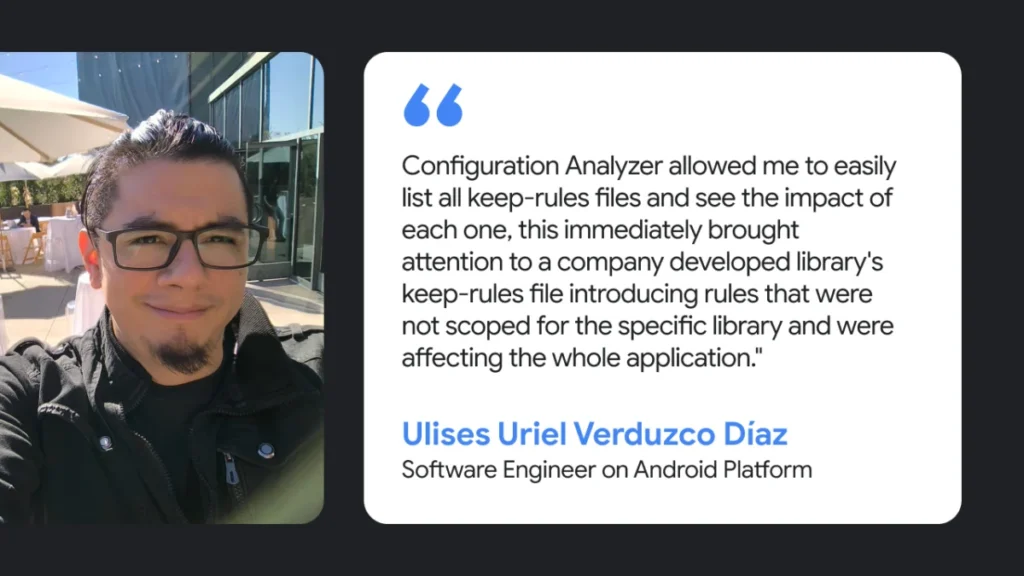
Through the implementation of the R8 Configuration Analyzer, the team discovered a critical issue: an in-house library was implementing an overly broad, unscoped keep rule. The rule read:
-keep public class *
    public protected *;
This "wide" rule acted as a blanket, preventing the optimization of all public classes and their members. Because this rule was essentially a "safety net" to prevent potential runtime crashes, it had become a standard, albeit damaging, fixture in the codebase. Every time a new feature was developed, developers defaulted to this rule rather than specifying precise requirements, allowing technical debt to compound over time.

Phase 3: Surgical Refinement
Armed with data from the R8 Configuration Analyzer, the team identified the specific classes being impacted by this wide rule. They were able to surgically modify the rules, replacing the broad strokes with targeted configurations. This process allowed R8 to finally "see" and shrink the classes it had previously been instructed to ignore.
Phase 4: CI/CD Integration
Recognizing that optimization is a journey rather than a destination, Tinder integrated R8 reporting into their Continuous Integration (CI/CD) pipeline. By making optimization metrics visible to every developer in their daily workflow, the team ensured that any new code submitted would be evaluated for its impact on the app’s overall performance, effectively preventing future regressions.
Supporting Data: The Quantitative Impact
The results of this optimization initiative were both immediate and substantial. By removing the blockers that hampered R8, Tinder achieved metrics that significantly improved the end-user experience:
- Cold Start Reduction: The team successfully cut application cold start times by 47%. This change directly contributed to a smoother, more "instant" feel when users open the app.
- Download Size: The application’s total download size decreased by 28.98%, bringing the final size down to 61.5 MB. This is a critical metric for global expansion, as it makes the app more accessible in emerging markets where users may have limited data plans or lower-end devices with restricted storage.
- ANR Reduction: User-perceived "Application Not Responding" (ANR) events were reduced by 28%. This reduction is vital for maintaining user trust and ensuring that the app remains stable during high-traffic periods.
- Optimization Score: The R8 optimization score jumped from 28% to 50%, with the team actively working to push this number even higher as they continue to audit and refine their internal dependency rules.
Official Perspectives: The Role of the R8 Configuration Analyzer
The R8 Configuration Analyzer is designed to demystify the often-complex world of R8 rules. By tracking shrinking, optimization, and obfuscation scores, it provides developers with a clear roadmap for refinement. It highlights redundant or obsolete keep rules—including those buried within external libraries—allowing teams to analyze the impact of their rules before they cause performance issues.

The developers at Tinder emphasize that the analyzer was the "missing link" in their development process. Previously, they were working in the dark, unable to determine if a performance lag was caused by their code, a third-party library, or a legacy configuration. The R8 Configuration Analyzer provided the granular insight needed to distinguish between necessary protections and unnecessary overhead.
To further support developers, the Android team has published an R8 Analyzer skill for use with agentic tools. This skill automates the analysis process, summarizing the report to display key metrics and highlighting the top five most impactful keep rules. This allows for faster iteration and prevents developers from having to manually parse complex configuration reports.
Implications: The Business Case for Performance
The technical success experienced by Tinder has profound business implications. In the context of mobile applications, performance is directly correlated with engagement.
1. Market Accessibility
By reducing the app size by nearly 30%, Tinder has lowered the barrier to entry for users in regions with limited connectivity. In many international markets, a smaller download size can significantly improve conversion rates, as users are more likely to download and keep an application that does not consume excessive storage or data.

2. User Retention and Trust
The 28% reduction in ANRs is perhaps the most significant win for user sentiment. A stable, responsive app encourages users to spend more time on the platform. Conversely, frequent crashes or freezes lead to frustration and, ultimately, uninstalls. By stabilizing the foundation, Tinder has secured a more loyal user base.
3. Culture of Performance
Perhaps the most lasting implication is the cultural shift within the Tinder engineering organization. By integrating performance metrics into their CI/CD pipeline, the team has moved from a "fix-it-when-it-breaks" mentality to a culture of continuous performance monitoring. This proactive approach ensures that the app stays lean as it continues to add features, protecting the user experience from the inevitable growth that comes with a scaling platform.
Conclusion: A Blueprint for Android Developers
Tinder’s experience serves as a compelling case study for any engineering team struggling with a bloated Android codebase. The lessons are clear:
- Audit internal dependencies: Do not assume that internal libraries are perfectly optimized. Often, they contain the most restrictive and outdated rules.
- Use the right tools: The R8 Configuration Analyzer is an essential utility for modern Android development.
- Make performance visible: By incorporating optimization stats into the CI/CD process, performance becomes a shared responsibility rather than a chore performed by a small team.
The journey taken by Tinder demonstrates that technical debt is not permanent. With the right tools and a commitment to rigorous auditing, any team can reclaim their application’s performance, creating a faster, lighter, and more enjoyable experience for their users. As Tinder continues to connect millions of people worldwide, they do so with a foundation that is now as agile as the mission they serve.