The Future of Quality: Analyzing the Explosive Growth of the Global Software Testing Market
For years, software testers and quality assurance (QA) professionals have faced a recurring, existential question: "Is there a future in software testing?" As automation technologies evolve and development cycles accelerate, the concern that artificial intelligence might render manual testing obsolete has been a frequent topic of industry debate.
However, current market data paints a radically different picture. Far from disappearing, software testing has become the bedrock of the digital economy. Quality assurance is no longer a peripheral step in the development process; it is a critical, integrated pillar of product engineering. With the global software testing services market poised for massive expansion, the industry is entering a "golden age" of intelligent automation, security-focused testing, and strategic quality management.
Main Facts: The State of the Industry
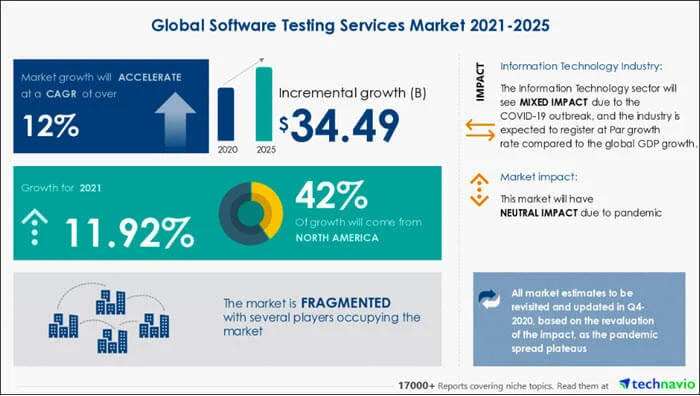
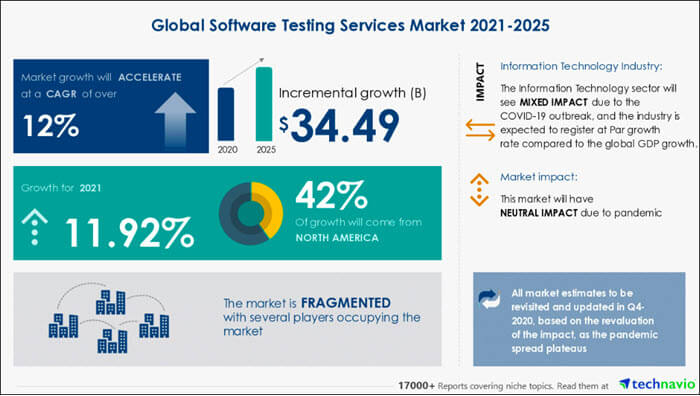
The narrative surrounding software testing has shifted from one of redundancy to one of essential value. According to data from industry analysts, the global software testing services market is on a trajectory of significant growth. Projections indicate an increase of approximately $90 billion in market valuation between 2021 and 2030, with a Compound Annual Growth Rate (CAGR) of over 12%.
This growth is driven by the proliferation of complex, interconnected applications and the absolute necessity of maintaining high-quality user experiences in a competitive, digital-first market. As companies shift toward DevOps and Continuous Testing (CT) models, the testing budget has become an indivisible, non-negotiable component of overall software engineering expenditure.

Chronology of Market Evolution
The trajectory of the software testing market can be viewed through three distinct phases:
- The Manual Era (Pre-2010s): Testing was largely reactive, performed at the end of the development lifecycle, and heavily reliant on manual processes.
- The Automation Transition (2010–2018): As Agile methodologies gained traction, the industry began shifting toward scripted automation, with tools like Selenium becoming the industry standard for functional test automation.
- The Intelligent QA Era (2019–Present): We are currently witnessing the integration of Artificial Intelligence (AI) and Machine Learning (ML) into the testing stack. This era is defined by "Intelligent Automation," where testing systems can self-heal, predict defects, and optimize coverage without human intervention for every minor update.
Supporting Data: Why Quality Matters
The shift toward automated, intelligent testing is backed by empirical data from leading research firms.
Automation and AI Integration
Research from the Forte Group highlights that while only 12% of QA practitioners claim to have reached "fully automated" status, an additional 35% are currently in the process of scaling their automation efforts. This suggests that the industry is in the midst of a massive technological migration. Furthermore, a report by Micro Focus in the World Quality Report indicates that 90% of businesses are experiencing significant growth in AI-driven projects, necessitating more sophisticated, automated testing environments to keep pace.
The Rise of Specialized Tooling
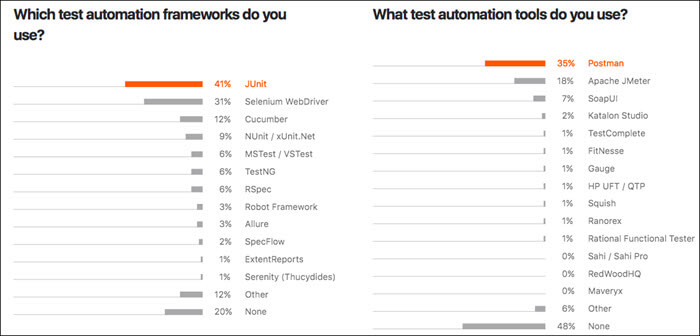
The dominance of specific frameworks reveals a mature ecosystem. According to JetBrains’ research, Java remains the primary programming language for test automation, while JUnit and Selenium WebDriver continue to hold the top spots for framework popularity. In the API testing and performance domains, Postman and Apache JMeter remain the industry benchmarks. These tools are no longer just "add-ons"—they are the core engines driving the quality of modern enterprise software.
Workforce and Skill Demographics
The "QA Lead" research indicates a global average of 5.2 testers per 100,000 people. As the demand for talent grows, the skill set requirements are becoming more specialized. While traditional manual testing is declining, the demand for "SDETs" (Software Development Engineers in Test) is skyrocketing. Employers are placing a premium on two primary areas:
- Communication Skills (75% demand): Essential for collaborating across cross-functional product teams.
- Scripting and Automation (63% demand): The technical backbone required for building scalable, resilient test suites.
Official Industry Responses and Market Outlook
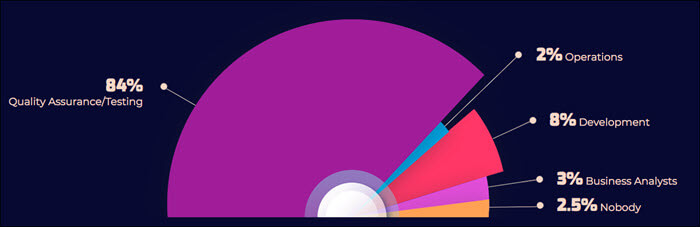
Industry leaders have acknowledged that the "testing silo" is dead. Organizations like Tricentis have conducted comprehensive surveys revealing that over 80% of functional test automation is now performed by dedicated testers or QA teams, confirming that the responsibility of quality has moved into the hands of those who specialize in it.
Global Market Insights suggests that the market, having already exceeded $40 billion in 2020, will maintain a steady growth trajectory throughout the decade. This growth is bolstered by the increasing adoption of mobile-first strategies and the integration of IoT (Internet of Things) devices, which require a level of testing complexity that cannot be handled by legacy methods.
Implications for the Future
The growth of the software testing market carries several profound implications for businesses, individual practitioners, and the tech ecosystem at large.
1. The Security Imperative
Perhaps the most significant trend for the coming years is the convergence of QA and Cybersecurity. With 68% of large companies reporting a sharp increase in cyber threats, the testing market is expanding to include automated security testing. Investments in cybersecurity are expected to balloon to over $133 billion globally, as companies look to automate vulnerability scanning and compliance checks within their CI/CD pipelines.
2. The Shift Toward "Codeless" Testing
As the industry matures, the barrier to entry for test automation is being lowered. "Codeless" or "Low-code" testing platforms are allowing testers to build complex automation scenarios without writing deep, monolithic scripts. This trend is expected to democratize testing, allowing a broader range of team members to contribute to quality assurance.
3. Career Longevity
For those asking if software testing is a viable career, the answer is a definitive "yes." However, the nature of the role is evolving. The future belongs to the "Automation Architect"—a professional who understands the product lifecycle, can leverage AI/ML to predict bugs, and possesses the coding proficiency to build robust, maintainable test frameworks.
4. Continuous Quality
The integration of DevOps means that testing is no longer a phase; it is a continuous, perpetual state. The ability to perform "Continuous Testing" is now a competitive advantage. Companies that fail to invest in high-quality, automated testing find themselves unable to deploy updates at the speed the market demands, leading to a loss in market share.
Conclusion: The Path Ahead
The software testing industry has moved beyond the simple search for bugs. It is now a high-tech discipline focused on performance engineering, security, and the optimization of the user experience. By adopting AI/ML, investing in continuous test automation, and focusing on the most critical mission-driven applications, businesses are ensuring their own longevity in an increasingly digital world.
For the aspiring QA professional, the landscape is bright. The demand for trained IT specialists is at an all-time high, and the skills learned today—automation, AI integration, and security—are becoming the most valuable assets in the software engineering domain. As we look toward 2030, the software testing market will not only continue to grow; it will become the silent, powerful engine that keeps the global digital economy secure, functional, and efficient.
The question is no longer whether software testing has a future, but rather, how quickly your organization can adapt to the sophisticated, automated, and intelligent quality landscape that is already upon us.